


A good sweet potato casserole recipe does two jobs at once. It has to taste like the holiday dish everyone remembers, soft and warmly spiced under a crisp, buttery topping, and it has to behave itself in a busy kitchen, forgiving about timing and happy to be made ahead. This version does both. You get the classic casserole first, with exact quantities and timings, then a lighter version that keeps the flavour and trims the sugar and butter, plus make ahead, storage, and reheating instructions so the dish fits around a turkey, a roast, or a weeknight tray of leftovers.
Sweet potatoes earn their place on the table on nutrition as well as flavour. According to USDA FoodData Central, sweet potatoes are a strong source of fibre, potassium, and beta carotene. Beta carotene is the orange pigment your body converts to vitamin A. That is a better starting point than most holiday sides, which is why this sweet potato casserole recipe leans on the potatoes themselves for sweetness and only adds as much sugar as the topping and filling genuinely need.
Sweet Potato Casserole at a Glance
- Prep time: 25 minutes, plus potato cooking time
- Cook time: 30 to 35 minutes in the oven
- Total time: about 1 hour 30 minutes, including boiling the potatoes
- Yield: 10 servings as a side dish
- Dish size: a 2 litre (2 quart) baking dish, roughly 20 by 28 cm (8 by 11 inches)
- Oven temperature: 175 degrees C (350 degrees F)
- Make ahead: yes, up to 2 days, details below
Ingredients for the Classic Sweet Potato Casserole
Quantities are given in metric and imperial so the recipe works the same in the United States, the United Kingdom, Canada, and Australia.
For the filling
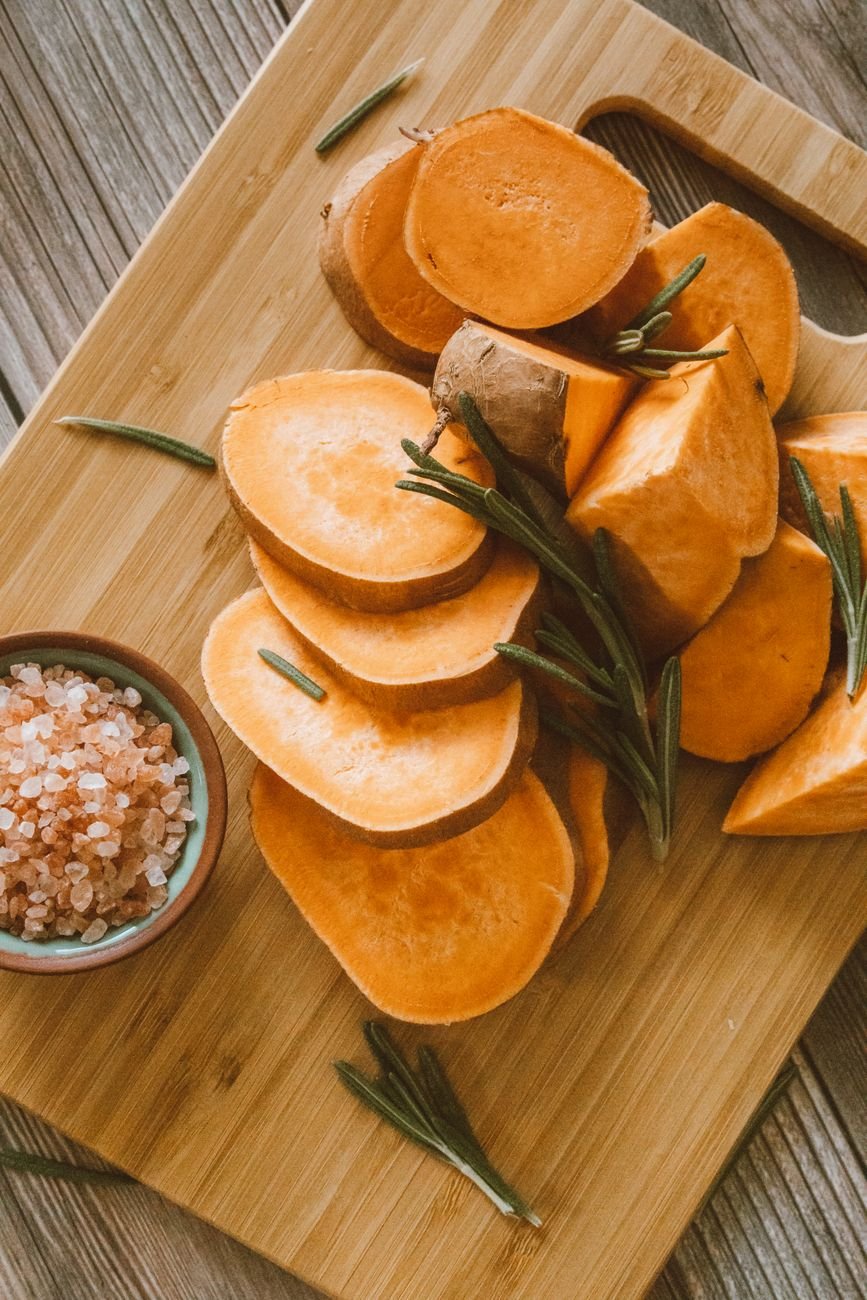
- 1.4 kg (3 lb) sweet potatoes, about 4 large, peeled and cut into 4 cm (1.5 inch) chunks
- 60 g (4 tablespoons) unsalted butter, melted, plus extra for greasing the dish
- 80 g (1/3 cup, packed) brown sugar
- 80 ml (1/3 cup) milk, whole or 2 percent
- 2 large eggs, at room temperature
- 1 teaspoon vanilla extract
- 1 teaspoon ground cinnamon
- 1/4 teaspoon ground nutmeg
- 1/2 teaspoon fine salt
For the pecan crumble topping
- 100 g (1 cup) pecans, roughly chopped
- 65 g (1/2 cup) plain (all purpose) flour
- 100 g (1/2 cup, packed) brown sugar
- 60 g (4 tablespoons) unsalted butter, melted
- 1/2 teaspoon ground cinnamon
- 1/4 teaspoon fine salt
A note on the potatoes: orange fleshed, red skinned sweet potatoes, often sold as garnet or jewel varieties, give the deepest colour and the most reliable sweetness. Paler varieties work, but the filling colour will be lighter and you may want the full amount of sugar. Avoid anything labelled as a yam in North American shops unless you know it is a true yam; most are simply sweet potatoes under another name, and true yams are drier and starchier.
How to Choose and Store Sweet Potatoes for Casserole
Start with firm potatoes that feel heavy for their size, with tight, unbroken skin and no soft spots, sprouts, or mouldy patches. Small to medium potatoes cook more evenly than very large ones, and two medium potatoes are easier to peel and chunk than one giant. If you are shopping several days ahead, store sweet potatoes in a cool, dark, ventilated spot in the kitchen, never in the fridge: cold storage turns their starches in a way that leaves hard, pale centres that never soften properly, a fault no amount of mashing can hide. Used within a week, ordinary counter storage in a basket away from onions is fine. Wash and peel them just before cooking, and if you peel ahead, keep the chunks in cold water for up to a few hours so they do not darken, then drain and pat them dry before the pot.
How to Make This Sweet Potato Casserole Recipe, Step by Step
Step 1: Cook the sweet potatoes
Put the potato chunks in a large pot, cover with cold water by about 2.5 cm (1 inch), and add a pinch of salt. Bring to the boil over high heat, then reduce to a steady simmer and cook for 15 to 20 minutes, until a knife slides into the largest chunk with no resistance. Starting in cold water matters. It lets the chunks cook evenly, so you do not get hard centres inside mushy edges. Drain well and let the potatoes steam in the colander for 2 to 3 minutes. Extra surface water is the most common cause of a loose, wet filling, so do not skip the steaming off.
Step 2: Heat the oven and prepare the dish
While the potatoes cook, heat the oven to 175 degrees C (350 degrees F). Grease the baking dish with a little butter. If your oven runs hot, check it with an oven thermometer once; casseroles forgive a lot, but a scorched crumble does not.
Step 3: Mash and mix the filling
Tip the drained potatoes into a large bowl and mash until mostly smooth. A few small lumps are fine and give the casserole a homemade texture. Long blending with an electric mixer makes the filling gluey, so mash by hand or use a mixer only briefly on low. Stir in the melted butter, brown sugar, milk, eggs, vanilla, cinnamon, nutmeg, and salt until everything is combined and the colour is even. Taste at this point. The filling should taste clearly sweet and warmly spiced but not sugary, because the topping adds its own sweetness on top.
Step 4: Make the pecan crumble
In a medium bowl, stir together the flour, brown sugar, cinnamon, and salt. Pour in the melted butter and stir with a fork until the mixture forms damp, uneven crumbs. Then fold in the chopped pecans. The crumble should clump together when you squeeze it and break apart easily. If it looks like a smooth paste, add another tablespoon of flour. If it is dry and dusty, add a teaspoon of milk.
Step 5: Assemble
Spread the filling into the prepared dish and smooth the top. Scatter the crumble over the whole surface, right to the edges, and do not press it down. A loose topping browns more evenly and stays crisp.
Step 6: Bake
Bake for 30 to 35 minutes, until the topping is deep golden and crisp. The filling is set at the edges with just a slight wobble in the centre. If the topping colours early, cover the dish loosely with foil for the last 10 minutes. Rest for 10 minutes before serving: the filling firms as it cools and scoops far more neatly.
The Lighter Sweet Potato Casserole
Holiday food does not have to be diet food, and this lighter version is not about apologising for the classic. It is for the cook who wants the same dish, the same warm spice and crisp topping, with less sugar and butter and a bit more fibre. The swaps below keep the structure and most of the pleasure, and they work because the sweet potatoes are doing the heavy lifting already.
- Halve the sugar in the filling. Use 40 g (about 3 tablespoons) of brown sugar instead of 80 g. The topping still brings sweetness, so the dish does not taste thin.
- Swap half the butter in the filling. Replace 30 g (2 tablespoons) of butter with 40 ml (about 3 tablespoons) of milk or plain Greek yogurt, and keep the remaining butter for flavour.
- Lighten the topping. Cut the topping sugar by a third and add 30 g (1/3 cup) of rolled oats to the crumble. The oats add crunch and fibre, which fits the whole idea of fibermaxxing, and the pecans still bring the buttery note.
- Keep the eggs. They are what make the filling slice instead of slump, and they are not where the calories live.
The lighter version comes in at roughly 240 calories a serving against about 330 for the classic, with the full estimate in the table below. Either way, one rich side dish does not make or break a week of eating; as our guide to why you are not losing weight in a calorie deficit explains, it is the pattern across the whole week that matters, not a single generous meal.
Nutrition per Serving, Classic and Lighter
These are careful home estimates for one serving of this sweet potato casserole recipe, which is one tenth of the dish, not laboratory values. The numbers move with the size of your potatoes, the milk you choose, and how generous you are with the topping, so treat them as a guide rather than a promise.
| Classic | Lighter | |
|---|---|---|
| Calories | about 330 kcal | about 240 kcal |
| Carbohydrates | about 45 g | about 36 g |
| Sugars | about 22 g | about 13 g |
| Fibre | about 4 g | about 5 g |
| Protein | about 4 g | about 5 g |
| Fat | about 15 g | about 9 g |
| Sodium | about 220 mg | about 210 mg |
Sweet potato casserole is a side dish, and it pairs naturally with protein centred plates. If you want the rest of the meal to do more of the work, our high protein meal prep guide shows how to build a fuller high protein spread around it.
Marshmallow Topping Variation
The marshmallow version is a genuine classic in much of the United States, and readers ask for it every year, so here it is done properly. Skip the pecan crumble. Bake the filling on its own for 25 minutes, then scatter 150 g (about 3 cups) of mini marshmallows evenly over the top and return the dish to the oven for 5 to 8 minutes, until the marshmallows are puffed and golden in spots. Watch closely in the last minutes; marshmallows go from golden to scorched fast. You can also do half and half across the dish, crumble on one side and marshmallow on the other, which settles most family arguments. Note that the marshmallow version keeps worse and reheats less crisply than the crumble, one more reason the crumble is the main recipe here.
Make Ahead, Storage, and Reheating
This sweet potato casserole recipe is one of the easiest holiday sides to get ahead of, which is half of why it survives every busy November and December.
- Make ahead, unbaked: assemble the filling in the dish, cover, and refrigerate for up to 2 days. Keep the crumble separate in a sealed container at room temperature so it stays dry. Add the topping just before baking, and give the casserole 10 extra minutes in the oven because it is starting cold.
- Make ahead, baked: bake the full casserole, cool, cover, and refrigerate for up to 3 days. Reheat covered at 160 degrees C (325 degrees F) for 20 to 25 minutes, then uncover for 5 minutes to re-crisp the topping.
- Leftovers: refrigerate in a sealed container for up to 4 days. Single servings reheat well in the microwave in about 2 minutes, though the topping softens; a 10 minute stint in a moderate oven keeps it crisp.
- Freezing: the filling freezes well for up to 3 months, with or without topping, though the crumble is best added fresh after thawing. Thaw overnight in the fridge before reheating.
If you are cooking this outside North America, remember the season flip: in Australia this dish lands in early summer, and it works just as well served warm rather than piping hot alongside grilled meats. In the United Kingdom and Canada it doubles as a Sunday roast side well beyond any holiday.
Five Mistakes That Ruin Sweet Potato Casserole
- Undercooking the potatoes. Hard centres never fully smooth out in the filling. Cook until a knife meets no resistance at all.
- Skipping the drain and steam off. Waterlogged potatoes make a filling that weeps liquid into the dish as it bakes.
- Overmixing. Beaten sweet potato turns elastic and gluey. Mash, stir to combine, and stop.
- Forgetting salt in the topping. An unsalted crumble tastes flat and sugary. The quarter teaspoon is doing real work.
- Serving it straight from the oven. Ten minutes of resting is the difference between a scoop that holds and a scoop that slumps.
What to Serve With Sweet Potato Casserole
The classic partners are roast turkey, glazed ham, and roast chicken. And the casserole earns its place next to all three because its sweetness balances salty, savoury mains. It also sits happily beside green beans, a sharp slaw, or roasted Brussels sprouts, which cut through the richness.
For a smaller, everyday plate, serve it with a simple protein and something green and treat it as the carbohydrate anchor of the meal; our guide to what to eat before and after a workout explains why a fibre rich, slow digesting carbohydrate like sweet potato works well in the meal after training. A walk afterwards helps too, and the habit is easier than people expect: our walking 10000 steps for fat loss guide shows how post meal walking adds up across a day. And if holiday baking leaves you with pumpkin seeds from another dish. Our roasted pumpkin seeds recipe turns them into the snack that keeps cooks out of the casserole before dinner.
Frequently Asked Questions About Sweet Potato Casserole
Can I use canned sweet potatoes or canned yams?
Yes, in a pinch. Drain them very well, use about 1.1 kg (about 40 oz) of drained canned potatoes for this recipe, and cut the added sugar in the filling by about a third, because canned potatoes are often packed in syrup and taste sweeter. Fresh potatoes give a better texture and colour, so canned is a backup, not the first choice.
Can I make sweet potato casserole without eggs?
Yes. The eggs help the filling set into soft slices, but you can leave them out for an egg free version; the result eats more like a rich mash under crumble, which many people prefer. Add an extra tablespoon of flour to the filling to help it hold, and rest it a full 15 minutes before serving.
Why is my casserole runny?
Almost always one of three causes: the potatoes were not drained and steamed off properly, the filling was served before resting, or the dish was made ahead unbaked and baked without the extra 10 minutes a cold start needs. A runny baked casserole usually firms after 20 minutes in the fridge and a short reheat.
Can I use a slow cooker?
Yes. Cook the filling in a greased slow cooker on low for 3 to 4 hours, adding the crumble in the last 45 minutes with the lid slightly ajar so moisture escapes. The topping will be softer than the oven version, but the method frees oven space on the busiest cooking day of the year.
What can I use instead of pecans?
Walnuts are the closest swap, at the same quantity. For a nut free topping, replace the pecans with 60 g (2/3 cup) rolled oats and 2 tablespoons of pumpkin seeds or sunflower seeds, and keep the rest of the crumble the same.
How do I know when the casserole is done?
The topping should be deep golden, the edges of the filling should look set and be pulling very slightly from the sides of the dish, and the centre should wobble only a little when you nudge the dish. A knife inserted in the centre should come out hot and mostly clean.
The Bottom Line on This Sweet Potato Casserole Recipe
A reliable sweet potato casserole recipe is mostly about water control, honest seasoning, and a topping with enough salt and crunch to balance the filling. Cook the potatoes until completely soft, drain them properly, do not overmix, and let the dish rest. Make the classic version when the occasion calls for it, make the lighter version when it does not, and use the make ahead path whenever the oven schedule is crowded. That is the whole secret, and it works every time.
This article is general cooking and nutrition information. It is not medical or dietary advice for any individual condition. If you manage diabetes or another condition affected by carbohydrate or sugar intake, check with your own clinician or dietitian about portions and swaps.

 Ablaze Fitness


