


Roasted Pumpkin Seeds Recipe: Crispy, Seasoned, and Never Soggy
Every autumn, millions of pumpkins get carved, cooked, or turned into soup, and most of their seeds go straight into the bin. That is a waste of one of the best snacks in the whole season. A good roasted pumpkin seeds recipe turns that handful of slimy seeds into something crisp, salty, and genuinely hard to stop eating, with almost no cost and about ten minutes of hands-on work.
The catch is that roasted pumpkin seeds have a reputation problem. Many people try them once, get chewy, pale, half-raw seeds, and never try again. That result comes from skipping two unglamorous steps: cleaning the seeds properly, and drying them before they meet any heat or oil. This recipe puts those steps front and centre, then gives you the exact temperatures, timings, and seasoning amounts that produce crisp, golden seeds every time, plus six seasoning variations, an air fryer method, and storage rules that keep the crunch for weeks.
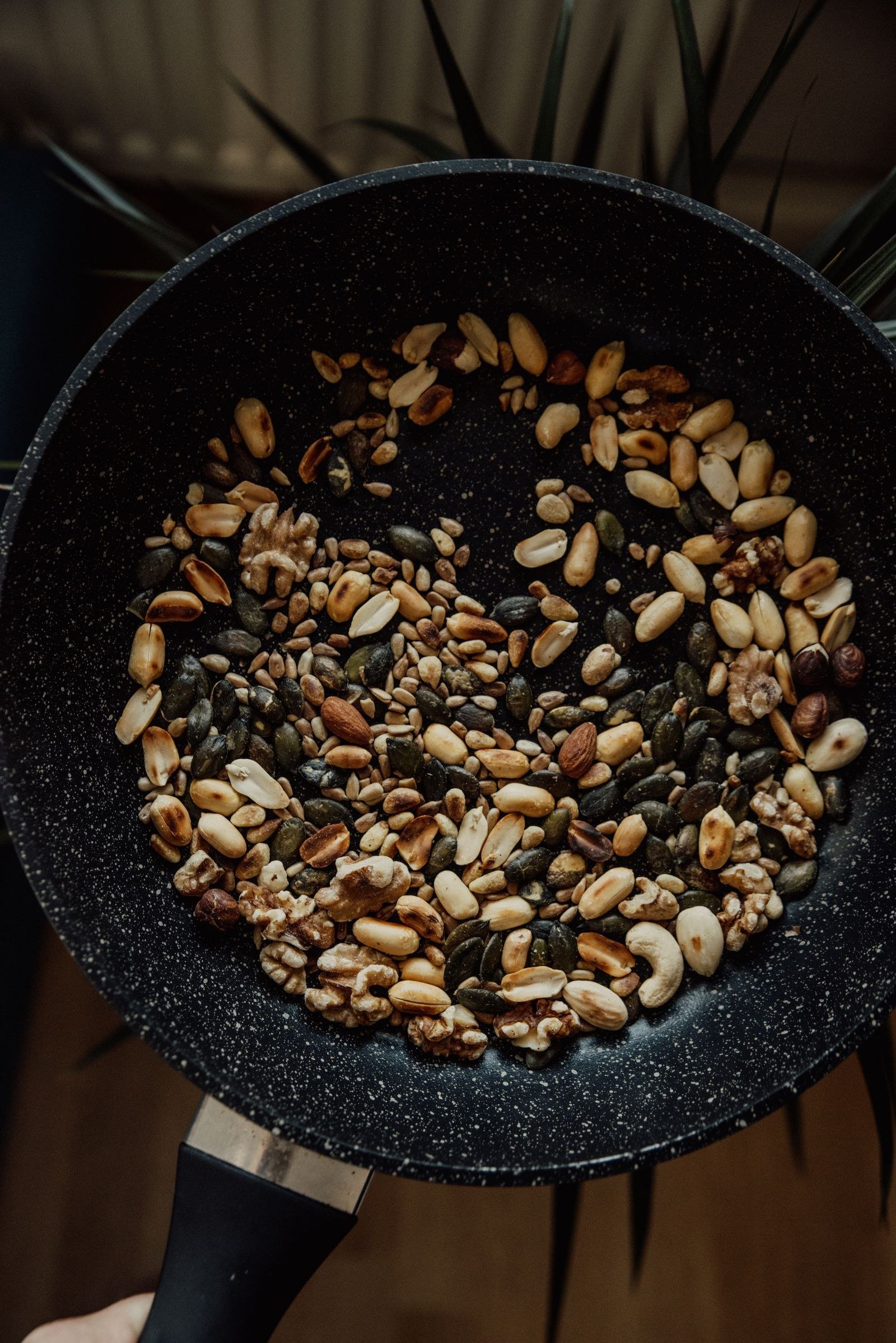
Which Seeds Can You Roast?
Almost any winter squash seed roasts well. Pumpkins are the classic source, but butternut, acorn, kabocha, delicata, and spaghetti squash seeds all work with the same method, and each has its own character:
- Carving pumpkin seeds are the biggest and thickest. They roast up sturdy and crunchy, with a mild flavour that carries seasoning well. They need the full drying step and the longer end of the roasting time.
- Sugar pumpkin (pie pumpkin) seeds are slightly smaller and a little more delicate, with a nuttier taste. Watch them closely in the last few minutes.
- Butternut squash seeds are smaller and thinner, closer to pepitas in texture. They crisp faster, so start checking five minutes early.
- Acorn and kabocha seeds sit in the middle: medium size, good crunch, slightly sweet flesh notes.
One honest note: the green pepitas sold in bags are shelled seeds from varieties grown for hull-free seeds. Home-roasted seeds keep their pale shell, and that shell is part of the snack. Roasted properly, it is crisp and pleasant; under-roasted, it is exactly the chewy part people complain about, which is why the timing in this recipe matters.
In the southern hemisphere, pumpkins are an autumn harvest too, so this lands in March and April there. The method works any month with market squash.
What Roasted Pumpkin Seeds Give You Nutritionally
Pumpkin seeds punch well above their weight for a snack that starts as a by-product. According to the USDA FoodData Central database, a small handful of shelled pumpkin seed kernels, about 30 grams (roughly 3 tablespoons), provides around 150 to 170 calories, 7 to 9 grams of protein, and a useful mix of minerals, including magnesium, zinc, iron, and manganese, plus fibre and mostly unsaturated fats. Whole roasted seeds in their shells give you a little less of everything per handful, because the shell adds weight without many calories, and a little more fibre.
What a Small Handful Gives You
- Protein for a plant snack. Seven to nine grams per small handful is high for something that crunches like a crisp, which is why these seeds actually take the edge off hunger. Our guide to what to eat before and after a workout shows where snacks like this fit around training.
- Magnesium. Pumpkin seed kernels are one of the richer everyday sources of magnesium. Our article on magnesium glycinate for sleep explains what magnesium does; food sources like these seeds are the everyday foundation underneath that conversation.
- Fibre. The shells add fibre you do not get from shelled kernels. If you are deliberately building your fibre intake, the fibermaxxing guide explains the gradual approach that keeps your digestion happy.
- A seed with a second job. Pumpkin seeds are one of the four seeds in the seed cycling rotation, where they cover the first half of the cycle alongside flax. Roasting a seasoned batch for snacks and keeping a plain batch for cycling is a tidy system.
Overall, none of this makes pumpkin seeds a medicine, and the salt in a seasoned batch is worth keeping sensible, but as a snack they earn their place.
The Basic Roasted Pumpkin Seeds Recipe
This roasted pumpkin seeds recipe is the master recipe. Everything else in this article, the flavours, the air fryer method, the storage rules, builds on it.
Makes: about 2 cups of roasted seeds (from one large pumpkin)
Prep time: 15 minutes, plus drying time
Cook time: 20 to 30 minutes
Total time: about 1 hour with fast drying, or overnight with air drying
Roasted Pumpkin Seeds Recipe Ingredients
- Seeds from 1 large pumpkin (about 2 cups / roughly 300 grams of cleaned seeds)
- 2 teaspoons olive oil or melted butter (10 millilitres)
- 3/4 teaspoon fine sea salt (about 4 grams), plus more to finish
- Optional base seasoning: 1/2 teaspoon garlic powder and 1/2 teaspoon smoked paprika
Also, for sweet versions and the other flavours, see the variations section below. The oil amount looks small, so a little goes a long way.
Step 1: Separate the seeds from the pulp
Cut the pumpkin open and scoop the seeds and stringy pulp into a big bowl of cold water. Work the seeds between your hands: they float, the pulp sinks and loosens, and ten minutes of this gets you most of the way. A few bits of pulp left behind are not a disaster; they go dark and chewy in the oven, so get what you reasonably can.
Tip: do this the same day you carve. Seeds left in wet pulp at room temperature go dull and can smell within a day; in the fridge, in water, they hold a day or two at most.
Step 2: Rinse and pick over
Drain the seeds in a colander and rinse them under running water, rubbing them between your palms to shift the last slippery coating. Pick out any seeds that are damaged, very thin, or discoloured. What you want is a bowl of plump, pale, clean seeds.
Drying and Seasoning
Step 3: Dry the seeds properly (the step that decides everything)
Wet seeds steam in the oven instead of roasting, and steamed seeds are chewy seeds. Choose one of these three drying routes:
- Overnight air dry (best crunch). Spread the seeds in a single layer on a clean tea towel or a tray lined with baking paper. Leave them at room temperature for 12 to 24 hours, stirring once or twice. They should feel dry and papery, and rattle slightly.
- Oven dry (same day). Spread the seeds on a tray and put them in the oven at its lowest setting, about 90°C (200°F), for 20 to 30 minutes, stirring halfway. Take them out when they feel dry to the touch. You will season and roast them straight after.
- Towel and time (the minimum). If you are in a hurry, press the seeds hard between two clean tea towels, then leave them spread out for at least 30 minutes while the oven heats. This works, but the crunch is a notch below the other two routes.
Some recipes boil the seeds in salted water for 10 minutes first, which seasons them through. It also adds a full second drying job, because boiled seeds come out soaking. If you try it, dry with route 1 or 2 afterwards and halve the added salt. For most cooks, the dry method above is the better trade.
Step 4: Season
Put the dry seeds in a bowl, add the oil, and toss until every seed looks faintly glossy. Sprinkle over the salt and any dry seasonings and toss again for a full minute. Seasoning sticks to oil, and oil only sticks to dry seeds, which is the whole logic of this recipe in one sentence. Sugary or delicate seasonings (cinnamon sugar, cocoa, fresh herbs) are the exception: add those after roasting, while the seeds are hot, so they do not scorch.
Roasting and Cooling
Step 5: Roast
Heat the oven to 150°C (300°F). Spread the seeds on a large rimmed baking tray in a single, even layer with a little space between them. A crowded tray steams; use two trays rather than piling seeds up.
Roast for 20 to 30 minutes, stirring well every 10 minutes so the edges do not race ahead of the middle. The seeds are done when they are golden at the edges, smell nutty and toasty, and sound dry and light when you shake the tray. A test seed, cooled for one minute, should crunch cleanly all the way through with no soft or chewy centre.
Thinner squash seeds can be done at 15 to 20 minutes; thick carving pumpkin seeds can take the full 30. Start checking early rather than trusting the clock, because seed size changes everything and ovens vary.
Step 6: Cool completely before you judge them
Seeds crisp up as they cool. A seed tested straight off the tray tastes softer than the finished batch will be. Spread them out, leave them for at least 15 minutes, and only then taste for salt and crunch. If they are not crisp after cooling, they are under-roasted: back into a 150°C (300°F) oven for 5 more minutes fixes most batches.
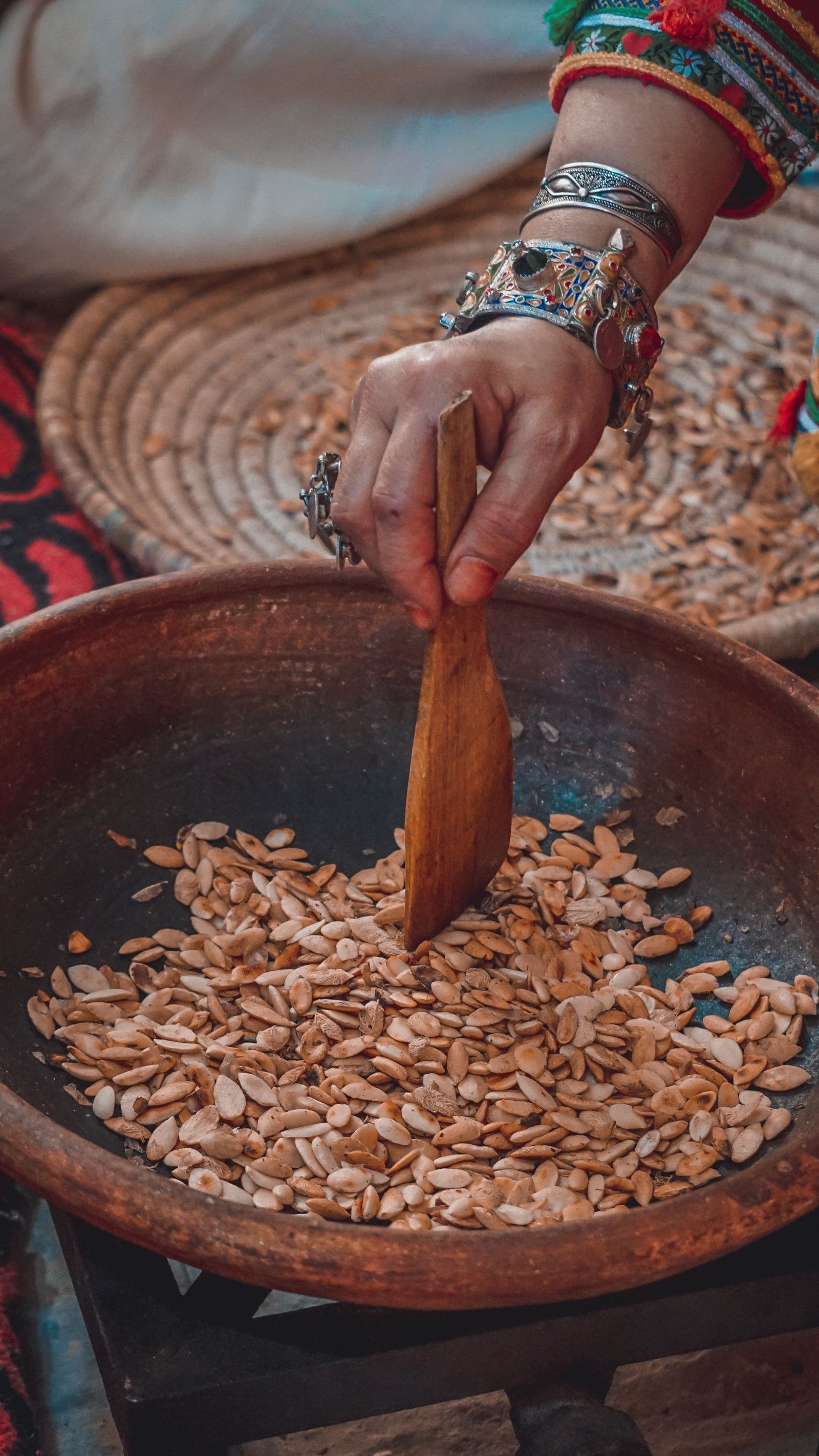
Roasted Pumpkin Seeds Recipe: Temperature and Time Chart
So, use this chart with the roasted pumpkin seeds recipe above as your starting point, and adjust for your seed size.
| Seed type | Oven temperature | Time | Notes |
|---|---|---|---|
| Carving pumpkin seeds (large, thick) | 150°C / 300°F | 25 to 30 minutes | Stir every 10 minutes |
| Sugar pumpkin seeds (medium) | 150°C / 300°F | 20 to 25 minutes | Check from 18 minutes |
| Butternut and acorn seeds (small, thin) | 150°C / 300°F | 15 to 20 minutes | Check from 12 minutes |
| Any seeds, faster hotter method | 175°C / 350°F | 12 to 18 minutes | Stir every 5 minutes; watch closely, they colour fast |
| Air fryer, any seeds | 160°C / 320°F | 10 to 15 minutes | Shake the basket every 4 minutes |
Overall, the low, slow method at 150°C (300°F) is the most forgiving. The hotter method works when you are short on time, but watch it like a hawk.
Six Seasoning Variations for This Roasted Pumpkin Seeds Recipe
Make this roasted pumpkin seeds recipe once, then swap the seasoning. Each set below seasons about 2 cups of seeds. Add dry spice blends before roasting; add the marked sweet or fresh finishes after roasting, while the seeds are hot.
- Classic garlic and smoked paprika. The base recipe above: garlic powder, smoked paprika, fine salt. The default for a reason.
- Sea salt and cracked pepper with Parmesan finish. Season with salt and plenty of black pepper before roasting. As soon as the seeds come out, toss with 2 tablespoons of finely grated Parmesan (about 15 grams). The cheese melts onto the hot oil and sets as they cool.
- Cinnamon sugar (sweet). Roast with oil and a pinch of salt only. While hot, toss with 1 tablespoon of sugar mixed with 1 teaspoon of cinnamon and a pinch of nutmeg. These are the ones that taste like autumn baking.
- Chilli lime. Season before roasting with chilli powder, a pinch of cayenne, and salt. After roasting, toss with the finely grated zest of 1 lime and let them cool. Bright, hot, and very hard to share.
- Ranch style. Garlic powder, onion powder, dried dill, dried parsley, and salt, all before roasting. Tastes like the seasoning on the crisps everyone fights over.
- Curry and coconut. Mild curry powder and salt before roasting, then toss the hot seeds with 2 tablespoons of desiccated coconut so it lightly toasts in the residual heat. Especially good on butternut seeds, and an easy win for a high protein meal prep snack box alongside eggs and yoghurt.
Finally, one variation rule: write down what you did. The batch everyone asks about is always the one nobody can reproduce.
Air Fryer Roasted Pumpkin Seeds Recipe
In fact, the air fryer version of this roasted pumpkin seeds recipe is genuinely excellent, because the moving hot air dries and crisps in one pass.
- Clean and towel-dry the seeds well (overnight air drying is still crunchiest).
- Season with oil, salt, and spices exactly as in the master recipe.
- Air fry at 160°C (320°F) in a single layer for 10 to 15 minutes, shaking the basket every 4 minutes.
- Start tasting at 10 minutes; small seeds finish fast and the last two minutes move quickly.
- Cool completely on a tray, not in the basket, so they do not steam in their own heat.
Also, work in batches: a deep bed of seeds gives you the same steaming problem as a crowded oven tray.
How to Store Roasted Pumpkin Seeds
- Counter: Airtight jar or container, up to 2 weeks at room temperature. They must be completely cool before the lid goes on, or trapped steam softens the batch overnight.
- Fridge: Airtight container, up to 1 month. The crunch holds well; let them sit out for 10 minutes before serving if you want the full snap back.
- Freezer: Sealed bag with the air pressed out, up to 3 months. Refresh for 5 minutes in a 150°C (300°F) oven straight from frozen.
- Rescue move: A softened batch crisps up again with 5 to 8 minutes in a low oven. Soft almost always means moisture, not staleness.
Where to use the stash: scattered over salads and soups, folded into granola, sprinkled on a healthy overnight oats bowl with yoghurt, blended into pesto in place of pine nuts, or simply kept in a jar where people walk past it, which is where most of them will go.
Seven Mistakes That Make Chewy or Burnt Seeds
- Skipping the drying step. The single biggest cause of chewy seeds. Wet seeds steam; steamed seeds never crisp properly.
- Too much oil. Seeds need a glossy film, about 2 teaspoons per 2 cups. Pooled oil fries the outside while the inside stays soft, and the batch tastes greasy.
- A crowded tray. Overlapping seeds trap steam. Single layer, space between, two trays if needed.
- Sugar in the oven from the start. Sweet seasonings scorch at roasting temperatures. Roast plain with salt, sweeten hot at the end.
- Judging them hot. Seeds crisp as they cool. Pulling a batch early because a hot seed felt soft is how under-roasted seeds happen. Cool, then judge, then re-roast for 5 minutes if needed.
- Walking away at high heat. At 175°C (350°F) and above, seeds go from golden to burnt in about two minutes. Stir and watch.
- Sealing them warm. Into an airtight jar while still warm, they steam themselves soft by morning. Cool fully first.
Frequently Asked Questions
Do you have to dry pumpkin seeds before roasting them?
Yes, if you want them crisp. Drying is the difference between roasted and steamed seeds. Overnight air drying gives the best crunch, a low oven works the same day, and a hard towel dry plus 30 minutes spread out is the minimum worth doing.
Can you eat the shell of a roasted pumpkin seed?
Yes. On a properly roasted seed the shell is thin, crisp, and completely edible, and it adds fibre. If it feels tough or chewy, the seed was under-roasted. Five more minutes in a low oven usually fixes the batch.
How do you know when roasted pumpkin seeds are done?
Three signs together: golden edges, a nutty and toasty smell, and a seed cooled for one minute that crunches cleanly with no soft centre. Colour alone can mislead; the cooled test seed is the reliable check.
How many calories are in roasted pumpkin seeds?
A small handful of shelled kernels, about 30 grams, has roughly 150 to 170 calories with 7 to 9 grams of protein. Whole seeds in the shell come in lower per handful, since the shell adds volume without many calories. Added oil and sugar in sweet versions nudge the numbers up slightly.
Can you roast seeds from any squash?
Yes. Butternut, acorn, kabocha, delicata, and spaghetti squash seeds all roast with this same method. Smaller, thinner seeds like butternut finish 5 to 10 minutes sooner, so start checking early and use the time chart above.
Troubleshooting and Storage
Why are my roasted pumpkin seeds chewy?
Almost always one of three causes: the seeds went in wet, the tray was crowded, or they were under-roasted and judged while hot. Spread the batch back on a tray and give it 5 to 8 more minutes at 150°C (300°F), then cool it fully before tasting again.
How long do roasted pumpkin seeds keep?
About 2 weeks in an airtight jar on the counter, a month in the fridge, and 3 months in the freezer. Cool them completely before storing, and refresh any softened batch in a low oven for a few minutes.
The Short Version
In short, this roasted pumpkin seeds recipe is simple: clean the seeds in water, dry them like you mean it, toss them in a whisper of oil and salt, and roast until golden and crisp.
General information only: nutrition figures are approximate values for typical pumpkin seeds and vary by variety and preparation. This article is a recipe and cooking guide, not medical or dietary advice. If you have a seed allergy or a medical condition that affects your diet, check with your own clinician or dietitian before making seeds a regular habit.

 Ablaze Fitness


