


Turkey gravy is made in the last ten minutes of a long day of cooking. It is made under time pressure, in front of an audience. That is exactly why so many versions go wrong. This turkey gravy recipe removes the drama. The method is a simple, reliable sequence. First, separate the fat. Then cook the flour in that fat properly. Add warm stock gradually while whisking. Finish by simmering until the gravy coats a spoon. Follow the order and the lumps never form in the first place. That is much easier than straining them out while twelve people hold plates.
You will also learn the parts most turkey gravy recipes skip. Plan the right amount per person. Make excellent gravy ahead of time when you cannot rely on drippings. Rescue a gravy that is too thin, too thick, too pale, or too salty. And keep it hot and silky from the stove to the table and into tomorrow’s leftovers.
Turkey Gravy Recipe at a Glance
Prep time: 5 minutes, once the turkey is resting
Cook time: 10 to 12 minutes
Total time: about 20 minutes
Yield: about 950 ml (4 cups), enough for 10 to 12 people with leftovers
Difficulty: easy, once the sequence is clear
Make ahead: yes, up to 3 days, refreshed with a splash of fresh drippings
How Much Gravy Per Person?
Plan on 80 ml (1/3 cup) per person as a working minimum and make extra if your table loves gravy, because gravy is the dish that quietly disappears. For 8 people, aim for 650 to 750 ml (about 3 cups). For 12, make the full 950 ml (4 cups) this recipe gives. Leftover gravy is never a problem: it freezes well and it is the soul of a next day hot turkey sandwich.
Turkey Gravy Recipe Ingredients
- 60 ml (1/4 cup) turkey fat, skimmed from the roasting pan drippings
- 60 ml (1/4 cup) pan juices and browned bits from the roasting pan, degreased
- 40 g (1/3 cup) plain all-purpose flour
- 1 litre (4 cups) good turkey or chicken stock, warmed
- 1 teaspoon soy sauce or Worcestershire sauce, optional, for colour and depth
- 1/2 teaspoon finely chopped fresh thyme or sage leaves, optional
- Salt and freshly ground black pepper, to taste, added only at the end
The stock deserves a sentence of its own. Gravy is mostly stock, so its quality sets the ceiling. Homemade stock from the turkey neck and giblets simmered while the bird roasts is the classic move and costs almost nothing. Good shop bought stock works perfectly well. What does not work is weak stock, because no amount of whisking turns flavoured water into gravy.
Turkey Gravy Recipe: The Method, Step by Step
Step 1: Collect and separate the drippings
While the turkey rests, pour everything from the roasting pan through a sieve into a jug or a fat separator. Let it stand for a few minutes. The fat rises to the top and the dark, intensely flavoured juices sink. You need both, in different amounts, at different moments, which is why separating them is the first real step of good gravy rather than a fussy extra.
Step 2: Measure the fat back into the pan
Spoon 60 ml (1/4 cup) of the clear golden fat back into the roasting pan or a wide saucepan. Keep the dark juices aside. If your bird was lean and the pan is short on fat, make up the difference with butter without any guilt. The ratio that matters is equal parts fat and flour by volume, and the total matters less than the balance.
Step 3: Cook the roux, properly
Set the pan over medium heat. Whisk the flour into the hot fat until it forms a smooth paste, the roux. Then cook it, whisking often, for 2 to 3 minutes, until it turns a shade deeper and smells nutty rather than raw and floury. This step is where gravy flavour is built and where the raw flour taste is cooked out. A pale roux gives pale gravy, so if you want a deeper colour, give it another minute, watching it constantly because roux darkens quickly at the end.
Step 4: Add warm stock, gradually, whisking constantly
Take the pan off the heat. Pour in about 240 ml (1 cup) of the warm stock. Whisk hard and immediately, right into the corners of the pan, until the mixture is completely smooth. It will seize into a thick paste first. That is correct, not a disaster. Add the rest of the stock in two or three more pours. Whisk each one smooth before adding the next. Scrape up every browned bit from the pan as you go. Those bits are the best flavour on the table. Warm stock matters: cold liquid hitting a hot roux is the most reliable lump factory in the kitchen.
Step 5: Add the pan juices and simmer
Whisk in the reserved dark pan juices. Bring the gravy to a gentle boil over medium heat. Then reduce to a simmer for 4 to 5 minutes, whisking now and then. This simmer thickens the gravy to its final consistency. It finishes cooking the flour, so the texture is silky rather than pasty. The flavours marry as well. The gravy is ready when it coats the back of a spoon. A finger drawn through it should leave a clean line.
Step 6: Season at the end, and only at the end
Taste first. Drippings and stock are both salty to unpredictable degrees, so seasoning before tasting is how gravy ends up too salty with no way back. Add salt in small pinches and plenty of black pepper. The optional soy or Worcestershire sauce adds colour and depth rather than any identifiable flavour of its own, and the chopped herbs go in now if you are using them.
Step 7: Strain and keep hot
Pour the gravy through a fine sieve into a warmed jug or a small saucepan. Straining takes ten seconds and guarantees the silkiness you promised. Keep the gravy hot, at a bare simmer or in a warmed vacuum flask, which is the host’s oldest trick: gravy made slightly early and kept in a flask pours perfectly an hour later and frees a burner at the busiest moment of the day.
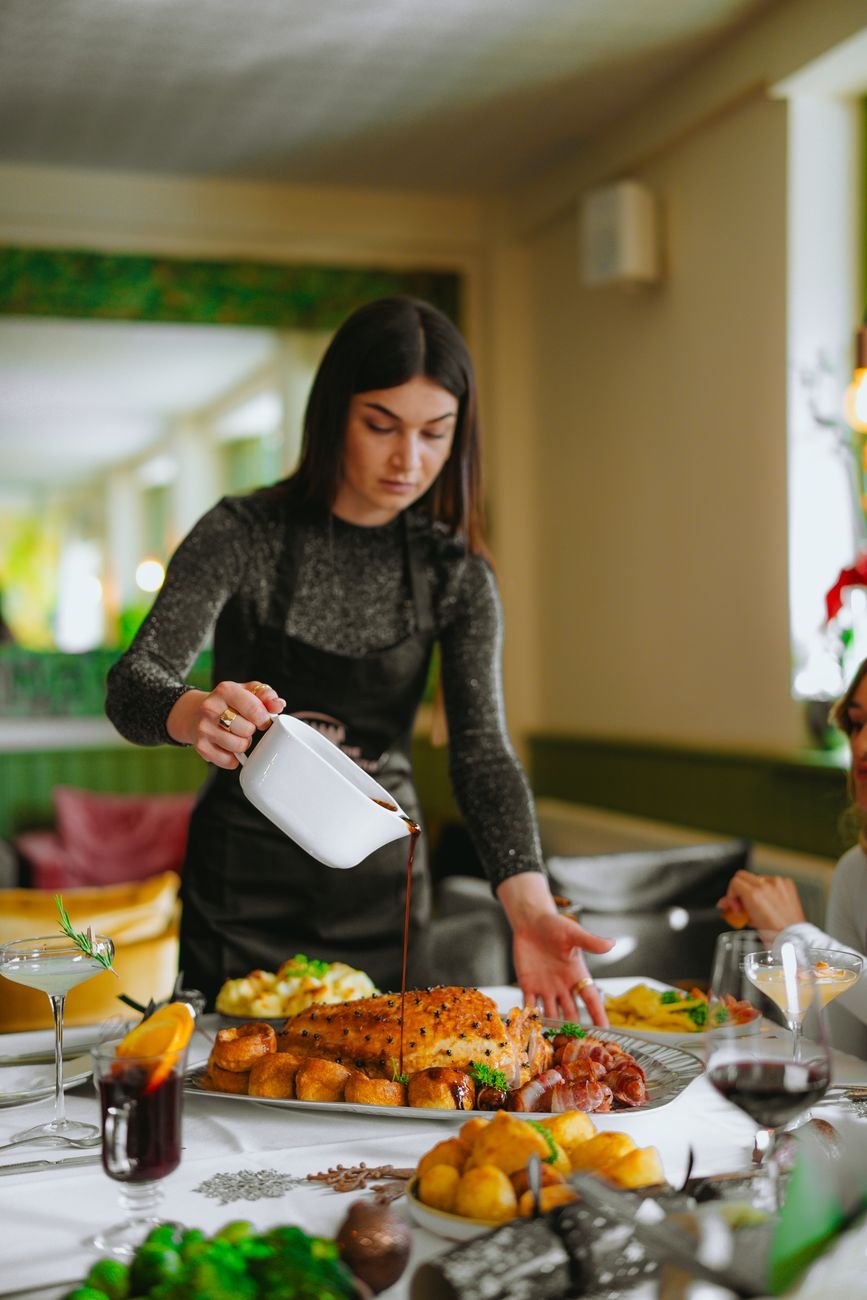
Turkey Gravy Recipe Without Drippings: The Make Ahead Version
Plenty of cooks cannot use this exact sequence, because the turkey is fried, spatchcocked on a grill, cooked by someone else, or simply not producing enough juice. Make ahead gravy solves all of it, and many experienced hosts make it even when drippings will exist, purely for the calm.
Melt 60 g (1/4 cup) butter, or a mix of butter and any poultry fat you have, and brown a finely chopped onion or a few shallots in it until deeply golden, about 10 minutes. Stir in the flour and cook the roux for 3 minutes. Whisk in 1 litre (4 cups) of the best stock you can get, simmer for 5 minutes, season boldly, and strain. Refrigerated, this keeps for up to 3 days. On the day, reheat it gently and whisk in whatever fresh drippings the turkey gives you, even a few spoonfuls, which wakes the whole batch up and makes it taste unmistakably of this year’s bird. Serve it over the mashed potatoes and watch it vanish.
Rescuing This Turkey Gravy Recipe: Every Problem, Fixed
Too thin. Simmer it longer, uncovered, whisking occasionally. For a faster fix, whisk a teaspoon of flour or cornflour with a tablespoon of cold water into a slurry, whisk it into the simmering gravy, and simmer 2 more minutes. Repeat only once; gravy thickens again as it stands.
Too thick. Whisk in warm stock a splash at a time. Gravy thickens as it cools on the table, so serve it slightly thinner than perfect and it will arrive at the plate exactly right.
Lumpy. Prevention is the real answer, but rescue exists: pour the gravy through a fine sieve and press the lumps through, or blend it briefly with a stick blender and return it to a simmer. Nobody at the table will ever know.
Too pale. Pale gravy tastes fine and looks apologetic. A teaspoon of soy sauce, a dash of gravy browning, or a longer cooked roux next time fixes the colour. Never add uncooked flour to darken gravy; it clouds the texture instead.
Too salty. Add unsalted stock or a splash of water and simmer briefly. A peeled potato chunk simmered in the gravy for 10 minutes absorbs a surprising amount of salt, an old trick that genuinely works. Remove it before serving.
Bland. The fix is almost never just salt. Add the reserved pan juices if any remain, a knob of cold butter whisked in off the heat for richness, black pepper, and a few drops of something acidic, lemon juice or a mild vinegar, which sharpens every other flavour in the jug.
Keeping, Reheating, and Freezing This Turkey Gravy Recipe
Pour leftover gravy over leftover stuffing and turkey in shallow containers so everything chills quickly and evenly. The USDA guidance on leftovers gives the rule that matters most for gravy: refrigerate within 2 hours, eat within 3 to 4 days, and bring leftover gravy back to a full rolling boil before serving it again. Frozen, gravy keeps well for up to 3 months; thaw it in the fridge, expect it to look separated, and whisk it back together over gentle heat with a splash of stock until it is glossy again.
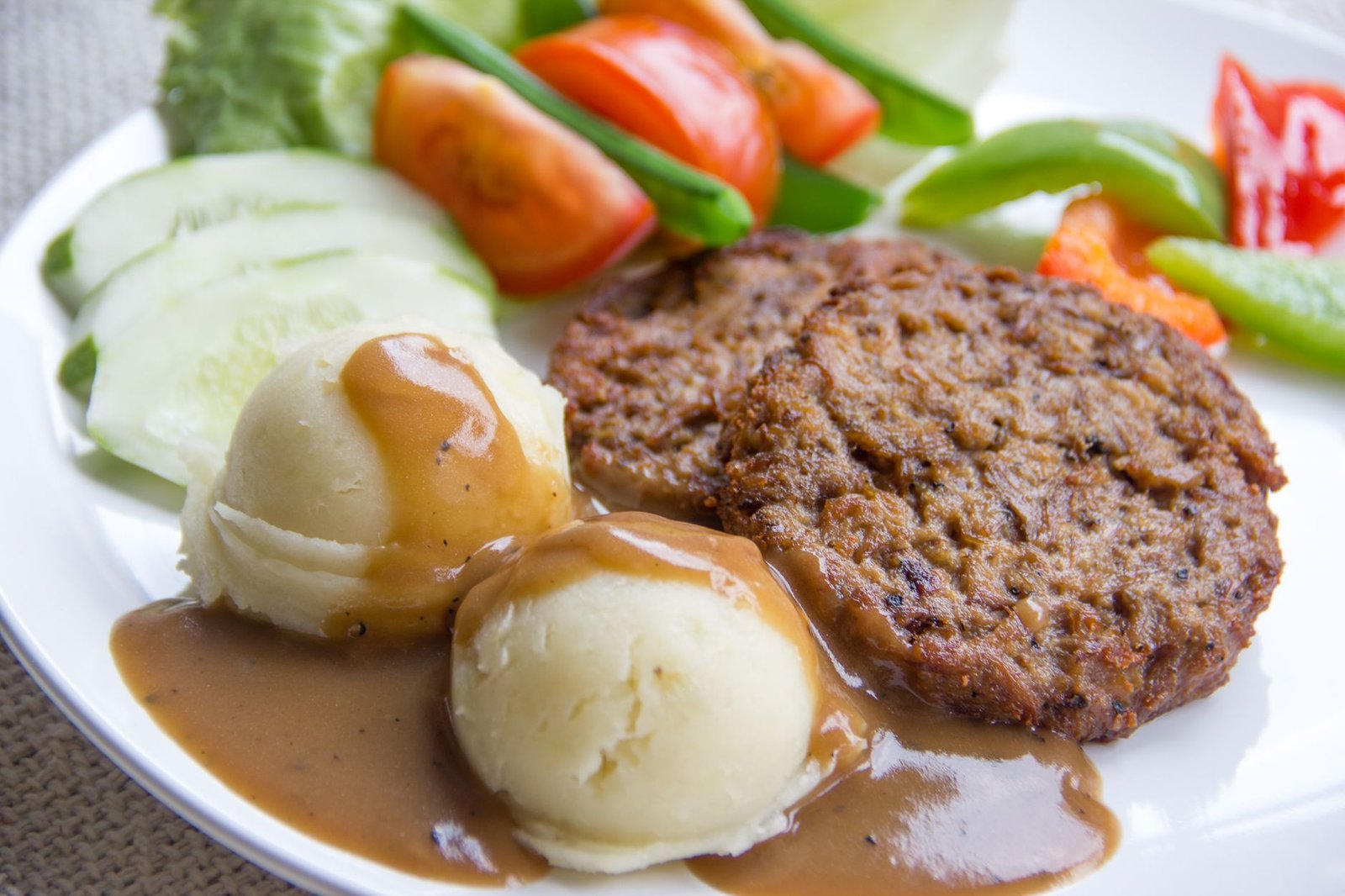
What This Turkey Gravy Recipe Does for the Whole Plate
This turkey gravy recipe is the connective tissue of the Thanksgiving plate. It moistens the turkey, enriches the sweet potato casserole, turns the green bean casserole into something people go back for, and gives the cranberry sauce something rich to cut through. That is why the ten minutes it takes deserve protection in the schedule: assign the gravy to one person, give them the whisk, and keep the kitchen clear until the jug is full. And when the meal is done, the cook who made good gravy has earned the first slice of pecan pie.
Why This Method Works: The Short Science of Smooth Gravy
Gravy is a starch thickened sauce. Its behaviour follows a few simple rules worth knowing once. Flour thickens when its starch granules absorb hot liquid and swell. That swelling begins around 60 degrees C (140 degrees F) and completes near a simmer. This is why gravy that never quite boils never quite thickens. Coating each flour particle in fat before the liquid arrives keeps the particles separated as they swell. A roux does exactly that. The particles then thicken the liquid instead of clumping into lumps. Adding warm stock gradually keeps the swelling controlled and even.
The final simmer matters twice over. It finishes the swelling, so the texture you judge is the texture you serve. It also cooks out the raw flour flavour that makes undercooked gravy taste pasty. Every rescue in the section above is one of these rules applied after the fact. Every failure in a Thanksgiving kitchen is one of them skipped under pressure. Knowing the rules turns gravy from a gamble into a routine.
Turkey Gravy Recipe Variations Once the Classic Is Yours
Herb gravy. Stir a tablespoon of finely chopped sage, thyme, and rosemary, in any combination, into the finished gravy. Fresh herbs added at the end stay bright; dried herbs should go into the roux so they have time to soften.
Mushroom gravy. Brown 200 g (7 oz) of finely sliced mushrooms in the fat before the flour goes in, and continue as written. This is the version to make when the turkey is small and the drippings are few, because the mushrooms supply the depth the pan did not.
Cider gravy. Replace 240 ml (1 cup) of the stock with dry apple cider and reduce the gravy a minute longer. The gentle acidity suits rich, sweet side dishes especially well.
Cream gravy. Whisk in 60 ml (1/4 cup) of cream at the very end, off the heat. Richer and paler, it is a deliberate choice rather than an upgrade, best when the rest of the plate runs lean.
Frequently Asked Questions About This Turkey Gravy Recipe
How do I make turkey gravy without lumps?
Cook equal parts fat and flour into a roux for 2 to 3 minutes, take the pan off the heat, and whisk in warm stock gradually, smoothing each addition before adding more. Lumps form when cold liquid floods a hot roux all at once, so the gradual pour is the entire secret.
Can I make turkey gravy ahead of time?
Yes, this turkey gravy recipe works up to 3 days ahead, using stock and butter in place of drippings. Reheat it gently on the day and whisk in a few spoonfuls of the fresh pan drippings to give it the flavour of this year’s turkey.
How much gravy does one turkey’s drippings make?
A typical roasting pan gives you roughly 60 ml (1/4 cup) of fat and 120 to 240 ml (1/2 to 1 cup) of juices, which, with about 1 litre (4 cups) of stock, makes the 950 ml (4 cups) this recipe gives. A small bird gives less, which is why the stock does the heavy lifting.
Texture, Giblets, and Keeping Gravy Hot
Why is my gravy gluey?
Too much flour for the liquid, or the gravy was simmered far too long at a hard boil. Whisk in warm stock until it pours again, and next time keep the ratio at 40 g (1/3 cup) of flour to 1 litre (4 cups) of liquid.
Can I use the giblets in gravy?
Yes. Simmer the neck and giblets, except the liver, which can taste bitter, in water or stock while the turkey roasts. Use that liquid as part of your stock and stir the finely chopped cooked meat in at the end for a classic giblet gravy.
How do I keep gravy hot during a long meal?
Serve it in a pre-warmed jug and keep the rest in a vacuum flask or at the barest simmer. Gravy held hot stays silky; gravy left to cool forms a skin, which a quick whisk and a splash of hot stock will fix.
Practising Before the Day
If gravy has beaten you before, do one rehearsal. It is the kindest thing you can do for your future self. Roast a chicken any ordinary week. It produces the same kind of drippings in miniature. Make a half batch of this turkey gravy recipe with nobody watching and nothing at stake. The sequence takes ten unhurried minutes, and every step becomes familiar. One rehearsal teaches you to separate the fat and judge the roux by smell. You will hear the whisk catch the pan corners and see the exact moment the simmer turns glossy. No written recipe achieves that familiarity on its own. Cooks who look effortless with gravy on Thanksgiving are almost never improvising. They have simply done it before, on a Tuesday, for a chicken. The holiday version asks nothing of them that the rehearsal did not already teach.
The Bottom Line
This turkey gravy recipe is a sequence, not a talent. Separate the fat. Cook the roux until it smells nutty. Add warm stock gradually while whisking. Simmer until it coats a spoon. Season last. Make it ahead if the day demands it. Rescue it calmly if it misbehaves. Make more than you think you need. On a table this rich, the humble jug of gravy does quiet work. It makes every other dish taste more like itself.
This recipe is general home cooking information. Follow standard food safety practice for handling poultry drippings and reheating gravy. Treat your own stove’s behaviour as the final guide to timing.

 Ablaze Fitness


