


This cranberry sauce recipe has the easiest job on the holiday table. It still somehow gets skipped, rushed, or left in a tin shaped log. That is a shame. Homemade cranberry sauce takes about fifteen minutes and needs one pot. You can make it days before the big meal, when your oven and your patience are both fully booked. The sauce is sweet and properly tart. It sets into a glossy sauce that slices and spoons beautifully. The finished dish makes the whole plate taste more like a celebration.
This cranberry sauce recipe is the reliable version. It uses fresh or frozen cranberries, with sugar balanced so the tartness stays alive. A little orange rounds it out. The recipe gives clear guidance on the one skill that matters: knowing when to take the pot off the heat. It is written for Thanksgiving in the United States on Thursday, November 26, 2026. The same method works just as well for Christmas in Canada, the United Kingdom, and Australia. There, cranberry sauce belongs next to roast turkey and ham in December, whatever the weather outside is doing.
Why Homemade Cranberry Sauce Wins
The case for homemade is not snobbery, it is chemistry and control. Cranberries are naturally loaded with pectin, the same setting agent used in jam. A brief simmer produces a sauce that sets on its own, with no gelatin and no cornflour. You control the sugar, so the sauce can stay bright and tart instead of syrupy. You control the texture, from mostly smooth to full of whole softened berries. And you control the flavour additions: orange, spice, a splash of something festive, or none of those.
There is also a timing argument, and for holiday cooks it might be the strongest one. Cranberry sauce not only survives being made ahead, it improves. A day or two in the fridge lets the flavours settle and the set firm up. On a day when the oven schedule is a military operation, a finished dish sitting quietly in the fridge is worth a great deal, the same reason make ahead sides like our sweet potato casserole recipe earn their place in a holiday plan.
Ingredients for This Cranberry Sauce Recipe
This recipe makes about 500 ml (2 cups) of sauce. That is enough for 8 to 10 people as a table sauce. It doubles cleanly in the same pot if your table is bigger.
- 340 g (12 oz) fresh or frozen cranberries, about 3 cups. That is the size of the standard bag sold in North American supermarkets; in the UK and Australia, cranberries are commonly sold in 300 g punnets or bags, and 300 g works fine with the same method and a touch less sugar.
- 200 g (1 cup) granulated sugar. You can adjust between 150 g (3/4 cup) for a sharper sauce and 250 g (1 1/4 cups) for a sweeter one; see the sweetness section below.
- 250 ml (1 cup) water, or replace half with orange juice for a fruitier base.
- The finely grated zest of 1 orange, plus 2 tablespoons of its juice. Use a lemon if that is what you have, with a lighter hand.
- A pinch of fine salt. It sounds odd in a sweet sauce and it makes the fruit flavour taste more like itself.
- Optional and lovely: 1 cinnamon stick or 1/4 teaspoon ground cinnamon, 1 star anise, or a small grating of fresh ginger.
A note on the berries. Fresh cranberries should be firm, glossy, and deep red. Discard any that are soft, shrivelled, or white and hard. Frozen cranberries need no thawing and cook identically. That is why this sauce is a genuine year round recipe anywhere frozen berries are sold, including Australian supermarkets in December. Dried cranberries cannot be substituted in this recipe. Finally, the set depends on the juice and pectin inside whole fresh or frozen fruit.
How to Make Cranberry Sauce, Step by Step
Total time for this cranberry sauce recipe is about 20 minutes. That is 5 minutes of preparation and 12 to 15 minutes of cooking, plus cooling time. The sauce will look loose in the pot. It sets as it cools. Trusting that fact is the heart of the method.
Step 1: Rinse and pick over the berries
Tip the cranberries into a colander. Rinse them under cold water. Pick out any soft or damaged berries and stray stems. Still, this takes a minute and is worth it. One shrivelled berry will not ruin a sauce, but a handful will dull it.
Step 2: Dissolve the sugar
Put the sugar, water, orange zest, salt, and any whole spices into a medium saucepan over a medium heat. Replace half the water with orange juice if you prefer a fruitier base. Stir until the sugar has fully dissolved and the liquid just reaches a simmer. Dissolving first means the syrup starts clear and even. The berries then cook in sweetness from the start, rather than catching on dry sugar at the bottom of the pan.
Step 3: Add the cranberries and listen
Add the cranberries and bring the pot back to a gentle boil. Then reduce to a steady simmer. Within 2 to 3 minutes you will hear the berries begin to pop. It is a soft ticking and bursting sound as the skins split and release their juice and pectin. Finally, stir now and then. Press a few berries against the side of the pan if you prefer a smoother sauce.
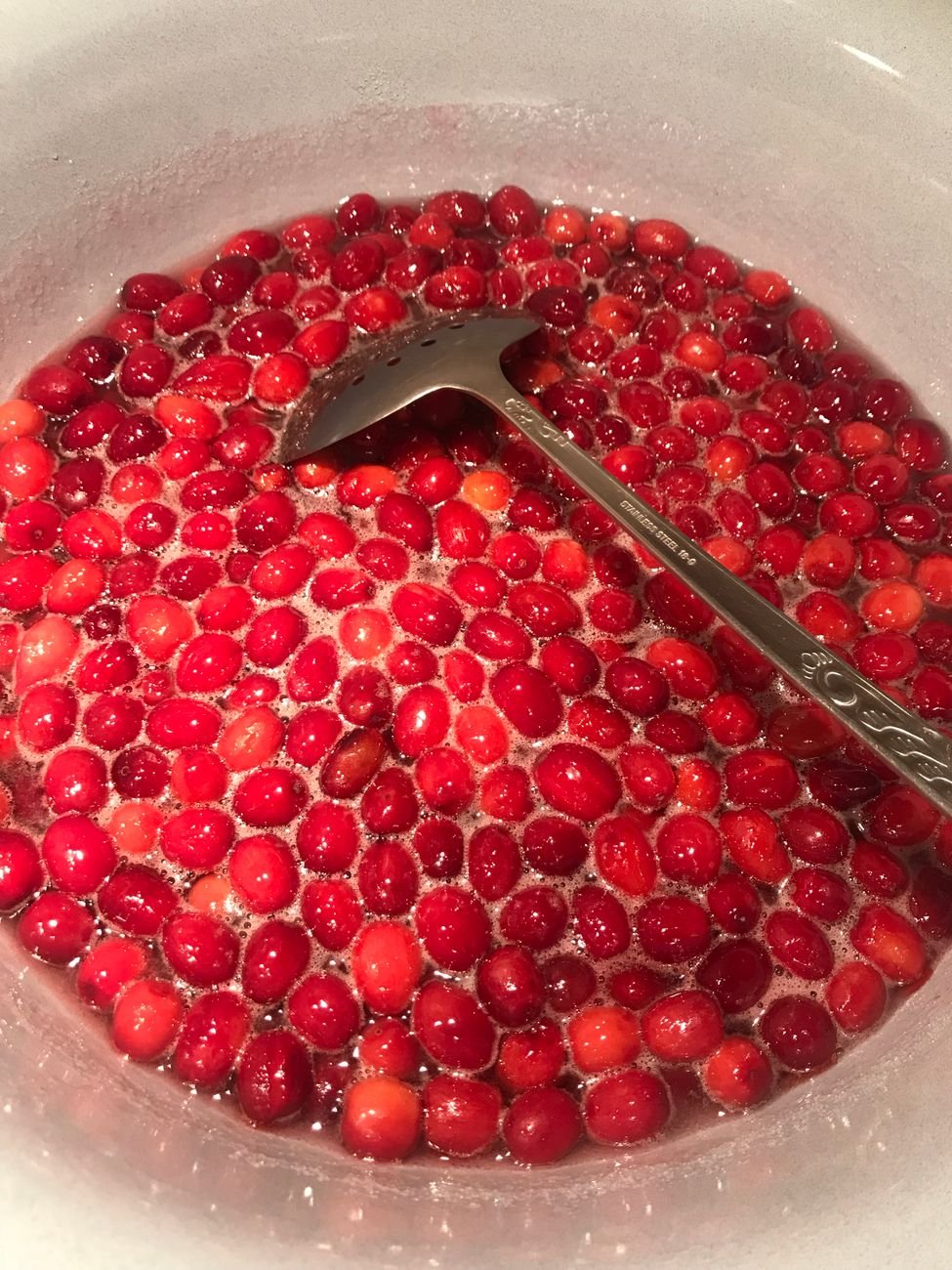
Step 4: Simmer briefly, then stop
Simmer for a total of 8 to 10 minutes from the moment the berries go in. Cook until most of them have burst. The sauce should look glossy. It should have thickened enough to coat the back of a spoon, leaving a clear trail when you run a finger through it. Then take the pot off the heat, even if it still looks thinner than the sauce you imagined. This is the moment cooks get wrong. Cranberry sauce sets as it cools. A sauce that looks perfect in the pot will set firm and dull if it cooks much longer. Overcooking breaks down the pectin you are relying on.
Step 5: Cool and let it set
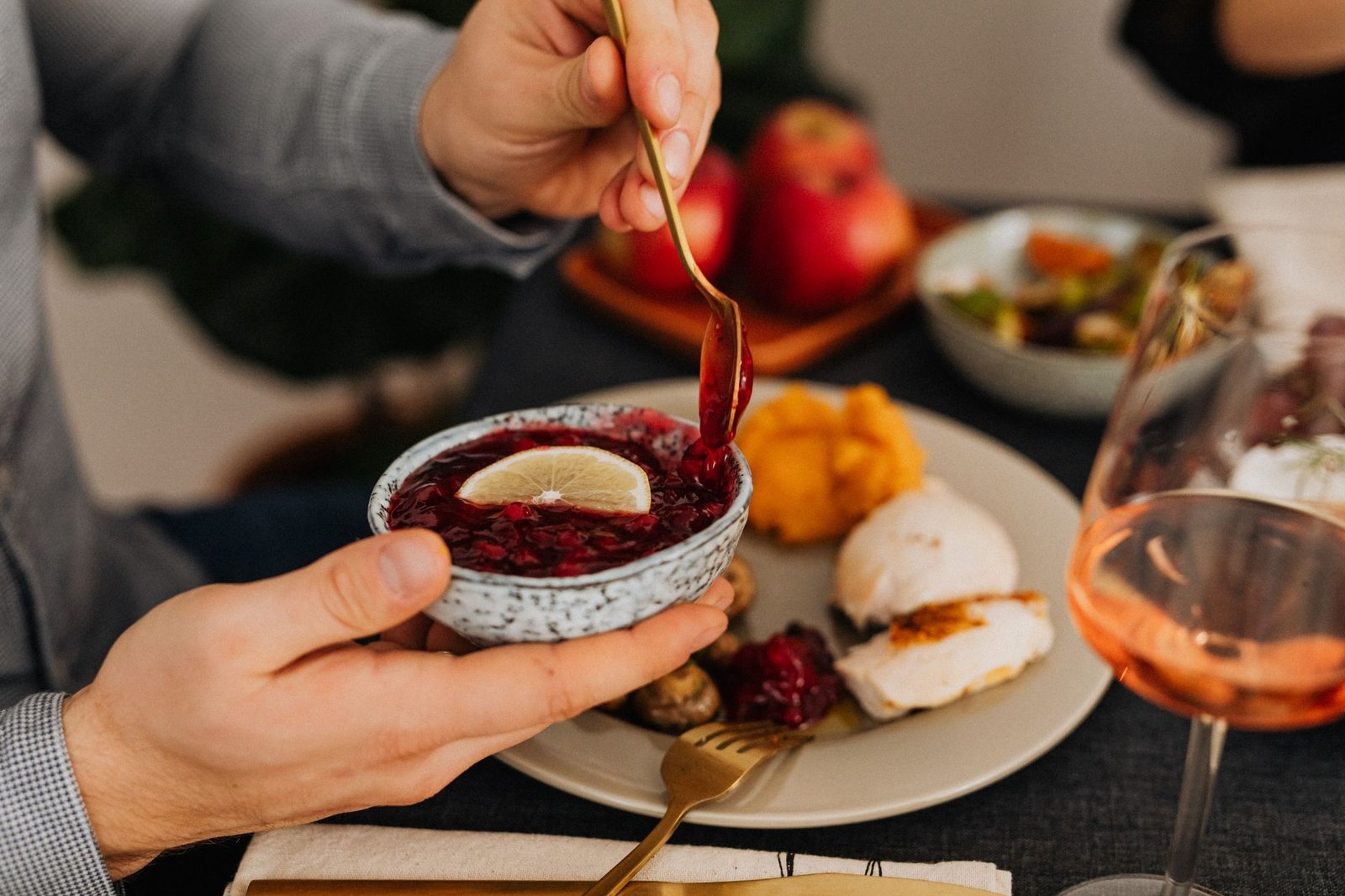
Stir in the 2 tablespoons of orange juice. Fish out the cinnamon stick or star anise if you used them. Pour the sauce into a serving bowl or a clean jar. It will set at room temperature in about an hour. Then the set firms up further in the fridge. If you are serving it the same day, give it at least 2 hours of cooling and chilling for the best texture.
Getting the Sweetness Right
Cranberries are one of the tartest fruits in the shop. The correct amount of sugar is the amount that lets you taste that tartness without wincing. The 200 g (1 cup) in this cranberry sauce recipe is the balanced middle. It is sweet first, with tart right behind it. That is where most people land after a taste test.
Use these adjustments with confidence. For a sauce to serve with rich meats and sweet sides, drop to 150 g (3/4 cup). Keep the orange zest. It reads as sweetness to your palate without adding sugar. For a sauce that children and sweet tooths will eat by the spoonful, go to 225 to 250 g. That is about 1 1/4 cups. Brown sugar swaps in one for one. It adds a gentle caramel note that suits Christmas spicing. Maple syrup or honey can replace up to half the sugar. Add it with the water, for a softer, rounder flavour. Whatever you choose, taste the cooled sauce, not the hot sauce, before adjusting. Sweetness reads differently at serving temperature. A spoonful from the fridge tells the truth.
Texture Choices: Whole Berry, Smooth, or Jellied
Whole berry style is this cranberry sauce recipe exactly as written: most berries burst, some stay soft and whole, and the sauce has body and character. It is the easiest and, for most tables, the favourite.
Smooth style asks for one extra step: after cooking, press the sauce through a sieve with the back of a spoon, or blend it briefly and pass it through a sieve to remove the skins. The result is a refined, glossy sauce that pours neatly. It will set a little softer than the whole berry version, because the skins carry some of the pectin.
Jellied style, the kind that slices, needs the smooth method plus a firmer set: simmer the strained sauce for 3 to 4 minutes more to concentrate it, pour it into a small mould or tin lined with cling film, and chill overnight. Unmould and slice. It is the nostalgic presentation, done properly, and it sits proudly next to the roast on a standing rib roast style spread just as happily as next to turkey.
Variations Worth Trying
Orange and spice. The Christmas version: add the cinnamon stick and star anise in step 2, keep the orange, and finish with an extra pinch of ground cinnamon. This pairs beautifully with the warm, baked flavours in our green bean casserole recipe, and the two dishes can be made on the same prep day.
Port or red wine. Replace 60 ml (1/4 cup) of the water with port or a fruity red wine, and simmer the full time so the alcohol cooks off and the depth remains. Rich, dark, and very good with ham.
Apple and cranberry. Add 1 peeled, finely diced apple with the berries. It softens into the sauce, adds natural sweetness, and lets you trim the sugar by about 50 g (1/4 cup).
Ginger heat. Add 1 teaspoon of finely grated fresh ginger in step 2 for a sauce with a gentle warmth that cuts through rich food.
Lower sugar. Drop the sugar to 125 g (about 2/3 cup) and add the diced apple above; the sauce will be distinctly tart, which some tables prefer, and it will set slightly softer. A tart cranberry sauce alongside sweeter dishes works the same balancing act as a bright starter before a big meal, a trick we use in our high protein soup recipes as well.
Common Mistakes
Cooking until it looks set in the pot. The most common error by far. The sauce sets while cooling, so pot perfect means fridge solid. Take it off the heat while it still looks a touch loose.
Skipping the salt and citrus. A pinch of salt and the orange zest are not garnishes; they are what stop the sauce tasting like sweetened tartness and start it tasting like fruit.
Too much water. Cranberries release plenty of juice. More water than the recipe calls for gives you a sauce that never quite sets and tastes diluted. If your sauce is genuinely too thin after chilling, a 3 minute re simmer and a second chill will rescue it.
Adding sugar after cooking. Sugar stirred into hot finished sauce can stay grainy. Dissolve it at the start, and adjust a finished sauce only with a small sugar syrup or a little honey, fully stirred in.
Make Ahead, Storage, and Freezing
This cranberry sauce recipe is the holiday helper every cook deserves. Make it up to a week ahead and keep it covered in the fridge; the flavour settles and improves over the first two or three days, and the set becomes reliably sliceable and spoonable. This is exactly the kind of dish that makes a holiday week feel organised, in the same way that the systems in our high protein meal prep for a busy week guide make ordinary weeks run smoothly.
In the fridge, the finished sauce keeps for 10 to 14 days, thanks to its sugar and natural acidity. In the freezer, it keeps for up to 2 months in a sealed container; thaw overnight in the fridge and stir well, and the texture comes back almost perfectly, with the whole berry version freezing best of all.
What to Do With Leftover Cranberry Sauce
Leftovers are a feature, not a problem. Swirl a spoonful through plain yogurt or over oatmeal for breakfast. Spread it on turkey or chicken sandwiches, where it does the work of both a sauce and a relish. Warm it and pour it over ice cream, or shake a spoonful into sparkling water with a squeeze of orange for a sharp, festive drink. A small bowl of it with cheese and crackers is a ready made snack plate. And if the holiday baking bug bites, the seeds and snacks end of the table is covered by our roasted pumpkin seeds recipe, which uses up the other classic leftover of the season.
Nutrition Notes
Cranberries bring more to the table than colour. Fresh cranberries provide vitamin C, fibre, and the deep red plant compounds that give them their colour, for very few calories in the raw fruit; the USDA FoodData Central database lists raw cranberries at roughly 46 calories per 100 g before sugar is added. The finished sauce is sweeter than the fruit, of course: a typical 60 ml (1/4 cup) serving of this cranberry sauce recipe lands around 90 to 110 calories depending on your sugar level, which is modest for the amount of flavour it adds to a plate. The lower sugar variation brings that down noticeably while keeping the sauce bright, which is the version to choose if cranberry sauce appears on your table all season rather than once a year.
Frequently Asked Questions
Can I make cranberry sauce with frozen cranberries?
Yes, and the method does not change at all. Add them straight from frozen, give the pot an extra minute or two to come back to a simmer, and cook as directed. Frozen berries are often the freshest option outside North America, and they are available in Australian and UK supermarkets through the Christmas season.
Why did my cranberry sauce not set?
Usually it was cooked too long, which breaks down the pectin, or it was given too much water. A short extra simmer to reduce it, followed by a full chill, fixes most cases. A sauce reheated and rechilled once will still set better than one served warm and judged too early.
How far ahead can I make cranberry sauce?
Up to a week in the fridge, comfortably, and the flavour is at its best after a day or two. It is one of the very few holiday dishes that rewards being made early, so move it to the front of your prep list.
Can I reduce the sugar a lot?
Yes, down to about 125 g (2/3 cup) with an added diced apple to soften the tartness. Below that the sauce becomes a condiment for people who truly love tart flavours, and its set softens. Sweeten to your table, and judge from a chilled spoonful.
Do I serve cranberry sauce hot or cold?
Cold or at room temperature is classic, and the set texture depends on it. If you prefer it warm, heat it gently until just loose, knowing it will not slice. Room temperature, about 30 minutes out of the fridge, is the happy middle for most tables.
What meats does cranberry sauce go with besides turkey?
Roast chicken, ham, pork, duck, and baked brie all love it, and it is excellent in leftover sandwiches with any of them. In Australia it appears on Christmas tables next to cold ham and seafood spreads as often as next to a hot roast, and it works in every one of those settings.
The Bottom Line
This cranberry sauce recipe asks for fifteen minutes, one pot, and the nerve to take it off the heat while it still looks a little loose. Do it days ahead, keep the tartness alive, and let the pectin do the rest. It is the smallest dish on the holiday table, and the one that makes everything else taste more like itself.

 Ablaze Fitness


