


Pecan pie has one job on the Thanksgiving table, and most failed versions miss it in the same place. The top looks perfect, the pecans are glossy and toasted, and then the first slice collapses into a runny puddle because the filling never truly set. This pecan pie recipe is built to prevent exactly that. It gives you a crisp, flaky crust that stays crisp, a rich filling that slices cleanly at room temperature, and a clear doneness test that does not rely on guessing or on a knife coming out clean, because with pecan pie that test lies.
You will also get the small decisions that separate a good pecan pie recipe from a great one: why the filling goes into a hot, par-baked crust, why the syrup mixture should be warm but never hot when the eggs go in, how to arrange the pecans so every slice looks deliberate, and how far ahead you can bake the whole pie so Thanksgiving day itself stays calm. If pecan pie is sharing the table with a classic pumpkin pie, this recipe is its ideal partner, because the two pies ask for opposite textures and this one delivers the firm, caramel-like slice that pumpkin pie never tries to be.
Pecan Pie Recipe at a Glance
Prep time: 30 minutes, plus 30 minutes chilling
Bake time: 55 to 65 minutes, plus par-baking the crust
Cooling time: at least 3 hours, and this is not optional
Total time: about 5 hours, mostly hands off
Yield: one 23 cm (9 inch) pie, 8 generous slices
Difficulty: intermediate, mostly because of the crust
Make ahead: yes, up to 2 days, and it is better on day two
Pecan Pie Recipe Ingredients
For the crust
- 190 g (1 1/2 cups) plain all-purpose flour, plus extra for rolling
- 1 tablespoon granulated sugar
- 1/2 teaspoon fine salt
- 115 g (1/2 cup, 1 stick) unsalted butter, very cold and cut into small cubes
- 60 to 75 ml (4 to 5 tablespoons) ice water
- 1 teaspoon apple cider vinegar or lemon juice, optional, for tenderness
For the filling
- 200 g (2 cups) pecan halves, plus a small handful of extra perfect halves for the top
- 240 ml (1 cup) light corn syrup, or golden syrup for a deeper flavour
- 200 g (1 cup packed) dark brown sugar
- 85 g (6 tablespoons) unsalted butter, melted
- 3 large eggs, at room temperature
- 2 teaspoons vanilla extract
- 1/2 teaspoon fine salt
- 1 tablespoon plain all-purpose flour, the quiet setting insurance
- 1 to 2 tablespoons bourbon, optional, or 1 teaspoon extra vanilla
A note on the syrup, because it decides the character of the pie. Light corn syrup gives the classic, clean sweetness and the firmest set. Golden syrup tastes deeper and slightly buttery, and sets almost as firmly. Maple syrup makes a lovely pie but a softer one, so if you swap it in, keep the tablespoon of flour and expect a gentler slice. Dark corn syrup works too and leans the filling toward molasses. What matters most is the total volume: 240 ml (1 cup) of syrup, no more, because extra liquid is the first cause of a filling that never sets.
Equipment You Need
- A 23 cm (9 inch) pie dish, metal or glass both work
- Rolling pin and a lightly floured surface
- Baking beans, dried beans, or pie weights, plus baking parchment
- A rimmed baking sheet, large enough for the pie dish
- A medium saucepan or microwave safe jug for melting butter
- A mixing bowl, a whisk, and a spatula
- An instant read thermometer, optional but genuinely useful here
- Aluminium foil or a pie shield for protecting the crust edge
Pecan Pie Recipe, Step by Step: The Crust
Step 1: Make the dough
Whisk the flour, sugar, and salt together in a large bowl. Add the cold butter cubes and work them in with your fingertips or a pastry cutter until the mixture looks like coarse crumbs with some pea sized pieces of butter still visible. Those visible pieces are what become flakes, so do not work the dough smooth. Sprinkle over 60 ml (4 tablespoons) of the ice water and the vinegar if using, and toss with a fork until the dough just holds together when squeezed. Add the last tablespoon of water only if dry flour remains at the bottom of the bowl.
Step 2: Chill before rolling
Press the dough into a flat disc, wrap it, and chill for at least 30 minutes and up to 2 days. Cold dough rolls without sticking, shrinks less in the oven, and bakes flakier. Skipping the chill is the second most common cause of a disappointing pecan pie, right after underbaking the filling.
Step 3: Roll and line the dish
On a lightly floured surface, roll the dough into a circle about 30 cm (12 inches) across, turning it as you go so it does not stick. Lay it into the pie dish without stretching it, because stretched dough shrinks back as it bakes. Trim the overhang to about 2.5 cm (1 inch), fold it under itself, and crimp the edge with your fingers or a fork. Put the lined dish back in the fridge for 15 minutes while the oven heats.
Step 4: Par-bake, because a crisp bottom needs a head start
Heat the oven to 200 degrees C (400 degrees F). Line the chilled crust with parchment, fill it with baking beans, and bake for 15 minutes. Remove the parchment and beans, prick the base lightly with a fork, and bake 5 minutes more, until the surface looks dry and just barely golden. Reduce the oven to 175 degrees C (350 degrees F). The filling goes into this hot crust, and that detail matters: hot crust plus warm filling starts the setting process from the bottom up, which is how you avoid the pale, soft layer that ruins the first bite.
Pecan Pie Recipe, Step by Step: The Filling
Step 5: Toast the pecans
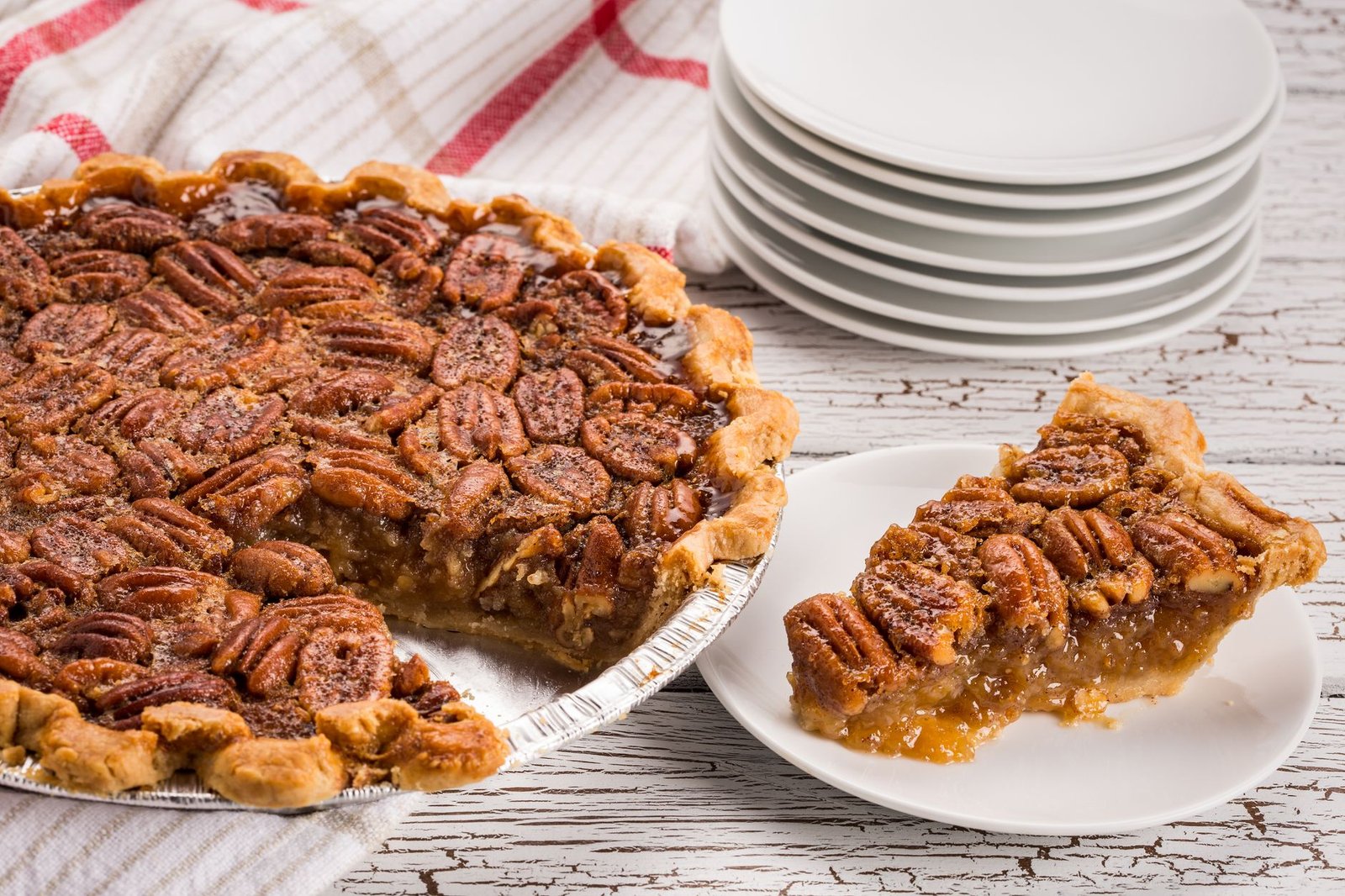
Spread the pecans on a dry baking tray and toast them in the cooling oven for 6 to 8 minutes, until they smell nutty and look a shade darker. Toasting is not decoration. Raw pecans taste flat and slightly waxy inside a baked pie, while toasted pecans taste like the pie people remember. Set aside the prettiest halves for arranging on top, and roughly chop the rest if you like a denser filling, or leave them whole for the classic look.
Step 6: Warm the syrup mixture
In a bowl or jug, whisk together the syrup, dark brown sugar, melted butter, salt, and flour until smooth. The mixture should feel warm from the melted butter but never hot. If it is steaming, let it stand for a few minutes, because hot syrup poured over eggs scrambles them into sweet strings, and there is no fixing that batch.
Step 7: Add the eggs last
Whisk the eggs and vanilla in a separate bowl until just combined, then pour them into the syrup mixture and whisk gently until the filling looks uniform. Whisk to combine, not to whip: beating air into the filling makes it puff in the oven and crack as it cools. Stir in the pecans, keeping your reserved halves aside. If you are using bourbon, stir it in now.
Step 8: Fill the hot crust and arrange the top
Place the hot par-baked crust on its rimmed baking sheet. Pour in the filling. Then, with patience that pays off in every photograph and every slice, arrange the reserved pecan halves in neat concentric rings on top, flat side down. The filling will rise slightly around them as it bakes and hold the pattern in place. The baking sheet is insurance against drips and makes moving a full, hot pie far safer.
Baking This Pecan Pie Recipe: Time, Temperature, and the Doneness Test That Works
Bake this pecan pie recipe at 175 degrees C (350 degrees F) for 55 to 65 minutes. After about 30 minutes, check the crust edge: if it is browning faster than the filling is setting, cover the edge with a foil ring or pie shield and continue baking.
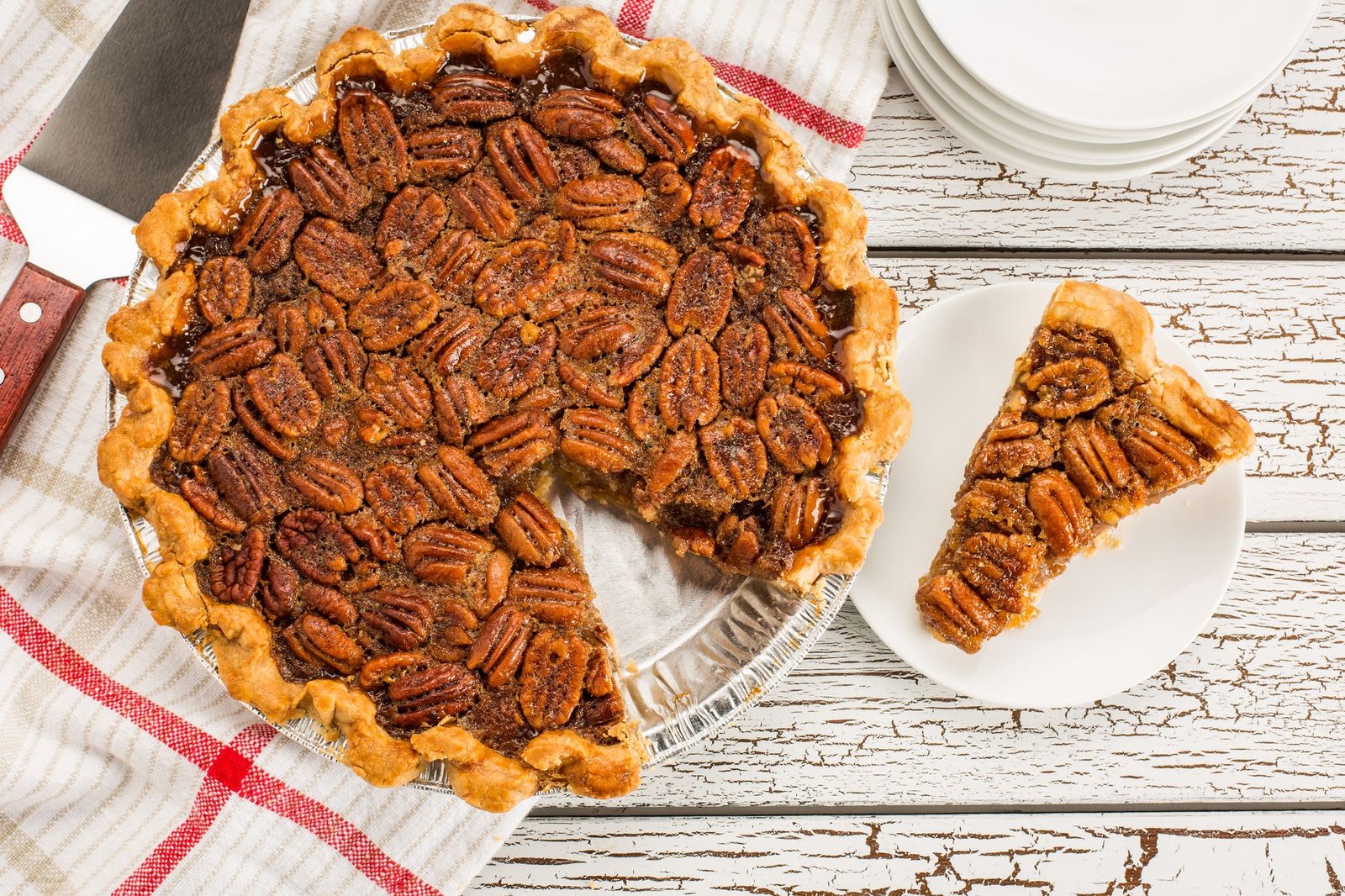
Now the test that matters. A pecan pie is done when the edges of the filling are set and puffed slightly, the centre still has a distinct wobble about the size of a small coin when you gently shake the dish, and an instant read thermometer in the centre reads 93 degrees C (200 degrees F). That wobble is correct, not a warning sign. The filling finishes setting from residual heat as the pie cools, a process bakers call carryover setting. The two mistakes sit on either side of this point: pulling the pie when the whole surface still sloshes, which guarantees a runny slice, and baking until the centre looks completely firm in the oven, which means the eggs have overcooked and the texture turns grainy and the top cracks.
Ignore the knife test for this pie. A knife inserted in the centre of a correctly baked pecan pie does not come out clean, because the filling is a custard that stays glossy. Trust the wobble and the thermometer instead.
Cooling This Pecan Pie Recipe: The Step That Actually Sets the Pie
Move the pie to a wire rack and cool it at room temperature for at least 3 hours before slicing. This is the step impatient bakers skip, and it is the step the recipe cannot work without. During cooling, the custard firms gradually into that clean slicing texture. A pie cut after one hour will look underbaked even if it was baked perfectly, which is why so many people conclude their recipe failed when their timing did.
For the cleanest slices of all, chill the fully cooled pie for 2 hours, slice it cold with a sharp knife wiped between cuts, then let the slices stand at room temperature for 20 to 30 minutes before serving. Cold slicing plus gentle serving temperature gives you sharp edges and full flavour at the same time.
Serving Ideas
This pecan pie recipe is rich enough to need very little. Lightly sweetened whipped cream is the classic partner because its plainness resets the palate between bites. Vanilla ice cream works the same way, with the bonus of melting into the warm filling if you serve slices gently warmed. A small pinch of flaky sea salt over each slice sharpens the caramel notes, especially in a pie made with golden syrup.
On a full Thanksgiving plate, this pie sits happily beside the savoury anchors of the meal. If you are building the whole menu, our sweet potato casserole recipe and classic stuffing recipe cover the two sides nobody wants missing, while cranberry sauce brings the tart contrast that a rich dessert table needs afterwards.
Make Ahead, Storage, and Freezing for This Pecan Pie Recipe
This pecan pie recipe is one of the best make ahead desserts on the holiday table, which is a genuine gift when oven space is contested. Bake it 1 to 2 days ahead, cool it completely, cover it loosely, and refrigerate. The flavour deepens overnight as the filling settles, and the slices cut even more cleanly on day two. Bring it to room temperature for an hour before serving, or warm slices in a 150 degrees C (300 degrees F) oven for about 10 minutes.
For storage generally, the USDA food safety guidance on leftovers is the reference worth following: refrigerate perishable food promptly, within 2 hours, and eat refrigerated leftovers within 3 to 4 days. Because pecan pie filling is an egg custard, it belongs in the fridge once it has cooled and been served, not on the counter for days, however traditional the counter display looks.
To freeze, wrap the whole cooled pie or individual slices tightly and freeze for up to 2 months. Thaw overnight in the fridge. The crust softens slightly after freezing, and 10 minutes in a moderate oven restores most of its crispness.
Pecan Pie Recipe Variations Worth Knowing
Chocolate pecan pie. Stir 85 g (1/2 cup) of dark chocolate chips into the warm syrup mixture so they half melt, or scatter them over the crust before filling. The result eats like a cross between pecan pie and a truffle, and it is the variation most likely to disappear first.
Bourbon pecan pie. Use the full 2 tablespoons of bourbon and add a pinch of cinnamon. Most of the alcohol bakes off, leaving warmth rather than heat.
Salted maple pecan pie. Swap the syrup for maple syrup, keep the flour, and finish slices with flaky salt. Expect a softer set and a shorter bake by about 5 minutes, and watch it closely at the end.
Pecan pie bars. Press the same crust into a lined 23 by 33 cm (9 by 13 inch) pan, par-bake, fill with the same filling, and bake 30 to 35 minutes. Bars travel well and feed a crowd without slicing drama, though the filling layer is thinner, so check the wobble early.
If bars and pies are both on your baking list, balance the workload with sides that hold well, like our mashed potatoes recipe, which reheats without complaint, and the green bean casserole recipe, which assembles a day ahead.
Troubleshooting: Why This Pecan Pie Recipe Fails
My filling is runny. The pie was underbaked, undercooled, or both. Next time bake to the thermometer reading and the coin sized wobble, then cool the full 3 hours. A runny pie that has already been sliced can still be served warm in bowls with ice cream, where the texture reads as sauce rather than failure.
My top cracked. The filling was overbaked, whipped with too much air, or cooled too fast in a cold spot. Cover cracks with arranged pecans or whipped cream and note the fix for next year: gentler whisking and a slightly earlier pull from the oven.
My crust is soggy on the bottom. The crust was not par-baked, or the filling went into a cold crust. Par-baking plus filling while hot is the whole defence, and baking the pie on a preheated sheet adds extra insurance.
My pecans sank. The filling was too thin at the start, usually because the syrup mixture was hot enough to thin the eggs, or the nuts were added to very warm filling and the pie sat before baking. Fill, arrange, and bake promptly.
My filling is grainy. The eggs overcooked. Graininess appears when the centre goes well past 93 degrees C (200 degrees F). Pull the pie earlier and let carryover heat finish the job.
The edges burned while the centre lagged. Your oven runs hot at the edges or the dish is dark metal, which browns crust faster. Shield the edge earlier, at the 20 minute mark, and consider glass next time for a gentler bake.
Nutrition Notes
Pecan pie is a celebration dessert and this recipe treats it as one. Pecans bring fibre, monounsaturated fats, and minerals such as manganese. A typical slice lands around 480 to 540 calories. The honest levers for a lighter table are slice size and what surrounds the pie, not a reformulated pie that pleases nobody. Readers managing a medical condition should follow their clinician’s guidance.
Frequently Asked Questions About This Pecan Pie Recipe
How do I know when pecan pie is done?
Look for set, puffed edges, a centre that wobbles in a small coin sized circle when the dish is gently shaken, and a centre temperature of 93 degrees C (200 degrees F). Then cool at least 3 hours, because the set you slice is created during cooling, not in the oven.
Can I make pecan pie without corn syrup?
Yes. Golden syrup is the closest substitute for texture and set. Maple syrup and honey both work for flavour but give a softer filling, so keep the tablespoon of flour in the recipe and slice the pie cold for the cleanest result.
Why does my pecan pie never set?
Almost always one of three causes: it was pulled from the oven while the centre still sloshed across the whole surface, it was sliced before cooling fully, or extra liquid crept in through a larger syrup measure or an added splash of cream or milk. Measure the syrup at exactly 240 ml (1 cup) and respect the cooling time.
Storing and Preparing Ahead
Should pecan pie be refrigerated?
After it has cooled and been served, yes. The filling is an egg custard, so refrigerate leftovers and eat them within 3 to 4 days. Serve slices at room temperature or gently warmed for the best texture.
Can I use a shop bought crust?
You can, and the pie will still be good, provided you par-bake it exactly as described. A bought crust skips the chilling and rolling, but it does not skip the blind bake, because that step is what keeps the base crisp under a wet custard filling.
How far ahead can I bake pecan pie?
Two days ahead is the sweet spot for this pecan pie recipe. The flavour improves on day two and the slices cut cleanly. Beyond that, freeze the pie instead and thaw it overnight in the fridge.
The Bottom Line
A great pecan pie is not a secret recipe. It is four ordinary disciplines done in order: a cold dough handled briefly, a crust par-baked and filled while hot, a filling baked to a wobble and a thermometer reading rather than to a firm look, and a full, patient cool before the knife comes out. Do those four things and this pecan pie recipe gives you glossy pecans, a caramel deep filling, and slices that stand up on the plate, this Thanksgiving and every one after it.
This recipe is general home baking information. Oven temperatures vary between models, so treat the thermometer reading and the wobble test as the final word over any time given here, and follow standard food safety practice for storing egg based desserts.

 Ablaze Fitness


