


Walking is everywhere in fitness advice. Step counters, fitness watches, and social media challenges all point to the same magic number: 10,000 steps a day. But does walking 10,000 steps a day actually help fat loss, or is it just a catchy target that sounds good?
The short answer is yes, walking can help fat loss, but not because 10,000 is a special number. Walking helps because it adds daily movement, burns energy, improves fitness, and is easy to sustain. The exact step count that helps you depends on where you are starting, how much you eat, and whether you can keep the habit going for months.
This guide explains what walking 10,000 steps a day really means, who it helps most, how to build up without injury, and how a trending variation called Japanese interval walking fits in. It is written for beginners and busy adults who want a realistic walking plan, not an extreme challenge.
This article is for general fitness and wellness information only. It is not medical advice. If you have a health condition, joint pain, or concerns about starting a new exercise routine, talk to a qualified health professional first.
Where did the idea of walking 10,000 steps a day come from?
The target of walking 10,000 steps a day did not start as a precise scientific prescription. It became popular in Japan in the 1960s, partly because a pedometer name translated roughly to 10,000 steps meter, and the number was easy to remember. Over time, fitness trackers and health campaigns adopted it as a simple daily goal.
That history does not make the number useless. It does mean you should treat it as a helpful benchmark, not a pass or fail test. Research on steps and health generally shows that more daily movement is associated with better health outcomes up to a point, and that the biggest benefits often come from moving from very low activity to moderate activity, rather than from chasing an exact number. The World Health Organization recommends regular physical activity for adults, and walking is one of the most accessible ways to build it into daily life.
For example, a person who currently walks 3,000 steps a day and builds up to 7,000 steps a day is likely to see meaningful benefits, even if they never reach 10,000. A person who already walks 12,000 steps a day may not need to push to 15,000 to see further fat loss, especially if diet and strength training are not also addressed.
The question to ask is not, did I hit 10,000 today? The better question is, am I walking more than I used to, most days, in a way I can sustain?
How walking 10,000 steps a day helps fat loss, in plain terms
Fat loss happens when your body uses more energy than you take in over time, a state called a calorie deficit. Walking contributes to the energy out side of that equation, but it does more than just burn calories during the walk itself.
Walking helps fat loss in several practical ways:
- It increases daily energy expenditure without a large recovery cost. Unlike intense running or heavy lifting, most people can walk daily without feeling exhausted the next day.
- It supports a calorie deficit without increasing hunger as much as very intense exercise sometimes does. Many people find that a long, hard workout makes them ravenously hungry, while a walk leaves appetite more stable.
- It improves fitness gradually. Regular walking can improve heart and lung fitness, leg endurance, and mood, which makes other exercise feel easier over time.
- It adds movement outside formal workouts. This everyday movement, sometimes called non exercise activity, can make up a large share of daily energy use, especially for people with desk jobs.
- It is accessible. You do not need a gym, special equipment, or a high level of fitness to start. Comfortable shoes, safe paths, and time are usually enough.
How walking 10,000 steps a day burns calories
How many calories walking burns depends on body weight, speed, terrain, and duration. A rough guide is that a person weighing around 70 kilograms might burn about 200 to 300 calories during an hour of brisk walking, while a heavier person burns more for the same walk. These are estimates, not exact values, and fitness trackers often overestimate or underestimate calorie burn. Use them as a trend guide, not a precise measurement. To work out the burn for your own weight, pace and minutes, try our Calories Burned Calculator.
Walking alone will not guarantee fat loss if food intake rises to match it. That is why walking works best as part of a broader plan that includes reasonable eating, enough protein, strength training a few times a week, and good sleep. Walking is a powerful support tool, not a standalone solution.
Is walking 10,000 steps a day the right target for you?
Step targets should be personal. Use this table as a starting guide, not a rule:
| Current daily average | Sensible next target | Notes |
|---|---|---|
| Under 3,000 steps | 5,000 steps | Focus on short, frequent walks first |
| 3,000 to 5,000 steps | 7,000 steps | Add a 20 minute walk most days |
| 5,000 to 7,000 steps | 8,000 to 10,000 steps | Add a longer walk or break up sitting time |
| 7,000 to 10,000 steps | 10,000 to 12,000 steps | Only if you enjoy it and recover well |
| Over 12,000 steps | Maintain, or vary intensity | Consider interval walking or strength training instead of more steps |
Increase gradually, by about 500 to 1,000 steps per day every 1 to 2 weeks, rather than jumping from 3,000 to 10,000 overnight. Sudden large increases can cause foot pain, shin discomfort, knee soreness, or blisters, especially if your shoes are worn out or you walk on hard surfaces for long periods.
Also consider your lifestyle. A person with a physical job may already walk 12,000 steps at work, while a desk worker may need intentional walks to reach 7,000. Both can be healthy. The goal is progress from your own baseline, not comparison with someone else’s tracker.
In the United States, step goals are often discussed in miles as well as steps. Roughly, 2,000 steps is about 1 mile for many adults, so 10,000 steps is about 5 miles, although stride length varies. In the United Kingdom and Canada, the same step goal is often discussed in kilometres, with 10,000 steps roughly equal to 7 to 8 kilometres for many adults. Use steps as your main measure, because it is consistent across devices, and use distance only as a rough guide.
How to build a walking habit that actually sticks
A step goal only works if you can fit it into real life. These strategies help busy adults in the United States, United Kingdom, and Canada build walking into days that are already full.
Break it into chunks
You do not need one long walk to reach your target. Three walks of 10 to 15 minutes, such as a morning walk, a lunch walk, and an evening walk, often add up to the same total with less fatigue and less scheduling stress.
Attach walking to existing habits
Walk after breakfast, after lunch, or after dinner. Listening to a podcast, audiobook, or phone call can make the walk more enjoyable. For a small errand, walking to a nearby shop instead of driving also adds steps, when it is safe and practical to do so.
Make it social or enjoyable
Walk with a friend, partner, family member, or dog. Join a local walking group if one exists. Choose routes you enjoy, such as parks, trails, riverside paths, or quiet neighbourhood streets, rather than routes you dread.
Break up sitting time
If you sit for long periods at work, stand and walk for 2 to 5 minutes every hour. That small habit can add 1,000 to 2,000 steps over a workday, and it also helps reduce stiffness.
Prepare for weather
In Canada and the northern United States, winter walking needs warm layers, gloves, a hat, and shoes with good grip for ice and snow. For summer walking in the southern United States, early morning or evening walks work better, with water and sun protection. Rain is common in the United Kingdom, so a waterproof jacket and shoes that handle wet paths make walking much more pleasant. Planning for weather removes one of the most common excuses for skipping a walk.
Choose shoes that fit your feet and your route
You do not need expensive shoes to start walking, but worn out, unsupportive shoes can cause foot and knee discomfort. Choose comfortable walking shoes or trainers with good cushioning, replace them when the soles are worn, and break in new shoes with shorter walks first.
Japanese interval walking: a trending variation explained
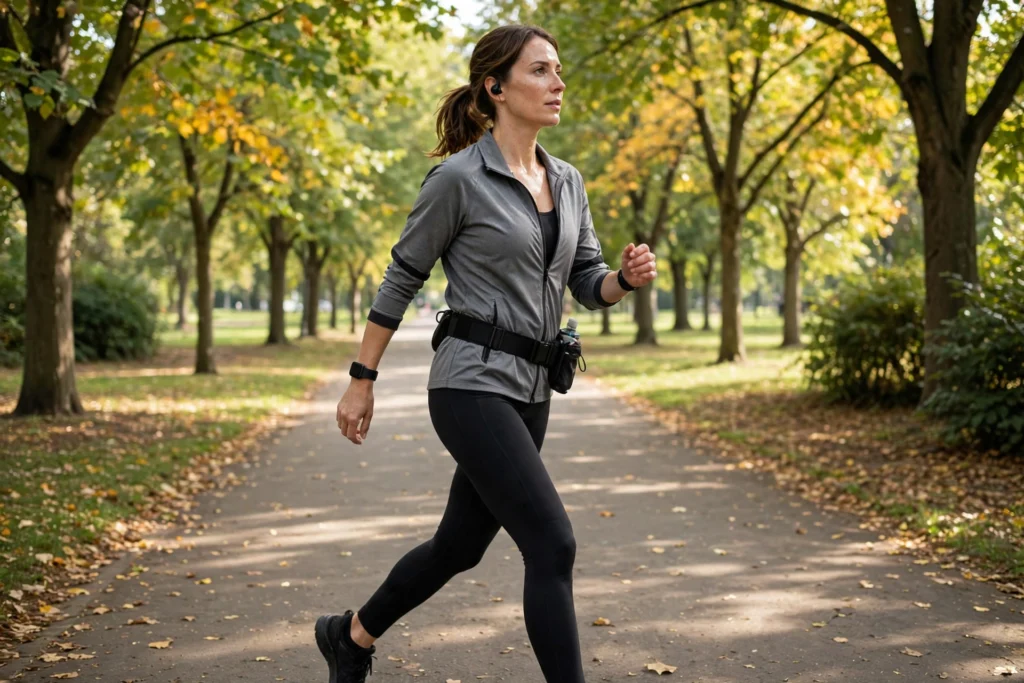
One of the most talked about walking trends in 2026 is Japanese interval walking. It has attracted attention because it is simple, requires no equipment, and changes a normal walk into a more structured workout without adding running or jumping.
In general terms, Japanese interval walking alternates faster walking with slower walking in repeated cycles. A commonly described version is:
- Warm up with 5 minutes of comfortable, steady walking.
- Walk fast for 3 minutes, at a pace where talking becomes difficult but you can still speak in short phrases. Pump your arms naturally and lengthen your stride if that feels comfortable.
- Walk slowly for 3 minutes, at an easy pace that lets your breathing recover.
- Repeat the fast and slow cycle 5 times, for a total of about 30 minutes of intervals.
- Cool down with 5 minutes of easy walking.
That adds up to about 40 minutes in total, including warm up and cool down. Some people start with fewer cycles, such as 2 or 3, and build up to 5 over several weeks.
Why interval walking has become popular
Why has it become popular? Interval walking can improve fitness more than steady walking at the same duration for some people, because the fast intervals raise heart rate and breathing more than a gentle stroll. It also gives a clear structure to a walk, which many people find more engaging than simply aiming for a step count. It addresses a common barrier too: time. A focused 30 minute interval walk can feel more productive than an hour of slow wandering, although both have value.
It is important to keep expectations realistic. Japanese interval walking is not a magic fat loss method, and it does not replace diet, strength training, or sleep. It is a useful variation of walking, especially for people who already walk regularly and want a next step that is still low impact.
How to try it safely as a beginner
- Start with a base of regular walking for 2 to 3 weeks before adding intervals, especially if you are currently inactive.
- Begin with 2 cycles, not 5, and add one cycle per week if you feel good.
- Choose a flat, safe route for your first interval walks. Hills add intensity, so save them for later.
- Fast does not mean sprinting. It means brisk, purposeful walking. If you feel chest pain, dizziness, sharp joint pain, or unusual shortness of breath, stop and seek advice.
- Wear comfortable shoes, carry water, and tell someone your route if you walk alone in a remote area.
- Keep at least one easy walking day between interval days at first, so your legs and feet can recover.
Japanese interval walking versus steady walking: which should you choose?
| Feature | Steady walking | Japanese interval walking |
|---|---|---|
| Best for | Beginners, daily habit building, recovery days | People who already walk regularly and want more challenge |
| Intensity | Easy to moderate, conversational | Alternates moderate to hard with easy recovery |
| Time needed | Flexible, 20 to 60 minutes | About 30 to 40 minutes for a full session |
| Joint impact | Low | Low, but higher effort during fast intervals |
| Equipment | None, just shoes | None, just shoes and a timer or watch |
| Fat loss role | Adds daily movement and energy expenditure | Adds movement plus a stronger fitness stimulus |
Many people do best with a mix: steady walks most days, plus 1 to 2 interval walks per week. That combination builds a habit, adds variety, and avoids overdoing intensity.
Other trending walking variations worth knowing
Japanese interval walking is not the only walking trend. Others include:
- Walking pads, which are compact under desk treadmills that let desk workers add steps during work calls or television time. They are useful for breaking up sitting, but they do not replace outdoor walking or strength training.
- Rucking, which means walking with a weighted backpack. It can add resistance to walking, but beginners should start with a very light load, or even an empty pack, and increase slowly. People with back, hip, or knee issues should get professional advice before adding weight.
- Walking challenges, such as step challenges with friends or colleagues, which can increase motivation in the short term. They work best when the goal is personal progress, not competition that encourages sudden large increases in steps.
You do not need to try every trend. Pick the variation that fits your life, your joints, and your enjoyment, and stick with it long enough to judge whether it helps.
Walking plus strength training: the combination that works best for fat loss
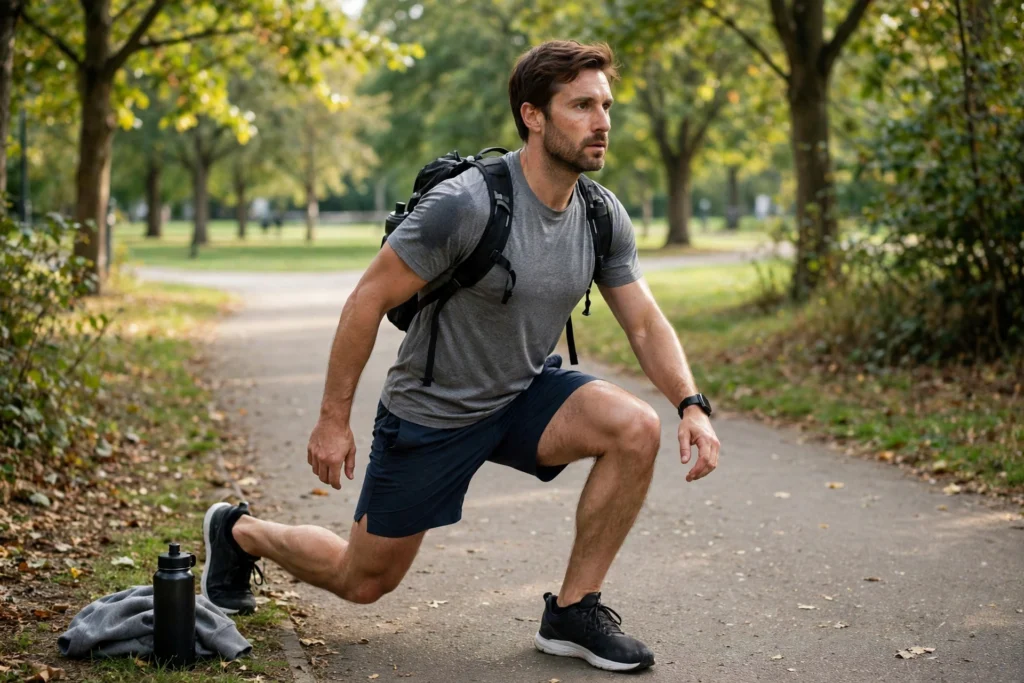
Walking alone can support fat loss, but walking plus strength training usually works better for body composition. Strength training helps maintain muscle, which supports strength, movement, and long term health. Walking adds daily movement without interfering much with recovery from strength sessions.
A simple weekly combination looks like this:
- Strength training: 2 to 3 sessions per week, using bodyweight, bands, or weights
- Walking: most days, building toward your personal step target
- Interval walking: 1 to 2 sessions per week, optional, once regular walking feels comfortable
- Rest or gentle mobility: 1 to 2 days per week, with stretching or light movement
If you only have time for one type of exercise, start with walking, because it is the easiest to sustain. Then add 2 short strength sessions per week when you can. That order, walking first, strength second, works well for many beginners who are building a habit from scratch.
Common walking mistakes
Jumping straight to walking 10,000 steps a day
A sudden jump from low activity to a high step goal often causes soreness, blisters, or joint discomfort, and then the habit stops. Build up gradually, and celebrate progress from your own baseline.
Counting steps but ignoring food and sleep
Walking can increase appetite slightly, and poor sleep can also increase hunger. If you walk more but eat much more, or sleep much less, fat loss may stall. Walking is one part of the plan, not a licence to ignore the other parts.
Walking too slowly to get any benefit, or too fast every day
Very slow strolling is still better than sitting, especially for beginners, but for fitness benefits, most walks should feel purposeful. A brisk pace, where you can talk but not sing, is a good guide for most walks. Save the fastest pace for interval sessions, not every walk.
Relying only on a tracker number
Trackers are useful, but they can be inaccurate, and they can turn walking into a stressful numbers game. If your tracker says 9,500 steps and you feel good, you have still had a good walking day. Use the tracker as a guide, not a judge.
Wearing the wrong shoes or walking on unsafe routes
Foot pain and safety issues are common reasons people stop walking. Choose comfortable shoes, well lit and safe routes, and reflective clothing if you walk in low light. In winter, grip and warmth matter. In summer, water and sun protection matter.
A simple 4 week plan for walking 10,000 steps a day
Use this plan as a starting point, and adjust it to your current level. If you already walk more than the Week 1 target, start at the week that matches your current average.
| Week | Daily step target | Interval walking | Strength sessions |
|---|---|---|---|
| Week 1 | Your current average plus 1,000 steps | None, steady walks only | 2 short sessions, optional |
| Week 2 | Previous target plus 500 to 1,000 steps | 1 session, 2 cycles | 2 sessions |
| Week 3 | Build toward 8,000 to 10,000 steps, if suitable | 1 to 2 sessions, 3 cycles | 2 to 3 sessions |
| Week 4 | Maintain your new target most days | 1 to 2 sessions, 3 to 5 cycles | 2 to 3 sessions |
Track steps with a phone or watch, but also track how you feel: energy, foot comfort, knee comfort, and sleep quality. If pain increases, reduce steps or intensity for a few days, and build up more slowly. Pain that persists, worsens, or affects daily movement should be checked by a qualified professional.
Frequently asked questions
Does walking 10,000 steps a day burn belly fat specifically?
No exercise, including walking, burns fat from one specific area on demand. Walking can contribute to overall fat loss over time when combined with a calorie deficit, and overall fat loss may eventually include abdominal fat, but you cannot target belly fat with walking alone.
How many calories does walking 10,000 steps a day burn?
It depends on body weight, speed, terrain, and duration. As a rough guide, walking 10,000 steps a day might burn about 300 to 500 calories for many adults, but trackers and online estimates vary widely. Do not use that number as an exact budget for extra food. Use walking as a general support for fat loss, not a precise calorie calculation.
Is 10,000 steps a day too much for beginners?
It can be too much if you jump to walking 10,000 steps a day suddenly from very low activity, but it is a reasonable long term target for many healthy adults who build up gradually. Start from your current average, increase by 500 to 1,000 steps every 1 to 2 weeks, and listen to your feet, knees, and energy levels.
Is walking better than running for fat loss?
Walking and running both burn energy, but running burns more per minute and needs more recovery. Walking is easier to do daily, lower impact, and more sustainable for many beginners. The best choice is the one you will actually do consistently. Some people do both: walking most days, running on selected days if they enjoy it.
What is Japanese interval walking, in simple terms?
It is a structured walk that alternates 3 minutes of fast walking with 3 minutes of slow walking, repeated several times, usually after a warm up and before a cool down. It is a low impact way to add intensity to walking without running, and it is best tried after you already have a regular walking habit.
Do I need a fitness tracker for walking 10,000 steps a day?
No. A phone step counter, a simple pedometer, or even time based goals, such as 30 minutes of walking per day, can work well. A tracker can help with motivation and trends, but it is optional, not required.
Can I lose weight by walking 10,000 steps a day alone, without changing my diet?
It is possible if walking creates a calorie deficit, but it is often slow and unreliable on its own, because appetite and food intake can rise to match the extra activity. Walking works best alongside reasonable eating, enough protein, strength training, and good sleep.
The bottom line
Does walking 10,000 steps a day actually help fat loss? Yes, it can, but not because 10,000 is a magic number. Walking helps because it adds sustainable daily movement, supports a calorie deficit, improves fitness, and fits into real life.
Start from where you are, build up gradually toward walking 10,000 steps a day, and make walking a habit you enjoy. Add strength training a few times a week, and try Japanese interval walking once regular walking feels comfortable, if you want more challenge. Judge progress over weeks, not days, using step trends, strength, energy, and how your clothes fit, alongside body weight.
That combination, steady walking, sensible eating, strength work, and patience, is far more effective than chasing a perfect step count for a week and then stopping.
Disclaimer: This content is for general information only and is not a substitute for professional medical, fitness, or nutrition advice.

 Ablaze Fitness


