

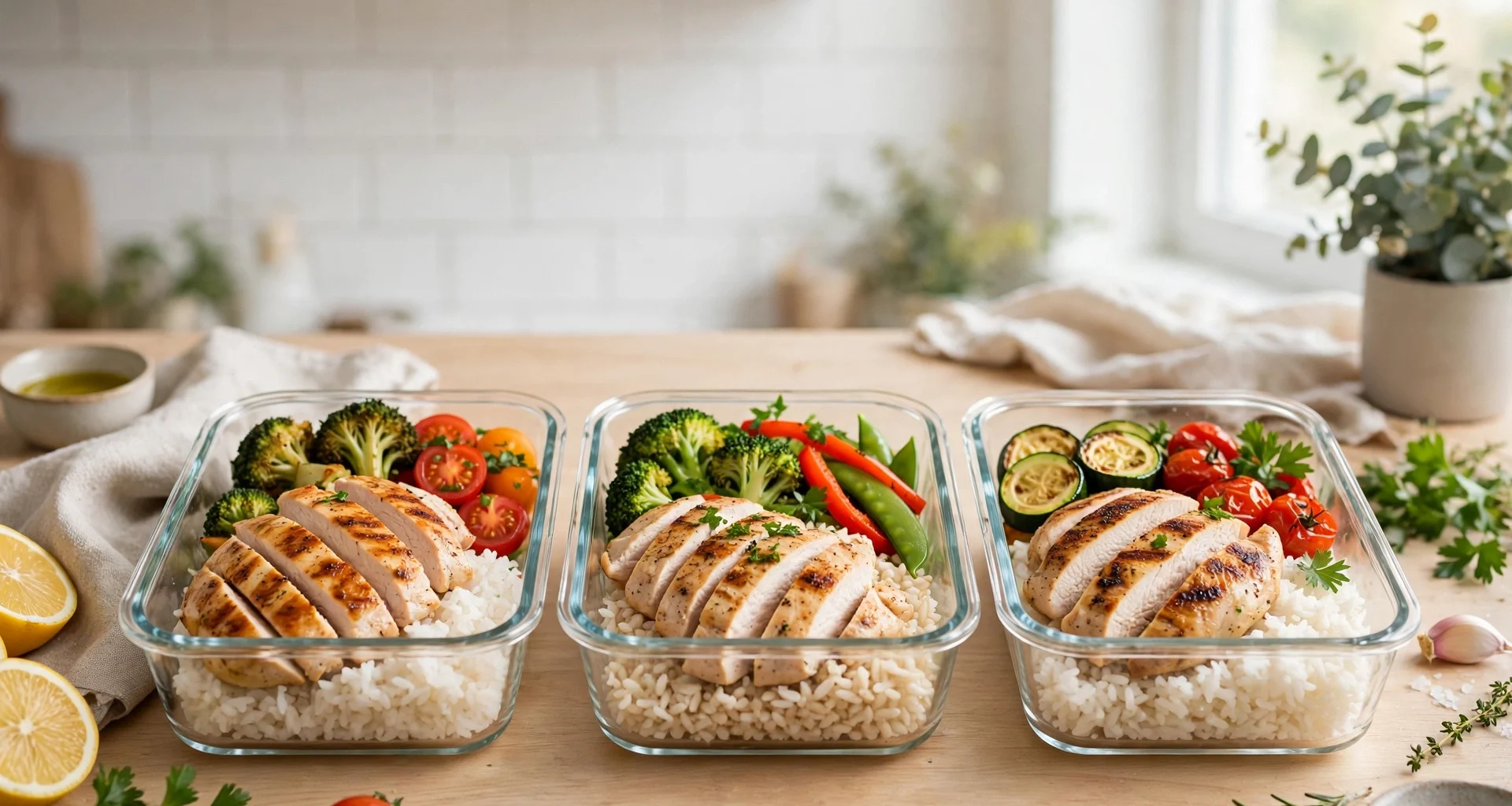
High protein meal prep can help. If you are busy, tired, or short on time during the week, healthy eating often falls apart at the exact moment you need it most. You skip lunch, grab something quick and low in protein, feel hungry an hour later, and then snack your way through the afternoon.
High protein meal prep solves that problem before the week starts. Instead of cooking from scratch every day, you prepare a few proteins, a few bases, and a few vegetables once, then mix and match them into different meals. The result is food that is ready when you are hungry, filling enough to keep you going, and flexible enough that you do not get bored by Wednesday.
This guide is for beginners and busy adults. It does not require fancy equipment, expensive ingredients, or hours in the kitchen. A single session of about 90 minutes can cover most lunches and dinners for the week, and breakfast can be assembled in minutes each morning.
This article is for general nutrition and wellness information only. It is not medical advice. If you have allergies, a medical condition, or dietary needs that require professional guidance, talk to a qualified health professional or registered dietitian first.
Why high protein meal prep works for busy people
Protein helps in three practical ways. First, it keeps you full for longer than the same calories from refined carbohydrates alone, which makes it easier to avoid constant snacking. Second, it supports muscle maintenance, especially if you are training or trying to lose fat. Third, when protein is already cooked and ready in the fridge, you are far less likely to skip it.
Meal prep also reduces decision fatigue. When you are hungry after work, you do not need to decide what to cook, whether you have ingredients, or how long it will take. You open the fridge, pick a protein, pick a base, add vegetables and a sauce, and eat within 10 minutes.
You do not need to prep every meal. Many people do best by prepping lunches and dinners, and keeping breakfast simple. Others prep only proteins and bases, and cook vegetables fresh each day. Both approaches count as meal prep, and both are better than starting from zero every night.
How much protein should you aim for?
Protein needs vary by body size, activity, and goals. For active adults, a common general range is 1.4 to 2.0 grams per kilogram of body weight per day, with the higher end often used during fat loss or heavy training. For a person who weighs 70 kilograms, that is about 98 to 140 grams per day. Someone weighing 90 kilograms, that is about 126 to 180 grams per day.
Instead of trying to hit a perfect number on day one, start with a simple target for each main meal:
- Breakfast: 25 to 35 grams
- Lunch: 30 to 45 grams
- Dinner: 30 to 50 grams
- Optional snack: 10 to 20 grams, if needed
A palm sized portion of meat, fish, or tofu is roughly 25 to 35 grams of protein, depending on the food and portion size. Greek yogurt is often around 15 to 20 grams per cup. A cup of cooked lentils is around 18 grams. You do not need to weigh every meal, but weighing protein portions for a week or two can help you learn what a serving actually looks like.
If you are vegetarian or vegan, aim for variety across the day. Beans, lentils, tofu, tempeh, edamame, soy milk, quinoa, nuts, and seeds can combine to meet your needs, especially when you include a protein source at each meal rather than relying on one large dinner portion.
The 90 minute Sunday prep: the core system
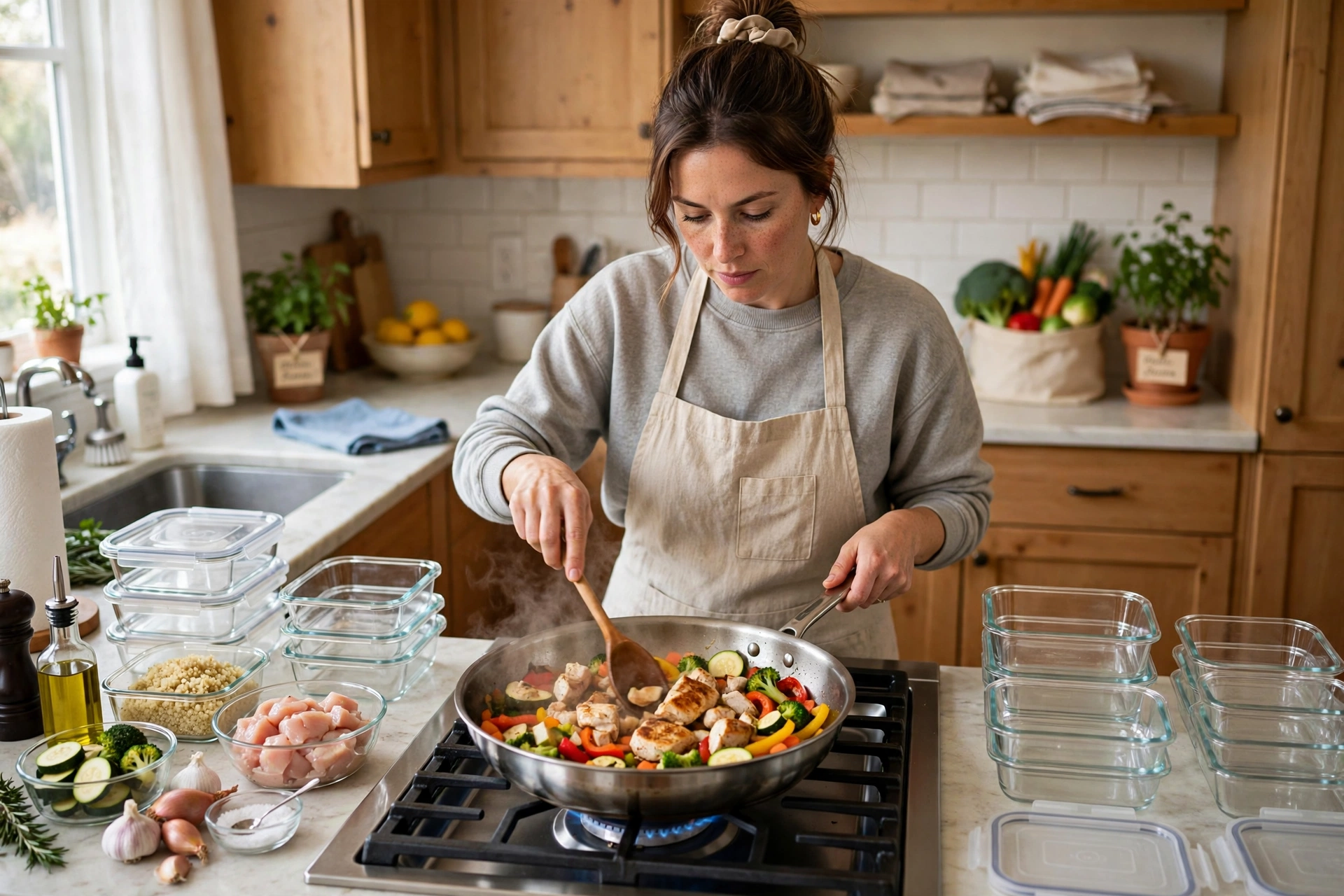
The simplest system uses three categories: proteins, bases, and vegetables, plus sauces for flavour. Cook 2 to 3 proteins, 2 bases, and 2 to 3 vegetables. Store them separately in containers, then combine them differently each day.
Step 1: Choose your proteins, 30 to 40 minutes
Pick 2 to 3 from this list, based on what you like and what is on sale:
- Chicken breast or chicken thighs, baked or air fried
- Ground turkey or ground beef, cooked with simple seasoning
- Salmon or another firm fish, baked in the oven
- Hard boiled eggs, for breakfasts and snacks
- Tofu or tempeh, baked until firm
- Lentils or chickpeas, cooked in a large pot
Season simply at first. Salt, pepper, garlic powder, paprika, cumin, or mixed herbs work well. You can change the flavour later with sauces, so the base protein does not need to be heavily seasoned.
Step 2: Cook your bases, 20 to 30 minutes
Pick 2 bases:
- Rice, white or brown, cooked in a large pot or rice cooker
- Quinoa, which cooks in about 15 minutes and adds extra protein
- Potatoes or sweet potatoes, roasted in cubes
- Whole grain pasta, cooked and cooled slightly before storing
- Oats, for breakfast, stored dry and cooked fresh or as overnight oats
Bases are what make a small portion of protein feel like a full meal. They also store well for 3 to 4 days in the fridge.
Step 3: Prepare vegetables, 15 to 20 minutes
Pick 2 to 3 vegetables that hold up well:
- Roasted broccoli, carrots, peppers, or zucchini
- Raw vegetables for crunch: cucumber, carrots, peppers, and cabbage
- Leafy greens, washed and stored dry, for salads and bowls
- Frozen mixed vegetables, which are quick, affordable, and just as useful as fresh for cooked meals
Wash, chop, and roast what needs roasting while your proteins cook. That overlap is what keeps the total session close to 90 minutes.
Step 4: Make 2 sauces, 10 minutes
Sauces prevent boredom. Two simple options cover most meals:
- Yogurt herb sauce: Greek yogurt, lemon juice, garlic, salt, and chopped herbs
- Simple vinaigrette: olive oil, vinegar or lemon juice, mustard, salt, and pepper
Store sauces separately so your meals do not go soggy. Add sauce just before eating.
Food safety and storage: what you need to know for high protein meal prep
Meal prep only works if the food stays safe and appetising. Follow these basics:
- Cool cooked food within 2 hours, then refrigerate in clean, sealed containers.
- Most cooked meals keep well in the fridge for 3 to 4 days. If you prep on Sunday, plan to eat the Sunday batch by Wednesday or Thursday, then use a quick second prep or frozen portions for the rest of the week.
- Freeze portions you will not eat within 4 days. Label them with the food name and date.
- Reheat food until it is steaming hot throughout, and stir halfway through reheating for even heat.
- Do not leave cooked food at room temperature for long periods, especially meat, fish, eggs, and dairy.
- Use your senses as a backup, but not as a replacement for time limits. If food smells off, looks slimy, or has been stored too long, throw it away.
In the United States, the United Kingdom, and Canada, food safety guidance is similar on these points, although exact fridge temperature advice may be phrased differently. A fridge temperature around 4 degrees Celsius, or 40 degrees Fahrenheit, is a common target.
If you are new to meal prep, start with a 3 day batch rather than a full week. That builds confidence, reduces waste, and helps you learn which foods you actually enjoy reheated. For official guidance on safe storage times, see FoodSafety.gov.
A sample week: mix and match, not repeat and suffer with high protein meal prep
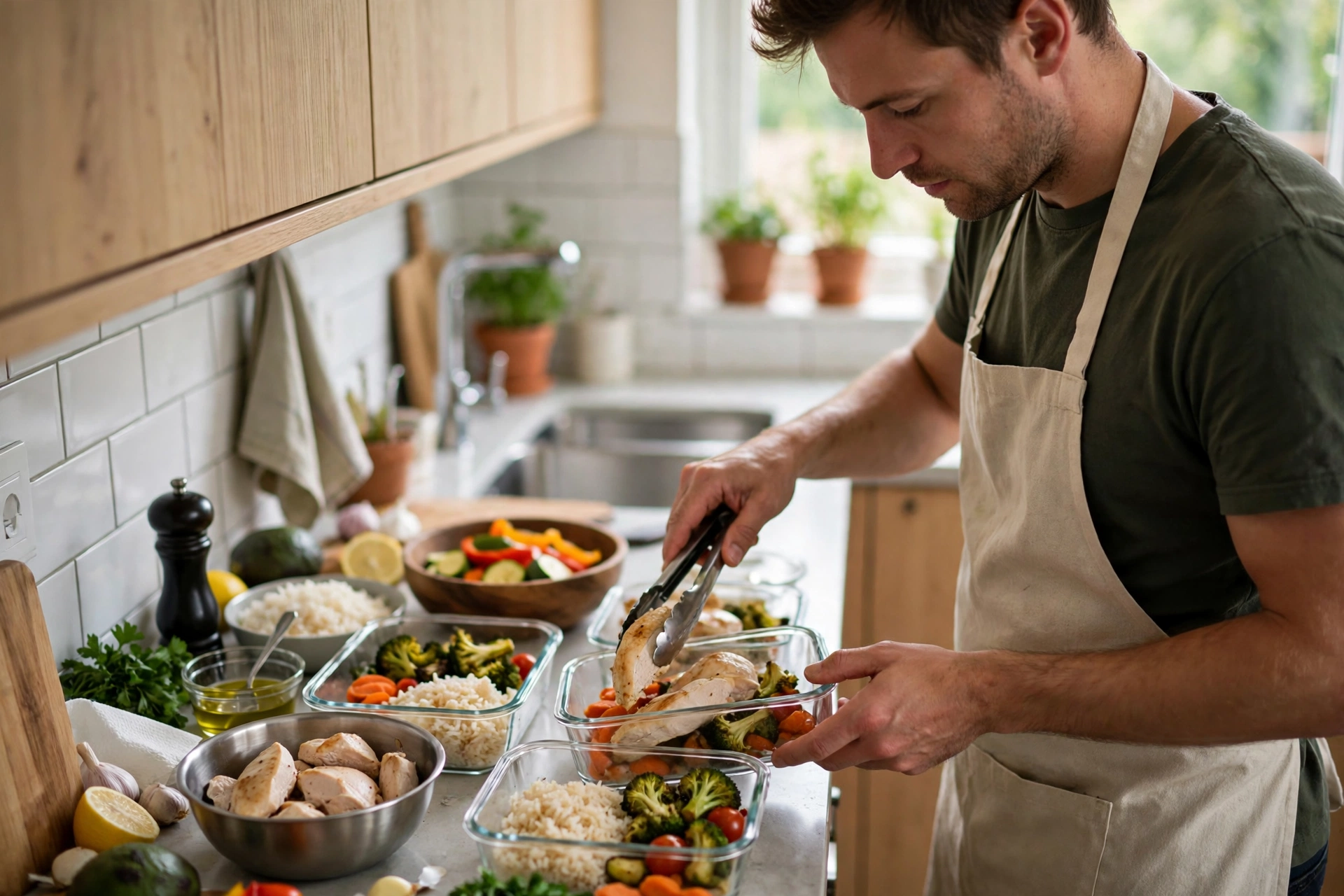
Here is how one prep session can become five different meals. The idea is to change the base, sauce, or vegetables, even if the protein repeats.
| Day | Lunch idea | Dinner idea |
|---|---|---|
| Monday | Chicken, rice, roasted broccoli, yogurt herb sauce | Ground turkey, quinoa, peppers, vinaigrette |
| Tuesday | Chicken wrap with cabbage, cucumber, and yogurt sauce | Salmon, potatoes, roasted carrots, lemon |
| Wednesday | Tofu, rice, mixed vegetables, soy and ginger style sauce | Lentils, quinoa, roasted zucchini, yogurt sauce |
| Thursday | Leftover turkey bowl with fresh greens and vinaigrette | Eggs, potatoes, vegetables, and toast, for a quick dinner |
| Friday | Freezer portion or fresh simple meal | Takeaway or flexible meal, with a protein focus if possible |
Notice that Friday is intentionally flexible. A plan that leaves no room for real life will fail in a busy week. Prepping for 4 days, plus one flexible day, is often more sustainable than trying to control all 7 days perfectly.
Breakfast ideas that take under 5 minutes
Breakfast does not need a full prep session. Keep these ready:
- Overnight oats: oats, milk or soy milk, Greek yogurt, chia seeds, and fruit, made the night before
- Greek yogurt bowl: yogurt, berries, nuts, and a drizzle of honey if you like it
- Eggs on toast: eggs cooked fresh, or hard boiled eggs from your prep, with whole grain toast and fruit
- Smoothie: frozen fruit, milk or soy milk, yogurt, and a scoop of protein powder if you use it, blended in 2 minutes
- Cottage cheese and fruit: simple, high in protein, and no cooking required
If you skip breakfast because you are not hungry, that is fine too. The goal is to have a protein option ready when you do eat, not to force a meal at a time that does not suit you.
Lunch and dinner formulas you can reuse
Use these formulas when you are tired and do not want to think:
- Protein plus base plus vegetables plus sauce. Example: chicken plus rice plus broccoli plus yogurt herb sauce.
- For a lighter option, try protein plus salad plus bread or grains. Example: tofu plus mixed greens plus cucumber plus quinoa, with vinaigrette.
- Protein plus soup or stew. Example: lentils plus vegetables plus potatoes, cooked in a large pot and frozen in portions.
- For a quick dinner, try protein plus eggs and vegetables. Example: eggs plus peppers plus potatoes, cooked as a quick scramble or frittata.
Once you know 4 formulas, you can build dozens of meals without a recipe book.
High protein meal prep on a budget
High protein eating does not need to be expensive. Some of the cheapest protein sources are also the most practical for prep:
- Eggs, which are versatile and store well when hard boiled
- Lentils, chickpeas, and beans, dried or canned, rinsed before use
- Chicken thighs, which are often cheaper than breast and stay moist when reheated
- Ground turkey, which cooks quickly in a large pan
- Tofu, which is affordable and absorbs flavour well
- Canned tuna or salmon, for quick lunches, used in moderation as part of a varied diet
- Greek yogurt and cottage cheese, bought in large tubs rather than single servings
Buy frozen vegetables, store brand oats and rice, and seasonal produce to keep costs down. Cooking in bulk also reduces waste, because you use ingredients before they spoil, and you are less likely to order expensive takeaway when you are already hungry.
In the United Kingdom, look for supermarket own brand proteins and frozen vegetables. In Canada and the United States, warehouse stores and weekly sales can make bulk chicken, eggs, and yogurt more affordable. The exact prices differ by location, but the strategy is the same: choose a few affordable proteins, cook them in bulk, and repeat them in different combinations.
High protein meal prep for different goals
If you want to lose fat
Focus on protein and vegetables for volume, and keep bases to a portion that fits your overall calorie target. A useful plate guide is: half vegetables, one quarter protein, one quarter base, plus a small amount of sauce or healthy fat. Keep sauces light, and be mindful of oils, dressings, and cheese, which add calories quickly even in small amounts.
If you want to maintain weight and energy
Use the same system, but allow a larger base portion and an extra snack if you are hungry between meals. Training days may need more carbohydrates, especially if you do strength training or longer cardio sessions.
If you want to gain muscle
You will likely need more total food, including more protein and more carbohydrates. Add an extra base portion, an extra snack, or a larger protein portion at dinner. Keep the same prep system, just scale the portions up, and track your weight trend over 2 to 4 weeks to see if you are gaining slowly.
If you are vegetarian or vegan
Build your prep around lentils, chickpeas, tofu, tempeh, and edamame, and add quinoa, nuts, and seeds for variety. A sample vegan prep might include: baked tofu, lentil stew, quinoa, roasted vegetables, and a tahini lemon sauce. That combination covers protein, fibre, and flavour without relying on a single food.
Common high protein meal prep mistakes and how to fix them
Prepping foods you do not like reheated
Some foods, such as fried foods or delicate salads, do not reheat well. Stick to roasted, baked, stewed, and grain based foods for prep, and add fresh crunchy vegetables at serving time.
Making every meal identical
Eating the exact same lunch for 5 days is a fast way to quit meal prep. Change the sauce, base, or vegetables, even if the protein is the same. Two sauces and two bases create at least 4 combinations from one protein.
Prepping too much at once
A huge Sunday session can feel overwhelming and lead to waste. Start with 3 days of lunches, or 2 proteins and 1 base, and build up as you learn what works for your fridge, schedule, and taste.
Forgetting snacks and drinks
If you prep meals but have no protein snacks or water ready, afternoon hunger can still derail you. Keep yogurt, fruit, nuts, or hard boiled eggs available, and keep a water bottle filled.
Storing everything mixed together
Mixed meals go soggy faster, especially salads and bowls with sauce. Store proteins, bases, vegetables, and sauces separately when possible, and combine them just before eating.
Ignoring food safety
If you are unsure how long something has been in the fridge, do not risk it. Freeze extra portions early, label them, and use them within a few weeks for best quality.
Quick shopping list for your first prep week for high protein meal prep
Use this as a starting point, and adjust for allergies and preferences:
Proteins: chicken thighs or breast, ground turkey, tofu, eggs, lentils
Bases: rice, quinoa, potatoes or sweet potatoes, oats
Vegetables: broccoli, carrots, peppers, zucchini, cucumber, leafy greens, frozen mixed vegetables
Pantry: olive oil, vinegar, mustard, garlic, herbs, spices, salt, pepper
Sauces and extras: Greek yogurt, lemon, tahini if you like it, nuts, fruit, milk or soy milk
You do not need to buy everything at once. Pick 2 proteins, 2 bases, and 3 vegetables for your first week, and add variety later.
High protein meal prep: frequently asked questions
How long does high protein meal prep take?
A focused session for lunches and dinners usually takes 60 to 90 minutes, including cooking, cooling, and packing. Breakfast can be prepared separately in under 5 minutes per day, or as overnight oats the night before. The time you save during the week, when meals take 5 to 10 minutes instead of 30 to 45 minutes, usually more than makes up for the Sunday session.
How long does meal prep last in the fridge?
Most cooked meals last 3 to 4 days in the fridge when stored promptly in sealed containers. Freeze anything you will not eat within that window. Soups, stews, cooked grains, and cooked meats generally freeze well.
Can I meal prep if I do not like leftovers?
Yes, if you focus on components rather than complete meals. Cook proteins and bases, store them separately, and combine them fresh with different vegetables and sauces. That feels much less like eating leftovers, even though the core ingredients were cooked earlier.
Do I need special containers?
No. Any clean, sealed containers that fit in your fridge will work. Glass containers are useful because you can see the contents and reheat them easily, but plastic containers are fine too. Compartment containers can help keep sauces and crunchy items separate.
Is high protein meal prep safe for kidneys?
For most healthy adults, a higher protein diet within the ranges in this guide is not a concern, but people with kidney disease or other medical conditions should follow professional advice tailored to them. If you have a health condition, speak to a qualified health professional before making major dietary changes.
What if I get bored of chicken and rice?
Change the flavour, not the whole system. Try different sauces, spices, and vegetables, or swap chicken for tofu, fish, lentils, or eggs. A new sauce can make a familiar protein feel like a different meal, and that small change is often enough to keep prep sustainable.
Can I meal prep for a family with different tastes?
Yes. Cook neutral proteins and bases, then let each person choose their own vegetables and sauce. That way, you cook once, but everyone gets a version they like. Keep spicy sauces or strong flavours separate, so children or picky eaters can skip them.
The bottom line
High protein meal prep for a busy week does not need to be complicated, expensive, or perfect. Pick 2 to 3 proteins, 2 bases, and a few vegetables, cook them in one focused session, store them separately, and mix them into different meals with 2 simple sauces.
Start with 3 days, learn what you like reheated, and build from there. Over time, that simple system saves money, reduces stress, and makes it much easier to eat enough protein, even on your busiest days.
Disclaimer: This content is for general information only and is not a substitute for professional medical or nutrition advice.

 Ablaze Fitness


