


You do not need a perfect pre workout meal or a complicated post workout shake to benefit from exercise. You need enough energy before training, enough food after training, and a routine that fits your day. This guide covers what to eat before and after a workout in plain, practical terms.
This guide explains what to eat before and after a workout in simple terms. It covers timing, portion ideas, hydration, and easy examples for home, gym, and busy days. It is written for beginners, and it works for walking, strength training, running, cycling, and other general fitness activities.
This article is for general nutrition and fitness information only. It is not medical or diet advice. If you have diabetes, a food allergy, a digestive condition, an eating disorder history, or any condition that affects what you can eat, talk to a qualified health professional or registered dietitian before changing your eating pattern.
What to eat before and after workout: the simple idea
Before a workout, your body needs available energy and comfort. A meal that is too large, too high in fat or fibre right before training, or eaten too close to hard exercise can feel heavy and uncomfortable. A small, familiar snack is often enough.
After a workout, your body needs food and fluids to recover. A normal balanced meal within a few hours is usually enough for most beginners. You do not need to eat within a strict 30 minute window to benefit, although many people feel better when they do not wait too long to eat after a hard session.
Think of it this way: before training, eat for energy and comfort. After training, eat for recovery and satisfaction. The rest is detail.
What to eat before a workout
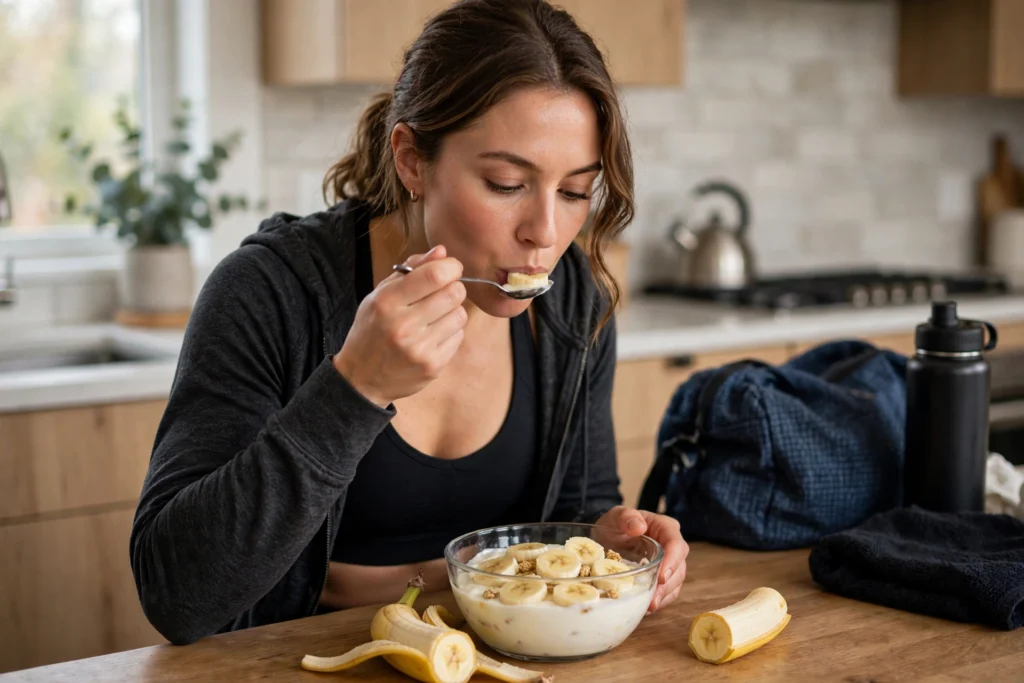
What to eat before and after workout: timing matters more than a magic food
Use this timing guide as a starting point, and adjust it based on how your stomach feels.
| When you eat | What works well | Examples |
|---|---|---|
| 2 to 3 hours before | A normal balanced meal | Chicken and rice with vegetables; a sandwich with lean protein and salad; pasta with tomato sauce and beans |
| 1 to 2 hours before | A smaller meal or a larger snack | Oatmeal with banana; toast with peanut butter; yogurt with fruit and oats |
| 30 to 60 minutes before | A small, easy snack | A banana; a small handful of dried fruit; a slice of toast with jam; a small smoothie |
| Less than 30 minutes before | Only if you need it, keep it very small | A few sips of water and a small piece of fruit, or skip food and eat after training |
If you train first thing in the morning, many beginners do well with a small snack, like a banana or toast, or with water only for a short, easy session, followed by breakfast after training. Dizziness, shakiness, or strong hunger during training is a sign to eat a little more before your next session, or to choose an easier session until you find what works for you. Seek professional advice if symptoms persist.
What makes a good pre workout snack
A good pre workout snack is:
- Familiar, so your stomach knows what to expect
- Easy to digest, so it does not sit heavily
- Mainly carbohydrate for quick energy, with a little protein if you have time
- Low in fat and fibre right before training, compared with a large meal
- Paired with water
Examples that fit many beginners:
- Banana with a small spoonful of peanut butter
- Toast with jam or honey
- Oatmeal made with water or milk, with sliced banana
- Greek yogurt with berries, if you have at least an hour before training
- A small bowl of cereal with milk
- Rice cakes with a thin spread of peanut butter
- A smoothie made with fruit, milk or yogurt, and oats
You do not need a special pre workout supplement to train well. For most beginners, food and water are enough. If you use caffeine, keep it to what you normally drink, and avoid trying a large new dose right before a hard workout, especially late in the day if it affects your sleep.
What to avoid right before training
Avoid testing a brand new food, a very spicy meal, a very large meal, or a large amount of alcohol before training. Alcohol does not help performance or recovery in general terms, and it can affect balance, coordination, and sleep. If you are training hard, give your body time to digest a large meal first. Your stomach will thank you.
Hydration before, during, and after training
Water is often more important than the exact timing of a snack, especially for short to moderate workouts.
General tips for beginners:
- Drink water through the day, not just during training
- Have water available during your session, and sip regularly
- For sessions under an hour in normal conditions, water is usually enough
- For longer, hotter, or very sweaty sessions, you may need more fluids, and some people use an electrolyte drink, but that is a personal choice, not a requirement for every workout
- After training, drink to thirst, and eat a normal meal that includes some salt from food, unless a health professional has advised you to limit salt
In the US, water bottles are often measured in fluid ounces. In the UK and Canada, millilitres and litres are common. A standard reusable bottle of about 500 to 750 millilitres, or about 17 to 25 fluid ounces, is a useful size for most training sessions.
If you feel very thirsty, confused, or unwell during training in heat, stop, cool down, and seek help if needed. That is general safety information, not a diagnosis.
What to eat after a workout
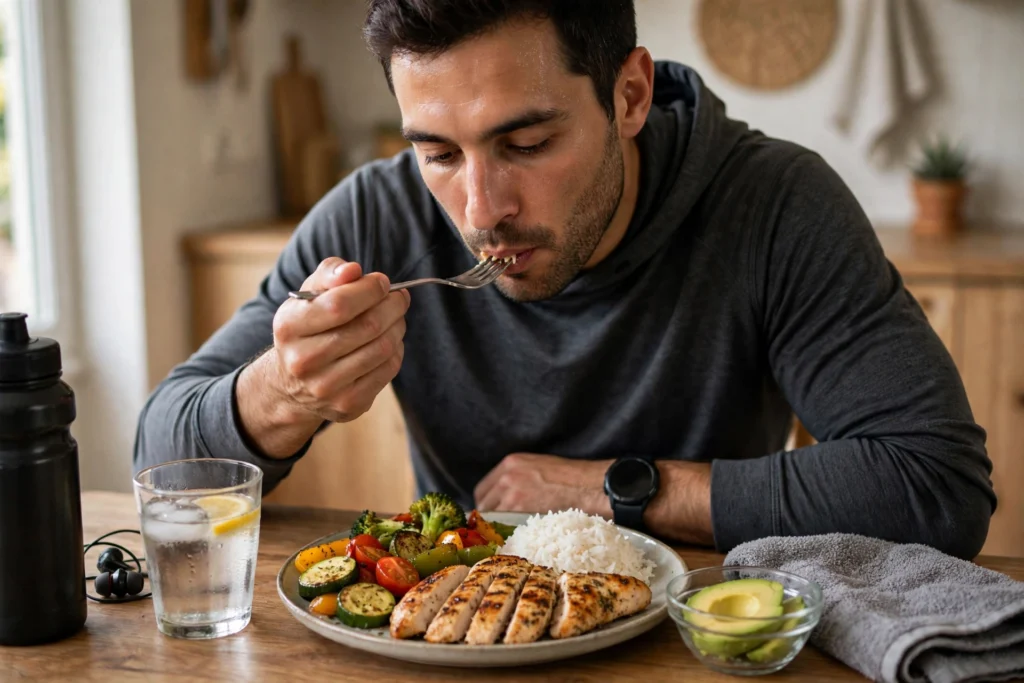
After training, aim for a balanced meal that includes:
- Protein, to support muscle repair in general terms
- Carbohydrate, to replace energy used during training
- Vegetables or fruit, for variety and fibre
- Fluids, to replace what you lost through sweat
You do not need to hit an exact gram target as a beginner. A palm sized portion of protein, a fist sized portion of carbohydrate, and a generous portion of vegetables is a useful visual guide for many people. Adjust portions based on your appetite, body size, and goals, and talk to a professional if you want personalised targets.
What to eat before and after workout: post workout meal ideas
These ideas work after strength training, running, cycling, or a general fitness session:
- Grilled chicken, rice, and roasted vegetables
- Salmon or tofu, sweet potato, and green beans
- Eggs on toast with spinach and tomato
- A bean and cheese burrito with salad
- Greek yogurt with oats, berries, and nuts
- A tuna sandwich on whole grain bread with salad
- Lentil soup with bread and a piece of fruit
- A smoothie with milk or yogurt, banana, oats, and peanut butter, plus a sandwich if you are still hungry
If you train late at night, a lighter post workout meal is often more comfortable than a very large meal right before bed. For example, yogurt with oats, eggs on toast, or soup with bread can work well, followed by a normal breakfast the next day.
Do you need a protein shake?
A protein shake is a convenient option, not a requirement. It can help on busy days, after a gym session when you do not have time to cook, or if you struggle to eat enough protein from food. It is not better than a normal meal in general terms, and it is not necessary for beginners to make progress.
If you choose a protein powder, read the label, check for allergens, and use it as part of a balanced diet, not as a replacement for meals every day. If you have kidney disease, a milk allergy, or another condition that affects protein intake, get professional advice before using supplements.
Eating around different types of workouts
Strength training
For strength training, many beginners do well with a small carbohydrate snack before training, and a balanced meal with protein and carbohydrate after training. You do not need to eat a huge amount of protein in one meal to benefit. Regular protein across the day, from meals and snacks you enjoy, is more useful than one very large post workout meal.
Walking and easy cardio
For a walk or an easy cardio session under an hour, you usually do not need a special pre workout meal. Eat normally, drink water, and eat your next normal meal after your walk. If you walk for a long time, take water, and consider a snack if you feel hungry or tired.
Running, cycling, or longer cardio
For longer sessions, timing matters more. Eat a larger meal 2 to 3 hours before, or a smaller snack 1 to 2 hours before, and take water during the session. After a long session, eat a balanced meal with carbohydrate and protein, and drink fluids. For sessions over 90 minutes, especially in heat, some people need extra fluids and electrolytes, but that is beyond beginner basics, and professional guidance can help if you train for long events.
Morning, lunchtime, and evening training
Morning training: If you train early, a small snack before, and breakfast after, often works well. Examples include toast with banana, oatmeal, or yogurt with fruit.
Lunchtime training: Eat a light breakfast, train at lunch, and eat lunch after training. If you eat lunch before training, leave enough time to digest, or keep the pre workout portion small.
Evening training: Eat lunch normally, have a small snack in the late afternoon if needed, train, and eat dinner after training. If dinner is very late, a lighter evening meal can help sleep.
Sample day: training after work
This example shows how the ideas fit together, without strict calorie counting.
- Breakfast: Oatmeal with milk, banana, and a spoonful of peanut butter
- Lunch: Chicken or bean sandwich on whole grain bread, with salad and fruit
- Late afternoon snack, 1 to 2 hours before training: Toast with jam, or yogurt with berries
- Training: Strength session, with water available
- Dinner after training: Salmon or tofu, rice, and roasted vegetables, plus water
If you prefer vegetarian or vegan eating, swap chicken and salmon for beans, lentils, tofu, tempeh, eggs if you eat them, or Greek yogurt if you eat dairy. The structure stays the same: carbohydrate for energy, protein for recovery, and vegetables for variety.
What to eat before and after workout for weight loss, muscle gain, or maintenance
Many beginners ask whether pre and post workout eating changes if their goal is weight loss or muscle gain. The timing principles stay similar. The main difference is total food intake across the day, not a special workout meal.
For weight loss in general terms, a calorie deficit over time matters more than the exact timing of a snack. Choose filling foods, like vegetables, lean protein, and whole grains, and avoid using a workout as a reason to eat a very large meal every time.
For muscle gain in general terms, eating enough total food and protein across the day matters more than one post workout shake. Regular meals, strength training, and sleep are the foundation.
For maintenance, eat normally around training, and adjust portions based on hunger, energy, and how your weight and performance change over weeks, not days.
If you want a personalised calorie or protein target, talk to a registered dietitian or another qualified professional. This guide is intentionally general, because personal targets depend on age, sex, body size, activity, health history, and goals. For more general guidance, see Cleveland Clinic.
Common mistakes beginners make
- Skipping food all day, then training hard on an empty stomach and feeling faint or tired
- Eating a very large, fatty meal right before training and feeling sick during the session
- Waiting many hours after a hard session to eat, then feeling very hungry and overeating later
- Relying only on supplements and skipping real meals
- Drinking very little water, then wondering why a workout feels harder than expected
- Copying a professional athlete’s diet. A professional’s training load and nutrition needs are very different from a beginner’s needs
- Trying a new diet, a new supplement, and a new workout all in the same week, so you cannot tell what helped or what caused discomfort
Shopping list for easy workout meals
Keep these basics at home, and pre and post workout eating becomes much easier:
- Oats, rice, pasta, bread, and tortillas
- Bananas, berries, apples, and frozen fruit for smoothies
- Eggs, canned beans, lentils, tofu, chicken, fish, or other protein foods you enjoy
- Greek yogurt, milk, or a plant based alternative you like
- Peanut butter or another nut butter
- Frozen vegetables, salad leaves, tomatoes, and cucumbers
- Water bottle, and a small snack you can take to the gym or on a walk
In the US, these items are often bought in larger pack sizes. In the UK, pack sizes are often smaller, and in Canada, both metric and imperial labels are common. The foods are the same, even if the packaging looks different.
Frequently asked questions
Should I eat before a morning workout?
It depends on the session and how you feel. For a short, easy session, water only can work, followed by breakfast after. For a longer or harder session, a small snack like a banana or toast usually helps. Try both approaches on easy days, and choose what feels better.
How long after eating should I wait to train?
For a large meal, 2 to 3 hours is a good guide. For a small snack, 30 to 60 minutes is often enough. If you feel heavy or uncomfortable, wait longer next time, or eat a smaller amount before training.
What should I eat after a workout if I am trying to lose weight?
Eat a normal balanced meal with protein, carbohydrate, and vegetables, and keep portions in line with your overall eating pattern. You do not need a special low calorie post workout meal, and you do not need to skip eating after training to lose weight. Consistency across the day matters more than one meal.
Is a protein shake better than a meal after a workout?
No, not in general terms. A protein shake is convenient, but a balanced meal gives you protein, carbohydrate, vegetables, fluids, and variety. Use a shake when it is practical, and use meals when you have time to cook.
Do I need sports drinks?
For most workouts under an hour, water is enough. For longer, hotter, or very sweaty sessions, some people use a sports drink or electrolyte drink. That is a choice based on duration, heat, and sweat, not a requirement for every workout.
What if I feel sick when I eat before training?
Try a smaller snack, eat earlier, and choose blander, lower fat foods before training. Avoid spicy, very fatty, or very high fibre foods right before a hard session. If nausea happens often, or you have a digestive condition, seek professional advice.
Can I train on an empty stomach?
Some people train comfortably on an empty stomach for short, easy sessions. Others feel weak or dizzy. There is no single rule that fits everyone. If you feel unwell, eat a small snack before your next session, and choose an easier workout until you find what works.
What about caffeine before a workout?
Caffeine is in coffee, tea, and many pre workout products. If you already drink caffeine, a normal amount before training is familiar to your body. Avoid a large new dose, especially late in the day, if it affects your sleep. Sleep is important for recovery, so late caffeine can work against your training goals.
The bottom line: what to eat before and after workout
What to eat before and after a workout does not need to be complicated. Eat a small, familiar snack before training if you need energy, drink water, and eat a balanced meal after training with protein, carbohydrate, and vegetables.
Start with the timing guide, try the meal ideas that fit your tastes and schedule, and adjust based on how you feel during and after training. That simple, repeatable pattern will support your workouts far better than a perfect meal plan you cannot follow.
Disclaimer: This content is for general fitness and nutrition information only and is not a substitute for professional medical, diet, or fitness advice.

 Ablaze Fitness


 Mélanie Courcelles


