


Cold plunges are everywhere right now. Athletes swear by them, gyms are installing tubs, and social media is full of people lowering themselves into icy water at sunrise. But what do cold plunge benefits actually look like when you separate research from hype?
The honest answer is mixed, and more interesting than the marketing. Cold water immersion does some things reasonably well. Others, it does only modestly. And it comes with a real trade off for anyone training to build muscle. It also carries genuine risks for the wrong person. This guide puts the evidence first, the practical details second, and safety in plain sight rather than in fine print.
Everything here is general information, not medical advice. If you have any health condition at all, the safety section further down is the most important part of this article.
What Is Cold Water Immersion, and What Are Cold Plunge Benefits?
Cold water immersion simply means submerging part or all of your body in cold water for a short period. The cold plunge benefits people talk about come in a few different formats:
- Dedicated cold plunge tubs hold water at a set cold temperature, often around 10 to 15 degrees Celsius (50 to 59 degrees Fahrenheit), and are common at gyms, spas, and recovery studios.
- Ice baths are the original version: a bathtub or large container filled with cold water and ice. The ice bath benefits are the same in principle, because the active ingredient is cold water, not the equipment.
- Cold showers are the entry level version. They are milder, easier to control, and a sensible place for beginners to start.
- Natural cold water, such as lakes and the sea, is where the practice began, and it comes with extra variables like currents, depth, and no controlled temperature.
Researchers usually define cold water immersion as water below about 15 degrees Celsius (59 degrees Fahrenheit). Most studies use immersion up to the chest or neck for somewhere between 5 and 15 minutes, although everyday practice tends to be shorter, as the protocol section below explains.
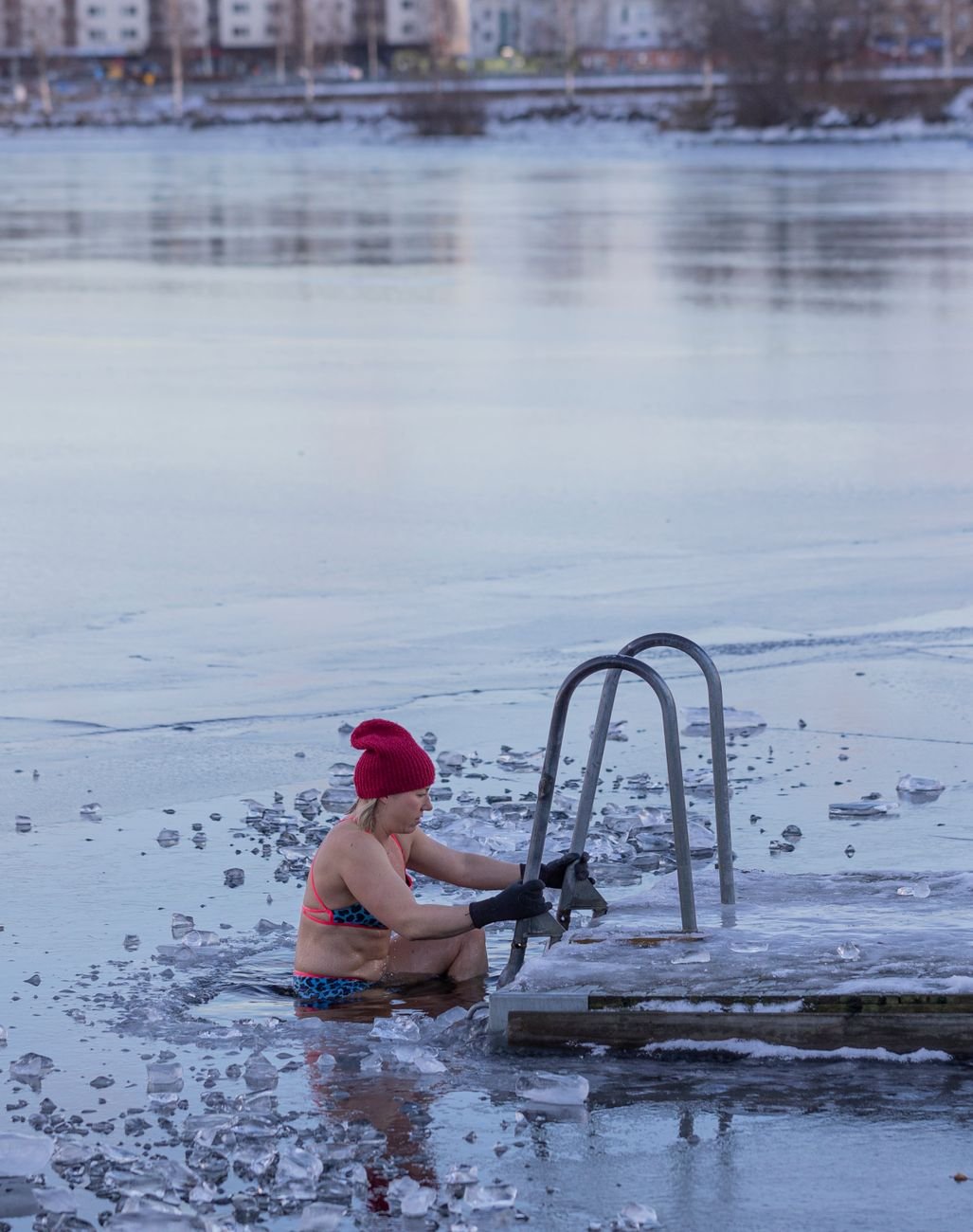
Cold Plunge Benefits, Ranked by How Strong the Evidence Is
Not all claimed benefits are equal. Here is where the research is comparatively solid, where it is mixed, and where claims run well ahead of the data. Cold immersion is also only one recovery tool among many, and it works best alongside basics covered in our guide to the most overlooked ways to recover faster.
Better supported: less muscle soreness after hard training
The most consistent finding in the literature is that cold water immersion reduces delayed onset muscle soreness, the stiff, achy feeling that peaks a day or two after a hard session. A 2025 systematic review and meta-analysis published on PubMed Central pooled 24 studies and found that cold water immersion significantly reduced delayed onset muscle soreness compared with passive rest. Interestingly, the same review found no clear effect on creatine kinase, a blood marker of muscle damage, or on jump performance. In other words, you may genuinely feel less sore without the underlying markers changing very much.
That distinction matters. Feeling less sore is a real benefit if you train often, compete on back to back days, or simply want to move comfortably the day after a session. It does not necessarily mean you recovered faster in a deeper sense. If soreness is a recurring problem for you, it is also worth knowing the signs your body is not recovering properly, because a plunge is not a fix for underfueling, poor sleep, or a program that is simply too much.
Cold immersion is not the only hands-on recovery option. Foam rolling is a simple, low cost way to work through tight spots between sessions, and many lifters pair it with plunging on rest days.
Better supported: alertness and that refreshed feeling
Most people who plunge report feeling sharply awake, clear headed, and refreshed afterward, and this is one of the most reliable short term effects. Cold exposure triggers a strong release of alertness related chemicals in the body, and the subjective effect is hard to miss. Many regular users say this morning reset is the main reason they keep doing it, and it is one of the most widely reported cold plunge benefits.
Treat this as a genuine but personal benefit. It is real for a lot of people, it is not the same as a proven medical outcome, and it tends to be the benefit that keeps beginners coming back while the subtler recovery effects do their quieter work.
Mixed or modest: inflammation and recovery markers
Cold water narrows blood vessels and slows metabolic activity in cooled tissue. That is why it has long been used around acute injuries and heavy training. In the research, effects on inflammation markers are inconsistent. The same 2025 meta analysis mentioned above found a modest lowering effect on C reactive protein in some analyses. This was particularly true at water temperatures above 10 degrees Celsius (50 degrees Fahrenheit). But results across studies vary, and other markers often show no significant change.
The fair summary is that cold immersion probably nudges some inflammatory processes in the short term. But it is not the reliable anti inflammatory tool it is sometimes sold as. Less inflammation is not always better anyway. As the next section explains, some of that post workout inflammatory signalling is exactly how your body adapts. It is how you get stronger.
Mixed or modest: mood and stress claims
Plungers often describe improved mood and stress resilience, and there are plausible mechanisms and small early studies behind those reports. But the evidence here is still thin: small samples, short follow ups, and a lot of expectation effect to untangle. If cold water leaves you calmer and more upbeat, that is a perfectly good reason to enjoy it. Just hold the stronger claims, about treating anxiety or depression, at arm’s length. This article makes no treatment claims, and cold water is not a substitute for professional mental health support.
The Trade Off Most Articles Skip: Cold Plunges and Muscle Growth
Here is the part of the cold plunge benefits conversation that rarely makes it into promotional content. Several well designed studies found that regular cold water immersion right after strength training blunts the adaptations you trained for. That includes muscle growth and, in some research, strength gains. The likely reason is that the plunge dampens the very signalling responses that tell your muscles to rebuild bigger.
This does not mean lifting and plunging cannot coexist. It means timing matters:
- If building muscle or maximum strength is your main goal, avoid plunging in the first few hours after a lifting session. Separating the plunge from training by at least about six hours, or saving plunges for rest days, is the cautious approach many researchers and coaches now suggest.
- If your priority is recovering between close together sessions, tournaments, or endurance events, the soreness relief may be worth more to you than the small adaptation cost.
- Endurance adaptations appear less affected than muscle growth, although the research there is also not fully settled.
If you are following a structured program like our beginner strength training plan, the simple rule is: train first, plunge much later or on a different day.
If you train at home, a beginner home workout built around basic bodyweight movements pairs well with rest-day plunges, since the sessions are short and easy to schedule around recovery.
How a Cold Plunge Is Usually Done
There is no single official protocol, and anyone presenting exact numbers as a prescription is overclaiming. What follows are the commonly used ranges in research and practice, offered as general information so you can see what typical use looks like.
- Temperature: most practice sits between about 10 and 15 degrees Celsius (50 to 59 degrees Fahrenheit). Colder is not automatically better, and some analyses suggest moderate temperatures in this range perform as well as very cold water for soreness.
- Duration: sessions of about 2 to 10 minutes are common in everyday use. Studies often run longer, but beginners should start at the short end. A minute or two is a legitimate start.
- Depth: immersion up to the waist covers the legs after running or leg training. Up to the chest or shoulders is full body immersion and a bigger physiological stress.
- Frequency: a few sessions a week is a typical pattern. Daily plunging is common among enthusiasts but is not required for the soreness benefit.
- Breathing: the first 30 to 60 seconds are the hardest. Slow, controlled exhales help you ride out the initial shock response described in the safety section.
Build up gradually over weeks, not days. More cold and more time is not a contest, and your tolerance on a tired, underfed, or unwell day will be lower than usual.
Warming Up After a Plunge
Afterward, let yourself warm up naturally with dry clothes, movement, and a warm drink. Skip the very hot shower: many regular users find it blunts the alert, refreshed feeling they plunged for. Pay attention to how you feel over the following hours. Feeling energised and clear is the response most people are chasing. Feeling drained or shivery long after leaving the water usually means the session was too cold or too long. Sleeping badly that night can mean the same thing, or that the timing was wrong for you. Adjust the next one accordingly. Your own response, tracked over a few weeks, is better guidance than any influencer’s personal record.
A Beginner Progression That Respects the Cold
If you are curious but new, there is no need to start with a full plunge. A staged approach builds tolerance and teaches you how your body reacts.
- Cold showers, weeks 1 to 2. End your normal shower with 15 to 30 seconds of the coldest setting, and build toward 1 to 2 minutes. This teaches you the breathing pattern with an easy exit at all times.
- Cool, not icy, immersion. A bath or tub of cool tap water, roughly 18 to 22 degrees Celsius (64 to 72 degrees Fahrenheit), for 2 to 3 minutes. Less shock, same basic skill of staying calm.
- Short true cold dips. Water in the 10 to 15 degrees Celsius (50 to 59 degrees Fahrenheit) range for 1 to 3 minutes, with someone nearby, and stop well before you feel you have something to prove.
- Your regular practice. Gradually settle into the duration and temperature that leave you feeling good afterward. For most people that is somewhere between 2 and 10 minutes.
On the days you are not plunging, low-impact workouts for beginners keep you moving without adding joint stress, which makes them a good fit for a cold plunge week.
Safety First: The Risks Are Real
Cold water is a genuine physiological stress. This section is not boilerplate, and it matters more than any benefit listed above.
The cold shock response
Sudden immersion in cold water triggers an involuntary gasp, rapid breathing, a spike in heart rate and blood pressure, and a sharp drop in how long you can hold your breath. It is strongest in the first minute and is the main reason cold water can overwhelm even strong swimmers. It is also why you should:
- Never plunge alone, especially outdoors or in any water you cannot stand up in.
- Never jump or dive into cold water. Enter slowly, keep your head above water, and let your breathing settle first.
- Never plunge after drinking alcohol, and avoid it when you are ill, feverish, or severely sleep deprived.
Who should not plunge, or needs medical clearance first
Get explicit medical clearance before trying cold immersion if any of the following apply, and avoid it entirely if your clinician advises against it:
- Heart or cardiovascular conditions of any kind, including a history of heart attack, stroke, or arrhythmia
- High blood pressure, whether treated or not
- Raynaud’s phenomenon or other circulation problems
- Pregnancy
- Cold allergy or cold urticaria (hives triggered by cold)
- Open wounds, recent surgery sites, or skin infections
- Any condition that affects your ability to sense cold or to get out of the water quickly, and any history of fainting
This list is not exhaustive. When in doubt, ask your own clinician first. Feeling faint, dizzy, confused, or unwell in the water is a signal to get out immediately, and slurred speech, clumsiness, or uncontrollable shivering afterward are reasons to warm up and seek medical advice.
A warning about converted chest freezers
Some home users convert chest freezers into plunge tubs. This is genuinely dangerous and is not recommended. A freezer full of water combines electricity and immersion in a metal box that was never designed for people. The risks include electric shock from modified or damaged equipment. A lid can close and trap you. The water can also turn unsafe, since the vessel was not built to be sanitized for bathing. Purpose built tubs, gyms, and supervised studios exist for a reason. A plain bathtub and a bag of ice is a far safer home option.
How Much Do Cold Plunge Benefits Cost?
Costs vary widely by city and country, but the shape of the market is consistent:
- Gym and studio sessions range from drop in fees for a single session to memberships where plunging is bundled with sauna or classes. Dedicated recovery studios sit at the higher end.
- A home ice bath costs the price of the ice itself for each session, plus a suitable tub if you do not already have one. Ice for a full bath adds up quickly over a month, which surprises many people.
- Purpose built home tubs with chillers are a significant purchase, from the low thousands upward, plus running and maintenance costs.
There are no product links in this article on purpose. The cheapest sensible trial is a cold shower, which costs nothing, followed by a single gym or studio session before you commit to anything.
The Bottom Line on Cold Plunge Benefits
Cold plunge benefits are real but specific. The strongest case is simple: less muscle soreness after hard training and a powerful feeling of alertness and refreshment. The case for inflammation control and mood effects is modest and still developing. Against that sits a well supported trade off. Plunge right after lifting often, and you may blunt some of the muscle and strength gains you trained for. Separate the two, and most people can enjoy both.
Start smaller than you think, never plunge alone, and take the safety list seriously. Cold water rewards respect and punishes bravado.
Frequently Asked Questions About Cold Plunge Benefits
How long should a beginner stay in a cold plunge?
Start with 1 to 2 minutes in water around 10 to 15 degrees Celsius (50 to 59 degrees Fahrenheit), and only after building tolerance with cold showers and cooler baths. Many regular users settle between 2 and 10 minutes to get the cold plunge benefits they are after. Longer is not automatically better, and you should always be able to get out easily and immediately.
Do ice bath benefits differ from cold plunge benefits?
Not in any meaningful way. Both are cold water immersion, and the benefits come from the water temperature, depth, and duration, not from whether the cold came from ice or a chiller unit. A dedicated tub is more convenient and more consistent; an ice bath is cheaper to start with but costs you ice every session.
Will a cold plunge hurt my muscle gains?
It can, if you do it right after strength training on a regular basis. Research suggests immediate post workout immersion can blunt muscle growth and some strength adaptations. If muscle is your priority, leave at least several hours between lifting and plunging, or plunge on rest days. Used between endurance sessions or during heavy competition weeks, the trade off often runs the other way.
Temperature, Safety, and Getting Started
How cold does the water need to be?
Most research and practice uses roughly 10 to 15 degrees Celsius (50 to 59 degrees Fahrenheit). There is no good evidence that going colder produces better results, and some analyses show moderate temperatures performing just as well for soreness. Extremely cold water mainly adds risk and discomfort.
Who should never cold plunge?
Anyone with a heart or cardiovascular condition, uncontrolled high blood pressure, or a clinician who has advised against it should not plunge. People who are pregnant, have Raynaud’s, cold allergy, or open wounds should get medical clearance first at minimum. The safety section above covers the full list, and it is worth reading before your first dip, not after.
Are cold showers a good enough substitute?
For building the habit and learning how your body responds, yes. Cold showers are milder than full immersion, so the soreness effect is likely smaller, but they deliver the alertness effect for many people and cost nothing. They are the recommended starting point in the beginner progression above.

 Ablaze Fitness


