


A great stuffing recipe does two jobs at once. First, it tastes deeply savoury and herby. Second, it gives you two textures in every bite. The top turns golden and crisp. Meanwhile, the middle stays soft and moist.
This version keeps things classic, with good bread, butter, onion, celery and fresh herbs. In addition, it uses a simple method that works every time, for Thanksgiving, a Sunday roast, or any cold weather meal.
Moreover, this dish bakes in its own dish. As a result, it is safer, easier to time, and full of crisp edges. For a full holiday menu, it pairs well with other classics. For example, it sits happily beside a green bean casserole recipe and a bright homemade sauce.
Stuffing or Dressing: What Is the Difference?
People often use both words for the same dish. However, there is a traditional difference. Stuffing was cooked inside the bird, while dressing was cooked in a separate dish.
Today, the words often depend on region and family habit. For example, many families in the southern United States say dressing. Meanwhile, many families in the north say stuffing, even when it bakes in a dish. In this article, we use stuffing, but you can call it dressing if your family prefers. The recipe stays the same.
Why Bake This Stuffing Recipe in a Dish Instead of Inside the Bird?
Baking stuffing in a dish gives you control. The heat reaches the centre evenly, the top can crisp properly, and you can check the temperature with ease.
Food safety is the main reason, however. Stuffing inside a bird cooks very slowly, so the bird may look done while the stuffing is still too cool. As a result, harmful bacteria can survive in the centre.
For safety, stuffing must reach a safe internal temperature of 165 degrees Fahrenheit, which is 74 degrees Celsius, in its thickest part. The FoodSafety.gov safe minimum internal temperatures chart lists this guidance for stuffing and leftovers. Always check with a food thermometer in the centre.
In addition, raw juices from the bird can soak into stuffing and must also reach the same safe temperature. Therefore, a separate dish removes that risk and is easier to serve.
Choosing the Best Bread for This Stuffing Recipe
Bread is the base of this dish, so your choice matters. A sturdy loaf works best, because soft sandwich bread turns mushy fast. In contrast, a firm loaf holds its shape after soaking.
Good options include a rustic white loaf, a sourdough loaf, or a mix of both. Sourdough adds a gentle tang, while rustic white bread keeps the flavour classic. For example, many bakers use half of each. Avoid very sweet breads, because they clash with sage and thyme.
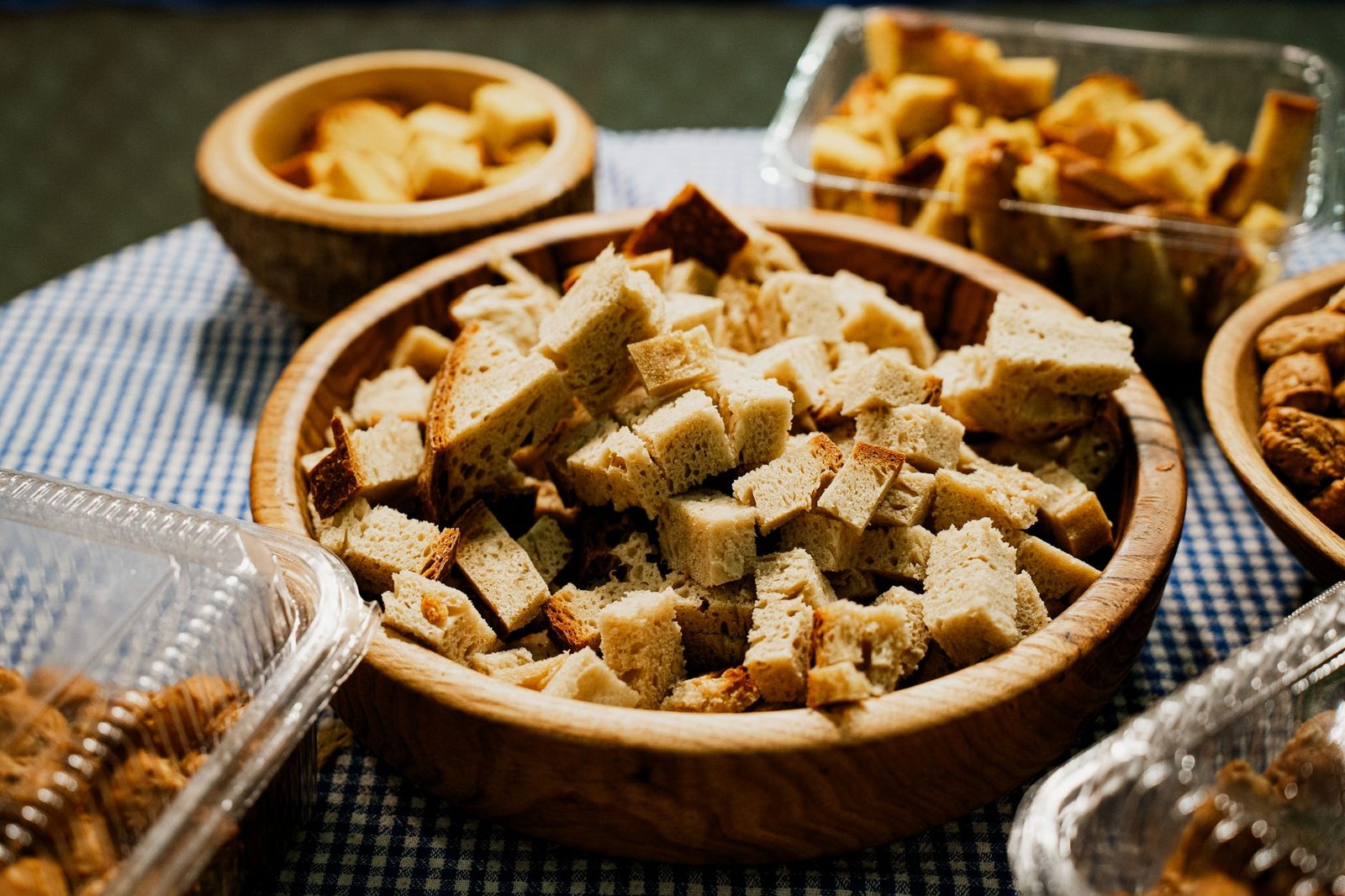
You will need about 1 pound, which is about 450 grams, of bread. That gives roughly 10 cups, which is about 2.4 litres, of cubes. Cut the bread into cubes of about 3/4 inch, which is about 2 centimetres.
Fresh bread needs drying before use, because dry bread soaks up broth without falling apart. Wet fresh bread, however, often turns to paste.
How to Dry Bread Cubes Properly
You have two easy options. First, leave the cubes out overnight on two large baking sheets in a single layer. By morning, they should feel dry and firm.
Second, dry them in the oven at 300 degrees Fahrenheit, which is 150 degrees Celsius, for 20 to 30 minutes. Stir them once halfway.
The cubes should feel dry and light, but not browned or hard like croutons. Therefore, keep the heat low and watch them closely. Let the cubes cool fully before use, because warm cubes soak unevenly. You can dry bread up to 3 days ahead and store it in an airtight container.
Ingredients for This Stuffing Recipe
This recipe serves 10 to 12 people as a side dish. It fits a baking dish of 9 by 13 inches, which is about 23 by 33 centimetres, and you can halve it for a smaller meal. Use fresh herbs if you can, because fresh sage, thyme and parsley give the best flavour. However, dried herbs also work in smaller amounts.
Main Ingredients
- Dried bread cubes: 10 cups, about 2.4 litres, from about 1 pound or 450 grams of bread
- Unsalted butter: 3/4 cup, about 170 grams, plus extra for the dish
- Yellow onions, finely chopped: 2 large, about 3 cups or 450 grams chopped
- Celery, finely chopped: 4 stalks, about 2 cups or 240 grams chopped
- Garlic cloves, minced: 3 cloves, about 1 tablespoon or 15 millilitres minced
- Low sodium chicken broth or vegetable broth: 3 1/2 to 4 cups, about 830 to 950 millilitres
- Large eggs, lightly beaten: 2 eggs
- Fresh parsley, chopped: 1/4 cup, about 15 grams, plus extra to serve
- Fresh sage, finely chopped: 2 tablespoons, about 8 grams
- Fresh thyme leaves: 1 tablespoon, about 4 grams
- Fine sea salt: 1 1/2 teaspoons, about 9 grams, adjusted to taste
- Black pepper, freshly ground: 1 teaspoon, about 2 grams
- Poultry seasoning, optional: 1 teaspoon, about 2 grams
If you only have dried herbs, use less. For example, use 2 teaspoons, about 2 grams, of dried sage and 1 teaspoon, about 1 gram, of dried thyme. Choose low sodium broth when possible, so you can control the salt yourself.
A Note on Broth Amount
Broth amount controls the final texture. Too little gives a dry result, while too much gives a soggy result. Start with 3 1/2 cups, which is about 830 millilitres. Then, add more only if the mix looks dry. The bread should look moist all over, but not swimming. Sourdough often needs a little more broth, so add the last part slowly and judge by touch.
For example, the calorie calculator helps you plan a balanced plate without guesswork.
Equipment You Will Need for This Stuffing Recipe
You do not need special tools. However, use a very large mixing bowl, so the cubes have room to toss without breaking. You will also need a large skillet of about 12 inches, which is about 30 centimetres, plus two baking sheets, a baking dish, a whisk, and a food thermometer. A thermometer is essential, because colour alone cannot tell you the centre is safe.
Stuffing Recipe: Step by Step Method
Read all the steps before you start and gather your ingredients in one place. This simple habit prevents stress later. Meanwhile, heat your oven early, because a hot oven gives you a better crisp top.
Step 1: Prepare the Dish and Oven
Heat the oven to 375 degrees Fahrenheit, which is 190 degrees Celsius, with a rack in the middle. Butter your baking dish well, so nothing sticks and the edges turn golden.
Step 2: Cook the Onion and Celery
Melt the butter in the large skillet over medium heat. Add the onion and celery with a pinch of salt. Cook for 8 to 10 minutes, stirring often, until soft and sweet, but not deeply browned.
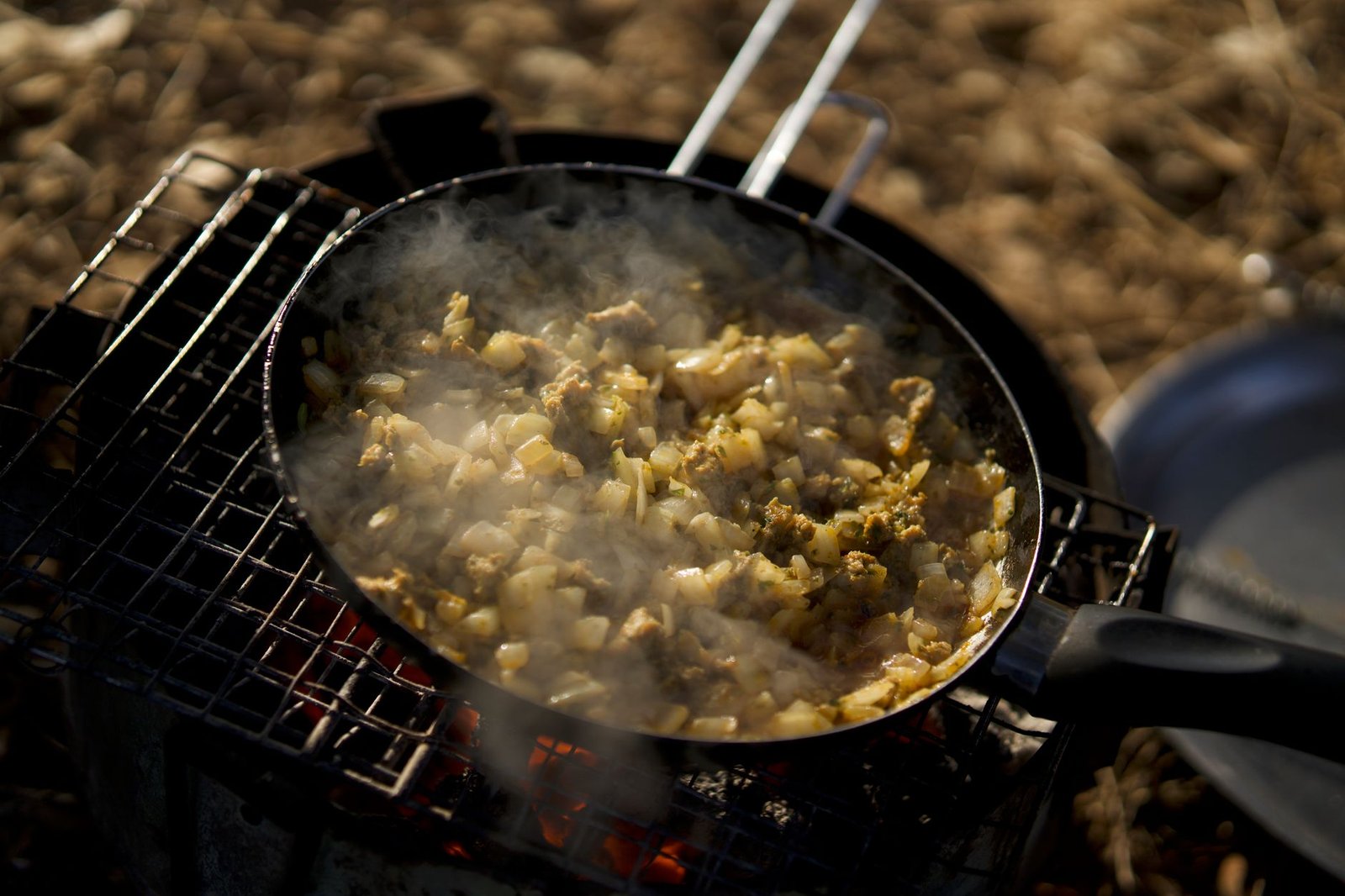
Next, add the garlic and cook for 30 seconds more, because garlic burns quickly. Then, remove the skillet from the heat and stir in the sage, thyme and parsley. Warm butter carries their flavour well.
Step 3: Combine Bread and Vegetables
Place the dried bread cubes in the large bowl. Pour the warm vegetable mix over the top. Toss gently, so every cube is coated but stays whole, because broken cubes make a dense texture. Then, let the bowl sit for 5 minutes while you prepare the broth and eggs.
Step 4: Add Broth and Eggs
Whisk the eggs in a medium bowl. Then, whisk in 3 1/2 cups, which is about 830 millilitres, of broth, plus the salt, pepper and poultry seasoning if using.
Pour half over the bread, toss gently, and wait for 2 minutes. Then, pour in most of the rest and toss again.
Press a handful of cubes to check the texture. They should feel moist, soft, and able to hold together. If they feel dry, add the last broth a little at a time. Stop before the mix looks wet or soupy.
Step 5: Rest the Mixture Briefly
Let the mixed stuffing rest for 10 minutes, so the bread soaks up broth evenly. Then, check the texture once more.
If the top cubes look dry, drizzle on 2 to 4 tablespoons, which is 30 to 60 millilitres, of extra broth. In contrast, if the mix looks too wet, add a handful of extra dry cubes.
Step 6: Fill the Dish Without Packing
Spoon the mixture into the buttered dish and spread it into an even layer with a light hand. Do not press or pack it down, because loose filling lets steam escape, so the top crisps and the middle sets softly.
Dot the top with about 1 tablespoon, which is about 14 grams, of butter in small pieces. This extra butter boosts browning and flavour.
Step 7: Bake Covered, Then Uncovered
Cover the dish tightly with foil. Bake for 25 minutes at 375 degrees Fahrenheit, which is 190 degrees Celsius, so the middle steams and the eggs set.
Then, remove the foil with care, as steam will rush out. Bake uncovered for 25 to 30 minutes more, until the top is deep golden and crisp.
Check the centre with your thermometer. It must read at least 165 degrees Fahrenheit, which is 74 degrees Celsius. If it reads lower, bake for 5 to 10 minutes more and check again. Finally, rest the dish for 10 to 15 minutes, so scoops hold their shape.
How to Keep This Stuffing Recipe Crisp on Top and Moist in the Middle
This balance is the heart of a great stuffing recipe. Luckily, a few habits make it reliable. First, dry bread is essential, as explained earlier.
Second, use the two stage bake. The foil stage protects moisture in the middle. Then, the uncovered stage crisps the top. Skipping the foil often gives a dry centre.
Third, do not drown the bread in broth, because soaked bread steams instead of crisping. Therefore, add liquid slowly and stop early. Finally, use a shallow, even layer and rest the dish uncovered, because covering traps steam and softens the top.
For example, a sweet potato casserole recipe also benefits from an uncovered finish. Both dishes reward patience in the final minutes.
Sausage Variation for This Stuffing Recipe
Sausage adds richness, savoury depth, and extra filling power. Use 1 pound, which is about 450 grams, of plain pork sausage meat. Choose a mild or herbed style without strong sweet flavours and remove any casings before cooking.
Brown the sausage in the skillet over medium high heat for 7 to 9 minutes. Break it into small crumbles until cooked through and golden. Then, lift it out with a slotted spoon.
Leave about 2 tablespoons, which is 30 millilitres, of fat in the pan and cook the onion and celery in it. Reduce the butter to 1/2 cup, which is about 115 grams, because the sausage fat adds richness. Finally, fold the sausage back in with the bread in Step 3 and reduce the added salt to 1 teaspoon, about 6 grams.
If you enjoy protein rich holiday cooking, you may also like browsing high protein soup recipes for lighter meals around the big day.
Vegetarian Variation
This stuffing is very easy to make fully vegetarian. First, use a rich vegetable broth instead of chicken broth. Second, keep the butter, eggs and herbs the same. The method does not change, so the texture stays just as moist and crisp.
For extra savoury flavour, add mushrooms. Use 8 ounces, which is about 225 grams, of finely chopped mushrooms and cook them with the onion and celery until their liquid evaporates. Mushrooms add moisture, however, so reduce the broth to about 3 1/4 cups or 770 millilitres to start. You can also add 1/2 cup, about 60 grams, of chopped walnuts for crunch.
For a vegan version, use olive oil instead of butter, at 3/4 cup or 180 millilitres. Also, skip the eggs and add 2 tablespoons, about 16 grams, of ground flax mixed with water. The set will be softer, however.
Make Ahead Timeline for Thanksgiving
US Thanksgiving falls on Thursday, November 26, 2026 this year. A clear timeline removes most of the stress, and this dish welcomes early prep at almost every stage. Small jobs spread out feel easy. In contrast, doing everything on the day feels overwhelming.
Three Days Ahead
Dry your bread cubes on Monday, November 23, 2026. Store them in an airtight container. Also, check that you have enough broth, butter and herbs.
Two Days Ahead
Chop the onion and celery on Tuesday, November 24, 2026 and store them in the fridge. Also measure your salt, pepper and spices into a small bowl, so cooking day moves faster.
One Day Ahead
Assemble the full dish on Wednesday, November 25, 2026 if you wish. Mix everything as written, but use the lower broth amount. Then, fill the buttered dish, cover it, and refrigerate it for up to 24 hours. Before baking, add a splash of broth if it looks dry. Alternatively, bake it fully the day before and refrigerate it for reheating.
For example, a cranberry sauce recipe tastes even better after a night in the fridge, so making it early frees your stove.
On Thanksgiving Day
Take a chilled unbaked dish out of the fridge 30 minutes early, so it bakes more evenly. Bake as written, but add 5 to 10 minutes to the covered stage. It must still reach 165 degrees Fahrenheit, which is 74 degrees Celsius, in the centre.
If oven space is tight, bake the stuffing first. Then, keep it warm in a low oven at 200 degrees Fahrenheit, which is about 95 degrees Celsius, for up to 30 minutes.
Common Mistakes to Avoid in This Stuffing Recipe
Even simple dishes can go wrong in small ways. However, each mistake here has an easy fix.
First, many cooks skip drying the bread, so it turns soft and gummy when soaked. Therefore, always start with dry, firm cubes.
Second, many cooks add all the broth at once. Once added, extra broth cannot be removed. Instead, add it in stages and judge by touch.
Third, many cooks pack the dish too tightly, which creates a dense texture. In contrast, a loose fill gives light scoops and crisp edges.
Fourth, many cooks skip the thermometer check. The top can look golden while the centre lags behind, so always check the thickest part.
Fifth, many cooks serve it straight from the oven. Without a rest, the middle is loose and steamy. A rest of 10 to 15 minutes fixes this.
Sixth, many cooks use too much dried sage, which tastes bitter and dusty. Therefore, measure dried herbs carefully, or choose fresh herbs.
Serving, Storing and Reheating This Stuffing Recipe
Serve the stuffing hot, straight from its dish, with a little fresh parsley scattered over the top for colour. Each serving is about 3/4 cup, which is about 180 millilitres.
Cool leftovers within 2 hours of serving. Then, store them in a sealed container in the fridge for 3 to 4 days.
To reheat, add about 2 to 3 tablespoons, which is 30 to 45 millilitres, of broth over the top. Cover with foil and heat at 350 degrees Fahrenheit, which is 175 degrees Celsius, for 20 minutes. Then, remove the foil for the last 5 to 10 minutes to bring back the crisp top. Leftovers must also reach 165 degrees Fahrenheit, or 74 degrees Celsius, before serving.
You can also freeze baked stuffing for up to 1 month and thaw it overnight in the fridge. Meanwhile, keep other snacks simple, such as a roasted pumpkin seeds recipe for guests to nibble.
Stuffing Recipe: Frequently Asked Questions
Can I make this stuffing recipe fully ahead and reheat it?
Yes. Bake it a day ahead, cool it, and store it in the fridge. Then, reheat it covered at 350 degrees Fahrenheit, which is 175 degrees Celsius, until hot. Finally, uncover it for 5 to 10 minutes to crisp the top again.
How do I fix stuffing that turned out too dry?
Drizzle warm broth over the top, using 1/4 cup, which is about 60 millilitres, at a time. Then, cover the dish and return it to a low oven for 10 minutes, so the middle softens without turning soggy.
How do I fix stuffing that turned out too wet?
Spread it into a wider, shallower dish if you can. Then, bake it uncovered for 10 to 15 minutes more, so steam escapes faster. In addition, a short rest helps the texture set.
Can I use gluten free bread for this recipe?
Yes, a sturdy gluten free loaf works well. Dry the cubes a little longer, because they are often softer. Also, add broth slowly and toss very gently, because gluten free bread breaks down faster.
What size dish can I use if I halve the recipe?
Use a dish of 8 by 8 inches, which is about 20 by 20 centimetres, or a 9 inch, or 23 centimetre, round dish. The bake time stays similar, but check 5 minutes early.
Can I add fruit like apple or dried cranberries?
Yes. Add 1 cup, which is about 150 grams, of finely chopped apple with the celery. Alternatively, stir in 1/2 cup, which is about 75 grams, of dried cranberries with the bread.
A Final Note
This article is for general information only and is not medical, nutrition, or food safety advice for your situation. Follow current guidance from your local food safety authority, check temperatures with a thermometer, and adjust the recipe for allergies and dietary needs. If you have concerns, speak with a qualified professional.

 Ablaze Fitness


