


Every year, the same Thanksgiving disappointment repeats: a turkey that looked magnificent and carved dry. Brining is the most reliable insurance against it. Salt, given time, changes how turkey meat holds water. The bird stays juicy through roasting, carving, and even reheating the next day. This guide explains how to brine a turkey both ways. It covers the wet brine, the standard for decades, and the dry brine that many cooks now prefer. You get exact quantities, timings by bird size, and the food safety rules that are not optional.
You will also get the decisions most guides rush past when explaining how to brine a turkey: how much salt per litre and per kilogram, why a koshered or self basting turkey must never be brined, how long is too long, and what to do on roasting day so the skin still crisps after all that moisture work.
How to Brine a Turkey: What Brining Actually Does
When you brine a turkey, salt does two useful things to turkey meat. First, it dissolves some of the muscle proteins, which loosens the structure of the meat so it squeezes out less juice as it cooks. Second, in a wet brine, the meat absorbs seasoned water and holds onto it; a well brined bird typically loses far less moisture in the oven than an unbrined one. The result is meat that tastes seasoned all the way through, not just on the surface, and that stays forgiving if the bird runs a few degrees past its target temperature, which at Thanksgiving it often does.
Brining is not marinating. A marinade flavours the surface and barely penetrates. A brine seasons the whole bird, given 12 to 24 hours to work. That time is the one ingredient you cannot substitute.
First Decision: Is Your Turkey Already Salted?
Before you brine a turkey, check the label. A turkey sold as kosher, self basting, or enhanced with a sodium solution has already been salted, and brining it again produces an unpleasantly salty, spongy bird. Brining is for natural, untreated turkeys. If your bird’s label lists only turkey, you are clear to proceed. This single check is the difference between the best turkey your table has had and a mistake people politely chew through.
Method One: How to Brine a Turkey With a Wet Brine
The wet brine is the classic way to brine a turkey: the turkey soaks in seasoned salt water in the fridge. It gives the juiciest white meat of the two methods and seasons very evenly. Its costs are fridge space and a large container.
Wet brine ingredients
- 4 litres (1 gallon) cold water, divided
- 200 g (1 cup) Diamond Crystal kosher salt, or 150 g (about 3/4 cup) Morton kosher salt, or 135 g (about 1/2 cup plus 1 tablespoon) fine table salt
- 100 g (1/2 cup) granulated or brown sugar, optional, for balance and browning
- 1 tablespoon black peppercorns
- 2 bay leaves and a small handful of thyme or sage sprigs, optional
- Ice, to top up and keep everything cold
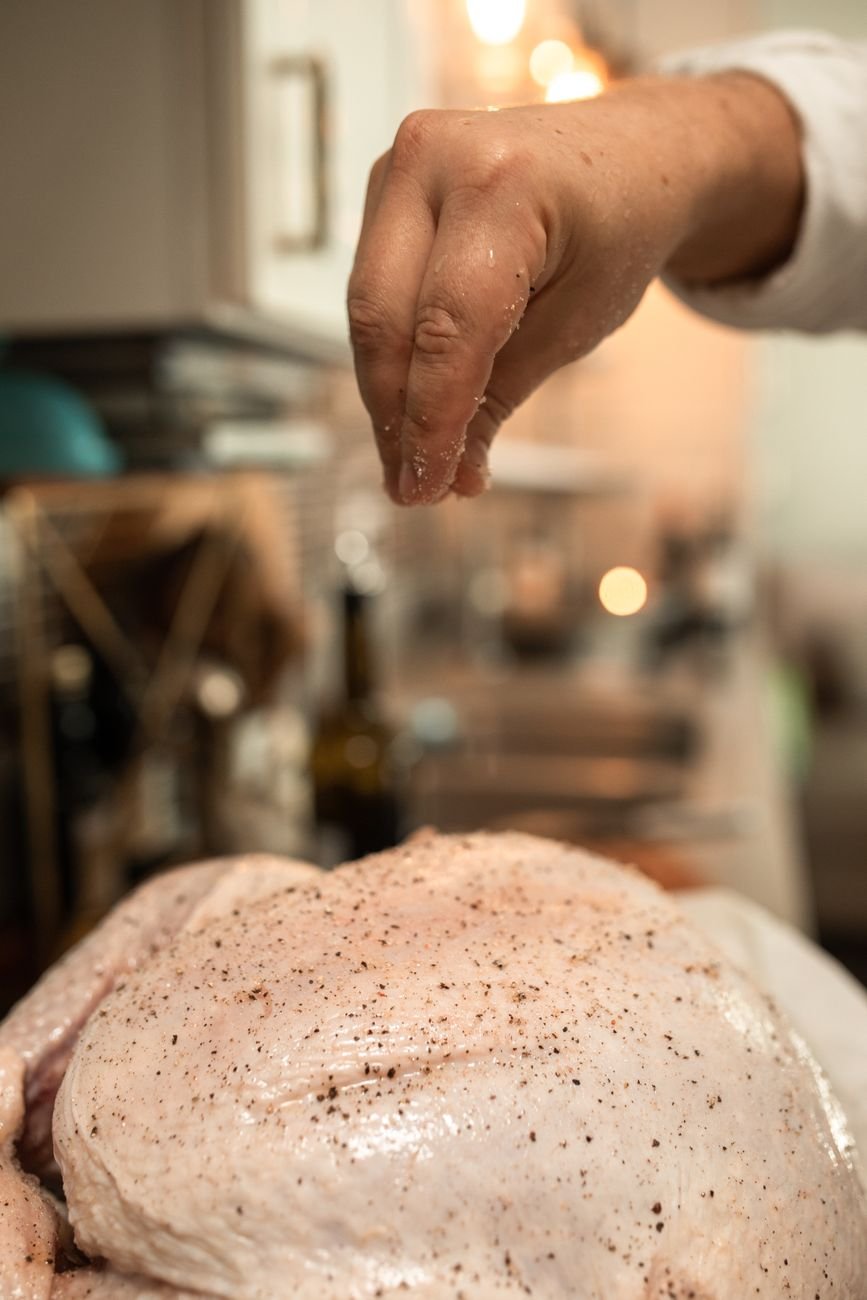
Salt brands differ sharply in how much salt fits in a cup, which is why the weights above matter more than the volumes. If you remember one number, remember the ratio: about 50 g of Diamond Crystal kosher salt per litre of water, roughly 5 percent by weight, scaled down for denser salts as listed.
Wet brine, step by step
Step 1: Dissolve. Put 1 litre (4 cups) of the water in a large pot with the salt, sugar, and aromatics. Heat gently, stirring, only until the salt and sugar fully dissolve. You are not making soup; the moment the liquid is clear, take it off the heat.
Step 2: Chill the brine completely. Add the remaining 3 litres of cold water and the ice, and refrigerate the brine until it is fully cold, below 4 degrees C (40 degrees F). Warm brine on a raw turkey is a food safety failure, not a shortcut.
Step 3: Submerge the bird. Put the thawed turkey, with the giblets and neck removed and saved for gravy stock, into a brining bag, a large stockpot, or a clean cooler. Pour the cold brine over it, add cold water if needed to cover, and seal or cover it.
Step 4: Refrigerate 12 to 24 hours. Use the timing table below by weight. Turn the bird once halfway if it is in a bag and you can do it easily.
Step 5: Rinse, dry, rest. Lift the turkey out, rinse it briefly under cold water to remove surface salt, and pat it thoroughly dry. Set it uncovered in the fridge for 8 to 24 hours if you can: this air drying is what restores crisp skin on a wet brined bird. If time is short, dry it very well with towels and roast it the same day.
Method Two: How to Brine a Turkey With a Dry Brine
The dry brine, also called a pre salt, is the simpler method: salt and aromatics rubbed onto and under the skin, with no water at all. It concentrates the flavour, produces excellent crisp skin, and needs nothing but the fridge shelf the bird is already sitting on.
Dry brine ingredients and steps
Use 1 tablespoon of Diamond Crystal kosher salt per 2 kg (about 4 to 5 lb) of turkey, and scale other salts down in proportion as listed in the wet brine ingredients, for example 3/4 tablespoon of Morton kosher salt or 2 teaspoons of fine table salt for the same weight. Add a little finely ground black pepper and a small handful of dried thyme, rosemary, or sage, rubbed in with the salt. Mix the salt and aromatics in a bowl first, then work through the steps.
Step 1: Pat the turkey dry and sprinkle the salt evenly over the breast, legs, and the inside of the cavity. Use your fingertips to rub a little of the mix under the skin of the breast, lifting it gently so it does not tear.
Step 2: Set the bird on a rack over a rimmed tray, uncovered, in the fridge. Uncovered matters: the dry surface is what produces crisp skin later. Leave it 24 to 72 hours, longer for larger birds.
Step 3: Do not rinse. The salt has been drawn into the meat, and rinsing only re-wets the skin you worked to dry. Brush off any loose surface salt with a dry paper towel and roast the bird as usual.
How to Brine a Turkey: Timing by Bird Size
| Turkey weight | Wet brine | Dry brine |
|---|---|---|
| 4.5 to 5.5 kg (10 to 12 lb) | 12 to 18 hours | 24 to 48 hours |
| 5.5 to 7 kg (12 to 15 lb) | 18 to 24 hours | 48 to 72 hours |
| 7 to 9 kg (15 to 20 lb) | 24 hours, no more | 48 to 72 hours |
Over brining does not help. A wet brine left for two days begins to cure the meat, which turns the texture spongy and the flavour ham-like. A dry brine past 72 hours does the same more slowly. If life intervenes and the bird overruns its time, rinse a wet brined bird well, dry it thoroughly, and skip any extra salt in the pan juices and gravy.
Food Safety Rules That Are Not Optional
When you brine a turkey, raw turkey and salt water demand the same discipline as any poultry handling. The USDA turkey basics guidance covers thawing in full; the working rules for brining are these. Thaw the turkey completely first, allowing roughly 24 hours in the fridge per 2 kg (4 to 5 lb). Keep the brining bird at or below 4 degrees C (40 degrees F) the entire time, which means a fridge, or a cooler whose ice you check and replenish so a thermometer confirms the temperature. Never brine at room temperature.
Discard used brine completely; it has held raw poultry and is never reused, boiled or otherwise. Wash the sink, counters, and your hands after handling the bird, and cook the turkey to 74 degrees C (165 degrees F) in the thickest parts, checked with a thermometer rather than a timer.
Roasting Day After a Brine
A brined turkey roasts exactly like any other, with three adjustments. First, skip any additional salt in butter rubs or seasoning blends, because the bird is seasoned through; pepper, herbs, and butter are all still welcome. Second, expect the drippings to be saltier than usual, so when you make the turkey gravy, taste before adding any salt at all, and consider stretching the pan juices with unsalted stock. Third, watch the browning: sugar in a brine encourages colour, so tent the breast loosely with foil if it darkens early.
Serve the bird with the dishes that frame it: the classic stuffing, proper mashed potatoes waiting for that gravy, a cranberry sauce made days ago without stress, the sweet potato casserole reheating as the bird rests, and the green bean casserole holding its place as the table’s green dish. Then, when the plates are cleared, the cook who remembered to brine has earned a slice of pecan pie.
How to Brine a Turkey: Wet Brine or Dry Brine?
Choose the wet brine when the bird is large and you have the fridge space and a suitable container: it produces the juiciest white meat and the most even seasoning. Choose the dry brine when you want crisp skin with the least effort and no special equipment. A dry brine is also the better choice if you cook a stuffed bird, because it leaves less water in the cavity to manage. Both methods reliably improve a turkey. Neither rescues an overcooked one, so keep the thermometer handy.
Flavour Additions That Actually Work
Most of the flavour from a brine comes from the salt, not the aromatics. Herbs, citrus, and spices contribute subtly, which is why this guide keeps them restrained. Peppercorns, bay leaves, and thyme or sage add a quiet background note. Garlic and onion, used whole and lightly crushed, lend a little depth. Anything acidic, such as citrus juice or vinegar, is best kept modest, because long acid exposure begins to cure the surface of the meat.
Do not add soy sauce, stock cubes, or seasoning mixes to a wet brine unless you have recalculated the total salt: their sodium counts toward the 5 percent ratio and can push the brine over it. The safest way to add flavour is to butter the skin and season the cavity on roasting day, after the brine has done its work.
Troubleshooting Brined Turkeys
The bird does not fit in the fridge. Use a cooler and ice. A 7 kg turkey with brine needs a large cooler, and the ice must keep the liquid below 4 degrees C (40 degrees F). Check it with a thermometer twice a day and top up the ice. If you cannot keep it cold, choose the dry brine instead.
I forgot and brined too long. Rinse a wet brined bird thoroughly and pat it dry. If the flavour is already salty, skip salt everywhere else: no salted butter rub, no salt in the pan juices or gravy, and serve it with unsalted sides.
The skin will not crisp. The cause is almost always moisture. Dry the bird far more thoroughly than feels necessary, leave it uncovered in the fridge overnight if you can, and roast it at the temperature in the recipe, not lower. A wet brine without the resting step produces soft skin.
The gravy is far too salty. Stretch the pan juices with unsalted stock, or make the gravy from stock alone and serve the drippings on the side. Add a little cream or butter to round the salt. This is the one brine mistake that is hard to reverse, so taste before you salt anything.
I bought the wrong turkey, and it is self basting. Do not brine it. Roast it as it is, season it lightly, and make a good gravy. You will still have a fine dinner.
Frequently Asked Questions About How to Brine a Turkey
How long should you brine a turkey?
In a wet brine, 12 to 24 hours depending on the weight; longer is not better. In a dry brine, 24 to 72 hours. Use the timing table above rather than guessing.
Do you rinse a turkey after brining?
After a wet brine, yes: a brief rinse removes surface salt. After a dry brine, no: brush off loose salt and roast it as it is.
Does brining make turkey taste salty?
Only if the ratio is wrong or the bird was already salted. At the ratio in this guide, the meat tastes well seasoned rather than salty. Taste the drippings before adding salt to the gravy.
Is a dry brine really better than a wet brine?
For skin, yes. For white meat juiciness, the wet brine still edges it. The difference is smaller than the choice between brining and not brining.
Can I brine a frozen turkey?
No. Thaw it completely first, allowing roughly 24 hours in the fridge per 2 kg (4 to 5 lb). A partly frozen bird will not absorb the brine evenly, and the outside will sit in the danger zone while the centre thaws.
Can I brine a turkey breast instead of a whole bird?
Yes. Use the dry brine ratio and 24 hours for a bone-in breast. It is the simplest way to test brining before committing a whole bird to it.
Planning Backwards From the Table
Learning how to brine a turkey rewards a calendar more than any skill. Count back from the moment the turkey goes in the oven. A dry brine wants up to 72 hours, a wet brine 12 to 24 hours plus an overnight rest. Add the thawing time, 24 hours per 2 kg, and you have the date to start. Write it on the fridge door. On the day, the turkey is already seasoned, the gravy has a plan, and the cook is not improvising the most expensive item on the table.
The Bottom Line on How to Brine a Turkey
How to brine a turkey comes down to salt, water or no water, and time, and it is the highest return step in the whole Thanksgiving cook. It takes an hour of attention spread over two or three days, and it changes the one dish that carries the meal. Pick a method, follow the ratio, respect the clock, and roast the bird like any other, with a thermometer to tell you when it is done.
This guide is general home cooking information and is not a substitute for official food safety guidance. Always follow your local food safety authority, thaw and store turkey as directed, and check the internal temperature with a thermometer before serving.

 Ablaze Fitness


