


Why This Mashed Potatoes Recipe Works
Mashed potatoes look simple. However, small details decide whether the bowl is light and creamy or heavy and sticky. This mashed potatoes recipe focuses on those details, so you can repeat the result with confidence.
First, the potatoes start in cold water. As a result, they cook evenly from edge to centre. Meanwhile, the dairy is warmed before it goes in. Warm liquid absorbs easily, so the potatoes stay fluffy instead of cooling and turning dense.
In addition, the method protects the starch. Potatoes become gummy when starch cells burst and release sticky starch. Gentle cooking and gentle mashing keep that starch under control. For example, draining well and drying the potatoes briefly removes extra water and improves flavour.
You will also find make-ahead steps for Thanksgiving in the United States on Thursday, November 26, 2026, plus a lighter version with more protein. For a full menu, this dish pairs well with a green bean casserole recipe and a bright cranberry sauce recipe.
Choosing the Best Potatoes for This Mashed Potatoes Recipe
Variety changes everything. Potatoes differ in starch, moisture and flavour, and those differences show in the final bowl.
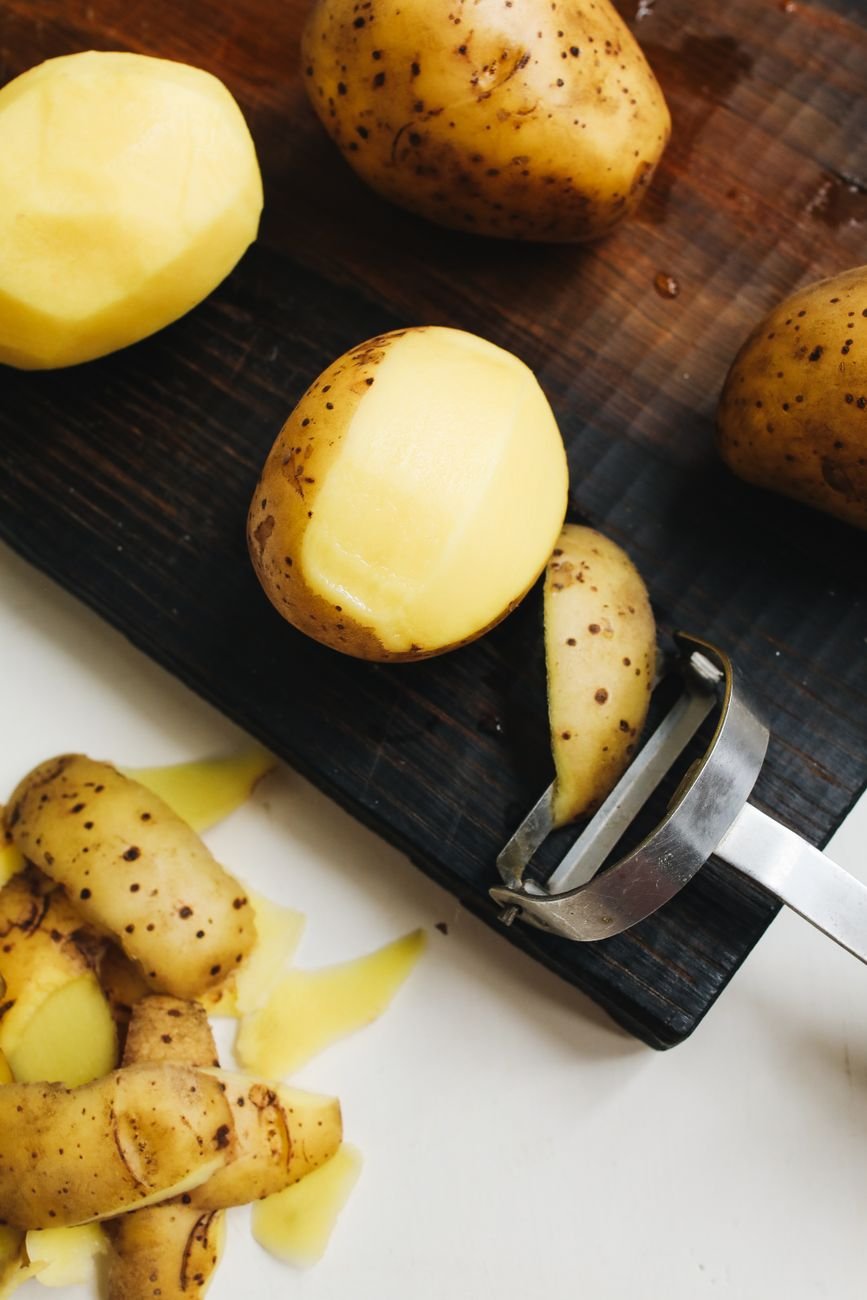
Russet Potatoes
Russets are high in starch and low in moisture, with thick brown skin and white flesh. They become dry and fluffy when cooked, so they absorb butter and milk very well. As a result, russets make the lightest mash. However, they need a gentle hand, because their starch swells easily and overworking causes gluey results. Their flavour is mild, earthy and classic.
Yukon Gold Potatoes
Yukon Golds have medium starch, thin golden skin and yellow flesh. They taste naturally buttery and give a creamy, smooth texture. In addition, they are more forgiving. They resist gumminess, stay moist with less liquid, and suit everyday cooking well. If you want creaminess without heavy cream, choose this variety.
Red Potatoes
Red potatoes are waxy and low in starch, with thin red skin and firm flesh. They hold their shape, so they make a chunkier and more rustic mash. Some cooks leave the skin on for colour. Meanwhile, they absorb less liquid and stay more dense and less fluffy than russets. However, that density suits garlic and herb styles served beside roasted meats.
Which Variety Should You Choose
For fluffiness, choose russets. Yukon Golds give creamy flavour. Red potatoes suit a rustic style. In addition, a half and half mix of russet and Yukon Gold gives both lightness and rich flavour.
Ingredients for This Mashed Potatoes Recipe
This recipe serves 6 to 8 people as a side dish. Halve it for a small meal, or double it for a large gathering.
- Potatoes: 1.4 kilograms or 3 pounds, peeled, cut into 4 centimetre or 1.5 inch chunks
- Salt for cooking water: 15 grams or 1 tablespoon, plus more to taste
- Unsalted butter: 115 grams or 8 tablespoons or 0.5 cup, at room temperature
- Whole milk: 180 millilitres or 0.75 cup, warmed
- Double cream or heavy cream: 60 millilitres or 0.25 cup, warmed, optional
- Garlic: 2 cloves, peeled and lightly crushed, optional
- Black pepper: 2 grams or 0.5 teaspoon, or to taste
- Chopped fresh chives: 15 grams or 3 tablespoons, optional
- Extra butter for serving: 30 grams or 2 tablespoons, melted, optional
Keep dairy amounts flexible. Different potatoes absorb different amounts, so add liquid gradually and stop when the texture looks right. As a result, you avoid a soupy mash. If you track portions, you can check a serving with the calorie calculator to plan the rest of the plate.
Equipment You Will Need for This Mashed Potatoes Recipe
Use a large pot of at least 5 litres or 5 quarts and a colander for quick draining. For mashing, a potato ricer gives the smoothest result, a food mill also works well, and a hand masher gives a chunkier texture. However, avoid a food processor or high-speed blender, because fast blades break starch cells and make the mash sticky.
Mashed Potatoes Recipe: Step by Step Method
Follow the steps in this mashed potatoes recipe in order. Most problems come from rushing or from adding cold liquid. Meanwhile, warming the milk while the potatoes cook saves time.
Step 1: Prepare the Potatoes
Peel and cut the potatoes into even chunks of about 4 centimetres or 1.5 inches. Place them in a pot and cover with cold water by about 2.5 centimetres or 1 inch. Even size matters, because small pieces overcook while large pieces stay hard. If not cooking at once, keep them covered in cold water for up to 2 hours.
Step 2: Cook Until Just Tender
Add 15 grams or 1 tablespoon of salt. Bring to a boil over high heat, then reduce to medium and simmer gently for 15 to 20 minutes. The potatoes are ready when a knife slides in easily and the chunk breaks apart. Do not boil hard throughout, because a violent boil breaks pieces down too early. In addition, start checking at 12 minutes for smaller chunks.
Step 3: Drain and Dry
Drain well and let steam escape for 1 minute. Then return the potatoes to the warm empty pot over low heat for 1 to 2 minutes, shaking gently. This drying step drives off surface water. As a result, the potatoes absorb butter and milk better and taste stronger. However, watch closely so the bottom does not scorch.
Step 4: Warm the Dairy
Warm the milk and cream in a small pan over low heat until steaming but not boiling, about 60 degrees Celsius or 140 degrees Fahrenheit. Add garlic to the warm milk for gentle flavour if you like, and remove it after 5 minutes. Warm dairy matters, because cold milk cools the potatoes, makes them stiff, and forces extra mashing that harms texture.
Step 5: Rice or Mash Gently
Rice the hot potatoes back into the pot, or mash with a hand masher until most lumps are gone. Work quickly while hot. Stop as soon as the texture looks mostly smooth, even if a few small lumps remain. For example, a ricer gives smoothness without extra force, so it is ideal for large holiday batches.
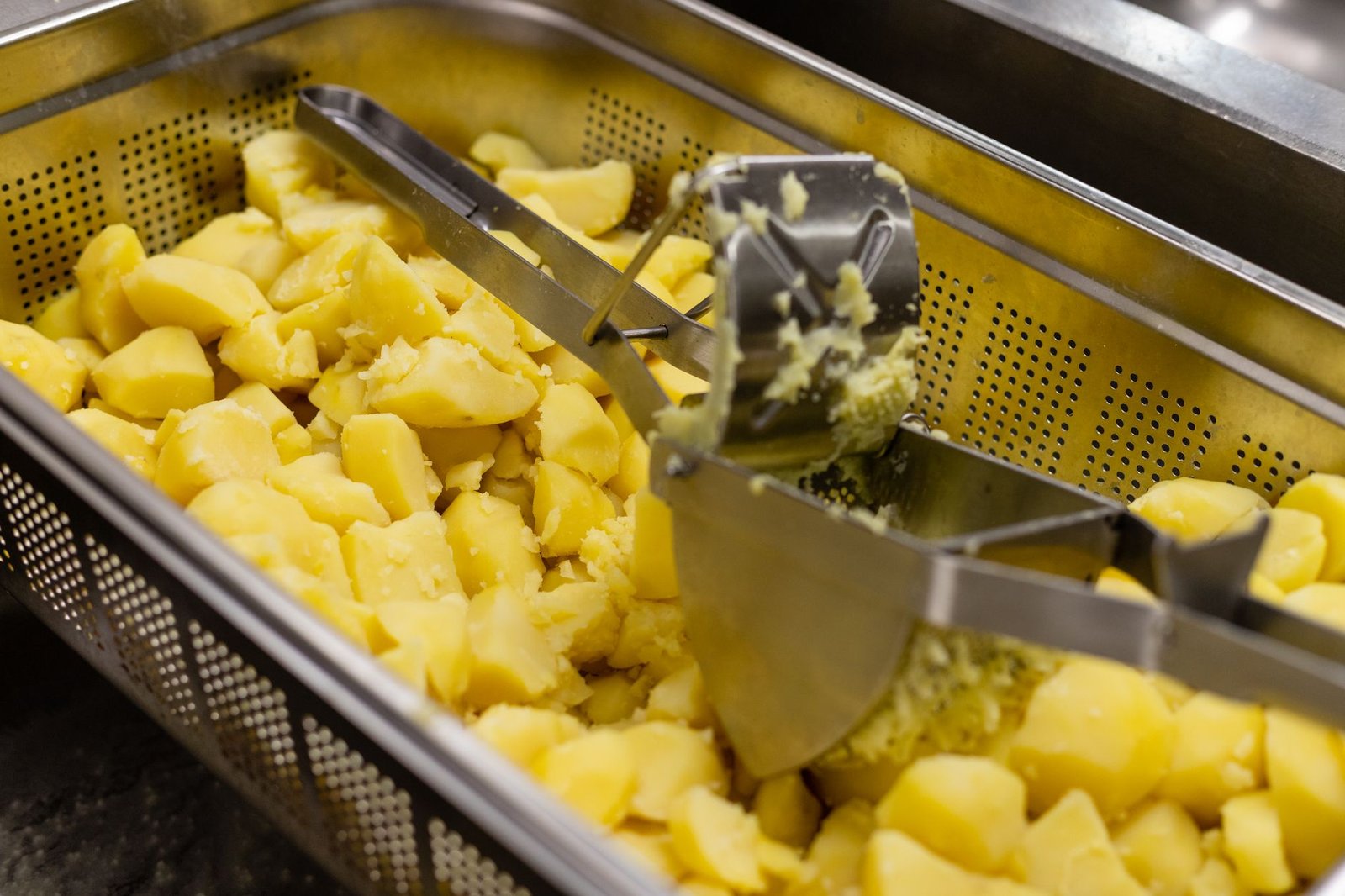
Step 6: Add Butter, Then Liquid
Add butter first and fold gently until melted. Butter coats the starch and adds richness. Then add half the warm milk and fold gently. Add more liquid a little at a time until the mash is soft and holds a gentle peak. Season with salt and pepper and taste after the butter melts, because flavour settles then.
Step 7: Serve Warm
Spoon into a warm bowl, swirl the top, and add extra melted butter and chives if you like. Serve at once, ideally at 65 to 70 degrees Celsius or 150 to 160 degrees Fahrenheit. If you must hold it, keep it covered in a warm oven at 90 degrees Celsius or 200 degrees Fahrenheit for up to 30 minutes. Meanwhile, set out other sides, such as a sweet potato casserole recipe.
Why Potatoes Go Gummy and How to Avoid It
Gummy potatoes feel sticky, elastic and heavy. The cause is starch. Inside each cell, starch granules swell with heat and water. When many cells burst, free starch forms a glue-like paste. This mashed potatoes recipe is built around that fact, so every step protects the starch.
Several habits burst those cells. Overcooking softens the structure too far. Overmashing, especially with fast machines, tears cells apart. Adding cold liquid forces extra mixing. In addition, working potatoes while cool needs more force and causes more damage.
To avoid gumminess, cook until just tender and drain promptly. Dry the potatoes briefly. Use a ricer or gentle hand masher. Add warm liquid gradually and fold, do not beat. Work while hot, because hot potatoes mash with less force.
If the mash starts to feel sticky, stop mixing at once. You cannot fully undo released starch. However, folding in a little more warm milk and butter and serving in a shallow dish can improve the texture. For large batches, rice in smaller portions instead of using a big machine.
Make-Ahead and Reheating for Thanksgiving
Thanksgiving in the United States falls on Thursday, November 26, 2026. Oven and stove space are limited that day, so making this mashed potatoes recipe ahead reduces stress.
Make Them One Day Ahead
Prepare the recipe fully, but use about 30 millilitres or 2 tablespoons less milk. Cool quickly, cover, and refrigerate within 2 hours. The texture will firm in the fridge, which is normal.
For oven reheating, place the mash in an oven-safe dish, dot with 15 to 30 grams or 1 to 2 tablespoons of butter, cover with foil, and heat at 180 degrees Celsius or 350 degrees Fahrenheit for 30 to 40 minutes, stirring halfway. Add warm milk a spoonful at a time until soft again.
For stove reheating, use a heavy pot over low heat. Add 60 to 120 millilitres or 0.25 to 0.5 cup of warm milk and stir gently for 15 to 20 minutes until steaming hot. Keep heat low to avoid scorching.
Make Them on the Morning
Alternatively, make the mash in the morning and hold it in a slow cooker on warm. Cover the surface with about 30 millilitres or 2 tablespoons of warm milk to prevent drying, and stir every 30 to 45 minutes. It stays pleasant for up to 3 to 4 hours. However, keep it above 60 degrees Celsius or 140 degrees Fahrenheit for food safety.
Plan about 200 to 250 grams or 1 to 1.25 cups per person when many sides are served. Extra mash reheats well the next day in dishes such as these high protein soup recipes.
A Lighter, Higher-Protein Variation
Classic mash is rich and satisfying. However, some readers want a lighter weeknight version of this mashed potatoes recipe, or more protein to stay full longer. This variation keeps a fluffy texture while reducing butter and adding protein.
Lighter Ingredients
- Potatoes, Yukon Gold preferred: 1.4 kilograms or 3 pounds, peeled and cut as above
- Salt for cooking water: 15 grams or 1 tablespoon
- Plain low-fat Greek yogurt: 200 grams or about 0.75 cup plus 2 tablespoons, at room temperature
- Skim or low-fat milk: 120 millilitres or 0.5 cup, warmed
- Butter: 30 grams or 2 tablespoons, melted
- Garlic powder: 2 grams or 0.5 teaspoon, optional
- Salt and black pepper to taste
- Chopped chives or parsley: 15 grams or 3 tablespoons
For even more protein, blend cottage cheese into the warm milk. Use 200 grams or about 0.75 cup of cottage cheese, blended until completely smooth, and reduce yogurt to 100 grams or about 0.4 cup. Blending matters, because unblended curds create lumps.
Lighter Method
Cook, drain and dry the potatoes as in the main method. Rice or mash gently. Fold in melted butter, then warm milk. Next, fold in yogurt or the cottage cheese mixture at the end, off the heat. Yogurt can split if it boils, so keep the heat gentle. Taste and season well, because yogurt adds tang that needs salt, pepper and fresh herbs for balance.
Honest Nutrition Estimates
These are estimates per serving, based on 8 servings, and values vary with ingredients and amounts. The classic version provides roughly 280 to 320 kilocalories, 4 to 5 grams of protein, 12 to 15 grams of fat and 38 to 42 grams of carbohydrate.
Meanwhile, the yogurt version provides roughly 190 to 220 kilocalories, 8 to 10 grams of protein, 3 to 5 grams of fat and 36 to 40 grams of carbohydrate. The cottage cheese version can reach about 10 to 12 grams of protein with similar calories. Use these figures as planning guides, not exact labels. For contrast beside creamy dishes on another day, try the crunch from a roasted pumpkin seeds recipe.
Storage and Food Safety for This Mashed Potatoes Recipe
Mashed potatoes are perishable because they contain dairy and moisture. Cool leftovers quickly in shallow containers and refrigerate within 2 hours. Store at or below 4 degrees Celsius or 40 degrees Fahrenheit, and use within 3 to 4 days. That short window applies to any batch of this mashed potatoes recipe.
For freezing, portion into airtight containers, remove excess air, and freeze at or below minus 18 degrees Celsius or 0 degrees Fahrenheit. Best quality lasts up to 1 month, although the mash remains safe longer if kept frozen continuously. After thawing, reheat with a little warm milk to restore creaminess.
Reheat leftovers until steaming hot throughout, at least 74 degrees Celsius or 165 degrees Fahrenheit, and reheat only once. Stir during reheating so the centre warms evenly. If leftovers smell sour, look slimy or sat out for more than 2 hours, discard them. For detailed guidance, see the USDA guidance on leftovers and food safety from FoodSafety.gov. In addition, label containers with the date to avoid guesswork.
Common Mistakes to Avoid in This Mashed Potatoes Recipe
Starting in hot water. If potatoes go into boiling water, the outside overcooks while the centre stays firm. Then you cook longer, and the outside falls apart. Starting in cold water solves this simply.
Cutting uneven pieces. Uneven chunks cook at different rates. Small pieces turn waterlogged while large pieces stay hard. Meanwhile, the final texture becomes mixed and uneven. Cut evenly and check a few pieces.
Skipping the drying step. Wet potatoes dilute flavour and force you to use less dairy. As a result, the mash tastes flat. A brief return to low heat removes surface water and improves flavour and texture.
Adding all liquid at once. Potatoes vary, so a fixed amount does not suit every batch. Pouring in everything can create a loose mash. Add gradually, fold gently, and judge texture before adding more.
Overworking the mash. Beating or processing for too long releases starch and causes gumminess. Work briefly, accept a few small lumps if needed, and use a ricer for smoothness without force.
Under-seasoning. Potatoes absorb salt and taste mild. Taste after butter and liquid are added, because flavour settles then. In addition, season the cooking water for an even result throughout.
Mashed Potatoes Recipe Serving Ideas and Simple Variations
For a garlic version of this mashed potatoes recipe, simmer 3 to 4 garlic cloves with the potatoes and rice them together. Herb mash comes from folding in 30 grams or 0.5 cup of finely chopped soft herbs at the end. A richer finish comes from spooning over brown butter made from 60 grams or 4 tablespoons of butter cooked over medium heat for 3 to 5 minutes until nutty and golden.
Leftovers also make crisp potato cakes. Mix cold mash with flour, 30 grams or 0.25 cup per 500 grams or about 2 cups of mash, form patties, and cook in a lightly oiled pan over medium heat for 3 to 4 minutes per side.
Mashed Potatoes Recipe: Frequently Asked Questions
Can I make mashed potatoes without peeling them?
Yes, especially with thin-skinned Yukon Gold or red potatoes. Wash well and mash with skin on for a rustic texture. However, russet skins are thick and tough, so peeling russets gives a better result.
How do I fix mashed potatoes that are too runny?
Return the pot to low heat and stir gently for 2 to 3 minutes to remove extra moisture. Alternatively, fold in a little more riced cooked potato. Add fixes gradually, because texture tightens as the mash sits.
Can I use only milk and skip the cream?
Yes. Cream adds richness, but warm whole milk alone makes a lovely mash, especially with Yukon Golds. In addition, using only milk slightly reduces calories while keeping the method the same.
Why did my mashed potatoes turn grey or dull?
Potatoes discolour if cut potatoes sit exposed to air, or if they cool fully before mashing. Keep cut potatoes under cold water and mash while hot. As a result, colour stays pale and appetising.
How much mashed potato should I make per person?
Plan on 200 to 250 grams or about 1 to 1.25 cups per person. Start with about 225 grams or 0.5 pound of raw potatoes per person, because peeling and cooking reduce weight. For meals with many sides, the lower end is usually enough.
Can I reheat mashed potatoes in a microwave?
Yes. Add 15 to 30 millilitres or 1 to 2 tablespoons of milk per 500 grams or about 2 cups of mash, cover loosely, and heat in 1 minute bursts, stirring between bursts, until steaming hot at 74 degrees Celsius or 165 degrees Fahrenheit.
A Final Note
This article is for general information and home cooking education only and is not medical, nutrition or food safety advice for your specific situation. Nutrition figures are estimates and vary by ingredient and portion. When in doubt about allergies, dietary needs or safe storage for a vulnerable person, follow official food safety guidance and consult a qualified professional.

 Ablaze Fitness


