


You catch your reflection in the mirror and notice a smooth, round patch of scalp where hair used to be. There is no pain, no rash, and no clear reason for it. That first patch can be confusing, and it can be worrying too. Alopecia areata is the name for this kind of patchy hair loss, and it affects people of all ages. This guide explains what alopecia areata is, what signs to look for, what usually happens over time, and when it is time to talk to a dermatologist. It is general information only, and it cannot replace advice from a health professional who can see your scalp.
You do not need to panic, and you do not need to hide the patch while you wait for answers. A calm first step is to learn what is normal for this condition and what is not. You will learn how alopecia areata differs from other kinds of hair loss, what a dermatologist usually checks, and how people live well with it day to day. Keep reading for a clear, honest picture, and bring your questions to your next appointment.
What Is Alopecia Areata?
Alopecia areata is a condition that causes hair to fall out in round patches. The patches are usually smooth, and the skin underneath often looks normal. The most common place for a patch is the scalp, but patches can also appear in a beard, on the eyebrows, or on the eyelashes. In some people, the hair loss is wider, and in a small number of people it can affect most or all of the hair on the scalp or body. The condition is not contagious, and it is not caused by poor hygiene. Hair can grow back, and that regrowth can happen on its own, but the course is different for every person.
Doctors describe alopecia areata as an autoimmune condition. That means the immune system, which normally protects the body from germs, mistakenly targets the hair follicles. A hair follicle is the tiny structure in the skin that grows a hair. When the immune system affects a follicle, the hair can fall out and growth can pause. The follicle itself usually survives, which is why hair can grow back later. Researchers are still learning why this happens in some people and not in others. What is clear is that it is not your fault, and it is not caused by anything you did to your hair.
How Alopecia Areata Differs From Other Hair Loss
Not all hair loss is the same, and the pattern is often the best clue. Male pattern baldness usually thins the hair slowly at the front and crown, and it follows a gradual pattern over years. Our guide to male pattern baldness explains that pattern in more detail. Traction alopecia, by contrast, comes from repeated pulling, such as tight braids or ponytails, and it often affects the hairline. Our guide to traction alopecia covers the early signs and how to protect the hairline. Alopecia areata is different again, because it tends to appear as sudden, round patches with a smooth surface. Telogen effluvium, another kind of shedding, usually causes diffuse thinning all over the scalp after stress or illness, rather than round patches.
What Are the Signs of Alopecia Areata?
The first sign of alopecia areata is often a round or oval patch of hair loss. The patch is usually smooth to the touch, and the skin may look the same color as the skin around it. Some people notice a few short hairs at the edge of the patch that are narrower at the base, and clinicians sometimes call these exclamation mark hairs because of their shape. A patch can appear without warning, and it may grow slowly or stay the same size for weeks. Some people feel a mild tingling or itching in the area before the hair falls out, while others feel nothing at all.
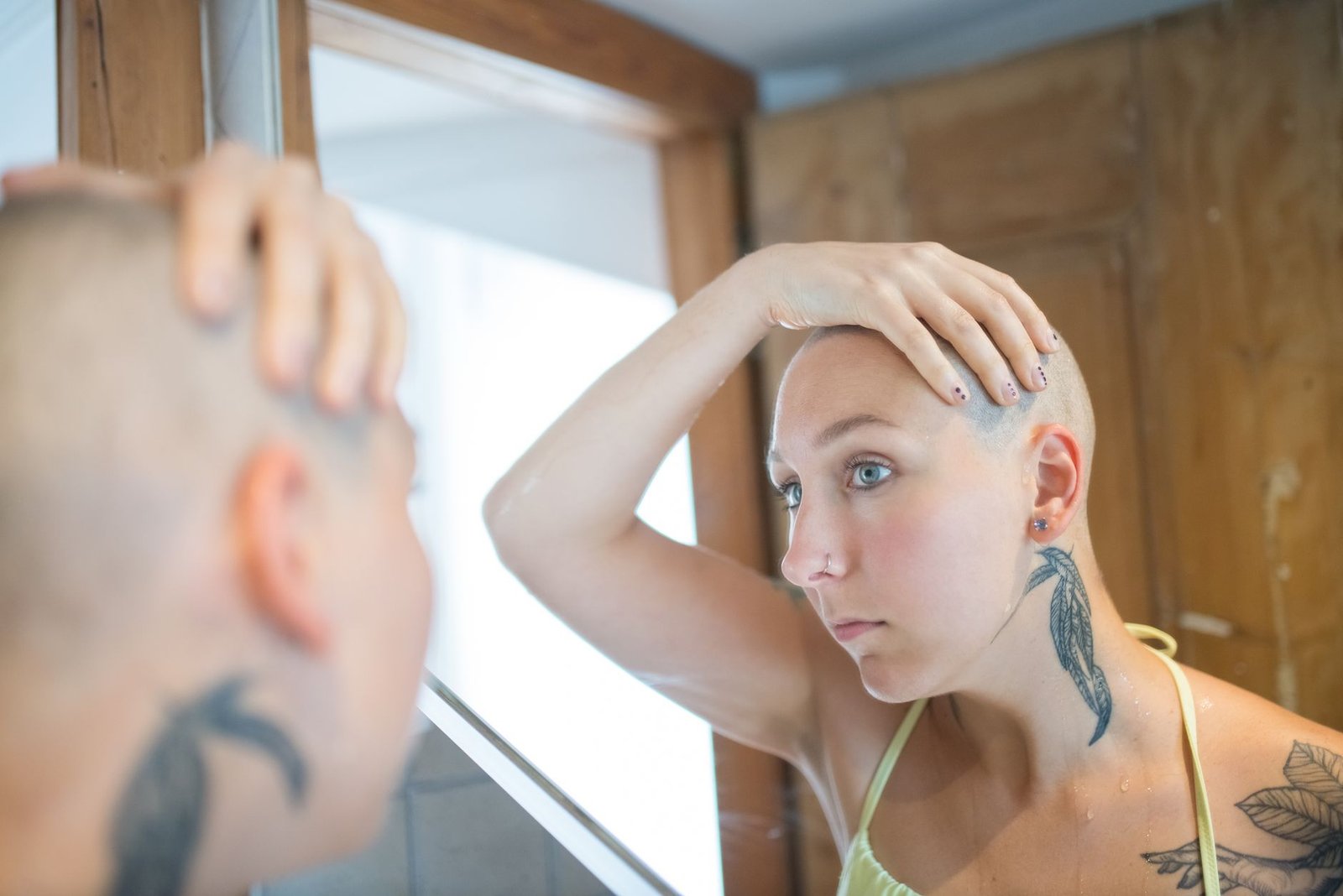
Patches from alopecia areata can show up in more than one place. On the scalp, there may be one patch or several. In a beard, a patch can leave a smooth, bare circle. Eyebrows and eyelashes can thin or fall out too, which can feel more visible and harder to cover. Some people also notice changes in their nails, such as small dents or ridges, and this can happen before, during, or after the hair loss. These nail changes are painless, and they do not happen to everyone. If you notice any of these signs, it is worth getting them checked, even if the patch is small.
Who Gets Alopecia Areata?
Alopecia areata can affect anyone, at any age. Teenagers and young adults notice it most often, but it can also begin in childhood or later in life. It affects men and women in similar numbers, and it occurs in people of all backgrounds. It is one of the more common causes of patchy hair loss, and clinicians see it often in everyday practice. Having a family member with alopecia areata, or with another autoimmune condition, can raise the chance of developing it, but many people with the condition have no family history at all.
People who are otherwise healthy can develop alopecia areata, and it does not mean that something is wrong with your general health. Some people live with one patch that comes and goes, while others have patches that appear in different places over time. Children can develop it too, and when a child has a patch, parents often worry most about teasing at school. A calm, honest talk with your child, and advice from a dermatologist, can make a real difference.
What Causes Alopecia Areata?
Researchers do not fully understand the exact cause of alopecia areata, and that uncertainty can be frustrating. What researchers do know is that the immune system plays a central role. In this condition, immune cells gather around the hair follicles and disrupt the normal growth cycle. Genes play a part too, because the condition runs in some families. Certain genes affect how the immune system behaves, and that can make a person more likely to develop it. Even so, genes are not the whole story, because many people with those genes never develop a patch.
People often ask whether stress causes alopecia areata. Experts do not count stress alone as the cause, but a period of illness, a major life event, or a time of high stress sometimes comes just before a patch appears. That timing can make it look like stress caused the patch, when the link may be more complicated. Researchers are still studying how stress, illness, and the immune system interact. For now, the honest answer is that the cause is a mix of genes and immune activity, and no single trigger explains every case.
The Immune System and Hair Follicles
To understand alopecia areata, it helps to know how hair normally grows. Each hair grows from a follicle, and follicles move through a cycle of growth, rest, and shedding. In alopecia areata, the immune system interrupts the growth phase in some follicles. The hair in those follicles falls out, and new growth pauses. Because the follicle is usually still there, growth can restart later, and that is why patches can fill in again. This cycle explains why the condition can be unpredictable, with patches that appear, fill in, and sometimes appear again in a new place.
How Is Alopecia Areata Diagnosed?
A dermatologist can usually diagnose alopecia areata by looking at the scalp and the pattern of hair loss. The visit often starts with questions about when you first noticed the patch, whether you have had patches before, and whether anyone in your family has a similar condition. The clinician may look closely at the scalp to check the follicles and the hairs at the edge of a patch. In most cases, no test is needed. If the cause is not clear, the clinician may suggest a small skin sample or blood tests to rule out other causes. The NHS overview of hair loss explains how hair loss is assessed in general terms.
It helps to arrive at the visit ready. Note when the patch appeared, whether it has grown or stayed the same, and whether you have noticed itching, tingling, or nail changes. Bring photos if you have them, because a photo shows how the patch looked when you first saw it. Write down your questions in advance, so you do not forget them. A short note can help the clinician give you advice that fits your situation. You can also ask what to expect next with alopecia areata, and when you should come back for a check.
What Can You Expect Over Time?
The course of alopecia areata is hard to predict, and that is one of the hardest parts of living with it. Some patches fill in on their own within months, and the new hair may be fine and pale at first before it thickens and takes on its usual color. Other patches stay the same for a long time, and new patches can appear while old ones are filling in. A small number of people lose more hair over time. No one can say in advance which course you will follow. What helps most is a steady plan and regular check-ins with your clinician.
It is important to be honest about what is not known. There is no way to guarantee that hair will grow back from alopecia areata, and there is no way to prevent new patches with certainty. That does not mean nothing can be done. A dermatologist can talk through the options that exist and help you decide what fits your situation. In the meantime, gentle care and patience matter more than quick fixes. Be wary of any product or program that promises a cure, because no such promise can be kept for this condition.
Living With Alopecia Areata
A patch from alopecia areata can affect how you feel, even when it does not hurt. Some people feel self-conscious, especially when a patch is easy to see. Others feel frustrated by the uncertainty, or tired of explaining it to people who ask. These feelings are normal, and they deserve the same attention as the patch itself. Talking with someone you trust can help, and so can meeting others who live with the same condition. If low mood or worry starts to affect your sleep, work, or daily life, mention it to your clinician, because support is part of good care.
Day to day, most people with alopecia areata carry on with their usual routine. You can wash your hair as normal, and you can keep training, working, and socializing. Some people find that a new parting, a different hairstyle, or a hat helps a patch feel less visible. Others prefer to leave it as it is. There is no right choice, and the best choice is the one that helps you feel comfortable. After training, our guide to electrolytes explains how to replace what you lose in sweat, and our guide to cold plunge benefits looks at one popular recovery method. The goal is to live your life, not to hide from it, and small changes can make a big difference to confidence.
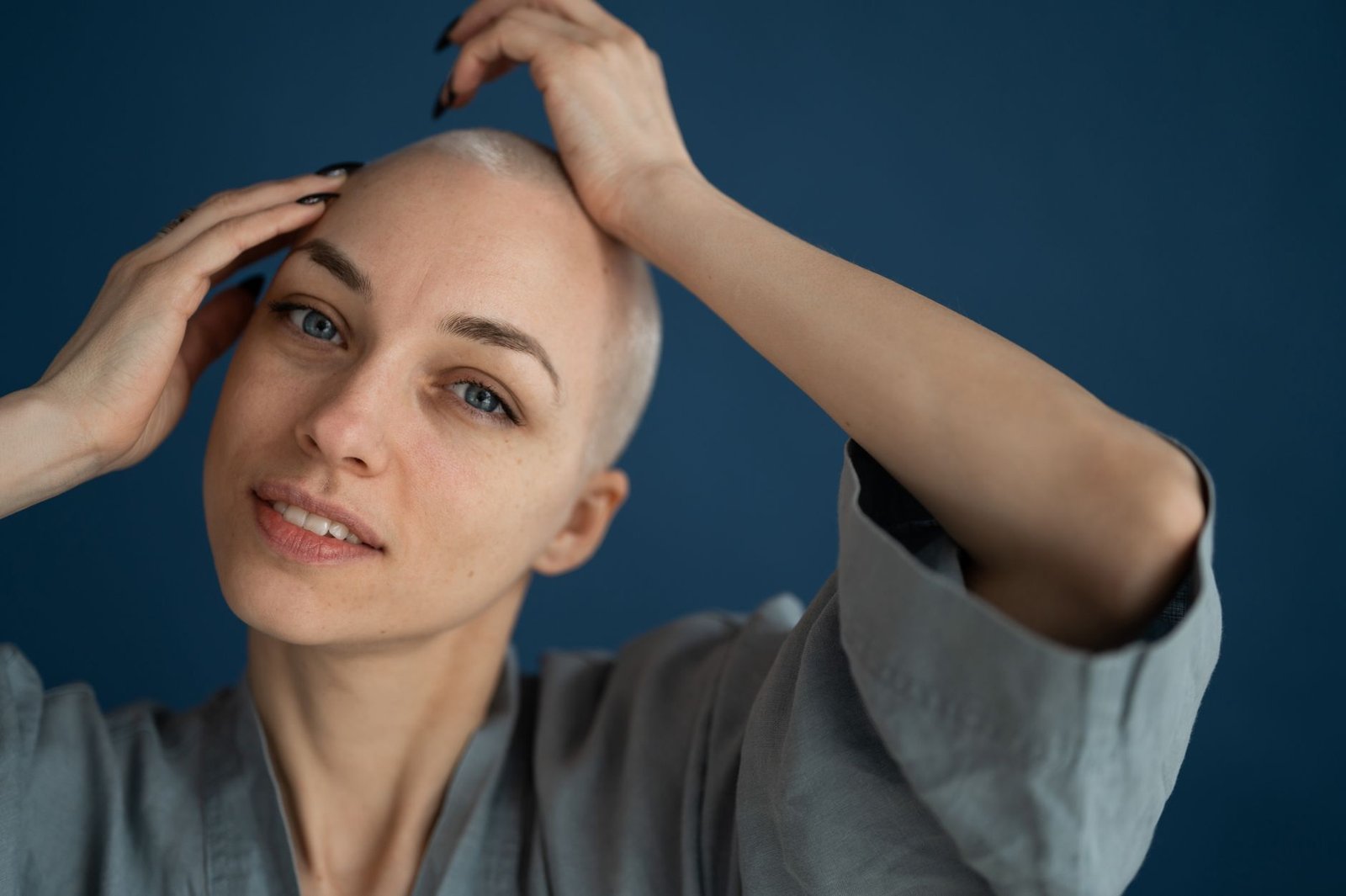
Gentle Hair and Scalp Care
Gentle care is a good habit when you have a patch from alopecia areata. Use a mild shampoo, and avoid pulling, tight styles, and harsh chemical treatments while the scalp is affected. Our guide to traction alopecia explains how tight styles can stress the hairline, and the same gentle approach helps here. Pat your hair dry rather than rubbing it hard, and let it air dry when you can. If you train often, wash after sweaty sessions so salt and sweat do not sit on the scalp. Good nutrition also supports skin and hair in general, and you can read more in our guides to vitamin D supplement and collagen supplement.
Covering Patches and Protecting Skin
If a patch from alopecia areata bothers you, there are simple ways to cover it. A hat, a scarf, or a change of hairstyle can cover a scalp patch, and a brow pencil can help if eyebrows thin. Some people choose a wig or a hairpiece, and there are many styles that look natural. A wig is a personal choice, and it is worth trying a few options before you decide. Bare patches of scalp can burn in the sun, so use sunscreen or cover the area when you are outside. In cold weather, a hat keeps the scalp warm and protects it from the wind.
Common Myths About Alopecia Areata
A few myths about alopecia areata cause needless worry. The first is that it is contagious. It is not, and you cannot catch it from another person or pass it on. The second is that it is caused by poor hygiene or by washing your hair too much. It is not, and your hair care routine did not cause it. The third is that shaving the patch will make the hair grow back thicker. Shaving does not change how hair grows, and it does not treat the condition. The fourth is that it always gets worse. Many people have only one or two patches that fill in over time.
Another myth is that stress alone causes alopecia areata. Stress can be part of the picture, but it is not the whole cause, and blaming yourself for being stressed only adds to the burden. A related myth is that a special diet or a single supplement can cure it. No food or supplement has been shown to cure this condition, and a balanced diet is the best general advice. If a product promises a cure, treat that promise with care, and ask your dermatologist before you spend money on it. Honest information is a better tool than a quick fix.
When to See a Dermatologist About Alopecia Areata
See a dermatologist if you notice a new patch, if patches spread quickly, or if hair loss affects your eyebrows or eyelashes. Get advice sooner if the scalp is painful, red, or sore, or if you notice sores that do not heal. Children with a patch should be seen too, so the clinician can check the scalp and talk with the family. If hair loss is causing real distress, that is also a good reason to seek care. A dermatologist can confirm whether it is alopecia areata, rule out other causes, and talk through the options that exist. You do not need to wait for the patch to get worse before you ask for help.
Frequently Asked Questions
Is alopecia areata contagious? No, alopecia areata is not contagious. You cannot catch it from another person, and you cannot pass it on to someone else. It is an immune system condition, not an infection.
Does alopecia areata cause permanent hair loss? Not usually. The hair follicles are usually still there, so hair can grow back. Some people have patches that fill in and never return, while others have patches that come and go. The course is different for every person, and no one can predict it with certainty.
Can hair grow back after alopecia areata? Yes, hair often grows back, and that regrowth can happen on its own. New hair may be fine and pale at first, and it often thickens and takes on its usual color over time. If a patch does not fill in, a dermatologist can talk through what to do next.
Does alopecia areata affect only the scalp? No, it can affect any hair on the body. The scalp is the most common place, but patches can also appear in a beard, on the eyebrows, or on the eyelashes. In a small number of people, hair loss is more widespread.
Is alopecia areata caused by stress? Stress alone is not thought to cause it, but stress or illness sometimes comes just before a patch appears. The cause is a mix of genes and immune activity, and researchers are still learning how these factors interact.
Two More Common Questions
Can children get alopecia areata? Yes, children can develop it, and it is often first noticed in childhood or the teenage years. A patch can be hard for a child, especially at school. A calm talk, support from family, and advice from a dermatologist can help a child cope.
What should I do first if I notice a patch? Start with a calm look at the patch and a note of when you first saw it. Avoid scratching or pulling at it, and keep your hair care gentle. Then book a visit with a dermatologist, who can check whether it is alopecia areata and explain what to expect.
The Bottom Line
Alopecia areata causes round patches of hair loss, and it can be unsettling when a patch first appears. The good news is that the condition is common, it is not contagious, and hair often grows back. What matters most is getting the right information about alopecia areata, seeing a dermatologist for a clear diagnosis, and giving yourself time. Gentle care, honest expectations, and support from people you trust can make the journey easier. If you notice a patch, do not wait and worry in silence. Get it checked and ask your questions.
This article is for general information only. It is not medical advice. Alopecia areata can have many causes and courses, and a persistent problem may need a dermatologist. If you have concerns about hair loss, talk to a qualified health professional or a dermatologist.

 Ablaze Fitness


 Mélanie Courcelles


