

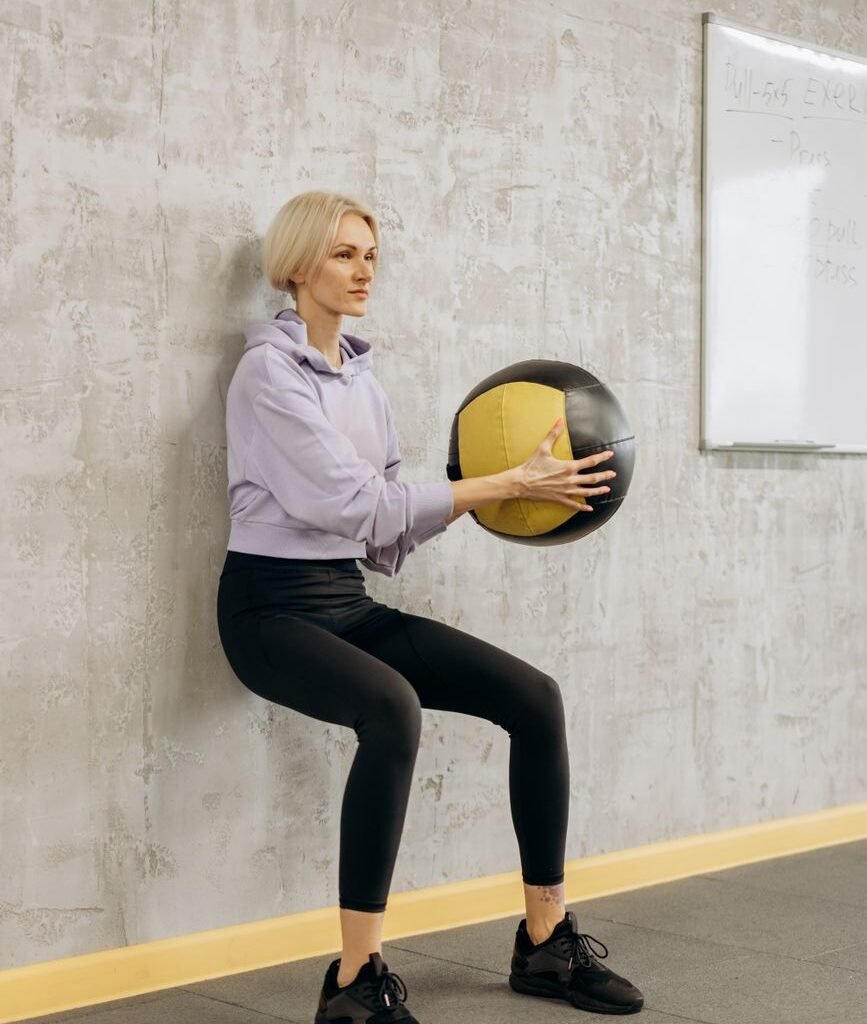
All you need for this workout is a wall, a few feet of floor space, and 20 minutes. Wall pilates for beginners has become one of the most searched home workouts of the year, and the reason is simple: the wall does half the coaching for you. It holds you up, shows you whether your alignment is drifting, and lets you build strength at a pace your joints can handle.
This guide gives you the complete routine. First, it explains what wall pilates actually is and what it can honestly do for you. Next, it covers the safety checks and setup that take two minutes. Finally, it walks you through the full session, move by move, with a two-week starter schedule and clear ways to progress when the basics feel easy.
What Is Wall Pilates for Beginners, and Why Is the Wall the Coach?
Pilates is a method of controlled, precise movement built around the core, posture, and breathing. Wall pilates takes the same principles and swaps the mat and studio equipment for the one thing every home already has: a flat wall.
The wall helps in three specific ways. First, it gives support: moves that would challenge your balance on the open floor, such as a single-leg stance, become manageable when your back or hand rests against something solid. Second, it gives feedback: with your back pressed into the wall during a roll-down or a wall sit, you can feel immediately if your ribs flare or your lower back arches away. Third, it gives resistance: pressing your hands, heels, or back into an immovable surface creates real muscular work, especially for the glutes, thighs, chest, and deep core muscles.
That combination explains who the trend suits. Beginners get guidance without a teacher in the room. Older adults get balance support built into every move. People returning after a long break get a gentle re-entry point that still feels like a workout. The whole session also happens in one spot, so there is no equipment to store and almost no excuse friction on a busy day.
Honest Benefits: What Wall Pilates Can and Cannot Do
Wall pilates is a strength and mobility practice, not a magic fix, and a good routine does not need inflated promises.
What it can reasonably do:
- Build core and glute strength. The wall sit, wall bridge, and wall plank all load the deep abdominal muscles and the glutes in a controlled way. Reviews of Pilates exercise in general link regular practice with better core endurance and stability.
- Improve posture awareness. Working with your back against a wall teaches you what a neutral spine feels like. Over weeks, many people notice slouching sooner and correct it without thinking.
- Support balance confidence. Standing moves with wall contact let you practise weight shifts and single-leg control with a safety net. That matters for everyday things like stairs, curbs, and uneven ground.
- Stay low impact. There is no jumping, no running, and no load crashing through your joints. The intensity comes from holds, slow tempo, and body position, which most joints tolerate well.
What it cannot honestly promise:
- Rapid weight loss. A gentle 20-minute session burns modest calories. If fat loss is your goal, treat wall pilates as the strength and habit part of a bigger picture that includes daily steps and your food choices.
- Spot reduction. Working the thighs against a wall does not melt fat from the thighs. Muscles strengthen where you train them; fat loss, when it happens, happens across the whole body.
- Treatment for pain or injury. This is general fitness information, not rehabilitation. A wall routine can sit alongside professional care, but it does not replace it.
Safety and Setup: Two Minutes Before You Start
Wall pilates for beginners is gentle, but gentle is not the same as careless. Run through these checks once and you are set for every session afterwards.
Choose the right wall. Pick a stretch of wall with nothing hanging on it and enough floor space to lie down in front of it. Move furniture, shoes, and anything you could step on. A hallway wall often works well.
Sort your feet. Bare feet or grippy socks on a hard floor give the best feedback and stop your heels sliding during wall sits. Avoid loose socks on smooth flooring, because several moves involve pressing and sliding under control.
A mat is optional. A thin mat or a folded towel under your back or heels adds comfort for the bridge. You do not need one to complete the routine.
Know the stop rules. Sharp pain, pinching in a joint, dizziness, or pain that changes how you move are all signals to stop that exercise, not to push through. Muscle effort and a mild burn in the working muscle are normal. Joint pain is not.
Check with a professional first if you are pregnant, recently had surgery or a joint replacement, have osteoporosis, uncontrolled blood pressure, a hernia, or a back, neck, or shoulder condition you are managing, or if you have been told to avoid certain positions or loading. A physiotherapist or doctor can tell you which moves to skip or modify.
Finally, warm up honestly: the warm-up below is part of the workout, not an optional extra, because cold muscles and stiff joints cause most beginner niggles.
The Wall Pilates for Beginners Routine: Your 20 Minutes, Step by Step
Here is the session. The timings assume a steady, unhurried pace, and the rests are built in.
- Minutes 0 to 4: warm-up
- Minutes 4 to 17: main set, six moves in a circuit
- Minutes 17 to 20: cool-down stretches
Warm-up, minutes 0 to 4
Standing breathing, 1 minute. Stand with your back lightly touching the wall, feet hip-width apart and a few inches out from the baseboard. Rest your hands on your ribs. Breathe in slowly through your nose and feel your ribs widen sideways. Then breathe out through your mouth and feel your ribs soften down. Repeat for six to eight breaths. This sets the breathing pattern you will use all session: inhale to prepare, exhale as you exert.
Wall roll-downs, 2 minutes. Stay in the same position. On an exhale, tuck your chin and slowly peel your spine away from the wall, one vertebra at a time, letting your arms hang heavy. Roll down only as far as comfortable, roughly until your hands pass your knees. Inhale at the bottom. Then exhale and press your lower back into the wall first, restacking your spine until you are standing tall again. Repeat four times, slower each time.
Shoulder rolls and arm sweeps, 1 minute. Step away from the wall. Roll both shoulders in big, slow circles, five in each direction. Then sweep your arms out to the sides and overhead as you inhale, and lower them as you exhale, four times. Your shoulders and neck should feel warm and loose by the end.
Main set, minutes 4 to 17
Work through the six moves in order. Rest 20 to 30 seconds between moves, or longer if you need it. Quality beats speed at every step.
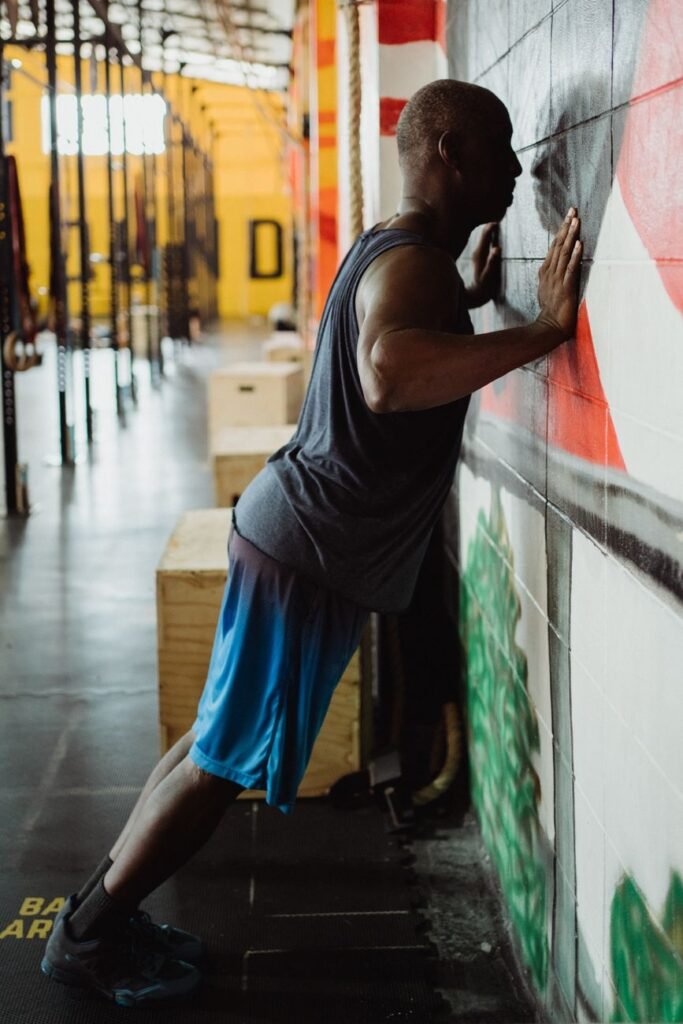
1. Wall push-ups, about 2 minutes. Stand facing the wall, roughly an arm’s length away, and place your palms flat at shoulder height, slightly wider than your shoulders. Keep your body in one straight line from head to heels. Inhale as you bend your elbows and lower your chest toward the wall. Then exhale and press back to the start. Aim for 8 to 12 controlled reps. The closer your feet are to the wall, the easier it feels, so step back a few inches for more challenge. Keep your elbows pointing slightly back rather than flaring wide.
Lower-body strength: wall sit and wall bridge
2. Wall sit with pulses, about 2.5 minutes. Stand with your back against the wall and walk your feet out about two foot-lengths. Slide down until your knees are bent at roughly 90 degrees, or higher if your knees prefer, with your knees tracking over your ankles. Press your whole back into the wall, hands on your thighs or the wall. Hold for 20 to 30 seconds, breathing steadily. Then add small pulses: lift and lower by an inch or two for 10 slow counts. Stand up, shake out your legs, and repeat the hold plus pulses once more. Thighs burning is expected; sharp knee pain is not, so slide up to a shallower angle or skip the pulses if your knees complain. For extra knee support work on other days, the strengthening routine in our guide to exercises to strengthen knees pairs well with this one.
3. Wall bridge, about 2 minutes. Lie on your back with your heels pressed into the wall, knees bent at about 90 degrees, and feet hip-width apart. Rest your arms by your sides. Exhale and press through your heels to lift your hips until your body forms a straight line from knees to shoulders. Squeeze your glutes at the top for two seconds. Then lower slowly, one vertebra at a time. Repeat for 8 to 10 reps. If your hamstrings cramp, walk your feet a little higher up the wall and try again.
Wall Pilates for Beginners: Core, Balance, and Calf Moves
4. Wall plank, about 2 minutes. Stand facing the wall and place your forearms flat against it, elbows under your shoulders. Walk your feet back until your body forms a straight, slanted line. Brace your stomach as if you are about to be gently poked, and keep your head in line with your spine. Hold for 20 to 30 seconds, breathing slowly. Rest, then repeat once. Step your feet further back to make it harder, or closer to the wall to make it easier. Do not let your lower back sag toward the floor.
5. Standing leg slides, about 2.5 minutes. Stand sideways, with your left side near the wall and your left hand resting lightly on it for balance. Shift your weight onto your left leg. Slowly slide your right leg out to the side, keeping your toes pointing forward and your hips facing front, then slide it back in with control. Repeat 8 times. Then turn around and repeat on the other side. Both legs work here, so a mild burn in both is normal. Use the wall for balance only, without leaning your weight into it.
6. Wall calf raises, about 2 minutes. Stand facing the wall with your fingertips resting on it for balance. Rise slowly onto the balls of your feet, taking a full two seconds to reach the top. Pause for one second. Then lower over two seconds until your heels nearly touch the floor. Repeat for 12 to 15 reps. Calf strength supports walking, balance, and ankle stability, and calves are one of the most skipped areas in beginner training.
Cool-down, minutes 17 to 20
Chest opener, 1 minute. Stand sideways next to the wall and place your nearest palm flat on it behind you at shoulder height, arm straight but soft. Gently turn your chest away from the wall until you feel a stretch across your chest and the front of your shoulder. Hold for 30 seconds, then switch sides.
Wall calf stretch, 1 minute. Face the wall and place your hands on it. Step one foot back, heel pressed into the floor, leg straight, and lean gently forward until you feel a stretch in the back calf. Hold 30 seconds, then switch sides.
Standing roll-down and breathe, 1 minute. Return to your starting position with your back against the wall. Take three slow breaths as in the warm-up. Then do one final gentle roll-down, let everything hang loose for a few seconds, and restack your spine against the wall to finish tall.
Your Two-Week Starter Schedule, and How to Progress
Consistency matters more than intensity in the first fortnight. Use this wall pilates for beginners schedule as your starting template:
- Days 1, 3, and 5 of each week: the full 20-minute routine as written.
- Other days: ordinary walking, light activity, or full rest, as your body asks for.
- Week 1 goal: learn the positions and breathing. Rushing is the only real way to do this week wrong.
- Week 2 goal: smooth the transitions between moves and trim rests toward 20 seconds if you feel ready.
After two weeks, progress one lever at a time, never all three at once:
- Longer holds. Build the wall sit toward 45 to 60 seconds and the wall plank toward 40 to 45 seconds.
- Slower tempo. Count three seconds down and three seconds up on push-ups, bridges, and calf raises. Slow reps are harder reps, with no extra equipment.
- Single-leg variations. Try single-leg calf raises with a fingertip on the wall, or a wall sit with one heel lifted for a few seconds at a time. Keep a hand near the wall until the new version feels steady.
If the full routine starts to feel short, add a second round of the main set with an extra minute of rest in the middle, which takes the session to about 30 minutes. Alternatively, pair this routine with the walking days in our beginner home workout plan with no equipment, which gives you a complete week of bodyweight home training.
Common Beginner Mistakes to Avoid
- Holding your breath. Bracing is not breath-holding. Keep the exhale-on-effort pattern going, especially during holds, or you will feel dizzy and tense.
- Sliding too low in the wall sit. Deeper is not better in week one. A shallower angle with good form builds more strength than a deep slide with your knees caving in.
- Locking the knees. Keep a soft bend in standing moves. Locked knees pass the work to the joint instead of the muscle.
- Rushing the reps. Wall pilates rewards slowness. If you finish a move early, the fix is a slower count, not more reps.
- Skipping the warm-up. Two minutes of breathing and roll-downs is what makes the main set feel smooth instead of stiff.
- Judging the routine by soreness. Mild next-day stiffness is common when a move is new. Its absence later does not mean the workout stopped working; it usually means you adapted, which is the point.
Wall Pilates or Chair Yoga: Which Gentle Practice Fits You?
Chair yoga is the other gentle at-home practice having a moment right now, and the two suit different people. Chair yoga keeps you seated or standing with chair support, and leans toward mobility, stretching, and breathing, which makes it a kind first step for very stiff or cautious beginners. Wall pilates for beginners adds more strength work, especially for the legs, glutes, and core, while keeping the same low-impact, supported feel. Many people use both: chair sessions on stiff days, wall sessions when they want to feel their muscles work. Neither needs equipment, a class, or leaving the house.
Frequently Asked Questions
Is wall pilates actually good for complete beginners?
Yes, because the wall supplies the balance and alignment help a beginner normally gets from an instructor. Every move here has an easier version built in, usually by standing closer to the wall or shortening the hold. Start with the written version, and only progress when the basics feel steady.
How often should I do wall pilates as a beginner?
Three sessions a week is a solid starting rhythm, with at least one easier day between sessions while your muscles adapt. Daily gentle practice is fine for many people once the routine feels easy, but keep one lighter day in the week and let walking fill the gaps.
Will wall pilates help me lose weight?
On its own, only modestly, because a gentle 20-minute session does not burn many calories. Its real contribution is strength, posture, and a routine you actually repeat. Those habits support weight management alongside daily steps and food choices, but it is not a weight loss programme by itself.
Progress and safety questions
How long before I notice a difference?
Most beginners feel the moves getting more controlled within two weeks, and holds getting longer shortly after that. Visible strength and posture changes are slower, usually a matter of months rather than days. Take the early wins, longer holds and smoother roll-downs, as your progress markers.
Can wall pilates replace my other exercise?
It can be your main strength practice, especially as a beginner, but it does not replace cardiovascular activity. Walking, cycling, swimming, or anything that raises your breathing rate covers the heart and lungs. The strongest simple combination for most beginners is wall pilates two or three times a week plus daily walking.
Is wall pilates safe if I have bad knees or a sensitive back?
Many people with cranky joints find wall work more comfortable than floor or standing free-weight exercise, because the loads are modest and the support is constant. That said, this article is general information, not advice for your joints. Keep the wall sit shallow, stop on sharp pain, and check with a physiotherapist or doctor before starting if you have a diagnosed condition, a recent injury, or a joint replacement.
The Bottom Line
Wall pilates for beginners works because it removes the three things that stop most home workouts: equipment, complexity, and fear of doing it wrong. The wall supports your balance, shows you your alignment, and creates the resistance, while you bring 20 minutes and some patience. Run it three times a week for two weeks, progress one lever at a time, and let consistency do the heavy lifting. Your future self, standing taller with stronger legs, will be glad you started with a wall.
This article is general health and fitness information only and is not medical advice, a diagnosis, or a treatment recommendation. Talk to a qualified professional about your own situation, especially if you have a diagnosed condition, a recent injury, or take medication.

 Ablaze Fitness


