

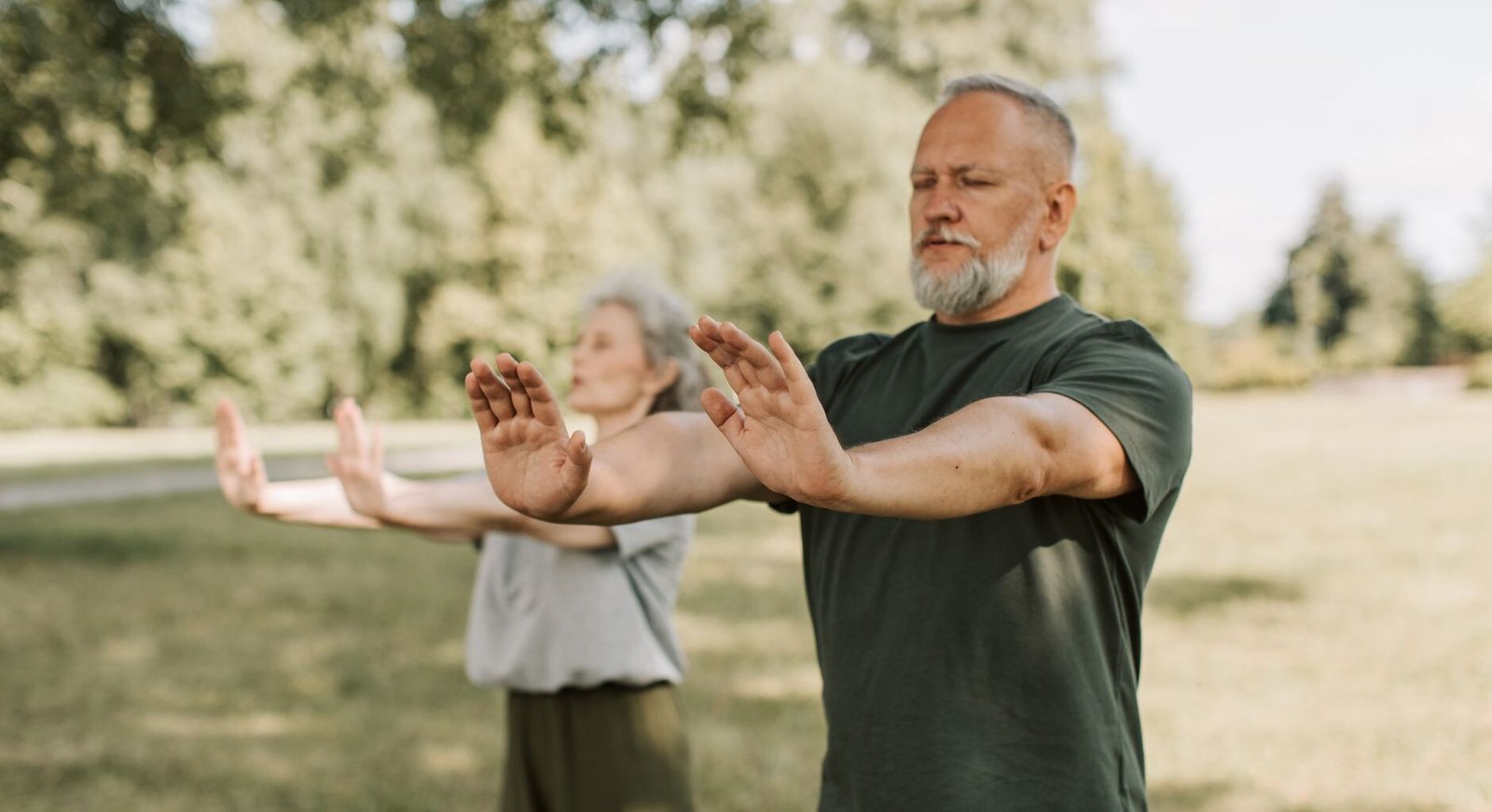
If your feed has started showing slow, flowing walks with swinging arms and deep breathing, you have met tai chi lymphatic walking. The clips are everywhere at the moment, and the promises attached to them are large. People describe lighter legs, less puffiness, and a calmer body after sessions that look more like a moving meditation than a workout.
This guide takes a steadier approach. First, it explains what the lymphatic system actually does, in plain terms. Next, it shows what this walking style involves and how a session is put together. Finally, it separates what gentle movement can plausibly do from the claims that outrun the evidence, so you can try the trend with realistic expectations.
What the Lymphatic System Is, Simply Explained
The lymphatic system is a network of vessels, fluid, and small glands that runs alongside your blood circulation. Its fluid, called lymph, collects water, proteins, waste products, and immune cells from your tissues. From there, the vessels carry that fluid through filtering stations, known as lymph nodes, and eventually return it to the bloodstream.
In other words, it is part of your fluid balance system and part of your immune system at the same time. It helps keep tissue fluid levels steady, and it helps immune cells move around the body where they are needed.
One detail matters for this whole article. Unlike the blood system, the lymphatic system has no pump of its own. Your heart moves blood, but nothing equivalent pushes lymph. Instead, lymph moves when you move. Muscle contractions squeeze the vessels, changes in pressure from breathing help draw fluid upward, and tiny one-way valves stop it flowing backwards.
Consequently, regular movement genuinely supports normal lymph circulation. Walking, stretching, and deep breathing all contribute, which is why people who sit still all day often notice heavy, stiff legs by the evening. That basic physiology is real. What it does not mean, however, is that any specific walking routine can drain, flush, or detox the body in a medical sense, and that distinction runs through everything below.
What Tai Chi Lymphatic Walking Actually Looks Like
Despite the grand name, the practice itself is simple. It combines a slow walk with tai chi style arm movements, relaxed posture, and deliberate breathing. Some versions add gentle heel drops or a soft bounce at the end of a sequence. Most sessions last between 10 and 30 minutes.
Pace and posture
The pace is slow, well below a normal brisk walk. You should be able to breathe through your nose and hold a conversation without effort. Your posture stays tall but relaxed, with your shoulders down, your chest open, and your gaze forward rather than at your feet.
Meanwhile, your steps stay soft. Rather than striding out, you place each foot down gently, roll through it, and keep your knees slightly soft instead of locked. Think of the walk as smooth and continuous, with no sharp or forceful movements.
Arm movements
The arms do much of the visible work in the videos. Typical patterns include slow swings as you walk, arms rising to chest height and falling again, gentle opening and closing movements as if you are gathering something toward you, and relaxed rotations from the shoulders.
These movements are not random. Arm swings rhythmically contract and release muscles in the arms, shoulders, and upper body, and they encourage you to breathe more deeply. Both of those things support normal circulation in a general way, although they do so as ordinary movement, not as a special drainage technique.
Breathing pattern
Most routines pair the movement with slow, deliberate breathing. A common pattern is to inhale over several steps while the arms rise, then exhale over several steps while the arms fall. The exact count varies between teachers, and none of the counts has been tested as a medical method.
Even so, slow breathing has a calming effect for many people, and deeper breaths change pressure in the chest and abdomen, which is one of the natural ways lymph and blood keep moving. For that reason, the breathing may be the most valuable part of the routine for stressed, desk-bound walkers.
Heel drops and gentle bounces
Some versions finish a set of steps with heel drops, where you rise onto your toes and let your heels settle back down with a soft thud. Others add a gentle bounce in place for 20 to 30 seconds. Calf muscles are powerful helpers for circulation in the legs, so repeatedly contracting and releasing them makes sense as general movement.
However, gentle is the key word. Heel drops should feel like a soft landing, never a jolt through the knees or back. If you have joint problems, balance issues, or osteoporosis, skip the bouncing element entirely and keep the plain slow walk, which gives you most of the benefit anyway.
What the Evidence Actually Supports for Tai chi lymphatic walking
No clinical trial has tested tai chi lymphatic walking as a named method. Instead, the honest case for it rests on three well-supported general facts about gentle movement.
First, movement supports circulation. Because lymph relies on muscle contractions and breathing, regular walking of any style helps the system do its normal job. People who break up long sitting time with short walks commonly report that their legs feel lighter and less stiff, and that everyday observation fits the physiology.
Second, low-impact exercise is genuinely valuable. Slow walking raises your activity level without stressing joints, and it suits people who cannot manage hills, intervals, or long distances. Regular gentle activity is associated with better mobility, better mood, and better long-term health than staying sedentary, even when the intensity is modest.
Third, tai chi style movement has a reasonable track record for balance and calm. Slow, controlled movements with attention on breathing have been studied in older adults and are commonly used to support balance, coordination, and relaxation. A walking version is unlikely to match a full tai chi class, but the direction of benefit is plausible.
Tai chi lymphatic walking as a daily habit
There is also a simple habit effect worth noting. Long, unbroken sitting is one of the main reasons legs feel heavy and ankles look puffy by the end of a working day. A short, gentle walk interrupts that pattern. It uses the calf and thigh muscles, it changes your breathing for a few minutes, and it gives stiff joints a chance to move. You do not need a special method to get that effect, but a structured routine with arm movements and a set time slot makes people far more likely to actually do it, and consistency is where most of the value sits.
Taken together, this style is best understood as a pleasant, sustainable form of gentle exercise. It can help you move more, sit less, breathe more deeply, and feel looser after a sedentary day. Those are worthwhile gains, especially for people who currently do almost nothing.
The Claims Audit: Where the Hype Outruns the Evidence
Unfortunately, social media clips rarely stop at gentle exercise. Several popular claims deserve a direct check.
Detox claims. Your liver and kidneys handle detoxification, and lymph fluid is filtered mainly through lymph nodes and returned to the blood. Walking supports normal circulation, but it does not flush toxins out of the body in the way adverts imply. Any routine sold as a lymph detox is using a marketing word, not a medical one.
Fat loss claims. A slow 20-minute walk burns modest calories, far fewer than the same time spent walking briskly. Over weeks, regular movement of any kind can contribute to an active lifestyle, but this style alone will not melt fat, and it is not a substitute for the calorie picture as a whole. For fat loss, pace and total steps matter, which is why our guide to walking 10,000 steps for fat loss focuses on brisk, repeatable volume.
Draining and curing claims. This routine does not drain lymph nodes, unblock anything, or treat lymphoedema or any other swelling condition. Those conditions need medical assessment and, where appropriate, professionally guided care. A gentle walk may be one small part of staying active alongside that care, but it is not a treatment, and no honest guide should present it as one.
Puffiness claims. Mild puffiness after a long flight, a hot day, or hours at a desk often eases with movement, simply because you are using your muscles again. That is a normal, temporary effect. Persistent swelling is a different matter entirely.
When to seek medical advice
That last point needs a firm line. Ongoing swelling, swelling that keeps returning, or swelling in only one leg needs a doctor, not a walking routine. One-sided leg swelling in particular can have causes that need prompt medical attention. Treat this article as general information only, and get checked rather than trying to walk a symptom away.
Who Tai Chi Lymphatic Walking Suits, and Who Should Be Careful
This style suits people who need a gentle starting point. Beginners who find normal fitness content intimidating often manage a slow 10-minute walk comfortably. Older adults may appreciate the balance practice and the absence of impact. Desk workers can use a short session to break up sitting, and people returning after a long break from exercise can use it to rebuild the habit of daily movement.
It also pairs naturally with other gentle walking habits. For example, a slow session after your evening meal fits the same low-effort pattern described in our guide to walking after meals, where short, easy walks support digestion comfort and help build a daily routine.
Because the movements are soft and the pace is low, this style is generally joint-friendly. Even so, stiff or weak knees benefit from extra support, and the strengthening work in our guide to exercises to strengthen knees can sit alongside gentle walking for many people, within their own limits.
Some people should be careful, however. If you have diagnosed lymphoedema, recent surgery, an active infection, heart failure, kidney problems, or unexplained swelling, talk to your doctor or specialist before starting any routine marketed around lymphatic drainage. If you have balance problems, do the movements somewhere with support nearby, and skip heel drops and bounces. Finally, if walking causes pain, breathlessness, or dizziness, stop and get advice rather than pushing through.
A Beginner Tai Chi Lymphatic Walking Session, Step by Step
You need no equipment, no app, and no special clothing beyond comfortable shoes. Choose a flat, safe route, ideally somewhere pleasant, because enjoyment is what makes a gentle routine repeatable.
Minutes 0 to 3: settle in
Stand still first. Take five or six slow breaths, letting your shoulders drop as you exhale. Then start walking at your slowest comfortable pace, swinging your arms naturally. The aim is to arrive in the movement gradually, not to launch into it.
Minutes 3 to 10: the starter session
Walk slowly and add a simple arm pattern. As you inhale over four steps, let both arms float up to about chest height. As you exhale over four steps, let them sink back down. Repeat that cycle for several minutes, keeping the steps soft and the breathing unforced.
After about five minutes, pause for 20 to 30 seconds of gentle heel lifts if they suit you. Rise onto your toes, then lower back down slowly. Slow lowering is better than dropping. Then walk for the remaining minutes with natural arm swings, and finish with three slow breaths standing still.
Ten minutes is a complete starter session. For many beginners, daily consistency at this length beats one long session per week.
Building toward 30 minutes
Across two to four weeks, extend the session gradually. Add a second arm pattern, such as arms opening wide as you inhale and crossing softly in front as you exhale. Add a few minutes at a time until you reach 20 to 30 minutes in total.
You can also vary the setting rather than the intensity. A morning session suits some people, while an after-dinner session suits others. What matters is the regular slot, because a gentle routine only works if it becomes part of the day.
How It Compares With Brisk Walking and Japanese Interval Walking
All three styles are walking, but they do different jobs.
Regular brisk walking is the better tool for cardiovascular fitness and calorie burn. It raises your heart rate, it is simple to measure through steps and time, and it carries the largest body of supporting evidence. If you can walk briskly comfortably, it should remain the backbone of your walking routine.
Japanese interval walking is a step up again. It alternates three minutes of fast walking with three minutes of slow walking, and it was designed to improve fitness more efficiently than steady walking. Our full guide to the Japanese walking method explains the protocol and the study behind it.
For people whose joints and fitness allow it, intervals deliver the strongest training effect of the three.
Tai chi lymphatic walking sits at the opposite end of the dial. It asks the least of your fitness, joints, and energy, and it offers calm and consistency in return. Rather than choosing one winner, many people will use it as a recovery-day or evening option alongside brisker walks, or as the first step toward them.
Frequently Asked Questions
Does tai chi lymphatic walking really drain your lymphatic system?
No, not in the medical sense the phrase suggests. Your lymphatic system moves fluid continuously with help from muscle contractions and breathing, and walking supports that normal process. Nothing is being drained, flushed, or unblocked by this routine. What you can honestly expect is the general benefit of gentle movement, including legs that feel less heavy after sitting.
How long should a beginner session be?
Start with 10 minutes. That is long enough to practise the breathing, the arm patterns, and the soft pace without fatigue. Then add a few minutes per week until you reach 20 to 30 minutes, if you enjoy it. Short daily sessions are a better starting goal than occasional long ones.
Is it better than normal walking?
It depends on the goal. For fitness and calorie burn, brisk walking is better because it works your heart and muscles harder. For calm, balance practice, and getting moving on low-energy days, this style may suit you more. Ideally, the two complement each other across a week rather than competing.
Can it reduce bloating or puffiness?
Gentle movement after eating or after long sitting can help you feel less sluggish, and mild, temporary puffiness often eases when you move. However, this is not a treatment for bloating, and persistent puffiness or swelling needs medical advice. Treat any change as a comfort effect, not a cure.
How often should I do tai chi lymphatic walking?
Daily is fine at this intensity, because the sessions are gentle and recovery demands are low. Many people start with once a day, often after a meal or during a work break. If any movement causes pain or unusual swelling afterwards, reduce it and seek advice instead of increasing the dose.
Who should avoid the heel drops and bouncing?
Anyone with balance problems, osteoporosis, joint replacements, or knee, ankle, or back pain should skip those elements. The slow walk itself keeps most of the benefit. If you are unsure whether a movement is suitable for you, ask a qualified professional who knows your history.
The Bottom Line on Tai Chi Lymphatic Walking
Tai chi lymphatic walking is a gentle, pleasant way to move more: slow steps, flowing arms, deep breathing, and no impact. It supports the normal circulation your lymphatic system depends on, it suits people who need a soft starting point, and it may leave your legs feeling lighter after a sedentary day. It does not detox the body, melt fat, or treat swelling conditions, and persistent or one-sided swelling always needs a doctor. Tried with those honest expectations, it is a trend that can do you some quiet good.
This article is general health and fitness information only and is not medical advice, a diagnosis, or a treatment recommendation. Talk to a qualified professional about your own situation, especially if you have swelling, a diagnosed condition, or take medication.


 Ablaze Fitness


