This article provides general fitness information only about knee strengthening exercises. It describes topics that are commonly discussed in general fitness writing. It does not give personal advice, and it does not tell any reader what to do for their own body.
Please read the safety notes first. This is general information only. Stop an exercise if something hurts. Talk to a qualified professional if you are unsure whether an exercise is right for you. People with knee pain, injuries, or medical conditions should get a professional assessment before exercising. A professional can discuss your own history and needs in person.
What this article covers
This article discusses knee strengthening exercises in general terms only. It covers general topics that often appear in discussions of knee area strength. These topics include stretches for the muscles around the knee, strength exercises for the legs, balance topics in general fitness writing, and low-impact movement options that writers commonly list. It also covers general safety topics and when to seek care.
The knee is a joint where the thigh bone, shin bone, and kneecap meet. Muscles around the knee include the quadriceps at the front of the thigh, the hamstrings at the back of the thigh, the calf muscles at the back of the lower leg, and the gluteal muscles at the hip. General fitness writing often groups these muscles together when it discusses leg strength and everyday movement.
General safety notes before you start
General fitness guidance often repeats a few basic safety points. Start with a light level that feels manageable. Use a slow and controlled pace. Keep your movements within a comfortable range. Use support, such as a wall or a chair, when you need it. Wear shoes that feel stable and comfortable for the activity.
Stop if something hurts, feels sharp, or feels wrong. Sharp pain, swelling during an activity, a feeling that the knee may give way, or pain that lasts after you stop are reasons to stop and seek professional advice. Do not push through pain to finish a set. Rest and professional advice are more useful than finishing a routine that hurts.
General fitness writing often describes a warm-up as light movement before a workout. Examples include a few minutes of easy walking or gentle leg movement. Writers often describe a cool-down as easy movement after a workout. These are general topics, not a plan for any one person.
Stretches commonly discussed for muscles around the knee
General fitness writing commonly describes the following stretches for muscles around the knee. This list uses general terms. Hold a stretch only to a gentle, comfortable point. Breathe normally. Repeat on both sides when a stretch describes one leg at a time.
- Hamstring stretch: Sit on the floor with your legs straight in front of you. Reach toward your toes and hold the stretch for 20 to 30 seconds. This stretch covers the muscles at the back of the thigh.
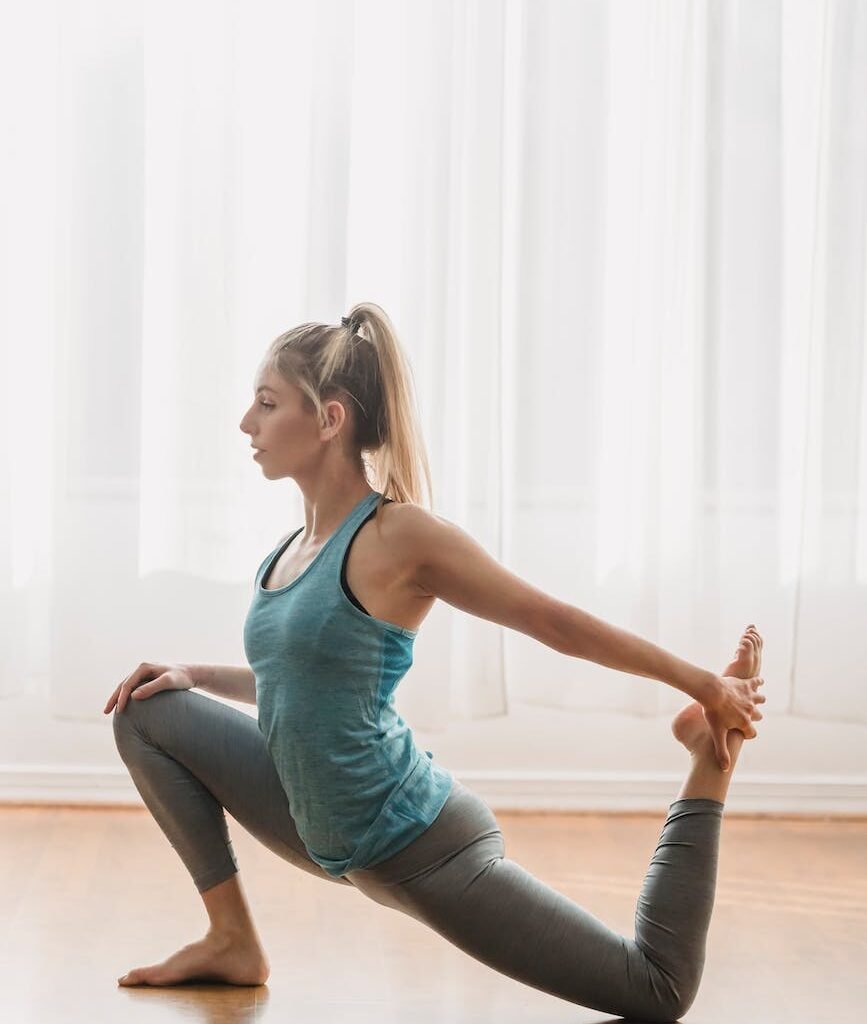
- Quadriceps stretch: Stand with a wall or chair nearby for support. Hold the support with one hand. Bend one knee and bring that foot toward your buttocks, holding the ankle or foot if that is comfortable. Keep your knees close together and stand tall. Hold for 20 to 30 seconds, then repeat on the other side.
- Calf stretch: Stand facing a wall, with your hands on the wall for support. Step one foot back and bend the front knee, keeping the back heel on the floor if you can. Hold for 20 to 30 seconds, then repeat on the other side. This stretch covers the muscles at the back of the lower leg.
Writers often note that you should do stretches on both legs. They also often note that a stretch should feel gentle, not forced. If a stretch causes pain, stop and talk to a qualified professional.
For more general stretching topics, see 5 stretches to improve flexibility.
Knee strengthening exercises commonly described
General fitness writing commonly describes these knee strengthening exercises for leg strength. This list uses general terms, without a recommended number of sets or a promise about results. A qualified professional can discuss a level that fits your own needs.
- Leg press: Using a leg press machine, press the weight up and down, keeping your feet shoulder-width apart. General descriptions often note a controlled pace and a comfortable range of motion.
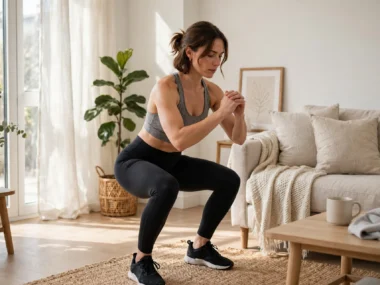
- Squats: Stand with your feet shoulder-width apart. Lower your body as if sitting back into a chair. Keep your chest up and your knees in line with your toes as a general form point. Rise back to standing at a controlled pace.
- Lunges: Step forward with one leg and lower your body down, keeping your front knee behind your toes as a general form point. Push back to the starting position, then repeat on the other side.
Form points in general fitness writing often include a tall chest, a controlled pace, and a range that feels comfortable. If you are new to these movements, general advice often suggests starting with body weight and a small range, and asking a qualified coach or professional for form guidance.
Balance topics commonly discussed
Balance is a separate general fitness topic, and writers often discuss it alongside leg strength. General fitness writing commonly lists the following movements in that context.
- Side-lying leg raises: Lie on your side and lift one leg up and down, keeping it straight. General descriptions note a slow pace and a focus on the muscles at the side of the hip and thigh.
- One-legged squats: Stand on one leg and lower your body down, keeping your knee behind your toes as a general form point. Use a wall or chair for support if you need it. This is a more advanced balance topic, so general writing often notes that support and a small range are common starting points.
- Balance board exercises: Standing on a balance board, try different balance exercises, such as single-leg stands. Focus on a steady pace and on engaging your core as a general form point. Stop if you feel unsteady.
Balance work can feel wobbly at first. That is why general fitness writing often notes the use of support and a clear space around you.
Low-impact movement options commonly discussed
Some general fitness lists group the following options together as low-impact movement. Low-impact here means writers commonly describe the activity as placing less jarring force on the joints than running or jumping. It is a general description, not a claim about any person’s knee.
- Elliptical machine: General fitness writing commonly lists the elliptical as a low-impact cardio option. It involves a smooth, gliding leg motion.
- Swimming: General fitness writing commonly lists swimming as a full-body activity in water. Water supports body weight during the activity.
- Biking: General fitness writing commonly lists biking as another low-impact option. It involves a repeated pedaling motion for the legs.
For general beginner topics, see Low-impact workouts for beginners. For general recovery topics, see The Kas Glute Bridge Exercise.
When to seek care
Seek professional care promptly if you notice any of the following, or if you are unsure about a symptom: pain that is severe, pain that does not settle, swelling, a knee that locks or catches, a feeling that the knee may give way, a change in how you walk, or a knee problem that follows a fall or an injury. Seek urgent care for a serious injury, heavy bleeding, a deformed joint, or an inability to bear weight.
People with knee pain, injuries, or medical conditions should get a professional assessment before exercising. A professional assessment can cover your history, your current symptoms, and what, if anything, is suitable for you. This article does not replace that assessment.
Summary
This article gave general information about knee strengthening exercises. It listed stretches, strength exercises, balance topics, and low-impact movement options that writers commonly discuss in general fitness writing. It also listed general safety points and when to seek care. No result is promised here. What is suitable for one person may not be suitable for another.
Disclaimer
This article about knee strengthening exercises is for general information only. It is not medical advice, and it does not diagnose, treat, or recommend care for any person or condition. Talk to a qualified professional before starting or changing an exercise routine, especially if you have knee pain, an injury, or a medical condition. Stop if something hurts, and seek professional care when you need it.
For related general information, see 10 Post-Workout Tips for Faster Recovery.

 Ablaze Fitness