


Barre classes look gentle from the doorway. Nobody is dropping heavy weights, nobody is sprinting, and the music is usually calmer than a spin studio. Then you try one. About four minutes into the thigh work, your legs start shaking. It feels like you have run up ten flights of stairs. That contrast is exactly why barre has grown from a niche studio format into a gym and boutique studio fixture. It is now offered across the United States, the United Kingdom, Canada, and Australia. This guide explains what barre classes involve and what happens in class. It covers why the famous shake happens, who the format suits, and how to choose a first class.
What Are Barre Classes?
Barre is a low impact group workout built from ballet inspired movements, small controlled ranges of motion, and high repetitions. The method traces back to the late 1950s. A German born dancer in London developed it as a conditioning routine while recovering from a back injury. It blended dance training with rehabilitative exercise. Modern barre classes keep that DNA. You work one muscle group at a time with tiny pulses, isometric holds, and slow, precise repetitions. You keep going until the muscles reach deep fatigue, then you stretch and move on.
The American Council on Exercise describes barre as a group fitness format built around the ballet barre, light resistance such as small dumbbells, bands, and inflatable balls, and bodyweight work, with a traditional focus on posture, alignment, and engaging the deep core stabilizers. That description matters because it separates barre from dance. Despite the ballet roots, barre classes are conditioning workouts, not dance lessons. There is no choreography to memorize and no performance at the end.
Expect the workout to be mostly low impact but not low effort. Your feet stay on the floor, there is no jumping in most classes, and the weights are light. The intensity comes from time under tension: a thigh sequence might keep you in a small pulsing squat for two or three minutes, a very different challenge from lifting something heavy once.
What Happens in a Barre Class, Step by Step
Classes vary by studio and instructor, but most follow a recognizable structure lasting about 45 to 60 minutes.
The Warm Up
Most barre classes open with a few minutes of marching in place, pliés, arm circles, and gentle mobility work, often with light weights in hand. The goal is to warm up and set the posture cues used all class, such as a neutral spine and ribs stacked over the pelvis.
Arm Work With Light Weights
Early in class comes an upper body segment using small dumbbells, commonly one to three pounds, sometimes up to five. You will do high repetition curls, presses, rows, and triceps work, often combined with leg movements like plié squats so the heart rate climbs. The weights look almost comically small, but thirty or forty continuous repetitions of a shoulder press will change your mind quickly. The block often finishes with push ups or a plank series.
Thigh and Seat Work at the Barre
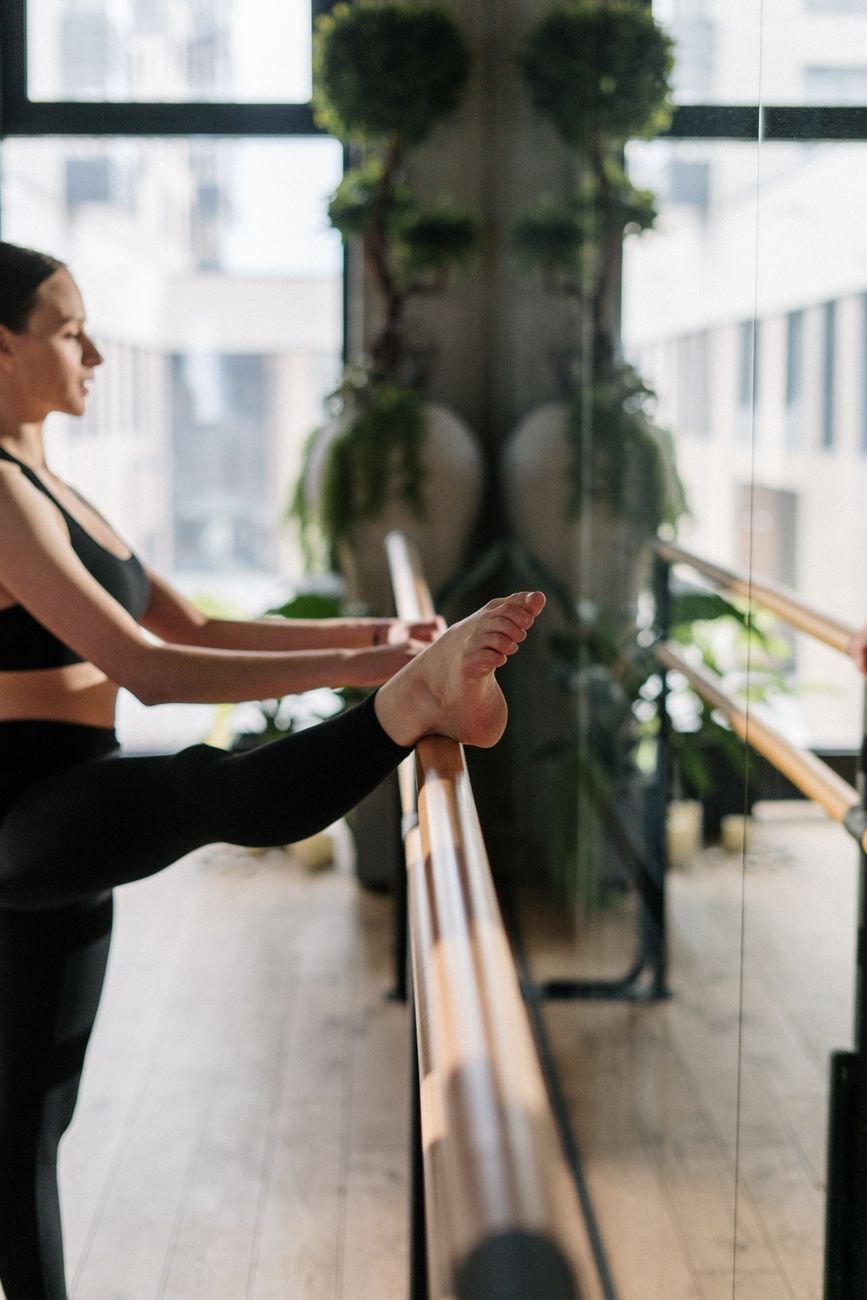
This is the heart of the class. Facing or side on to the barre, you work through thigh sequences such as narrow squats, pliés in turned out positions, and small pulses in a chair pose style position, using the barre for balance. Then the focus moves to the seat, the barre term for the glutes, with leg lifts and small circles behind you, sometimes with a ball behind the knee or a band around the thighs for resistance.
Core Work on the Mat
The final third usually moves to the floor for abdominal and back work: curl based core exercises, planks and side planks, sometimes with a small ball behind the lower back for support. Expect slow, controlled reps with a strong emphasis on breathing out as you exert.
Stretching and Cool Down
Barre classes typically end with several minutes of stretching for the muscles just worked.
Quads, hip flexors, glutes, hamstrings, chest, and shoulders all get attention.
Equipment You Will See in Barre Classes
The setup is simple. Studios provide everything, so you do not need to buy gear before trying a class.
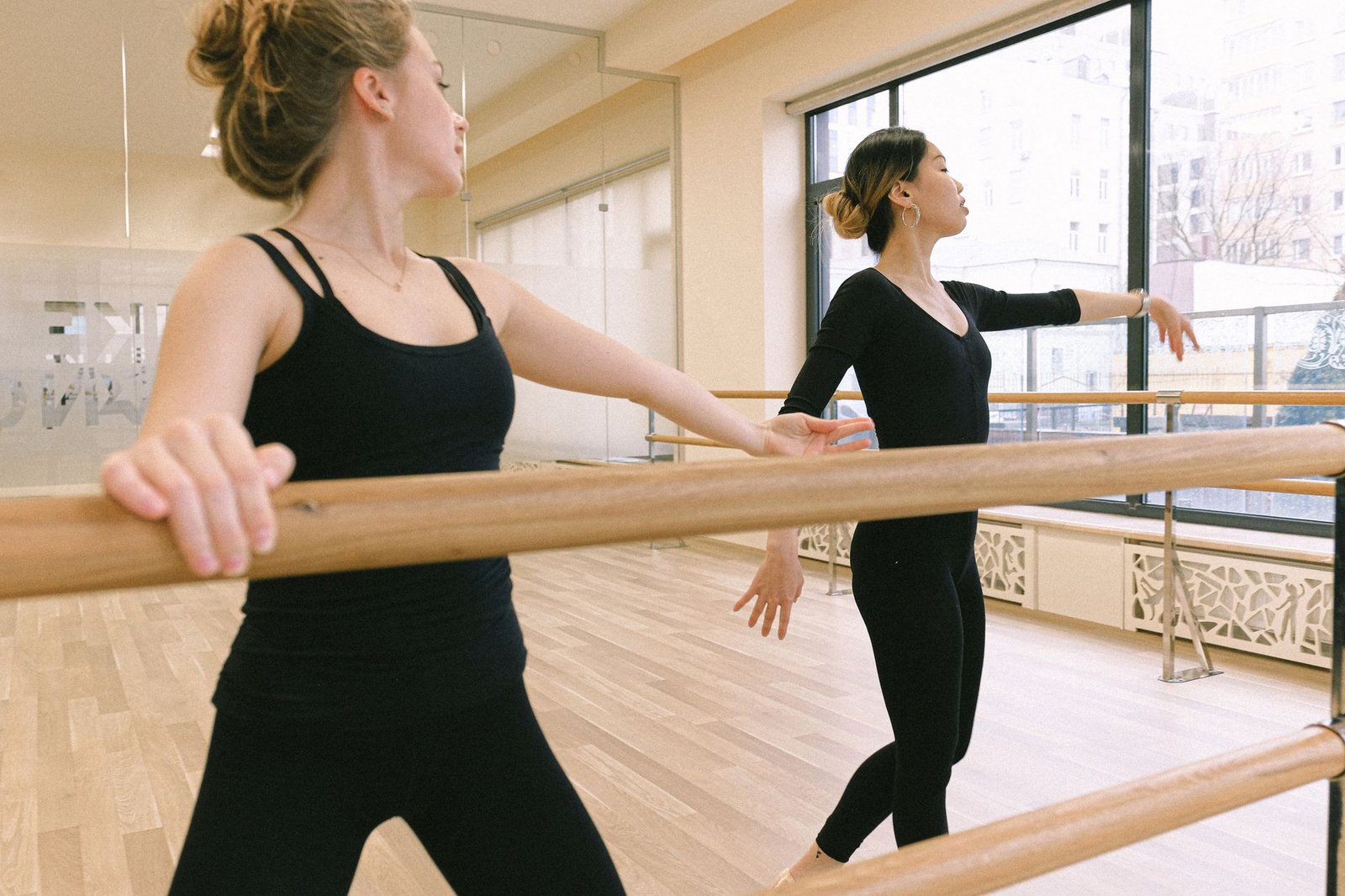
- The barre itself: a fixed horizontal bar at about hip height, used for balance during standing leg work. A sturdy chair back substitutes at home.
- Light dumbbells: usually one to five pounds, for the arm segment. Start at the lightest end.
- A resistance band or tubing: looped around the thighs or held in the hands to add load to leg and glute work.
- A small inflatable ball: placed between the thighs, behind the knee, or behind the back to increase engagement.
- A mat: for floor core work, planks, and stretching.
Why Your Muscles Shake During Barre Classes
The shake is the signature experience of barre, and it is completely normal. When you hold a muscle in a small pulsing movement for a long time, the fibers fatigue progressively. Your nervous system recruits more motor units to keep producing force. As some fibers tire and others take over unevenly, the muscle begins to tremble. Instructors call this the shake zone. The target muscle is working close to its current limit, which is where muscular endurance improves.
Shaking is not a badge you must chase, though. It is a signal to manage, not to endure at all costs. If your form collapses, your lower back starts aching, or you stop breathing properly, stand up, shake your legs out, and rejoin the set. Good instructors cue exactly that. Over a few weeks, most people find they hold positions longer before the shaking starts, a simple marker of progress.
Benefits of Barre Classes
Barre will not transform your body in a week, whatever the studio marketing says. Practiced two or three times a week, though, it offers a solid set of realistic benefits.
- Muscular endurance. The high repetition, low load format trains your muscles to keep working under fatigue. Everyday tasks involving sustained effort, like carrying groceries up stairs, tend to feel easier as this improves.
- Targeted lower body and core strength. Barre loads the glutes, thighs, calves, and deep core muscles from angles standard gym routines often miss, particularly the glute medius work done in turned out and side lying positions.
- Posture awareness. The constant alignment cues, tall spine, shoulders down, core engaged, train positions many people carry into daily life. This is awareness rather than a medical fix, but it is a genuine and often reported benefit.
- Balance and stability. Working on one leg at the barre, often up on the toes, challenges balance in a controlled setting with support right there if you need it.
- Joint friendly loading. With no jumping and no heavy external load, barre places relatively little stress on the knees, hips, and spine compared with high impact training, a major reason people stick with it for years.
- A low barrier to starting. Almost every exercise has a smaller range or no weight version, and the barre itself gives you something to hold onto.
The Honest Limits of Barre Classes
Being clear about what barre cannot do helps you build a sensible weekly routine around it. First, barre is not progressive heavy strength training. Light dumbbells and bodyweight pulses build endurance and some strength, especially for beginners. They will not build maximal strength or significant muscle mass. That takes progressively loaded barbell or dumbbell training. Second, barre is not a serious cardiovascular workout for most people. Your heart rate rises during the standing sequences. The format does not develop aerobic fitness the way running, cycling, or swimming does. Calorie burn is modest, roughly in the range of a brisk walk to a light jog.
The sensible conclusion is that barre works best as one component of a balanced week: a couple of classes for endurance, posture, and lower body work, some walking or other cardio you enjoy, and, if strength or muscle is a goal, some progressively heavier resistance training alongside.
Who Barre Classes Suit, and Who Should Modify
Barre has an unusually wide doorway. It suits complete beginners, because every move can be scaled down and there is no skill to learn before starting. It suits people returning to exercise after a break, because the impact is low and the pace is controlled. Former dancers enjoy the positions and music. Committed non dancers enjoy it equally well, since no rhythm or dance background is required. It also suits people who dislike the atmosphere of a traditional weights floor but still want structured resistance work. If joint friendliness is your top priority in general, our guide to low impact workouts for beginners compares several formats that share this quality.
Some people should modify rather than push through. If you are pregnant, tell the instructor before class: most movements can be adapted, particularly avoiding long periods flat on your back later in pregnancy and adjusting abdominal work, but the instructor needs to know. Flag knee, hip, shoulder, or wrist issues up front as well. Common adaptations include staying higher in squat positions, skipping the rise onto the toes, doing plank work at the barre instead of the floor, and dropping the weights during arm work. Anyone managing a medical condition or recovering from injury should check with their own clinician before starting, and treat class as general fitness, not rehabilitation.
What to Wear to a Barre Class
You do not need special clothing, but a few choices help. Leggings or fitted joggers are standard, because the instructor can see your alignment, and loose shorts ride up during floor work. A fitted or tuckable top helps for the same reason. Most studios require grip socks, with rubber dots on the sole, since you work in socks rather than shoes; many sell them at the desk if you forget. Add a water bottle and tied back hair, and you are set.
Barre Classes vs Pilates and Yoga
These three formats share a low impact, mat and bodyweight foundation, but they differ in emphasis, and many people rotate between them.
| Barre | Pilates | Yoga | |
|---|---|---|---|
| Main focus | Muscle endurance, small pulses, holds | Core strength, control, spinal alignment | Flexibility, breath, poses held and flowed |
| Equipment | Barre, light weights, band, ball | Mat, or reformer machine with springs | Mat, blocks, straps |
| Feel of class | Athletic, set to music, visible fatigue | Precise, methodical, equipment or floor based | Breath led, ranges from gentle to athletic |
| Dance element | Ballet positions and posture, no choreography | None | None |
| Typical goal | Endurance, tone, posture | Core function, control, back friendly strength | Mobility, calm, flexibility |
If the Pilates side appeals to you, a structured wall pilates for beginners routine is a free way to sample the style at home. If you want the gentlest entry point, especially for stiff joints, chair yoga for seniors shows how yoga adapts when getting down to the floor is not appealing. Barre sits between them: more overtly athletic than gentle yoga, less equipment focused than Pilates, and usually the most music driven of the three. If you are still deciding between formats, our guides to pilates classes near me and yoga classes near me explain how to find a local studio and what to ask before you book.
How to Choose a Barre Class as a Beginner
Not all barre classes are pitched at the same level, and the right first choice affects whether you come back. Start with a class labelled beginner, foundations, or intro if the schedule offers one. These move more slowly, explain positions before the set begins, and skip the faster transitions that can leave newcomers a beat behind in mixed level classes.
Look at the instructor as much as the timetable. Strong barre instructors cue alignment constantly, offer modifications without being asked, and correct positions rather than letting people grind through bad form. Class size matters too: smaller boutique classes mean more individual attention, while large gym classes offer more schedule options and a lower price. Use an introductory offer to try two instructors before judging the format, because teaching style varies more in barre than in most class types. Finally, check booking windows, grip sock policy, and cancellation terms, since popular slots fill quickly.
How Much Do Barre Classes Cost?
Prices vary a lot by city and format, so treat the following as typical ranges rather than quotes. At boutique studios in large US cities, a single drop in class commonly runs about US$25 to US$40, with class packs bringing the per class price down and monthly memberships often landing around US$150 to US$250. In smaller cities, and in the UK, Canada, and Australia, equivalent classes often run a little cheaper in local currency terms. Studios everywhere tend to offer a discounted first class or introductory week, the cheapest way to test a studio properly.
The budget route is a large gym or leisure center that includes barre style classes in a general membership, where the per class cost can be a fraction of boutique pricing, though classes are usually larger. Online barre classes sit at the other end of the scale, with subscriptions commonly around US$10 to US$30 a month, and plenty of free recorded classes exist if you want to learn the positions at home with a chair as your barre first.
Tips for Your First Barre Class
- Arrive ten to fifteen minutes early. You will need to sign in, find your spot, collect equipment, and ideally tell the instructor it is your first class so they can offer modifications.
- Pick a spot where you can see the instructor clearly. The middle of the barre is ideal, and mirror heavy studios make it easier to check your own alignment too.
- Take the lightest weights offered. One or two pounds is a sensible start for the arm segment. You can always go heavier next week, and finishing the set with good form beats dropping out halfway.
- Shrink the movement before you stop. When a set gets hard, make the pulses smaller or come up higher in the position rather than quitting entirely. That is how the format is designed to be scaled.
- Expect soreness in new places. Inner thighs, glutes, and calves often report a day or two after a first class. It settles within a few regular sessions and is not a sign you did anything wrong.
- Do not compare yourself to the regulars. The regular next to you holding a two minute plank has taken hundreds of classes. Instructors expect beginners to modify, rest, and rejoin; nobody is scoring you.
Frequently Asked Questions About Barre Classes
Do I need a dance background to take barre classes?
No. Barre borrows positions and posture from ballet, but there is no choreography to memorize and no dance skill involved. Most people in class have never danced, and instructors teach every position from scratch.
Are barre classes good for weight loss?
They can contribute, by building muscle endurance, adding regular activity to your week, and strengthening muscles that make other exercise easier. On their own, though, barre classes burn a modest number of calories, so for weight loss they work best alongside walking or other cardio, heavier strength work, and attention to food. No single class format drives weight loss by itself.
How often should I take barre classes?
Two or three classes a week is a productive rhythm for most people, with at least a day between sessions early on, since high repetition fatigue is not always obvious until the next day. Once adapted, some people take classes more often by varying intensity. Consistency matters more than cramming in sessions.
Will barre classes make my muscles bulky?
Very unlikely. The loads are light and the style targets endurance rather than muscle growth; noticeable bulk requires progressive heavy lifting and a calorie surplus sustained over months. What most regulars report instead is firmer, more defined muscles, particularly in the legs, glutes, and core.
What if I cannot do a move or my legs shake uncontrollably?
Stop, reset, and rejoin at a smaller range. Shaking is a normal response to local muscle fatigue, and resting briefly is part of the method, not a failure. If your joints hurt, rather than the muscle working, that is different: adjust the position, reduce the depth, or skip the exercise and tell the instructor, because joint pain is not something to push through.
Can I do barre classes at home?
Yes. Plenty of recorded and live streamed barre classes exist, and you need only a mat, the back of a sturdy chair in place of the barre, and light dumbbells for the arm segment. The trade off is losing instructor corrections and the energy of a room, so many people start at home to learn the vocabulary, then take studio classes once they know they enjoy the format.
The Bottom Line on Barre Classes
Barre classes turn small movements into a surprisingly serious workout. You get low impact strength and endurance training for the legs, glutes, arms, and core, a strong emphasis on posture, and a thorough stretch, without jumping, heavy weights, or any need for dance experience. The format will not replace heavy strength training or real cardio. As part of a balanced week, though, it earns its place, and shaking thighs in your first class are simply proof the method is working as designed. If you prefer a harder cardio workout with the same music driven energy, spin classes are the natural next format to try. Pick a beginner friendly class, take the light weights, and give it three sessions before you decide.
This article is general information about a style of exercise class. It is not medical advice, and it does not diagnose or treat any condition. If you are pregnant, managing an injury, or living with a health condition, check with your own clinician before starting a new exercise program.

 Ablaze Fitness


 Mélanie Courcelles


