


One pair of the best adjustable dumbbells can replace a whole rack of fixed weights. That is the promise, and for a small home it is a genuinely good one. The trap is that the market is full of sets that look identical in photos and behave very differently in your hands. One set changes weight in two seconds and feels solid for a decade. Another rattles, sticks, and starts shedding plates the first time you train with intent.
This guide is a choosing guide, not a sales pitch. It names no brands and pushes no products. Instead, it gives you the seven checks that separate the best adjustable dumbbells from the expensive regrets: weight range, step size, change speed, handle feel, build quality, footprint, and the true cost per usable weight. Run any set through these checks before you buy and you will know, in about ten minutes, whether it deserves your money and your floor space.
If you are building a home setup from scratch, pair this guide with our overview of the best home gym equipment for beginners, which puts dumbbells in context beside the other starter pieces. If you already train and just need the decision, start with check one.
Why the best adjustable dumbbells suit home training so well
A fixed dumbbell rack covering 2 kg to 24 kg (about 5 lb to 52 lb) in normal steps takes around ten pairs of weights and a metre or more of wall. An adjustable pair covering the same range sits on a tray about the size of a shoebox. For apartments, spare rooms, and garages shared with a car, that difference decides whether a home gym exists at all.
There is also a training reason. Progressive overload, adding a little weight as you get stronger, is how muscle and strength actually grow. Adjustable sets make small jumps easy, because the next step is already in your hands. That matters most in your first year, when a structured beginner strength training plan will have you adding weight to presses, rows, and squats every few weeks.
Adults should aim for muscle strengthening activity on at least two days a week alongside aerobic work, according to the CDC physical activity guidance for adults. A versatile pair of dumbbells is one of the simplest ways to hit that target at home, which is why choosing the right set is worth an hour of care.
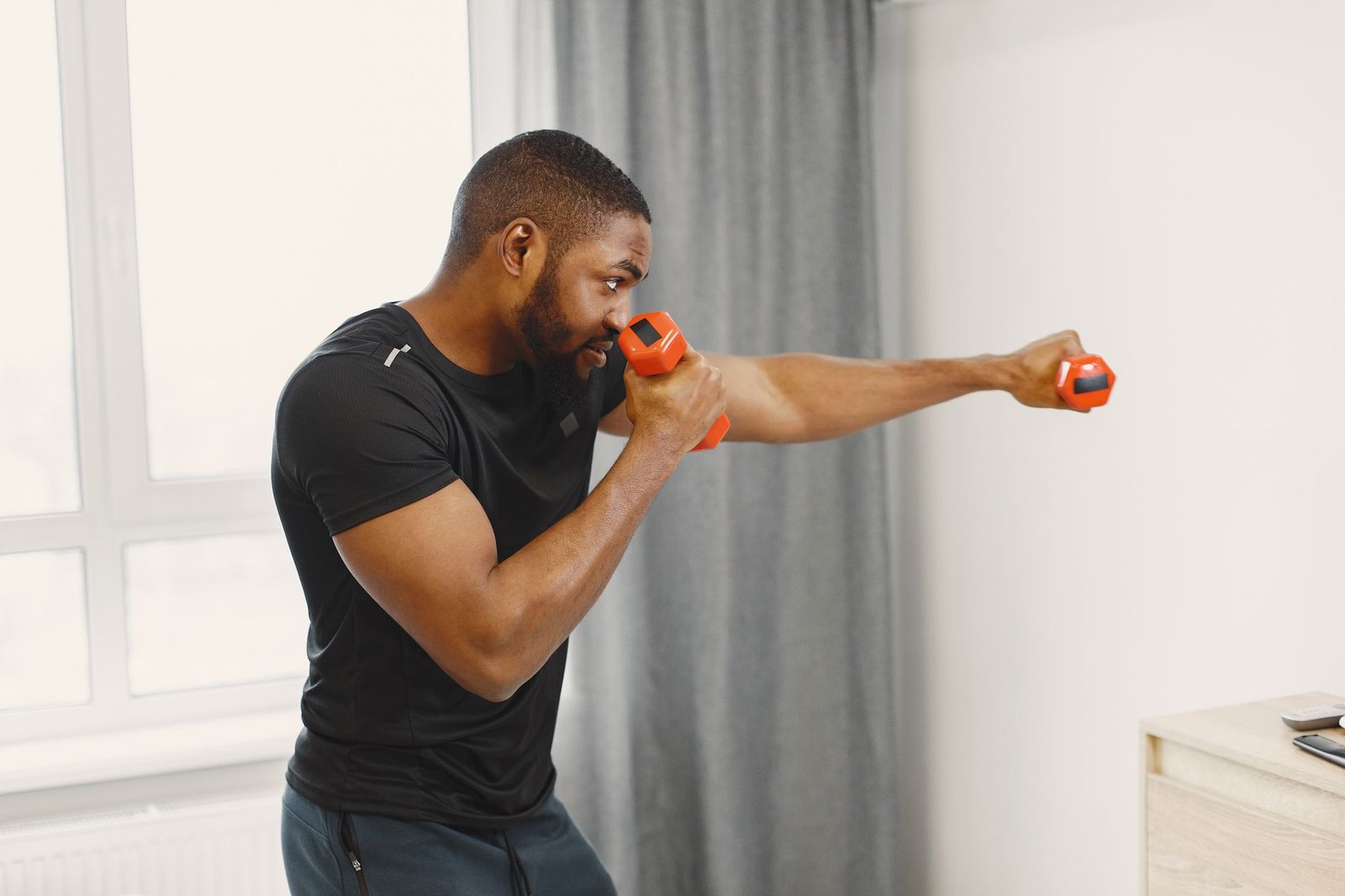
Check 1: The weight range you will actually use
Every set advertises its top weight. Far fewer advertise honestly how the range feels at the bottom. Both ends matter.
The top end. Most beginners outgrow a 10 kg (22 lb) ceiling within months on lower body work. Goblet squats, Romanian deadlifts, and split squats get heavy fast, because your legs are strong. A ceiling around 20 kg to 24 kg per hand (about 44 lb to 52 lb) covers most home trainees for years. If you already lift and plan to row or press seriously at home, look at sets reaching 32 kg to 40 kg (about 70 lb to 90 lb), and accept that they cost and weigh more.
The bottom end. A set that starts at 4 kg or 5 kg (about 10 lb) is too heavy for some shoulder work, rotator cuff exercises, and many beginners pressing overhead for the first time. Sets starting near 2 kg to 2.5 kg (about 5 lb) are kinder to small muscles and to anyone returning from a layoff.
The honest test. List the five exercises you will do most. For most home trainees that is a squat pattern, a press, a row, a hinge, and one arm exercise. Your set must be light enough for your weakest of those five and heavy enough for your strongest, with room to grow on both. If a set fails either end of your list, it fails, whatever the discount says.
Check 2: Step size, the quiet deal breaker
Step size is how much the weight jumps between settings. Small steps, around 1 kg to 2.5 kg (about 2.5 lb to 5 lb), let you progress gently, which is exactly what smaller muscles need. A shoulder press that feels right at 8 kg and impossible at 11 kg is a step size problem, not a strength problem.
Some sets use uneven steps, fine at the light end and coarse at the heavy end. That pattern is usually fine, because big muscles tolerate bigger jumps. What you want to avoid is a set whose steps are coarse everywhere, or one that skips the weights you will live at for months, often the 8 kg to 16 kg (about 17 lb to 35 lb) band for presses and rows.
Micro plates and add on weights exist for some systems and can rescue a coarse set. Price them before you buy, not after, and count them in the true cost under check seven.
Check 3: How fast and how safely the weight changes
There are three broad change systems, and each has a real trade off.
Dial and selector systems sit in a cradle. You turn a dial or move a pin, lift, and the unneeded plates stay behind. Changes take two to five seconds, which makes them the best choice for circuits, supersets, and any workout where two exercises share one pair at different weights. Their weakness is complexity: more moving parts means more that can jam if the set is dropped or stored in dust.
Spin lock and collar systems work like small barbells. You slide plates on and lock a collar. Changes take twenty to forty seconds per dumbbell. They are slower, simpler, and often the toughest option, and standard plates can be shared with other bars. If your training is straight sets with real rest periods, the slower change costs you nothing.
Fixed handle block systems use a pin through stacked plates inside a frame. Changes are quick and the footprint is tiny, but the block shape feels different from a round dumbbell, and some exercises, like pullovers held by one end, feel awkward.
Whichever system you choose, test the failure mode in reviews and in person if you can: what happens when the mechanism is used a thousand times, in a hurry, with sweaty hands. A weight that changes when you did not ask it to is a safety problem, not an annoyance. Never buy a set with repeated reports of plates slipping mid set.
Check 4: Handle feel, length, and balance
You will hold these handles thousands of times. Three details decide whether that feels good.
Grip diameter and texture. A grip around 32 mm to 35 mm suits most hands. Knurling, the cross hatch texture on metal handles, grips back when your palms sweat. Smooth plastic handles get slippery, and gloves are a poor fix for a bad handle. If your hands are small, a fat grip will fatigue your forearms before the target muscle gives up, which quietly ruins pressing work.
Handle length. Longer handles fit more plates but bump your thighs on deadlifts and catch your wrists on curls. Very long adjustable dumbbells also change the balance of a press, because the weight sits further from your hand. If you can, mimic a press and a row with the set at its longest setting before deciding.
Balance at light settings. Some selector sets feel hollow and head heavy at their lightest weights, because the handle and frame carry much of the mass. At 4 kg that odd balance is noticeable on lateral raises and presses. It is not a deal breaker for everyone, but it is worth knowing before the box arrives.
Good form still matters more than good gear. Whatever set you buy, a move like the squat only pays off with sound technique, so keep our guide on how to do a squat nearby when you program your first lower body day.
Check 5: Build quality and how the set handles drops
Home dumbbells get dropped. Not from overhead, but set down hard on the last rep, knocked off a tray, and rolled across garage floors. Ask three questions.
First, what are the plates and the locking parts made of. Steel plates and metal locking parts age better than plastic coated mechanisms at the stress points. Plastic has a place in housings and trays, but a plastic part that carries load every change is the part that will crack.
Second, can the set be dropped at all. Many selector systems carry an explicit warning: dropping voids the warranty and can bend the mechanism. If your training style involves heavy deadlifts set down firmly, a spin lock set or a traditional fixed pair for that one lift may serve you better than an expensive selector set you have to baby.
Third, what does the warranty actually cover, and for how long, in your country. A long warranty on the frame with a short one on the mechanism tells you where the maker expects failure. Read that split before you pay for the headline number.
Check 6: Footprint, storage, and your real room
Measure the space you truly have, not the space you wish you had. A selector set needs its tray, plus room to stand over it and lift clear. A spin lock set needs plate storage, which people forget, and loose plates migrate across floors and trip people at night.
Think about the floor itself. A loaded tray dropped from knee height concentrates force. A rubber mat under the storage spot protects both the floor and the set, and it costs little compared with either repair. On upper floors, also think about noise: setting down 24 kg (about 52 lb) at 6 in the morning carries through a building, and a mat plus controlled lowering keeps neighbours on your side.
If space is truly tight, remember that dumbbells are not the only route. A season of calisthenics for beginners builds real strength with no storage at all, and many home trainees pair bodyweight work with one modest dumbbell set rather than buying the biggest set on day one.
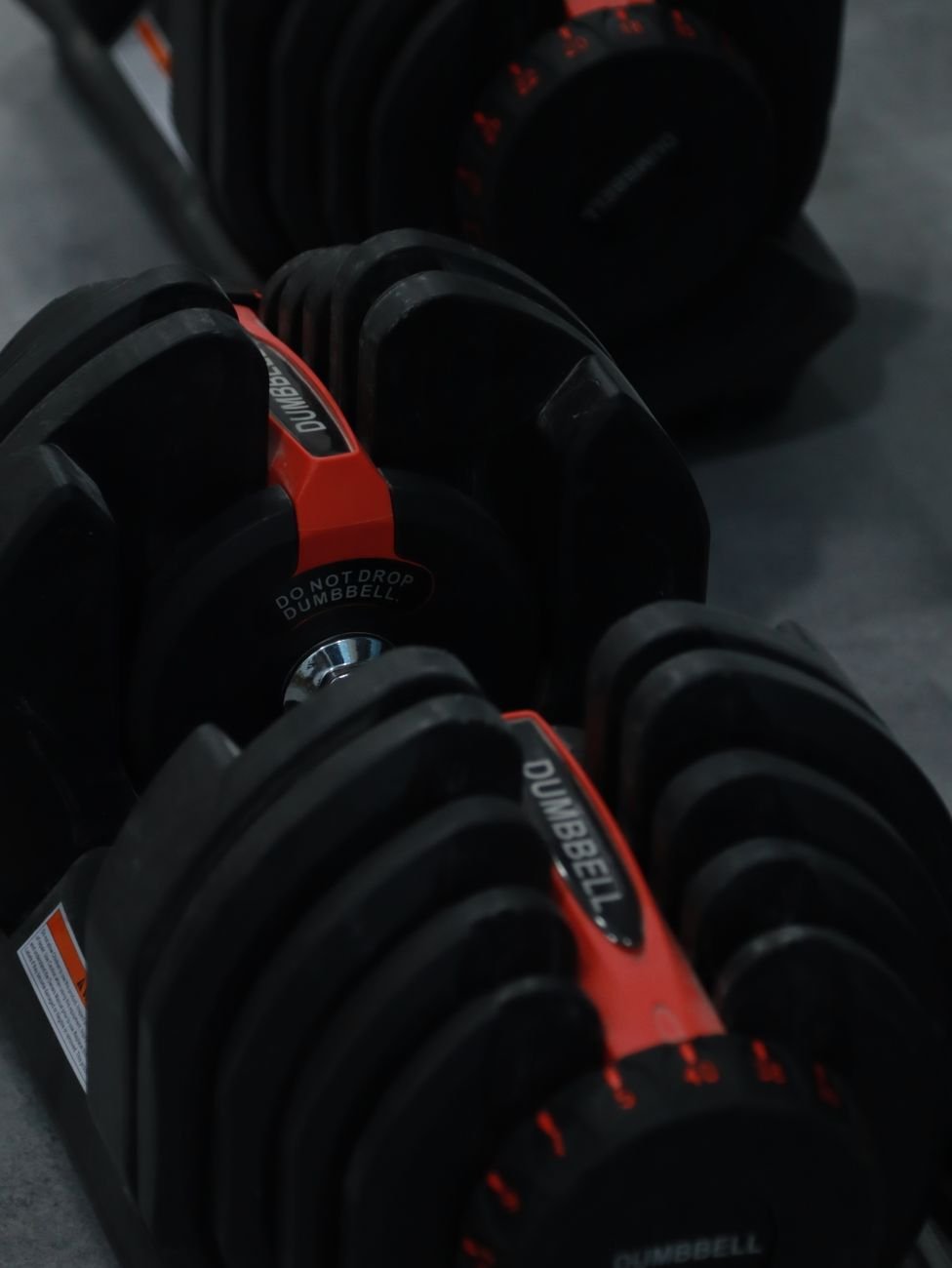
Check 7: The true cost per usable weight
Sticker prices mislead. Do the simple maths instead. Add the price of the set, any stand, any micro plates you priced under check two, and delivery. Then divide by the number of weight settings you will honestly use in your first year. A mid priced set you use at nine settings beats a premium set you use at four, and it beats a cheap set you replace in year two by a wide margin.
Also price the alternative honestly. A small run of fixed pairs covering your most used weights, bought second hand, sometimes costs less than a premium adjustable set and lasts forever. The adjustable set wins on space and on step coverage. The fixed pairs win on feel and toughness. Neither answer is wrong; the wrong answer is paying premium money for space savings you do not need.
One more cost hides in plain sight: resale. Well kept adjustable sets from established makers hold value, because the space problem never goes away. An unknown set with no spare parts support is worth close to nothing used. If there is any chance you will upgrade in three years, that difference is real money.
Matching the best adjustable dumbbells to your training style
The circuit trainer. You change weights every set and train in supersets. Prioritise change speed above all: a dial or selector system, small steps, and a stand at hip height so changes stay fast when you are tired.
The strength builder. You train in straight sets, rest properly, and chase heavier hinges and presses. Prioritise top weight, toughness, and handle feel. A spin lock set or a heavy selector set both work; drop tolerance decides between them.
The small space beginner. You train in a living room and store everything in a corner. Prioritise footprint and a low starting weight. A compact set starting near 2 kg (about 5 lb) with a ceiling near 20 kg (about 44 lb) will carry your first year, especially inside a full beginner home workout plan with no equipment where dumbbells upgrade moves you already know.
The walking first trainee. If most of your training is walking and you lift twice a week to support it, a modest set is enough, and the money saved may serve you better elsewhere, for example on the vest in our weighted vest walking guide. Buy for the training you actually do.
Common buying mistakes
Buying the top weight first. Most people overbuy ceiling and underbuy step quality. You will live in the middle of the range; judge the set there.
Ignoring the lightest setting. A set that cannot go light enough quietly deletes shoulder and rehab work from your program.
Forgetting the second dumbbell. Some prices are per single dumbbell. Check, every time, before comparing two listings that look oddly far apart.
Skipping the return terms. Handles and balance are personal. A seller with a real trial or return window is worth a small premium, because the one check you cannot do from photos is feel.
Dropping a set that was never built for it. Read the drop guidance before your first deadlift day, not after the mechanism bends.
How much weight do most beginners actually need?
Most beginners train well for their first six to twelve months with a pair covering about 2 kg to 20 kg (about 5 lb to 44 lb). Legs reach the top of that range first, on squats and hinges. Presses and rows live in the middle. Arms and shoulders live at the bottom. A set that covers that span with small steps will not hold you back in year one.
Are the best adjustable dumbbells worth it compared with fixed pairs?
The best adjustable dumbbells are worth it when space is limited or when you need many small steps in one footprint. Fixed pairs feel better, survive drops, and can be bought one pair at a time as you grow. If you have a garage wall free and train heavy, fixed pairs still make sense. If you train in a spare room, adjustable sets usually win.
Can you deadlift with the best adjustable dumbbells?
Yes, within the set ceiling and its drop guidance. Dumbbell Romanian deadlifts and standard deadlifts work well up to the top weight. Set the weights down with control, train on a mat, and respect any no drop warning your system carries. When you outgrow the ceiling, that is a good problem, and a barbell or a trap bar becomes the next purchase, not a bigger dumbbell set.
How long should the best adjustable dumbbells last?
A well built set of the best adjustable dumbbells, used indoors, kept out of dust, and never dropped against its guidance, should last a decade or more. Mechanisms wear first, so spare parts support matters. Before buying, check that replacement handles, pins, or dials for that system can still be bought. A set with no parts support is a countdown, not an investment.
What is the best first exercise set to learn with a new pair?
Start with a goblet squat, a floor press, a one arm row, and a Romanian deadlift. Those four moves teach you the handles, the balance, and the weight changes at loads you can control. Add weight only when the last two reps of a set look as tidy as the first two.
The verdict: choosing the best adjustable dumbbells for you
The best adjustable dumbbells for you are the set that passes all seven checks for your room, your hands, and your program: a range that covers your weakest and strongest lifts, small steps where you will live, changes as fast as your training style demands, a handle you enjoy holding, build quality that matches how you set weights down, a footprint your room can spare, and a true cost that still makes sense when you divide it by the settings you will use. Run the checks in order, be honest about your training, and the right set usually names itself.
General information only. If you have an injury, a joint condition, or pain that changes how you move, get advice from a qualified clinician or physiotherapist before starting a new lifting program.

 Ablaze Fitness


 Mélanie Courcelles


