

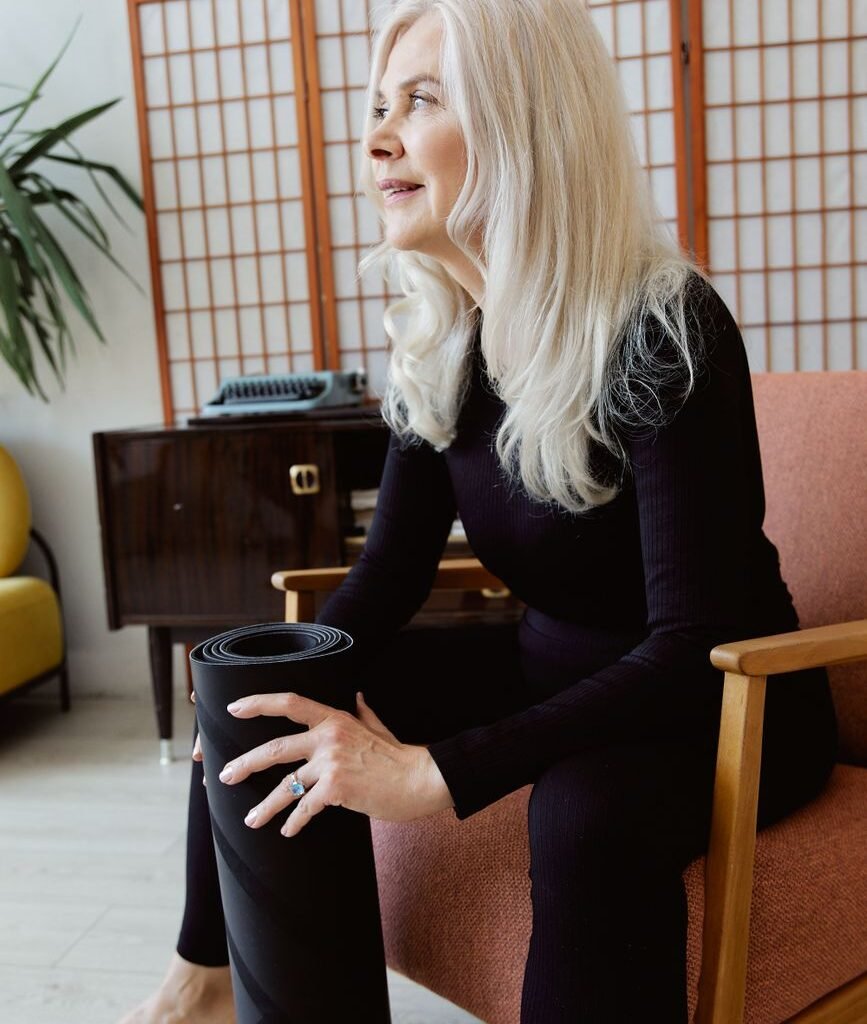
Chair yoga for seniors is having a real moment, and the reason is simple. Many older adults want the mobility, steadiness, and calm that yoga is known for, but getting down to a floor mat, and back up again, is the part that stops them. A sturdy chair removes that barrier completely. You sit down, you move gently, and you get up whenever you are ready.
Interest in seated practice has climbed sharply through the autumn, with searches for beginner routines, benefits, and even tai chi style chair movements all rising at once. Both approaches share the same ingredients: slow movement, steady breathing, and positions that respect what your joints can do today.
This guide explains what chair yoga is, what it can realistically do for you, and the safety rules that matter most. Then it gives you a complete starter routine, warm-up to cool-down, that takes about fifteen minutes and needs nothing but a chair, a little floor space, and comfortable clothes.
What Chair Yoga for Seniors Actually Is
Chair yoga is a gentle form of yoga where most of the practice happens seated, with some movements done standing while holding the chair for support. The poses are adapted versions of traditional positions, reshaped so the chair carries your weight where balance or stiffness would otherwise get in the way.
Traditionally, a floor yoga class moves between standing poses, kneeling positions, and stretches done lying down. Each transition is a small workout in itself, and for someone with sore knees, a replaced hip, vertigo, or less confidence on the floor, those transitions are often harder than the poses.
Chair yoga removes the floor from the equation. You stay seated or supported, and the challenge shifts to moving well within a comfortable range. Breathing stays central, exactly as in floor practice, as does paying attention to how each movement feels rather than chasing a perfect shape.
Because of that, chair yoga suits a wide range of people: complete beginners, active seniors wanting a recovery day between walks, and anyone rebuilding movement after a long sedentary stretch. If you are starting from a low base, pairing this routine with a simple no-equipment plan on other days builds a balanced week, and our beginner home workout plan with no equipment shows how to structure those days without any kit.
The Benefits of Chair Yoga for Seniors, Honestly Framed
It helps to be clear about what a gentle seated practice can and cannot do. Chair yoga is general movement and mobility work. It is not a treatment for arthritis, osteoporosis, or any other condition, and it does not replace medical care. Within those limits, the benefits are real and well matched to what most seniors want from exercise.
Mobility that you use every day
First, chair yoga moves your spine, shoulders, hips, and ankles through comfortable ranges, regularly. Everyday tasks run on exactly those ranges: reaching a shelf needs shoulder mobility, checking a blind spot needs spinal rotation, and getting out of a car needs hips that still open and close willingly. Gentle, repeated movement helps you keep the range you have, and often slowly expands it.
Steadier balance and more confidence
Next, the standing portion trains balance in the safest possible setup, with both hands on a chair back. Balance confidence is its own benefit: people who stop trusting their steadiness start moving stiffly and cautiously, which can raise risk rather than lower it. Practising small weight shifts and heel raises with support nearby reminds your body how to adjust, and that confidence carries into walking and stairs.
Less stiffness after sitting
In addition, a short seated routine answers the stiffness that builds after long periods in an armchair or on a car journey. Slow spinal movement, shoulder rolls, and ankle circles get fluid moving through joints that have been still for hours, and many people find ten minutes in the afternoon undoes the locked-up feeling.
Breathing, calm, and better wind-downs
Finally, chair yoga pairs movement with slow, deliberate breathing, and that combination has a settling effect. Research on yoga for older adults generally links regular gentle practice with better reported wellbeing and relaxation, alongside the physical gains. Three or four minutes of unhurried breathing at the end of a routine is enough for most people to notice their shoulders drop.
Chair Yoga for Seniors: Safety Rules Before You Start
Gentle does not mean careless, and this section matters as much as the routine itself. Read it before your first session.
Choose the right chair
Use a sturdy chair without wheels, with a firm, flat seat and a back you can hold while standing. A dining or kitchen chair is usually perfect. Avoid light folding chairs, deep soft armchairs, and anything on castors. Place it on a flat, non-slip surface, against a wall if you want extra reassurance.
Set your base position
Sit toward the front half of the seat with both feet flat on the floor, hip width apart, and knees over ankles. If your feet do not reach comfortably, place a firm cushion or low step under them. You should feel balanced and grounded before any movement starts, and you return to this base position between every pose.
Respect your range
Move slowly, and only as far as feels comfortable. A mild stretching sensation is fine. Sharp pain, pinching, or anything that makes you hold your breath is a signal to back off immediately. Range grows over weeks of gentle repetition, never from forcing a position once. Never bounce or jerk into a stretch, and keep head movements small if you are prone to dizziness.
Breathe and rise carefully
Breathe normally throughout, and never hold your breath to push through a pose. When moving from sitting to standing, do it in stages: scoot forward, hands on the chair or your thighs, lean slightly forward, and stand with support. If you feel lightheaded, sit back down and end the session there. That is always an acceptable outcome.
Check with your doctor first when needed
Some situations need medical guidance before you begin. Talk to your doctor or physiotherapist first if you have had recent surgery, a recent joint replacement, uncontrolled blood pressure, a balance or vestibular disorder, severe osteoporosis, or a new injury. The same applies if you take medication that makes you dizzy on standing. A short conversation usually ends with encouragement and one or two personal limits.
Chair Yoga for Seniors Starter Routine: Warm-Up
The full routine takes about fifteen minutes. You can shorten any section on a low-energy day. Timings are guides, not tests.
Breathing to settle in (1 to 2 minutes)
Sit in your base position with your hands on your thighs. Breathe in slowly through your nose for a count of three or four, then out for the same count, letting your shoulders drop on every exhale. Repeat for six to eight breaths. Settling your breathing first sets the pace for everything that follows.
Neck and shoulder rolls (2 minutes)
From the same seat, let your chin drop slightly toward your chest, then roll your head gently toward your right shoulder, back to centre, and toward your left shoulder. Keep the movement small and slow, like tracing a shallow bowl, and avoid full circles if they make you dizzy. Do three passes each way.
Then roll your shoulders: lift them toward your ears on an inhale, then roll them back and down on the exhale. Repeat five times, then reverse for five more. Finally, open and close your hands slowly ten times, spreading your fingers wide, to wake up stiff fingers and wrists.
Chair Yoga for Seniors: Seated Poses, the Core of the Practice
These five movements form the heart of the routine. Do them in order, moving slowly, and rest in your base position whenever you need to.
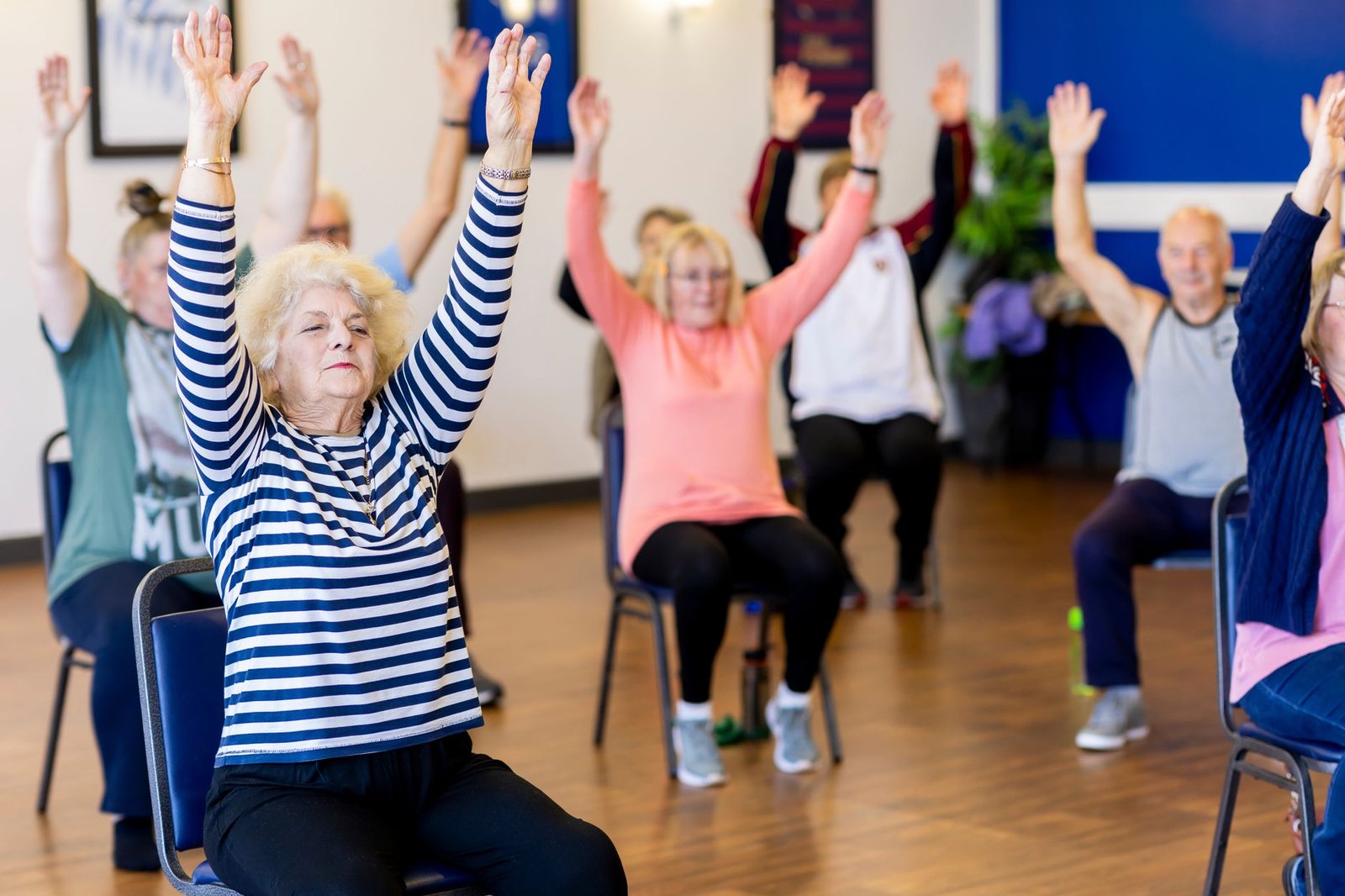
Seated cat-cow
Place your hands on your knees. As you inhale, gently arch your back, lift your chest, and look slightly upward. As you exhale, round your back, drop your chin, and let your shoulders roll forward. Flow between the two positions with your breath, six to eight times. This movement warms the whole spine and is many people’s favourite part of the practice.
Seated forward fold
Sit tall with your hands on your thighs. Inhale to lengthen your spine, then exhale and hinge forward from your hips, sliding your hands down your legs toward your shins. Go only as far as feels comfortable, keeping your back fairly straight. Hold for two or three breaths, then walk your hands back up. Repeat twice. If you have had a hip replacement or a bending limit from your doctor, keep this fold very shallow.
Seated twist
Sit tall with your feet flat. Place your right hand on your left knee and your left hand on the seat beside you. Inhale to sit taller, then exhale and rotate gently to your left, turning your head only as far as your neck allows. Hold for three breaths, then return to centre. Repeat on the other side, two rounds each way. Twists support the rotation you use for driving, reaching, and looking behind you.
Seated knee lifts
Hold the sides of the seat for support and sit tall. As you exhale, lift your right knee a few inches, as if marching in place, keeping your back straight. Lower it with control as you inhale. Alternate sides for eight to ten lifts. These strengthen the front of your hips and thighs, the muscles that lift your leg for steps and curbs. To make it gentler, lift only an inch or slide your heel along the floor instead. For more on building strength around the knees, our guide to exercises to strengthen knees adds simple movements that pair well with this routine.
Ankle circles and toe work
Extend your right leg slightly, heel on the floor, or lift the foot just clear of the floor if that feels stable. Draw slow circles with your toes, five each way, then repeat with the left foot. Finish by scrunching your toes, then spreading them wide, three times each foot. Ankles stiffen quickly with inactivity, and this small section pays off in walking comfort and balance.
Chair Yoga for Seniors: Standing Poses With Chair Support
For this section, stand behind your chair with both hands resting on its back. Keep your grip light but secure, stand tall, and step back down to sitting whenever you need to rest. Support is the point of these poses, not a weakness to hide.
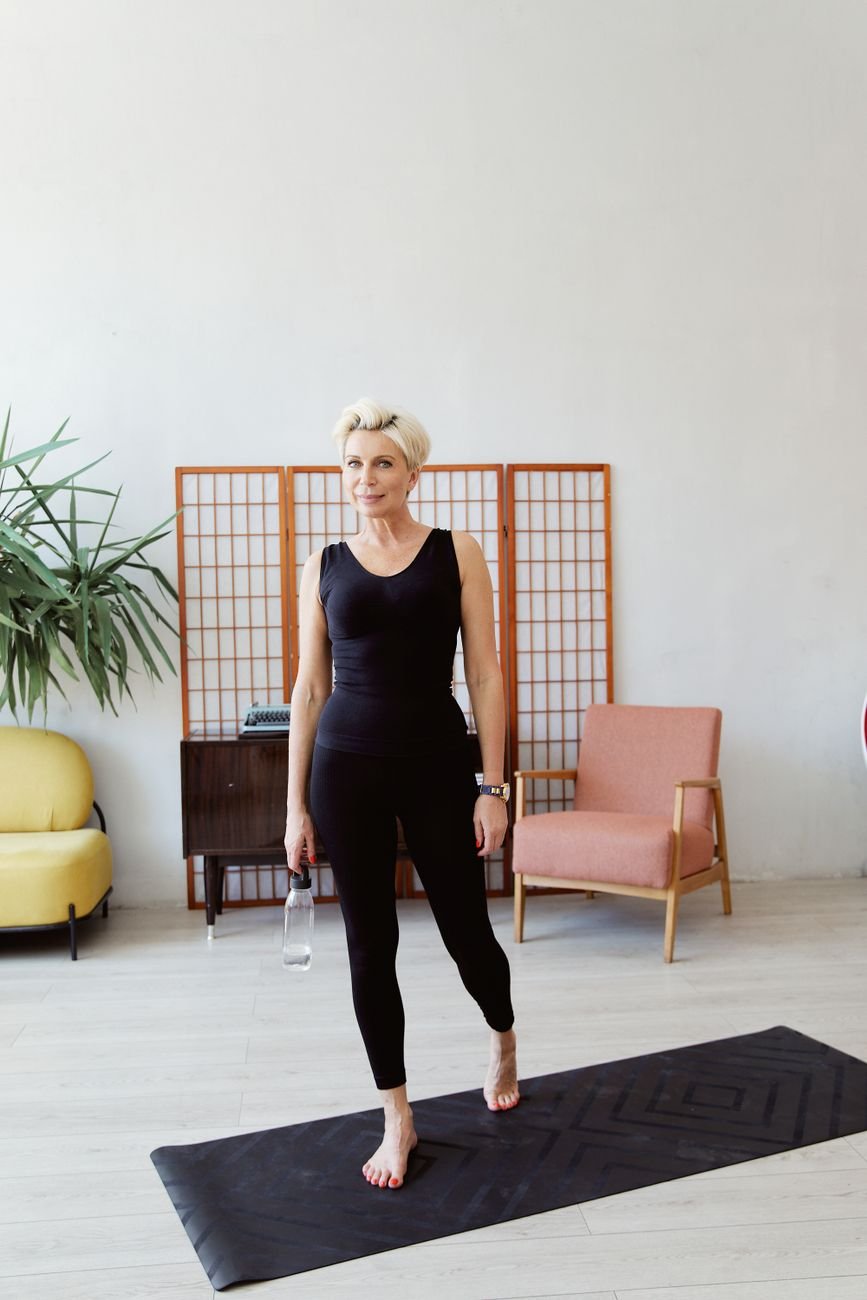
Supported mountain
Stand with feet hip width apart, hands on the chair back. Distribute your weight evenly, soften your knees slightly, and stand as tall as feels natural. Breathe here for five slow breaths, noticing subtle weight shifts. Simply standing well, with attention, is genuine training for your ankles and feet.
Gentle heel raises
Keeping both hands on the chair back, inhale and rise slowly onto the balls of your feet. Pause for a breath at the top, then lower with control. Repeat six to eight times, without bouncing. Heel raises strengthen your calves, which push you forward when walking and steady you on uneven ground. If rising fully is too much, lift your heels just a fraction. Small and controlled beats high and wobbly.
Supported warrior variation
With hands on the chair back, step your right foot forward a comfortable distance and your left foot back, both pointing mostly forward. Bend your front knee slightly, keeping it roughly above the ankle, and keep your back leg straight with the heel down if you can. Hold for three breaths, then step back to centre, rest, and repeat on the other side. This adapted stance builds leg strength and hip mobility that transfer directly to walking and stairs. Widen or shorten your stance freely; comfort decides the shape.
Chair Yoga for Seniors: Cool-Down Breathing
Finish seated in your base position. Place one hand on your stomach and one on your chest. Breathe in slowly so the stomach hand rises a little more than the chest hand, then breathe out even more slowly, five or six times. Then rest both hands on your thighs and take three natural breaths before opening your eyes. Notice what changed: warmer joints, looser shoulders, a quieter head. Ending deliberately also protects you from lightheadedness when you stand.
Chair Yoga for Seniors: How Often, How Long, and How to Progress
A session of 10 to 20 minutes, three to five days a week, is the sweet spot for most beginners. Daily shorter sessions are fine too. Chair yoga should feel like gentle to moderate effort: you could hold a conversation throughout. If you want to check how intensity zones work in general, our heart rate zones calculator explains the ranges, although most people judge this practice well by feel and breathing.
Consistency matters more than duration. Fifteen minutes four times a week does more than one ambitious hour followed by six days off. Attach the routine to an existing habit, after breakfast or before the evening news, and it becomes easier to keep.
Progress gradually, in this order. First, hold each pose a breath or two longer. Next, repeat the seated sequence twice. Then add a second round of heel raises and the warrior variation. Over time, use your hands on the chair more lightly, fingertips instead of a full grip, as your steadiness improves.
Once the basics feel familiar, you can borrow from the tai chi chair movement trend rising alongside chair yoga. Slow, flowing arm movements done seated, side-to-side weight shifts, and coordinated breathing all blend naturally into this routine. Add one flowing sequence after your warm-up, moving as if pushing gentle waves of water, and you get tai chi’s meditative quality with the same chair safety net underneath you.
Chair Yoga for Seniors: Common Mistakes to Avoid
Most problems come from a handful of habits. Using the wrong chair is the most common error: a wheeled office chair or soft recliner undermines every pose. Rushing defeats the purpose, so if you are moving faster than your breathing, slow down. Forcing range, especially in twists and folds, trades a moment of ambition for days of soreness.
Holding your breath is another frequent slip, usually during standing work. Skipping the warm-up is also a mistake, since stiff joints need the gentle on-ramp. Finally, do not compare your practice to anyone else’s, including your own younger self. The right session is the one your body thanks you for the next morning.
Chair Yoga for Seniors: Frequently Asked Questions
Is chair yoga as good as regular yoga?
It depends on your goal. Chair yoga cannot replicate the full strength and floor work of a traditional class, but for mobility, balance practice, stiffness relief, and calm breathing, it delivers the core benefits in a format you can do consistently and safely. The best yoga is the one that happens.
How many times a week should a senior do chair yoga?
Three to five sessions a week of 10 to 20 minutes is a solid target. Shorter daily sessions also work well, particularly for morning stiffness. Start at the lower end for two weeks, and build up only when the current level leaves you feeling better, not worse, the following day.
Can chair yoga help with stiff knees and hips?
Chair yoga moves the knees and hips gently through comfortable ranges, which many people find eases everyday stiffness, and the knee lifts also strengthen the muscles around the knee. However, it does not treat knee or hip conditions, and persistent pain, swelling, or a joint that locks deserves assessment by a doctor or physiotherapist.
Chair Yoga for Seniors: More Questions Answered
What is the best chair for chair yoga?
A sturdy dining or kitchen chair without wheels, with a firm flat seat and a supportive back, is ideal. Your feet should rest flat on the floor when you sit toward the front. Avoid folding chairs, chairs on castors, and deep armchairs. If it rocks, creaks, or slides, it is the wrong chair.
Is chair yoga safe after a hip or knee replacement?
It can be, but limits vary by surgery and surgeon. Many people get specific early restrictions, such as limits on bending or crossing the legs, and a deep fold or twist could break those rules. Do not start until your surgical team clears you, and ask which movements to modify. Begin with the warm-up and breathing only, adding poses gradually.
Do I need an app or videos to follow, or is a written routine enough?
A written routine like this one is enough to start, and plenty of people prefer it because there is nothing to pause or pay for. Read it once before your first session, keep the page nearby for the first week, and the sequence becomes familiar quickly. Slow, comfortable movement and regular breathing are what matter.
The Bottom Line on Chair Yoga for Seniors
Chair yoga for seniors works because it removes the two biggest barriers to gentle exercise, the floor and the fear of falling, while keeping what makes yoga valuable: movement through comfortable ranges, balance practice with support, and breathing that settles the whole system. Start with the safety rules, use the right chair, and give the routine fifteen minutes three times this week. Most people feel the difference first in small moments: turning in the car, reaching a shelf, and standing up feeling steady instead of stiff.
This article is general health and fitness information only and is not medical advice or a diagnosis. Talk to a qualified professional about your own situation, especially before starting a new exercise routine after surgery, a joint replacement, or a period of illness.

 Ablaze Fitness


