


If your knees feel less steady on the stairs, if standing up from a low chair takes a small extra effort, or if you are coming back from a period of inactivity, your knees are probably not asking for a complicated program. They are asking for a small set of reliable knee exercises, done with good form and repeated regularly.
Knee exercises work because the knee itself is a hinge that depends on the muscles around it. Strengthen the quadriceps, hamstrings, glutes and calves, and the joint tracks better, absorbs load more evenly and feels more stable. The routine below uses eight moves you can do at home with no equipment beyond a chair and a towel. Each one is simple, easy to scale, and paired with a clear rule for when to move forward and when to stop.
Why Your Muscles Matter for Knee Exercises
Your knee does not work in isolation. The muscles above it, below it and behind it all decide how forces travel through the joint. Weakness in any one group changes the load on the others, which is why this routine trains the full chain instead of one muscle.
The quadriceps: your knee’s front support
The quadriceps straighten the knee and control the descent when you sit down, step down from a kerb or walk downhill. When they are weak, the knee tends to collapse inward slightly under load. The American Academy of Orthopaedic Surgeons publishes a knee conditioning program that uses the same principles: slow, controlled strengthening of the muscles that support the knee, with steady progress over weeks.
Hamstrings and glutes: the back and side crew
The hamstrings bend the knee and help control the speed of the leg as it swings forward. The glutes keep the thigh aligned and stop the knee drifting inward. Together, they are the reason the routine below includes bridges and side-lying leg work rather than only front-of-thigh exercises.
Calves: the quiet stabilisers below
The calf muscles control the ankle, and the ankle controls the knee. If your calves are weak or stiff, the foot tends to roll in, which pulls the knee with it. Calf raises are a small move with a large effect on how steady the knee feels during walking and stair climbing.
Knee Exercises Safety Basics: Effort, Discomfort, and Warning Signs
Start by matching the exercise to your effort. Use a scale from zero to 10. Most of these moves should sit at a three or four: you can feel the muscles working, but you can still talk normally and your breathing stays steady. If you are holding your breath, your effort is too high. Ease off and find the level where you can keep the movement smooth.
Some discomfort is normal. A mild muscle burn or a gentle stretch sensation is part of strengthening work. It should settle within a minute or two of finishing a set and should be gone by the next day. However, if the burn turns into sharp pain, or if the pain stays above a four on the scale, stop that move and return to the easier version.
Know the warning signs that mean you should not train through the pain. Stop the session and seek medical advice if you feel sudden sharp pain, a sense that the knee has given way, swelling that appears quickly, a locked knee that will not straighten, or pain that keeps you awake at night. These are not signs of effort. They are signals to stop.
A practical rule is to finish each session with the knee feeling no worse than when you started, and ideally a little better. If the knee is more swollen or stiffer the next morning, you did too much. Reduce the sets or the range of movement and build back up slowly. The aim is steady progress, not a personal best on day one.
Knee Exercises: 8 Strengthening Moves, Step by Step
First, work through the moves in order. The first three are activation exercises that wake the muscles up without loading the knee heavily. Moves four to six add load and range, and the last two tie the chain together. Rest for 30 to 60 seconds between sets. Breathe out on the effort and breathe in as you return.
1. Quad set (isometric): the starter move
Sit on the floor with your legs straight out in front of you, or lie on your back with a rolled towel under your knee. Tighten the muscle on the front of your thigh and push the back of your knee gently into the floor or towel. Hold for five seconds, then relax. Next, aim for 10 slow repetitions. Keep your toes relaxed and your breathing normal. This move is the right starting point if your knee has been painful or weak, because it loads the quadriceps without moving the joint.
2. Straight leg raise: control without bending
Lie on your back with one knee bent and the foot flat on the floor. Tighten the quadriceps of the straight leg, then lift it to the height of your bent knee. Keep the knee straight and the toes pointing up. Lower it slowly over three seconds. Aim for two sets of 10 repetitions on each side. If your lower back arches as you lift, lower the leg a little less and keep the height you can control.
3. Heel slide: regaining the bend
Lie on your back with both legs straight. Slowly slide one heel toward your buttocks, bending the knee as far as it goes comfortably. Hold for three seconds, then slide the foot back out. In addition, aim for two sets of 10 repetitions on each side. This move restores the bending range that makes sitting and stair climbing comfortable, and it is useful after a period of inactivity.
4. Seated knee extension: the everyday move
Sit in a sturdy chair with your feet flat on the floor. Slowly straighten one knee until the leg is as straight as it comfortably goes, then lower it back down over three seconds. Aim for two sets of 10 to 12 repetitions on each side. When the top of the range feels easy, hold the straightened position for three seconds before lowering. Keep the movement slow and avoid swinging the leg.
5. Mini squat to a chair: strength you actually use
Stand in front of a sturdy chair with your feet shoulder width apart. Push your hips back as if you are about to sit, and lower yourself until your buttocks just touch the chair. Stand back up by pushing through your heels. Aim for two sets of eight to 10 repetitions. Keep your knees tracking over your toes and your chest tall. If the depth feels too much, use a higher chair.
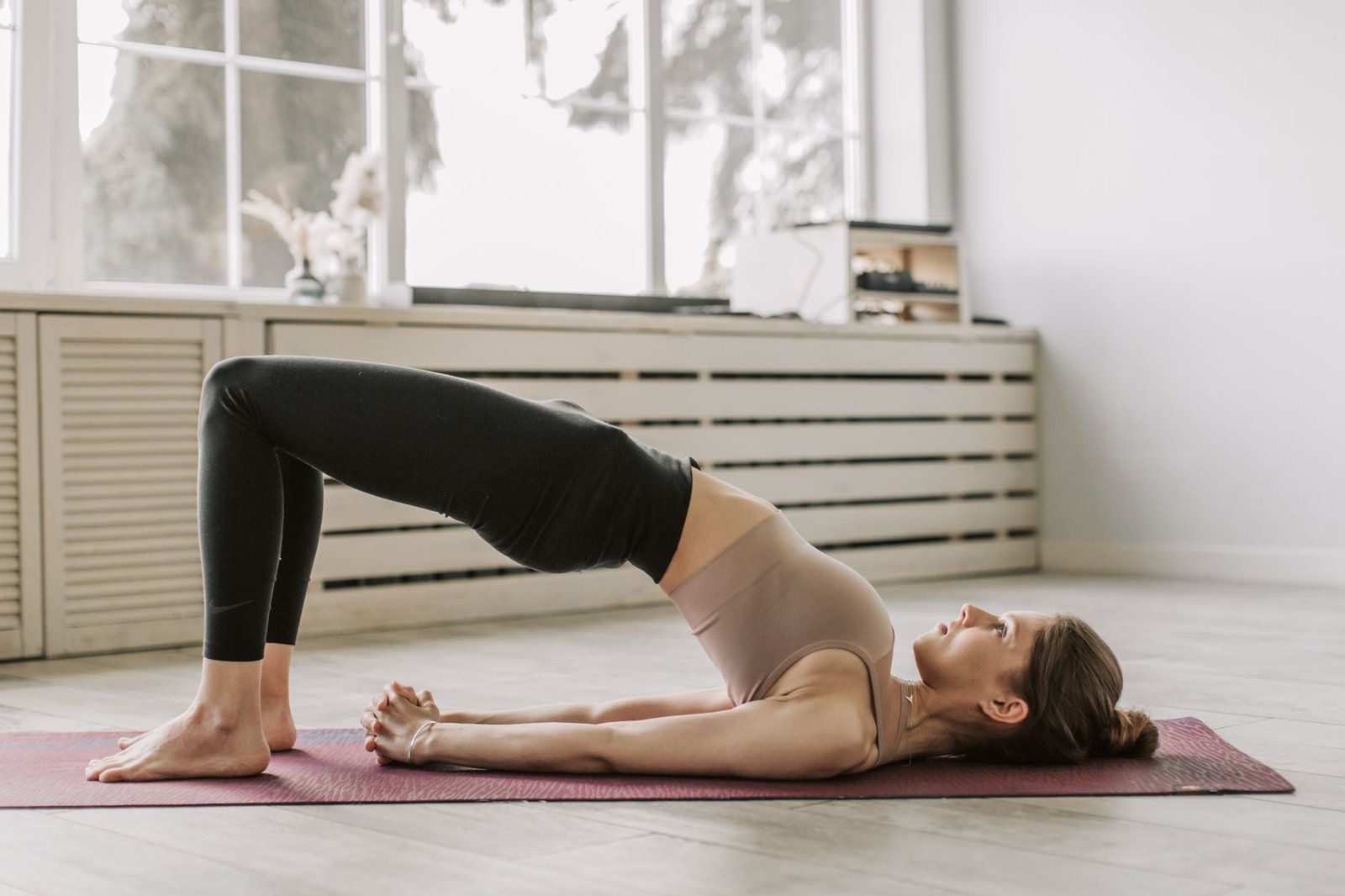
6. Glute bridge: the back of the chain
Lie on your back with your knees bent and your feet flat on the floor, hip width apart. Push through your heels to lift your hips until your body forms a straight line from shoulders to knees. Hold for two seconds, then lower slowly. Aim for two sets of 12 repetitions. Squeeze the glutes at the top. If your hamstrings cramp, move your feet a little further from your buttocks and try again.
7. Side-lying leg lift: the outer hip
Lie on your side with your legs straight and stacked. Lift the top leg slowly to about 45 degrees, keeping the toes pointing forward, not up. Lower it slowly. Aim for two sets of 12 repetitions on each side. This move targets the gluteus medius, the muscle that keeps the pelvis level when you walk. If it feels too easy, hold the top position for three seconds.
8. Standing calf raise: the finishing move
Stand behind a chair and hold the back for balance. Rise onto your toes slowly, keeping your ankles straight, then lower over three seconds. Aim for two sets of 12 repetitions. If both feet feel easy, try one foot at a time while holding the chair for balance. Strong calves reduce the load on the knee during walking and stair climbing.
Your Sample Knee Exercises Routine
Do the routine two or three times a week on non-consecutive days. It takes about 20 minutes. Pair it with our guide to low impact workouts for beginners on the days between sessions to stay active without overloading the knee.
| Exercise | Sets | Reps or hold |
|---|---|---|
| Quad set | 2 | 10 reps, 5 second holds |
| Straight leg raise | 2 | 10 per side |
| Heel slide | 2 | 10 per side |
| Seated knee extension | 2 | 10 to 12 per side |
| Mini squat to a chair | 2 | 8 to 10 |
| Glute bridge | 2 | 12 |
| Side-lying leg lift | 2 | 12 per side |
| Standing calf raise | 2 | 12 |
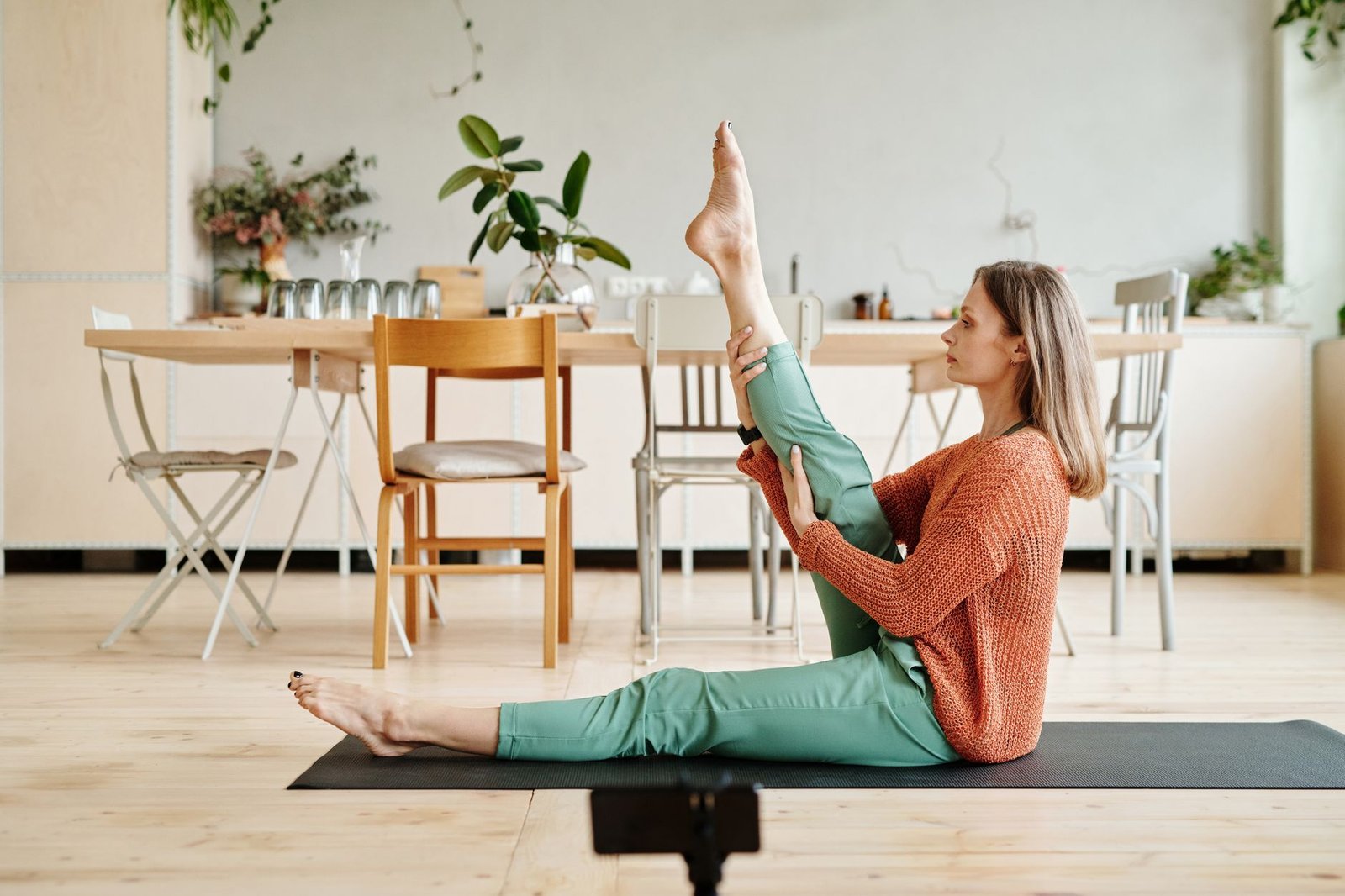
Rest for 30 to 60 seconds between sets. Finish with a gentle stretch, and use the stretches to improve flexibility to cool down. Progress the routine slowly: add a set or a few repetitions each week, and only add load when the current level feels easy.
How to Progress Your Knee Exercises, and How to Make Moves Easier
Progress works best when it is planned and logged. For example, write down your sets and repetitions each session and only change one variable at a time.
Range first, then load. Increase the range of movement before you add resistance. A deeper mini squat with body weight is a bigger progression than a shallow squat holding a weight. For a gentler session, try wall pilates for beginners, which keeps the knee supported while the legs work.
Tempo is a free upgrade. Slowing the lowering phase to three seconds increases the work the muscles do without adding weight. If a move feels too easy, slow it down before you add repetitions.
If a move causes sharp pain, skip it for that session and try the easier version. A quad set can replace a straight leg raise, and a heel slide can replace a mini squat. Pain is information, not a challenge to push through.
Who Should Check With a Professional Before Knee Exercises
Get personal guidance before starting this routine if any of these apply to you:
- you have had a knee replacement, reconstruction or other knee surgery.
- you have a diagnosed ligament, cartilage or meniscus injury.
- your knee locks, catches or gives way regularly.
- you have swelling that does not settle, or pain that wakes you at night.
- you have been told to avoid loading the knee.
A physiotherapist can check your movement, adjust the exercises to your knee, and set a starting level that is safe for you. That single visit often saves weeks of guessing.
Common Knee Exercises Mistakes That Slow Your Progress
Skipping the hips and calves. A thigh-only routine misses half the support system. Add the bridge, the side-lying lift and the calf raise, even when the quadriceps feel like the main event.
Adding load before you own the range. A heavier weight on a shallow squat is not progress. Own the full range with body weight first, then add load.
Rushing the lowering phase. Dropping into a squat or letting the leg fall uses momentum instead of muscle. Three seconds down is the standard to aim for.
Training hard every day. Muscles adapt during rest, not during the workout itself. Two or three sessions a week with a day off between them is the dose the evidence supports. Sore, tired muscles need a day or two before they are ready for another hard session.
Ignoring pain that changes. Pain that moves, sharpens or lingers is information. Adjust the move, reduce the load or seek advice instead of training through it.
Frequently Asked Questions About Knee Exercises
How often should I do knee exercises?
Two or three times a week is enough for most people. Leave at least one rest day between sessions so the muscles have time to adapt. Daily practice is fine for the gentlest moves, such as quad sets and heel slides, if they cause no pain.
Can I do knee exercises every day?
You can do the gentle activation moves daily, but the loaded moves need recovery time. A practical approach is to alternate: the full routine two or three times a week, and the gentle moves on the days between.
Are knee exercises safe for arthritis?
Gentle strengthening is often recommended for knee osteoarthritis, and the moves in this routine are commonly used in that context. Start with the gentlest options, keep the effort low, and stop if pain increases and stays increased. Talk to your doctor or physiotherapist first if your arthritis is severe or your knee is unstable.
How long before knee exercises make a difference?
Most people notice better control and less effort on stairs within four to six weeks of consistent practice. Strength changes take longer than the feeling of control, so keep going after the first improvements.
Do knee exercises reduce knee pain?
They can help. Stronger muscles share the load and reduce the stress on the joint. The effect is gradual, and it works best alongside weight management, good footwear and activity that does not overload the knee.
What is the best knee exercise?
There is no single best move. The mini squat and the glute bridge give the most return for most people because they train several muscles at once. The best routine is the one you will do two or three times a week for months.
The Bottom Line on Knee Exercises
Knee exercises work when they are simple, regular and honest about effort. Start with the activation moves, add load slowly, and let the routine fit your life rather than the other way around. Your knees will thank you in the small things: the stairs, the chair, the walk to the shops.
General information only. This article is not medical advice and is not a substitute for assessment by a qualified health professional. If you have an injury, a health condition or concerns about your knee, seek personal advice before starting a new exercise routine.

 Ablaze Fitness


 Mélanie Courcelles


