


Interest in milk thistle for liver health has grown fast. The claims around it can sound very confident. Walk into almost any health food shop. You will see it presented as a natural helper for the liver. Read a little further, though. The picture becomes more careful. It also becomes more interesting.
This article looks at what milk thistle is. You will learn what its active compound silymarin is. Then we look at what liver studies really show. We also look at where the evidence falls short. And we explain who should talk to a doctor first.
What Is Milk Thistle, Really?
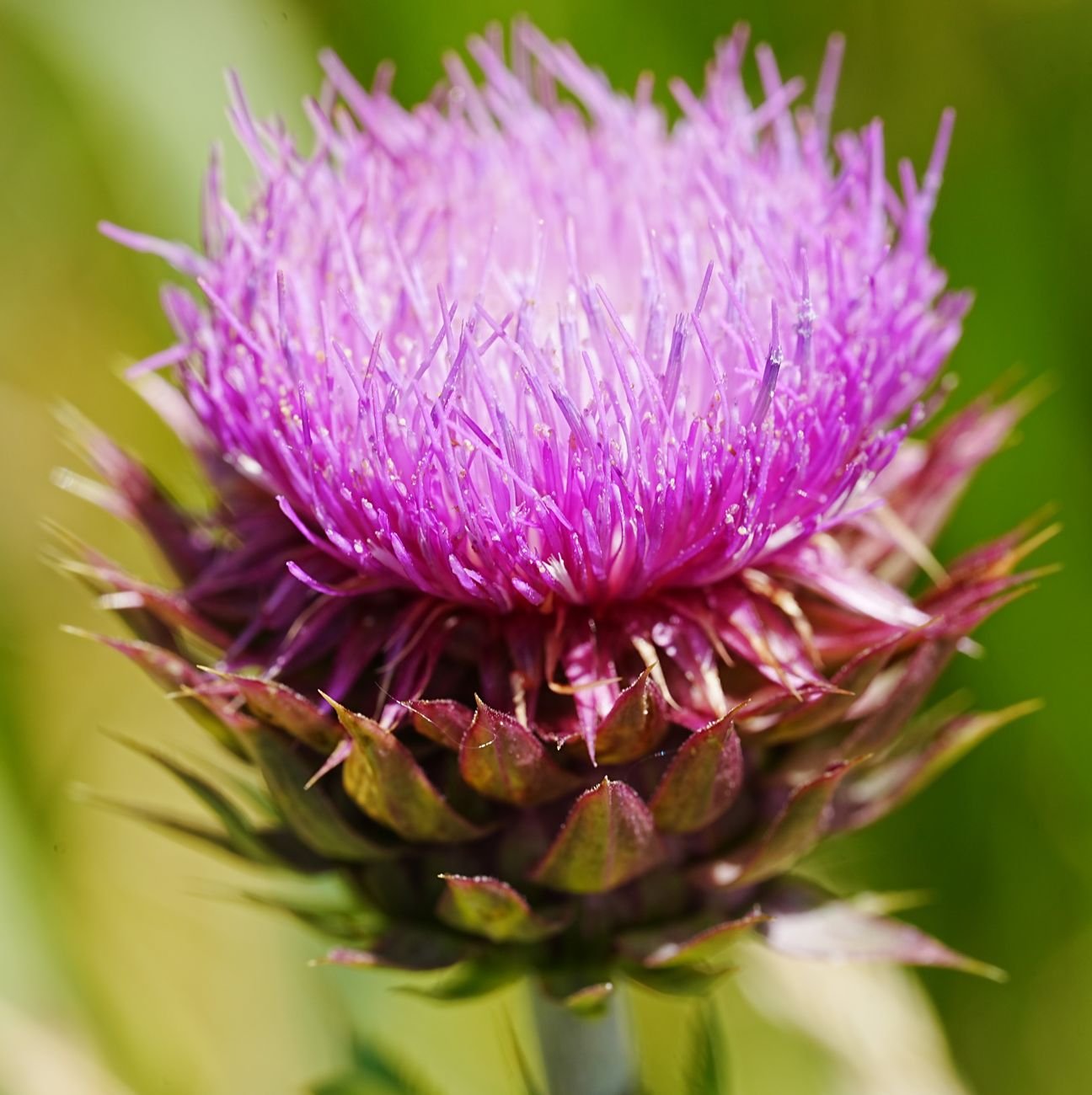
Milk thistle is a flowering plant. It has spiky purple flowers. Its leaves carry white veins. Its scientific name is Silybum marianum. Herbalists in Europe have used it in traditional medicine for hundreds of years. The seeds are the part most often used in supplements. They contain the compounds that researchers study most. On a shop shelf, you will usually see a seed extract. It comes in a capsule or tablet. Sometimes you will see a tincture or tea made from the seeds.
The plant itself is hardy and a little prickly. That is part of its charm. It has survived as a garden and roadside plant in many warm climates. It is related to daisies and artichokes. That surprises a lot of people when they first learn it. That family connection matters for one practical reason. We will return to it later. People who are allergic to plants in the ragweed family can also react to milk thistle. So allergies deserve a careful check before anyone tries it.
For most of its history, herbalists used milk thistle for complaints linked to the liver and gallbladder. They also used it for digestion in general. Traditional use is not the same as proof. That distinction sits at the centre of this article. A plant can have a long history. It can still have only modest evidence for a specific modern claim. What matters is what careful studies have measured. The people in the studies matter too. The length of the studies matters as well. What they could not show matters just as much.
What Is Silymarin and Why Does It Get the Credit?
Silymarin is a group of compounds. Milk thistle seeds contain them. Researchers focus on silymarin most. Silybin is the best known compound in the group. Many people call it the main active part. Studies of milk thistle for liver health almost always use a silymarin extract. They do not test eating the leaves. They do not test a weak tea from the flowers. Dose and form matter here. A cup of tea differs a lot from a standardised extract.
Laboratory studies give researchers a reason to study silymarin. The studies suggest it has antioxidant activity. That means it may limit damage from unstable molecules called free radicals. It also seems to affect some processes linked to inflammation. Animal and cell studies link it with effects on liver cell repair. Those findings are real. They explain why scientists keep studying it. Yet laboratory results do not always translate into the same effects in people. A compound can look promising in a petri dish. It can still show only small or uncertain effects in a human trial. Keep that gap in mind throughout this article.
What Your Liver Does All Day, Every Day
Your liver is the largest internal organ you have. It works quietly in the background all day. Food nutrients pass through it for processing. The organ stores energy as glycogen. It makes proteins that your blood needs. It also clears substances your body no longer needs. Cholesterol regulation is another job it does. It stores some vitamins and minerals too. Most of the time you never notice any of this. That is exactly why liver health is easy to take for granted. Problems often show up only when something goes wrong.
Your liver is already a detox organ in its own right. That is one of the most useful things to understand. Your kidneys, lungs, skin and digestive system work with it. Together they constantly sort what to keep, what to use and what to remove. People often talk about needing to detox. Usually they describe a feeling. Tiredness after a heavy weekend is a common example. That feeling is not automatically a medical problem with the liver itself.
Your liver can also repair itself well, within limits. Liver cells can regrow after damage. Doctors can remove part of a healthy liver in surgery. They watch it grow back. That ability is not unlimited, though. It does not make the liver invincible. Heavy alcohol use can damage it over time. Some medicines can do the same when people take them incorrectly. Long term metabolic problems can also wear it down. In time, that damage can overwhelm the repair capacity.
What the Research Says About Milk Thistle for Liver Health
When people search for milk thistle for liver support, they usually want a simple answer. The honest answer is that the research is mixed. Scientists have studied silymarin in people with liver conditions for many years. Their studies cover alcoholic liver disease. They also cover nonalcoholic fatty liver disease. Other studies looked at liver damage linked to viral hepatitis. Some small trials reported small improvements in liver enzyme tests. Doctors use those tests to check how the liver is coping. Other trials found no clear difference between silymarin and a placebo. When results point in different directions, be careful. Do not pick the most encouraging study and ignore the rest.
Reviews that pull many trials together reach a similarly cautious conclusion. They often find small trials. The trials ran for a short time. They used different doses and forms of silymarin. That does not mean milk thistle does nothing. It means the evidence is not strong enough. We cannot say with confidence that it improves liver health in a meaningful way for most people.
What the Reviews Say About Milk Thistle for Liver
It is also worth asking who the researchers actually studied. That shapes what the results can tell you. Most trials enrolled people who already had a diagnosed liver condition. Those people were receiving medical care. That is very different from a healthy person taking a supplement. A healthy person hopes to protect a liver that already works well. There is almost no good evidence that milk thistle improves liver function in healthy people. There is little room for improvement to show up in a test. Those studies are rarely done. If your liver is healthy, you are unlikely to feel a difference. A blood test is unlikely to show one either.
If you want a plain, independent summary of where the evidence stands, the United States National Center for Complementary and Integrative Health publishes a short overview of milk thistle research, including what studies have and have not shown. It is a useful place to check before you decide anything, because it does not sell supplements and it is written for the public rather than for researchers. Reading a source like that, and talking through what you find with a doctor or pharmacist, is a much better basis for a decision than a product label or a social media post.
The Limits You Should Know Before You Get Excited
The first limit is the one we have already met: the trials are small, short and different from each other, so they cannot support big promises. A supplement that shows a small change in a liver enzyme test in a small group of people with a diagnosed condition has not been shown to protect a healthy liver, to reverse liver damage, or to make up for heavy drinking or a poor diet. Those are very different claims, and they need very different evidence. Anyone who tells you that a capsule can undo years of damage in a few weeks is selling a story, not reporting a study.
The second limit is that we know less than we should about long term use. Most trials run for weeks or a few months, not for years, so questions about safety over a long period and about how silymarin interacts with medicines people take in real life are still only partly answered. That uncertainty is a reason to treat milk thistle as a decision to make with a health professional, especially if you already take prescription medicine.
The third limit is quality. Supplements are not regulated in the same way as prescription medicines in Canada, the United States, the United Kingdom or Australia, so the amount of silymarin in a product can vary, and what is on the label is not always what is in the capsule. Choosing a product from a reputable maker, and asking a pharmacist what to look for in general terms, can reduce that risk, but it cannot remove it completely. If a claim sounds too good to be true, if it promises a cure, or if it uses the word detox as if the liver needed a spring clean, that is a useful warning sign in itself.
Milk Thistle Liver Detox: A Framing That Needs Correcting
The phrase milk thistle liver detox is searched a lot, and it is easy to see why. It promises something simple: take a natural product, flush out the bad stuff, and start fresh. The problem is that the promise does not match how the liver works. Your liver does not store toxins waiting for a special cleanse, and it does not need a supplement to switch its detox work on. It is doing that work all the time, using enzymes and pathways that are built into the organ itself. Milk thistle does not detox your liver in the way that phrase suggests, and no honest article should claim that it does.
That does not mean the phrase is useless. It tells us what people are hoping for, which is usually a fresh start after a period of overeating, drinking or feeling run down. The honest answer to that hope is less exciting but more useful: sleep, water, balanced meals, movement, and cutting back on alcohol will do far more for how you feel than a detox product will, and they will do it without asking your liver to do anything new. If you want to read more about the home remedies that are often discussed alongside liver health, and about which of them have any support, our guide to home remedies to detox your liver looks at those ideas in detail, and it is worth reading alongside this article rather than instead of it.
The Natural Label Trap
There is one more correction worth making, because it protects you from a common trap. A product that calls itself a detox is not automatically safer or more natural than any other product, and a natural label is not a safety guarantee. Poisonous mushrooms are natural, and so are many plants that should never be eaten. The right question is not whether something is natural or whether it promises a detox, but whether there is good evidence that it helps, whether it is safe for you in particular, and whether a doctor or pharmacist thinks it is a sensible choice. On those questions, milk thistle sits firmly in the middle: interesting, studied, and not proven.
Who Should Talk to a Doctor First About Milk Thistle for Liver
Milk thistle is often described as gentle, and for many healthy adults it appears to be well tolerated in the short term, with only mild digestive upset reported in some studies. Gentle is not the same as safe for everyone, though, and a few groups should always talk to a doctor or pharmacist before trying it. That list includes anyone who is pregnant or breastfeeding, anyone with a diagnosed liver condition, anyone who takes prescription medicine regularly, and anyone who has had an allergic reaction to a plant in the past. A short conversation can prevent a problem that is much harder to sort out later.
People with liver disease have the most reason to be careful, which may sound odd for a supplement that is marketed for the liver. The reason is simple: a damaged liver handles medicines and supplements differently from a healthy one, and a supplement that seems harmless in a healthy person can behave differently when the liver is already under strain. A doctor who knows your history can weigh that risk properly, and can also check whether a supplement could interfere with the treatment you are already receiving. That check is especially important if you are waiting for test results, if you have been told your liver enzymes are raised, or if you are being treated for any liver condition.
Allergy Is the Other Group to Watch
Allergy is the other group to take seriously. Because milk thistle is related to ragweed, daisies and chrysanthemums, people with allergies to those plants can react to milk thistle too, and reactions can range from a mild rash to something more serious. If you know you react to ragweed or to other plants in that family, tell a pharmacist before you consider milk thistle, and stop using it and seek medical advice if you develop itching, swelling, a rash or trouble breathing. The same advice applies to children: supplements made for adults should not be given to children without a doctor or pharmacist saying so first.
How People Usually Take Milk Thistle
Milk thistle is most often sold as a capsule or tablet containing a standardised seed extract, which means the maker has aimed for a consistent amount of silymarin in each dose. Teas and tinctures are also sold, but they usually contain less silymarin and their strength can vary a lot from one batch to another. That is one reason most research uses extracts rather than teas. If you want to understand the different forms and what the labels usually mean, our guide to the milk thistle supplement explains the forms in plain language, and our look at milk thistle benefits puts the wider claims in context, so you can see which ones have any support and which ones are mostly marketing.
There is no single dose that research has settled on, and this article will not suggest one, because the right choice depends on your health, your medicines and the product itself. That is a good reason to ask a pharmacist, who can look at the product you are considering and at the medicines you already take, and give you advice that fits your situation. What you can do on your own is to be a careful shopper: look for a reputable maker, read the label for the silymarin content, avoid products that promise a cure or a detox, and keep a note of anything you take so you can tell a doctor about it later. A supplement is still a substance your body has to process, and your liver is the organ that will do much of that work.
A Sensible Way to Support Your Liver
If you want to look after your liver, the most reliable steps are the ones that support your whole body: eat a balanced diet with plenty of vegetables and whole foods, keep alcohol low or avoid it, move regularly, sleep well, and keep a healthy weight. Learning how to count macros can help you build balanced meals without turning food into a chore, and paying attention to the basics, such as whether you need a vitamin D supplement in the darker months, is a more useful habit than chasing a new liver product. Supplements can be part of a health routine for some people, but they are never a replacement for those habits, and they are never a shortcut around them.
Frequently Asked Questions
Does milk thistle actually help the liver?
The honest answer is that the evidence is mixed and modest. Some small trials in people with liver conditions found small improvements in liver enzyme tests, while others found no clear difference. There is no good evidence that it improves liver function in healthy people.
Can milk thistle detox your liver?
No, not in the way that phrase suggests. Your liver already removes waste all the time, and milk thistle does not flush it out or switch that work on. If you feel run down after overeating or drinking, rest, water, balanced meals and cutting back on alcohol will help you feel better, and no supplement can replace those steps.
Safety and Allergy Questions
Is milk thistle safe to take every day?
Most short term studies reported only mild side effects, such as digestive upset, in some people. Long term safety is less well studied, and safety depends on your health and your medicines. Anyone who is pregnant, breastfeeding, living with liver disease, or taking prescription medicine should talk to a doctor or pharmacist before taking it every day.
Who should avoid milk thistle?
People who are allergic to ragweed, daisies, chrysanthemums or other plants in that family should be careful, because they can react to milk thistle too. Children should not take adult supplements without a doctor or pharmacist saying so first. If you develop itching, swelling, a rash or trouble breathing, stop using it and seek medical advice.
Disclaimer: This article is general information only and is not medical advice. It does not diagnose, treat, cure or prevent any disease. Supplements can interact with medicines and can affect people differently, so talk to your doctor or pharmacist before you start milk thistle or any new supplement, especially if you are pregnant, breastfeeding, living with a liver condition, or taking prescription medicine.

 Ablaze Fitness


