


Creatine is one of the most talked about supplements in the gym. Yet most beginners still ask the same question. How do you actually take it? This guide answers that question in plain words. You will learn how to take creatine the simple way, with the right form, the right dose, and a routine you can stick to. No jargon, no hype, and no expensive blends. Just the basics that work.
Interest in this supplement is rising fast. In fact, Google Trends showed creatine searches climbing from 46 to the 60s and 70s in the week before this article. More people are trying it for the first time. If you are one of them, this guide shows you how to take creatine step by step. Follow the steps in order and you will know exactly what to buy, how much to take, and when to take it.
What Is Creatine, in Plain Words?
Learning how to take creatine starts with understanding what it does. Creatine is a compound your body makes from amino acids. It is stored mostly in your muscles, where it helps make energy for short, hard efforts. For example, a heavy set of squats, a sprint, or a set of push ups all draw on it. Your body makes about 1 to 2 grams a day. You also get it from food, mainly red meat and fish. A pound of beef or salmon gives you about 1 to 2 grams.
Supplementing with creatine tops up your muscle stores. As a result, your muscles hold more of the energy they need for short bursts. That can mean one or two extra reps, a slightly heavier lift, or a faster recovery between sets. The effect is small on any single day. Over weeks of training, however, those small gains add up. That is why creatine is one of the most studied sports supplements in the world.
Creatine is not a steroid. It does not work like a stimulant, and it will not build muscle on its own. It works only when you train. Think of it as a helper for your training, not a replacement for it. In fact, the International Society of Sports Nutrition calls creatine monohydrate the most effective ergogenic nutritional supplement currently available to athletes for increasing high intensity exercise capacity and lean body mass during training. You can read their full position stand on the International Society of Sports Nutrition position stand on creatine.
How to Take Creatine in 5 Simple Steps
Here is how to take creatine in five steps. First, buy creatine monohydrate powder. Next, measure out 3 to 5 grams, about one level teaspoon. Then, stir it into a glass of water or juice and drink it. After that, take the same dose every day, training days and rest days alike. Finally, keep training with weights two to four times a week. That is the whole method. The rest of this guide explains each step in detail.
- Buy creatine monohydrate powder from a trusted brand.
- Measure 3 to 5 grams, about one level teaspoon.
- Mix it into water, juice, or a shake and drink it right away.
- Take it every day, even on rest days.
- Train with weights and track your progress.
If you remember only one thing, make it this. Consistency matters more than timing. A missed day here and there is fine, but daily use is what fills your muscle stores. In fact, your muscles need about three to four weeks of daily use to reach full saturation without loading. Patience is part of the method.
Which Type of Creatine Should Beginners Buy?
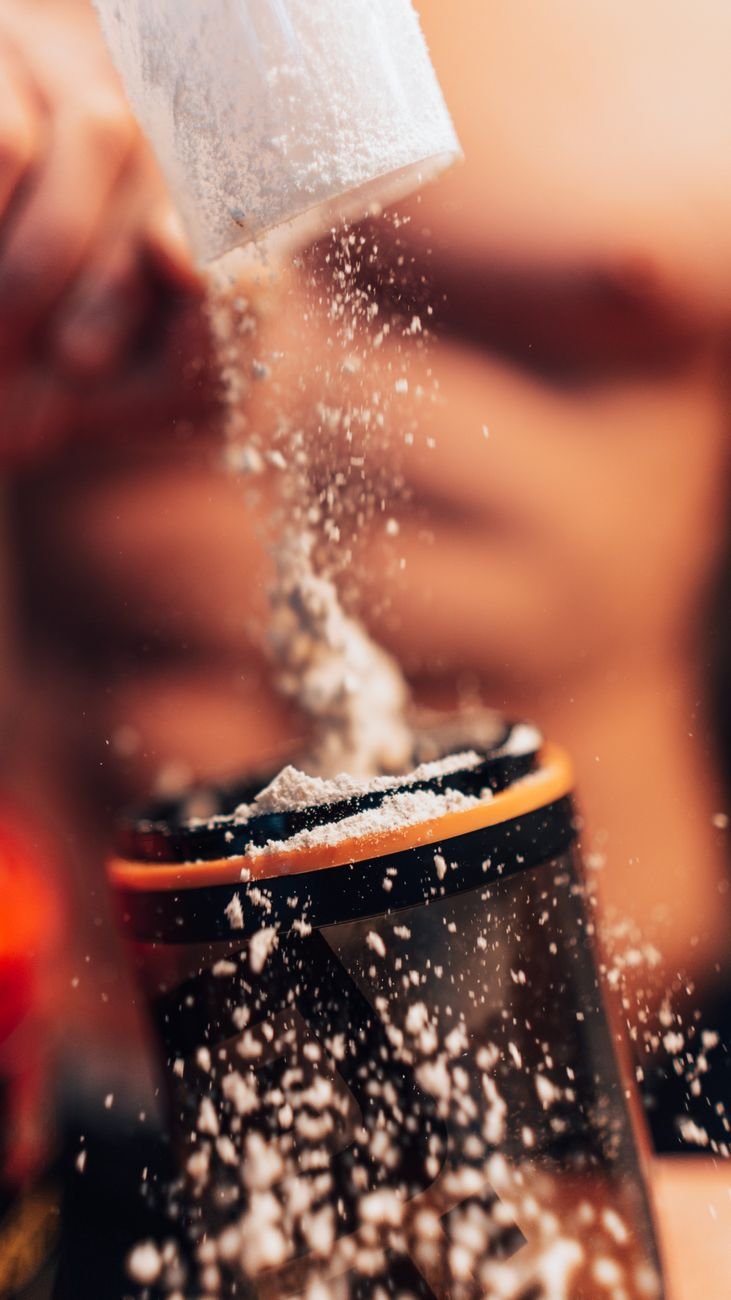
The first step in learning how to take creatine is choosing the right form. Buy creatine monohydrate. It is the form used in almost all of the research, and it is the cheapest. Other forms exist, such as hydrochloride, buffered, and ethyl ester versions. However, the evidence does not show that these forms work better than monohydrate. In fact, the International Society of Sports Nutrition states that monohydrate is the most extensively studied and clinically effective form. Save your money and buy the simple one.
Look for a plain powder with one ingredient: creatine monohydrate. Micronized monohydrate mixes a little easier in water. That is the only upgrade worth paying for. Choose a product that has been tested by a third party, such as NSF Certified for Sport or Informed Sport. Third party testing checks that the tub contains what the label says, with no hidden ingredients. Avoid blends that mix it with other powders at unknown doses. You cannot tell how much you are getting from a blend.
Powder is the best value. Capsules work too, but you need several capsules to reach 3 to 5 grams. Gummies are newer and often cost more per gram. In addition, some gummies contain less creatine than the label suggests. If you like the convenience of gummies, check the dose per serving carefully. For most beginners, a tub of plain powder is the smartest buy.
How Much Creatine Should You Take?
Once you know how to take creatine, the next question is how much. For most adults, the daily dose is 3 to 5 grams of creatine monohydrate. Smaller people can use 3 grams. Larger people, or those who train hard, can use 5 grams. Your exact weight matters less than you might think. The standard 3 to 5 gram range covers nearly everyone. In fact, the position stand notes that larger athletes may need 5 to 10 grams a day, but beginners should start at the standard dose and stay there.
| Body weight | Daily maintenance dose |
|---|---|
| Under 55 kg (121 lb) | 3 grams |
| 55 to 90 kg (121 to 198 lb) | 3 to 5 grams |
| Over 90 kg (198 lb) | 5 grams |
A level teaspoon of creatine monohydrate powder weighs about 5 grams. A heaped teaspoon weighs more. Use a kitchen scale the first few times, or use the scoop that comes in the tub. Most scoops hold 5 grams when level. Do not guess with a heaped spoon. Taking far more than 5 grams a day will not speed up your results, and it can upset your stomach.
Loading or No Loading: Which Is Right for You?
Loading means taking a higher dose for a few days to fill your muscle stores faster. The standard loading method is 20 grams a day, split into four 5 gram doses, for 5 to 7 days. After that, you drop to 3 to 5 grams a day. An alternative is to take about 0.3 grams per kilogram of body weight a day for 5 to 7 days, split into four doses. Whether you load or not, how to take creatine stays the same after the first week: a daily dose, every day. Both methods reach the same end point. Loading simply gets you there in about a week instead of three to four weeks.
| Method | Dose | Time to full stores |
|---|---|---|
| Loading | 20 g a day, split into 4 doses of 5 g, for 5 to 7 days, then 3 to 5 g a day | About 1 week |
| No loading | 3 to 5 g a day, every day | About 3 to 4 weeks |
| Slow loading | 3 g a day, every day | About 4 weeks |
For most beginners, no loading is the better choice. It is simpler, cheaper, and easier on the stomach. Loading can cause bloating and stomach upset in some people, because 20 grams a day is a lot of powder. If you want faster results and your stomach handles it well, loading is safe. However, there is no rush. Your muscles end up at the same place either way. Pick the method you will actually stick with.
When to Take It for Best Results
Take creatine at the same time each day. The time of day matters far less than daily consistency. Some people take it before training. Others take it after training with a meal. Both work. In fact, research suggests that taking creatine with food, especially with carbohydrate or protein, can help your muscles absorb a little more of it. That is a small bonus, not a rule. When you learn how to take creatine, timing is the least important part. The key point is to take it every day.
A simple routine is to take creatine with breakfast or with your post workout meal. Link it to something you already do each day, such as your morning coffee or your lunch. That habit makes it easy to remember. On rest days, take the same dose at the same time. Your muscles do not know whether you trained that day. They only need a steady supply.
Do not worry about taking creatine at an exact minute before or after training. The supplement works by building up in your muscles over weeks, not by acting in the hour after you swallow it. As a result, a missed hour does not matter. A missed week does. Keep the dose daily and the timing will take care of itself.
How to Mix It and Take It Daily
Mixing is the easiest part of learning how to take creatine. Stir one scoop or one level teaspoon of powder into a glass of water, juice, or a protein shake. Stir well and drink it right away. Creatine does not dissolve fully in cold water. It will look a little cloudy, and some powder may settle at the bottom. That is normal. Swirl the glass and drink the last sip too.
Do not mix creatine into a hot drink and leave it sitting for hours. Creatine slowly breaks down into creatinine in water over time, especially in warm or acidic drinks. Mixing it and drinking it right away avoids that problem. In addition, do not pre mix a bottle for the whole day. Mix each dose fresh when you take it.
If the texture bothers you, mix the powder into a smoothie or a flavoured drink. A little juice hides the taste, which is mild and slightly bitter. Some people take creatine with their morning oatmeal or yoghurt. That works too, as long as you eat the whole serving. The goal is simple. Get the full dose into your body, every day.
What to Expect When You Take Creatine
Knowing how to take creatine also means knowing what to expect. Do not expect overnight changes. Creatine works slowly, as your muscle stores fill up. Here is a realistic timeline for a beginner who trains two to four times a week.
| Time | What you may notice |
|---|---|
| Week 1 | Little change. Your muscles are still filling up. |
| Week 2 to 3 | One or two extra reps on hard sets. Slightly faster recovery between sets. |
| Week 4 and beyond | Steadier strength gains. The scale may show 1 to 2 kg more, mostly water in the muscles. |
The scale may rise by 1 to 2 kilograms in the first few weeks. That weight is water drawn into the muscles with the creatine. It is not fat. In fact, it is a sign the supplement is working. Your muscles will look a little fuller. If the scale bothers you, weigh yourself weekly at the same time and watch the trend, not the daily number.
Strength gains come from training, not from the powder alone. Creatine helps you do a little more work in each session. Over time, that extra work builds more strength and muscle. However, the effect is modest. A realistic expectation is a few percent more strength over a few months, not a dramatic change in a week. Track your lifts and you will see the trend.
Do You Need to Cycle It?
Once you know how to take creatine daily, the next question is whether to cycle it. No, you do not need to cycle creatine. You can take 3 to 5 grams a day for months or years. Your body keeps making its own creatine, and the supplement does not shut that down in a harmful way. When you stop taking creatine, your muscle stores slowly fall back to normal over four to six weeks. Nothing bad happens. You simply lose the small performance edge.
Some people take breaks because they want a break from supplements, or because they are travelling. That is fine. There is no rule that says you must cycle on and off. In fact, the long term studies on creatine use in healthy adults have found no harm to kidney or liver markers. The position stand notes that long term creatine use, up to 5 years in some studies, did not impair kidney function in healthy people. If you have kidney disease, however, talk to your clinician first. That advice applies to any supplement.
Creatine and Training: Making It Work
Knowing how to take creatine is only half the story. Training is the other half. Creatine works best with resistance training. That means lifting weights, using resistance bands, or doing bodyweight exercises that challenge your muscles. Without training, creatine will not build strength. It will only fill your muscle stores. The training is what turns those stores into results. In fact, the strongest evidence for creatine comes from people who lift weights regularly.
Start with a simple routine you can repeat. Our beginner home workout is a good place to start if you train at home. Add strength work for your hips and legs with our hip strengthening exercises. If you are short on time, a 10 minute workout still counts. The key is to train each muscle group two or three times a week, and to add a little weight or a few more reps over time. That steady progress is called progressive overload, and creatine helps you keep it going.
Recovery matters too. Sleep, food, and rest days all help your muscles grow. After a hard session, our foam rolling guide can help with soreness. If you are new to exercise, our low impact workouts for beginners show how to start gently. Creatine is one small piece of a bigger picture. Training, food, sleep, and consistency do the heavy lifting.

Common Mistakes When You Take Creatine
- Skipping days. Creatine works by keeping your muscle stores full. Missing days often lets those stores fall.
- Taking far too much. More than 5 grams a day will not speed up results, and it can upset your stomach.
- Buying fancy forms. Expensive creatine types have not been shown to beat plain monohydrate.
- Expecting instant results. Full muscle stores take one to four weeks, depending on whether you load.
- Forgetting to train. Creatine without training is like fuel without an engine.
- Skipping water. Creatine draws water into your muscles, so drink enough fluids each day.
- Taking it only on training days. Your muscles need a steady supply, so take it every day.
- Trusting blends. A product that hides its creatine dose inside a blend may give you far less than 3 grams.
Most mistakes in how to take creatine come from the same place. People want fast results, so they take more, buy the flashiest product, or skip the boring daily routine. In fact, the boring routine is the one that works. A plain powder, a level scoop, a glass of water, every day. That is the whole secret.
Who Should Check Before Taking Creatine
Before you learn how to take creatine, check whether it suits you. Creatine is safe for most healthy adults. However, some people should check with a clinician first. That includes anyone with kidney disease or liver disease, anyone who takes medication that affects the kidneys, and anyone who is pregnant or breastfeeding. Children and teenagers should also get guidance from a clinician or a qualified sports dietitian before supplementing.
Women over 40 often ask whether creatine is right for them. Our guide on creatine for women over 40 looks at the research for that age group, including muscle, bone, and brain health. It is a useful companion to this beginner guide. If you take any medication, or if you have a health condition, a quick chat with your clinician is the safest first step. Bring the tub with you so they can see exactly what you plan to take.
Frequently Asked Questions
How long does it take for creatine to work?
With a daily dose of 3 to 5 grams and no loading, your muscles reach full saturation in about three to four weeks. With loading, it takes about a week. Strength changes follow your training, so give it a month or two before you judge the results. That timeline is part of learning how to take creatine with realistic expectations.
Should I take creatine every day?
Yes. Take the same dose every day, including rest days. Daily use keeps your muscle stores full. Taking it only on training days will not fill your stores as well.
Does creatine cause weight gain?
Creatine can add 1 to 2 kilograms of water weight in the first few weeks. That water sits inside your muscles, not under your skin. It is not fat gain. If you track your weight, look at the trend over weeks, not single days.
Is creatine safe for my kidneys?
In healthy adults, long term studies have found no harm to kidney function from creatine monohydrate at normal doses. However, if you have kidney disease, talk to your clinician before taking it. A blood test for creatinine can look higher when you supplement, so tell your clinician that you take creatine before any blood work.
Can I take creatine with coffee?
Yes. You can take creatine with coffee, tea, or any drink. Caffeine does not cancel out creatine. In fact, many people mix their morning creatine into their coffee routine so they never forget it. Just drink it right away after mixing.
What happens if I stop taking creatine?
Nothing harmful happens. Your muscle stores slowly return to normal over four to six weeks. You may lose a little strength and a little water weight. You can restart at any time with the same 3 to 5 gram daily dose.
The Simple Routine
Here is the whole guide in one paragraph. Buy plain creatine monohydrate powder. Take 3 to 5 grams a day, mixed into water or juice, at the same time each day. Train with weights two to four times a week. Drink enough water. Wait a month, then check your progress. That is how to take creatine. No loading is needed, no cycling is needed, and no expensive form is needed. The simple routine is the one that works.
Supplements work best when the basics are in place. Eat enough protein, sleep well, and train regularly. Creatine adds a small edge on top of those habits. It will not do the work for you, but it will help you do a little more work in every session. Start today, stay consistent, and let the results build week by week.
This article is general information about a dietary supplement. It is not medical advice. Talk to your clinician before starting any supplement, especially if you have a health condition or take medication.

 Ablaze Fitness


