

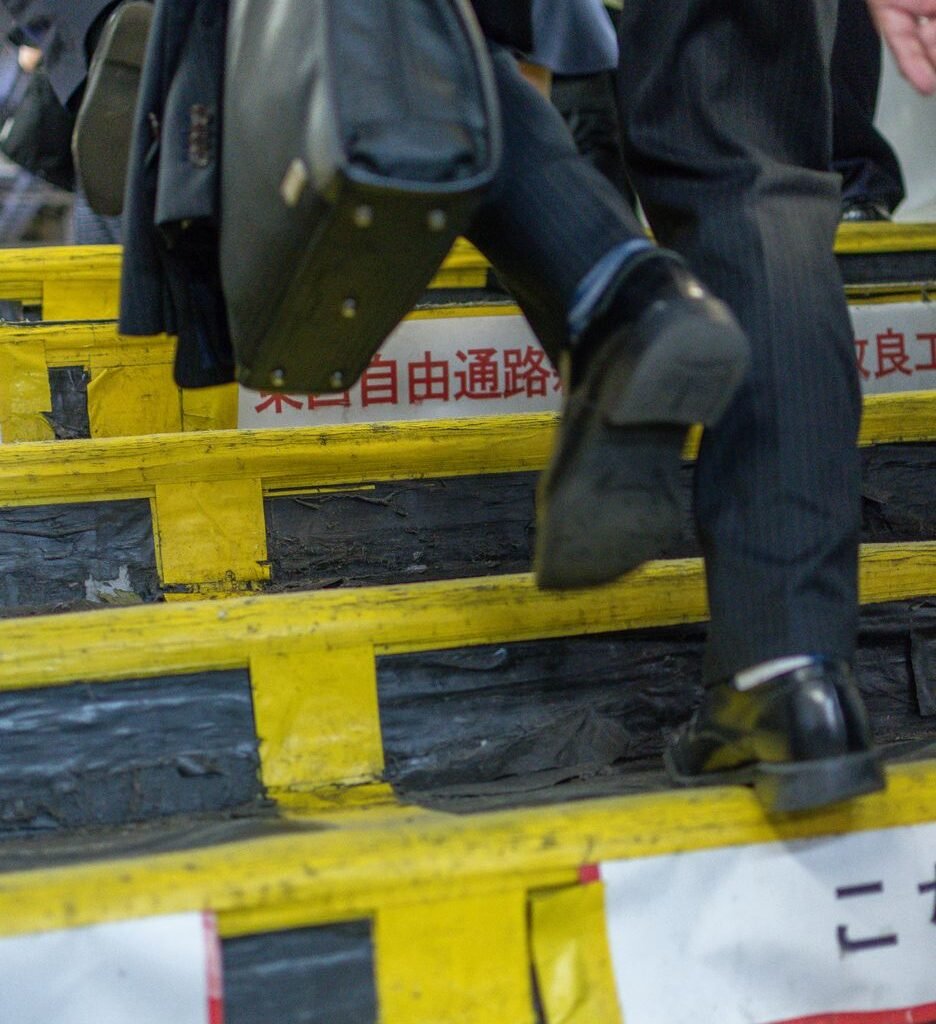
Exercise snacks are exactly what they sound like: very short bursts of movement. They usually last one or two minutes at a time, scattered through an otherwise ordinary day. No gym bag, no change of clothes, no hour carved out of your schedule. You climb the stairs briskly instead of taking the lift. You do fifteen sit-to-stands from your chair, or walk fast to the end of the street and back.
The idea would be easy to dismiss as too small to matter. Serious research has started paying attention to it. Studies following tens of thousands of people link short, vigorous bursts each day with strikingly better health outcomes. That link holds for a handful a day, even in people who do no formal exercise at all. This guide explains what exercise snacks are. It covers what the research actually shows and where its limits sit. It also shows how to build them into a real day without turning your life upside down.
What Exercise Snacks Are
The term covers two closely related ideas that researchers study under slightly different names.
The first is the exercise snack itself: a brief, deliberate bout of activity. It often lasts one to two minutes, performed at a fairly brisk effort. Examples include fast stair climbing, a set of bodyweight squats, sit-to-stands from a chair, or a short, fast walk. Snacks are planned in the loose sense that you decide to do them. They are small enough to fit between meetings or during a television advert break.
The second idea is the one behind the biggest headlines. Scientists call it VILPA, short for vigorous intermittent lifestyle physical activity. VILPA is not a workout at all. It is the vigorous movement that already hides inside daily life. Hurrying for a bus or carrying shopping up a hill both count. So does playing energetically with your children, or taking the stairs at pace. Researchers measure it with accelerometers worn by large groups of people. They then follow those people for years to see how movement patterns relate to health.
Both ideas rest on the same insight: movement does not have to arrive in one long, formal block to count. Many adults never set foot in a gym. For them, the minutes hiding inside ordinary life may be the most realistic place to start.
The Research Story, in Order
Because the headlines around this topic are bold, it helps to walk through the evidence in the order it arrived, with the caveats attached.
The 2022 Nature Medicine study
The 2022 study in Nature Medicine put this topic on the map. Researchers used accelerometer data from roughly 25,000 adults in the UK Biobank who reported doing no structured exercise in their leisure time. Because the devices recorded movement continuously, the team could spot short bursts of vigorous activity lasting up to about two minutes, the natural VILPA pattern of daily life.
People who accumulated around three of these bursts a day, totalling only a few minutes, had substantially lower death rates. That held for death from all causes and from cardiovascular disease over the follow-up years. The comparison was with people whose days contained almost none. The differences were large enough to surprise even the researchers. A similar pattern appeared in a comparison group of exercisers.
One caveat belongs in the same breath as those findings, because it changes how you should read them. This was an observational study. It shows that people whose lives contain more short vigorous bursts tend to live longer. It cannot prove the bursts themselves caused the difference. People who hurry up stairs may differ from people who cannot in ways no adjustment fully captures. Underlying health that made the movement possible is one example. The honest reading is that the findings are encouraging and biologically plausible. They do not mean that three bursts a day guarantee anything.
What the 2026 papers added
Interest did not fade after 2022. Fresh cohort analyses published in 2026 returned to the same questions in new populations. They included further UK Biobank work and a US-based VILPA analysis. They reinforced the original picture. Short, frequent vigorous bursts inside daily life track with better cardiovascular and overall outcomes. The association shows up at surprisingly small total amounts, on the order of a few minutes a day.
Just as importantly, the newer work sharpened the questions rather than settling them. Researchers are still working out how much of the benefit comes from the bursts themselves. The question is how much comes from the general fitness of people who move that way. The direction of the evidence is consistent, but it remains association built on observation, and careful scientists say so.
What controlled trials of exercise snacks show
The snack version of the idea, where people are actually assigned to perform short bouts, has been tested in smaller controlled trials, and here the picture is more modest and more concrete. Trials of brief stair-climbing snacks and similar protocols have found genuine improvements in cardiorespiratory fitness over several weeks, which matters because fitness is one of the strongest predictors of long-term health. Some studies of snacks taken around meals have also found improved blood sugar responses compared with sitting through the day, of real interest to anyone who spends long hours at a desk.
What the trials have not shown is direct fat loss from snacks alone. A few minutes of movement burns only a small number of calories, and studies measuring body composition have not found meaningful changes in body fat from snack protocols by themselves. If a headline promises that one-minute bursts will melt weight away, it has run well ahead of the evidence. The defensible claims are fitness, blood sugar handling, and breaking up long, still stretches of sitting.
Why the Idea Matters
The strongest argument for exercise snacks is not physiological. It is behavioural.
Surveys in the US, UK, and Canada consistently find that most adults do not meet standard activity guidelines, and the reason people give is rarely ignorance. Almost everyone knows exercise is good for them. The barrier is time, or more precisely friction: the gym commute, the hour the session really takes once changing and showering are added, the childcare problem, and the exhaustion of an already full day.
Snacks attack the friction instead of lecturing about the knowledge. A one-minute burst needs no travel, no equipment, no special clothes, and no willpower marathon. It can be attached to things that already happen: arriving at work, making coffee, finishing a call. Habits that small are unusually sticky, and a sticky small habit beats an ambitious routine abandoned by February.
There is also a fairness point worth making. Formal exercise culture quietly assumes a body that already works well, money for facilities, and a schedule with slack in it. Short bursts ask for none of those. For a carer, a shift worker, a new parent, or someone returning from illness at their own pace, snacks may be the first form of vigorous movement that is actually available.
What Counts as an Exercise Snack
A snack has three features. It is short, roughly 30 seconds to two minutes. It is vigorous enough to raise your breathing noticeably. And it fits inside a moment that already exists in your day.
Practical options include:
- Stairs taken briskly. One or two flights climbed at a pace that warms you up is the best-studied snack of all. If your building has stairs, you own a research-grade tool.
- A fast one-minute walk. Walk to the end of the street or around the block at a pace clearly faster than your stroll.
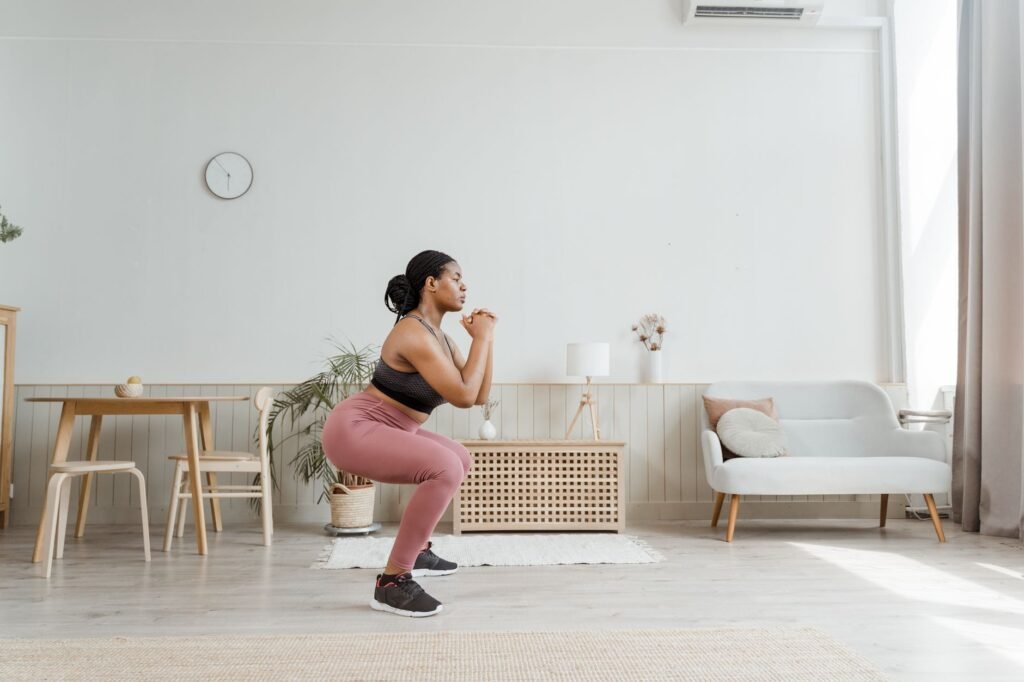
- Sit-to-stands. Stand up from a chair and sit back down repeatedly for a minute, using your legs rather than pushing off with your hands if you can.
- Bodyweight squats or wall push-ups. A short set at a steady, brisk rhythm works well at home and needs no floor space to speak of.
- Carrying something real. Shopping bags, a laundry basket, or a child carried at a purposeful pace all count, because VILPA research is largely measuring exactly this.
- Energetic play. Chasing games with children or a dog, done with genuine enthusiasm, produce the same burst pattern.
How hard should it feel?
Use the talk test. During a proper snack you should be breathing hard, able to get out a few words at a time but unable to hold a relaxed conversation. On a ten-point effort scale, aim for roughly seven out of ten: challenging, well above your normal pace, but nowhere near an all-out sprint.
That middle ground matters for safety as much as effect: the studied bursts are vigorous daily movement, not maximal efforts. You should finish each snack feeling worked and slightly breathless, then recover within a minute or two. If you are still gasping several minutes later, the burst was too hard for a snack and should be dialled back.
A Sample Day of Exercise Snacks, Hour by Hour
Here is how a desk worker might assemble five or six snacks across a day without a single formal workout. Treat it as a template to bend around your own routine, not a prescription.
7:30 a.m. After breakfast, take the stairs at home or walk briskly around the block once before leaving. One minute, done before the day has properly started.
9:00 a.m. Arriving at work, skip the lift and climb two flights at pace. Working from home, use your own stairs or do a minute of sit-to-stands before opening your laptop.
11:00 a.m. Coffee break. While the kettle boils or the machine runs, do a minute of squats or wall push-ups in the kitchen. Nobody needs to know.
1:00 p.m. Lunch. Take a brisk five-minute walk after eating, faster than a stroll. This longer snack pairs naturally with the structured routine in our guide to the Japanese walking method.
3:30 p.m. The afternoon slump. Stand up, walk fast to the far end of the building or around the car park once, and take the stairs back. Two minutes that clear a foggy head better than a second coffee.
6:30 p.m. Home again. Carry the shopping in at a brisk pace, take the bins out with intent, or play one genuinely energetic game with the kids or the dog before dinner.
8:30 p.m. During a television advert break, one minute of sit-to-stands or marching on the spot at pace.
Counted up, that day holds roughly eight to twelve minutes of vigorous movement, gathered in pieces too small to need planning. That clears the roughly three solid bursts a day that the observational research points to as a floor, with room to spare.
How Exercise Snacks Fit With Steps and Walking
Snacks do not replace walking; they sharpen it. Step counts reward total volume, and a high step day built from slow pottering is genuinely worthwhile for general health, as our wider guide to the benefits of daily exercise for physical and mental health explains. What snacks add is intensity in miniature, the short stretches where your heart and lungs are actually asked to work.
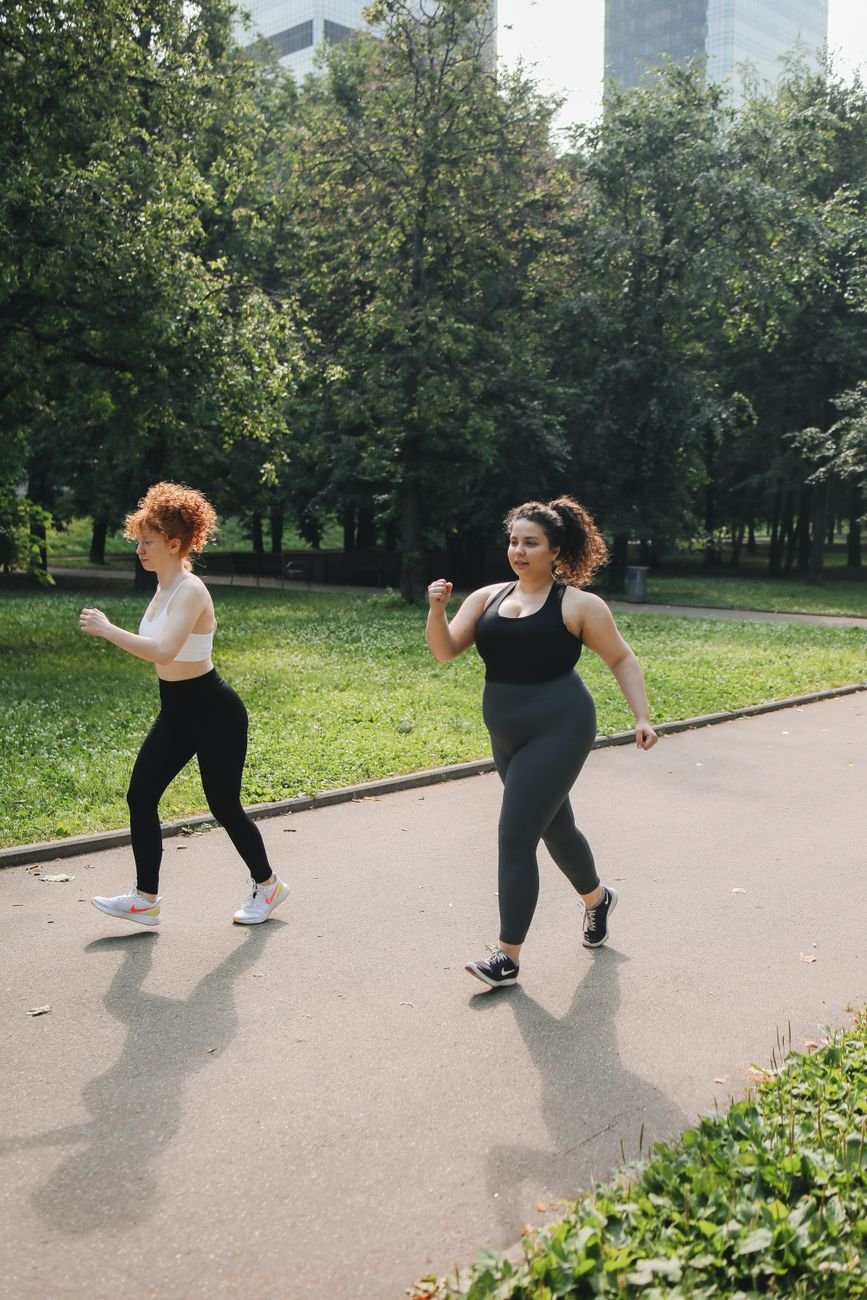
A sensible combination looks like this. Keep your ordinary walking as the base, because it is sustainable and it accumulates. Then upgrade a few of those minutes: take one stretch of every walk at a genuinely brisk pace, treat every staircase as a snack waiting to happen, and let hills do the work when your route offers them. Over a week, the two habits tend to reinforce each other: snacks make brisk walking feel easier, and regular walking makes snacks feel less like an interruption.
When snacks start feeling routine, that is the signal to build the next layer, and the cheapest next layer is a short, structured session at home. Our beginner home workout plan with no equipment takes the same movements you have been snacking on and arranges them into a complete beginner session, which is how many people graduate from bursts to training.
The Honest Limits of Exercise Snacks
A fair guide has to end the sales pitch here, because snacks have real boundaries.
First, snacks complement structured training; they do not replace it for specific goals. Building serious strength requires progressive resistance, gradually heavier loads over time, and no pattern of one-minute bodyweight bursts delivers that on its own. Likewise, training for a long run, a cycling event, or a sport demands sustained sessions that snacks cannot imitate.
Second, the calorie maths is unforgiving. Even a dozen vigorous minutes amounts to a modest energy cost, which is why trials do not find fat loss from snacks alone. Anyone using snacks as their movement base who also wants to lose weight will still need the food side of the equation to do most of that work.
Third, the most dramatic numbers in this field come from observational research, with all the uncertainty that involves. The fitness gains shown in controlled trials are real but smaller and slower than the headlines imply.
Fourth, snacks are general lifestyle activity, not a treatment for any condition. They are not a substitute for prescribed medication, rehabilitation programmes, or medical advice about a specific diagnosis, and nobody should read the cohort findings as a promise about their own future.
None of that makes snacks a gimmick. It makes them what the evidence says they are: a low-barrier way to raise fitness, interrupt long sitting, and give people who do nothing a first rung on the ladder.
Safety Notes Before You Start
Short does not mean careless, so run through these basics first.
Start with warm joints. The first snack of the day should be the gentlest, and cold, stiff ankles and knees appreciate a few easy repetitions first, especially on stairs.
Wear shoes that grip. Stair snacks in smooth-soled shoes or socks are a fall risk, and most daily-life bursts happen in whatever you are wearing, so let footwear decide some days.
Use the handrail without embarrassment. Holding a rail while climbing at pace is safer and barely reduces the effort in your legs.
Respect the recovery test. You should be breathing normally again within a couple of minutes. Chest pain, dizziness, palpitations that feel wrong, or breathlessness that does not settle are stop signals, not things to push through.
If you have a heart condition, uncontrolled blood pressure, a recent surgery or injury, or any condition your clinician monitors, check with that clinician before adding vigorous bursts to your day. This article is general information about a lifestyle pattern, and your own medical picture always outranks a general guide.
Frequently Asked Questions
How many exercise snacks do I need each day to make a difference?
The observational research found the clearest associations at around three vigorous bursts a day, each lasting up to about two minutes. Controlled trials of planned snacks often used three to six short bouts a day. Treat three solid bursts as a sensible starting target, build the habit first, and add more only when those feel automatic.
Do exercise snacks count toward the 150 minutes of weekly exercise guidelines?
Officially, guidelines count moderate and vigorous activity in bouts of any length, so vigorous snack minutes do contribute to your weekly total. Realistically, snacks alone rarely reach the full guideline amount, and the guidelines also call for muscle-strengthening activity twice a week. Snacks are best seen as a meaningful contribution and a bridge, not a loophole.
Can exercise snacks help my blood sugar?
Some small trials of short activity breaks, including snacks taken around meals, found improved blood sugar responses compared with uninterrupted sitting. The results are promising but come from modest studies, so the fair claim is that breaking up sitting with brief movement may help, not that snacks manage or treat blood sugar conditions. Anyone monitoring a condition should follow their own clinician’s guidance.
Weight Loss, VILPA, and Starting From Scratch
Will exercise snacks help me lose weight?
Not by themselves in any meaningful way, based on the trial evidence. The total calories in a few minutes of movement are small, and studies have not found direct body-fat changes from snack protocols alone. Where snacks help a weight loss effort is indirectly: better fitness, less unbroken sitting, and a daily movement habit that supports everything else you are doing.
Are exercise snacks the same as VILPA?
They overlap but are not identical. VILPA is the vigorous movement that happens naturally inside daily life, such as hurrying for a train or carrying shopping uphill, and it is what the large cohort studies measured. Exercise snacks are planned, deliberate mini-bouts, like a set of squats while the kettle boils. In practice the two blend into one pattern: a day with more short, vigorous minutes in it.
I do no exercise at all. Is it safe to start with vigorous bursts?
Start gentler than the full version. Begin with moderate bursts, a brisk walk pace that raises your breathing without straining it, and shorter stair climbs with the handrail, then build the intensity over a few weeks as the bursts feel easier. If you have any heart, joint, or blood pressure concerns, or you have been completely inactive for a long time, talk to your clinician first.
The Bottom Line
Exercise snacks take the most intimidating thing about fitness, the size of the commitment, and shrink it to a minute. The research behind them is genuinely interesting: large studies link a few short, vigorous bursts a day with much better outcomes in people who otherwise do no exercise, and trials confirm real fitness gains, while stopping short of proving cause or promising fat loss. Used with that honesty, snacks are a rare fitness trend that almost anyone can start today, on the stairs they already own.
This article is general health and fitness information only and is not medical advice or a diagnosis. Talk to a qualified professional about your own situation, especially if you have a
heart condition, take medication, or manage a long-term health condition.

 Ablaze Fitness


