


You love training, people ask you for advice in the gym, and now you want to know how to become a personal trainer for real, with paying clients and a qualification gyms and insurers recognise. The confusing part is not motivation. It is the maze of course adverts, each claiming to be the fastest or most respected route, with little explanation of what employers require.
This guide gives you a step by step roadmap for the United States, the United Kingdom, Canada, and Australia. Details differ by country, but the sequence is the same: check eligibility, choose a recognised certification, get first aid training, study with a plan, pass the exam, sort insurance, and build experience deliberately. Certification gets you through the door. Coaching safely, explaining clearly, and showing up reliably keep you there.
What You Do Once You Become a Personal Trainer
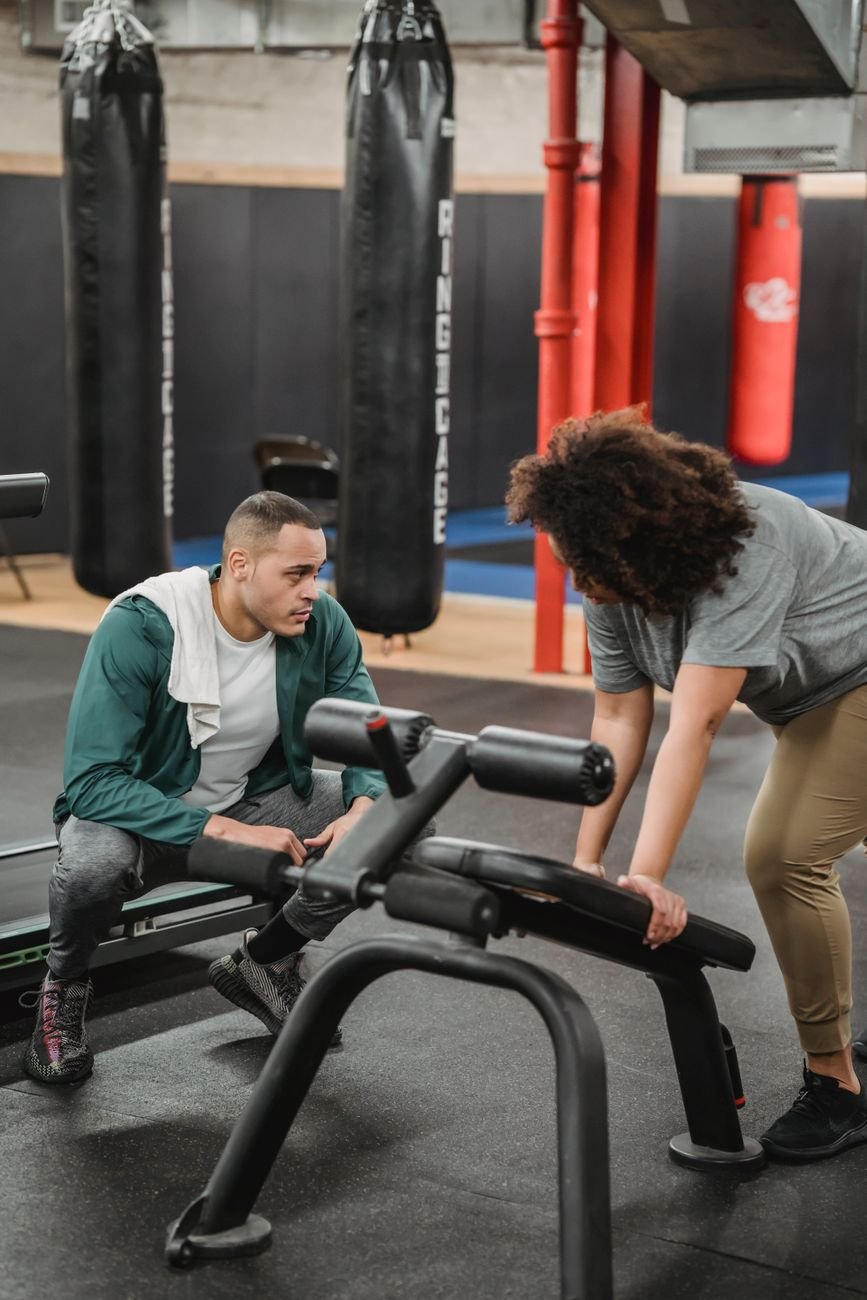
A trainer assesses a client, agrees goals, designs sessions and longer programs, coaches technique, tracks progress, and adjusts the plan when life gets in the way. Much of the work is communication: listening, cueing, and knowing when to push and when to back off. That mix is the daily work once you become a personal trainer.
There is also work clients never see: writing programs, keeping notes, managing bookings, checking equipment, and, if you are self employed, marketing, taxes, and admin. Early mornings and evenings are common. Split shifts, for example 6 a.m. to 10 a.m. and 4 p.m. to 8 p.m., are normal at first.
The US Bureau of Labor Statistics describes this mix in its overview of fitness trainers and instructors. If that full picture still appeals to you, you are likely a good fit.
The Roadmap at a Glance
- Check eligibility: age, education, and CPR.
- Choose a recognised certification route for your country.
- Complete CPR, AED, and first aid training.
- Study with a structured plan, usually 8 to 16 weeks.
- Pass the theory exam and, where required, a practical assessment.
- Get insurance, register as required, and set up business basics.
- Gain experience and find your first clients.
- Decide between gym based, independent, and online work, or a mix.
- Specialise gradually and keep your certification current.
Most people finish steps 1 to 6 in about 3 to 6 months part time.
Step 1: Check Your Eligibility to Become a Personal Trainer
Confirm entry rules before paying to become a personal trainer.
Age. Most major certifying bodies require at least 18 to sit the final exam and to be insured to train adults unsupervised. Some entry level gym instructor qualifications can start at 16 in the United Kingdom and Australia, but personal trainer level qualifications and insurance usually still require 18. In the United States and Canada, 18 is the standard minimum.
Education. Most routes require a high school diploma or equivalent: a GED in the United States, a high school diploma in Canada, GCSEs or equivalent in the United Kingdom, and a school certificate or equivalent in Australia. A degree is not required for the standard vocational route. Degrees help for specialist roles, but they are a longer separate path.
Your own training experience. You should be comfortable with the movements you will coach: squats, hinges, presses, rows, lunges, carries, and core work. If you have never followed a structured program, spend 8 to 12 weeks doing so first. Following a beginner strength training plan teaches you how progression and soreness feel from the client side.
Step 2: Choose a Certification Route to Become a Personal Trainer
Personal trainer is not a single government licensed title in the United States, the United Kingdom, Canada, or Australia in the way that nurse or physiotherapist is. Employers, insurers, and industry registers set the standard, and they recognise specific qualifications. Pick a route those gatekeepers accept.
United States. Employers commonly look for certification from a major national body with independent accreditation. Bodies named factually in most listings include the American Council on Exercise (ACE), the National Academy of Sports Medicine (NASM), the American College of Sports Medicine (ACSM), and the National Strength and Conditioning Association (NSCA). Listings often prefer accreditation through the National Commission for Certifying Agencies (NCCA). Check local gym adverts before you enrol.
United Kingdom. The recognised route is typically a Level 2 Certificate in Gym Instructing followed by a Level 3 Diploma in Personal Training, awarded by organisations such as Active IQ or YMCA Awards and delivered by colleges and private providers. Registration with CIMSPA, the Chartered Institute for the Management of Sport and Physical Activity, is the professional recognition employers understand.
Canada. Requirements vary by province and employer. CanFitPro is widely recognised for gym roles, and the Canadian Society for Exercise Physiology (CSEP) offers a certified personal trainer route with a more academic entry path. Municipal recreation centres sometimes list specific credentials, so check the exact facilities you want to work in.
Australia. The standard route is a Certificate III in Fitness to work as a gym instructor, followed by a Certificate IV in Fitness to work as a personal trainer, delivered by a Registered Training Organisation (RTO), including TAFE institutes and private colleges. Registration through AUSactive is widely understood by employers and insurers. Avoid any provider that cannot state its RTO status and the exact certificate you will receive.
Before You Pay to Become a Personal Trainer
Before paying to become a personal trainer, ask: is it named in local job adverts, will an insurer cover you, does it include practical assessment, and what is the total cost including retakes and renewal? Avoid unaccredited weekend certificates.
Step 3: Get CPR, AED, and First Aid Sorted Early
Almost every certifying body and employer requires anyone who wants to become a personal trainer to hold current cardiopulmonary resuscitation (CPR) and automated external defibrillator (AED) training, and many require basic first aid. Book it early, because you often must show a valid card before certification is issued, not just before you start work.
Choose a course with a hands on component where local rules require it. Purely online CPR courses are not accepted by some United States certifying bodies, and similar in person expectations apply elsewhere. In the United Kingdom, a workplace first aid certificate is a common employer request. In Australia, the unit HLTAID011 Provide First Aid, which includes CPR, is the standard named in job adverts. Confirm the current requirement with your certifier, because names and codes change.
Put the renewal date in your calendar the day you pass. Renewals are typically every 1 to 3 years, and a lapsed card can disrupt certification and insurance. Learn the training side of safety too: regressions, alternatives for sore knees, and when to stop a session. Reading around sensible knee exercises shows how a good coach offers options instead of forcing one movement on every body.
Step 4: Study With a Plan, Not Just Good Intentions
Most candidates who want to become a personal trainer study part time for about 8 to 16 weeks. First, build a written plan and protect it like client sessions you cannot cancel.
Start with anatomy and physiology in short blocks, because muscle actions and energy systems underpin everything else. Then move on to program design: how to progress a beginner from two sessions a week to three, or adapt training around shift work. Cover nutrition only within your scope of practice, which means general healthy eating information, not diagnosis or medical nutrition therapy. Do not skip business and communication, because they decide whether a qualified trainer gets clients.
Use active methods. Teach a concept aloud as if to a client. Write sample programs for imaginary cases: a desk worker with no equipment, a runner adding strength work, an older adult focused on balance. Practise coaching a friend through a beginner home workout and ask for feedback on your cues.
Keep your own training sustainable, with recovery basics such as mobility work and foam rolling after tougher sessions. Use mock exams if offered: a weak score tells you where revision belongs.
Step 5: Pass the Exam to Become a Personal Trainer
Expect a proctored theory exam, often multiple choice, covering anatomy, technique, screening, program design, professional practice, and scope of practice. Many United Kingdom and Australian qualifications also include observed practical assessments, where you deliver a session to a real or simulated client, plus case study work. United States and Canadian certifications place more weight on the written exam, with practical competence then tested by employers at interview and trial shift stage.
Prepare for scenario questions, where many candidates lose marks. A client reports chest pain, discloses a new medication, asks you to diagnose a pain, or wants a result on an unsafe timeline. The correct answer is almost always the safe, in scope response: stop or adapt, refer to a health professional when needed, document what happened, and do not diagnose or promise outcomes.
On practical day, coach the person in front of you. Confirm goals and any limitations that day, demonstrate briefly, give one or two clear cues at a time, and offer a regression without making it feel like failure. Assessors reward safe adaptation over complex exercise selection. If you do not pass first time, use the score report and retake the weak areas.
Step 6: Sort Insurance, Registration, and Business Basics
Never train a paying client, even a friend on a discounted trial, without appropriate insurance once you become a personal trainer. This step is unglamorous and non negotiable.
Insurance. Trainers typically need professional liability insurance, often called professional indemnity and public liability in the United Kingdom and Australia, and general and professional liability in the United States and Canada. Your certifying body, register, or a specialist fitness insurer can explain the cover local gyms expect. Employed trainers are often covered by the gym policy for work in that gym, but that may not extend to private clients elsewhere. Read the scope, do not assume.
Registration and checks. Register with the relevant industry body where customary, such as CIMSPA in the United Kingdom or AUSactive in Australia. Roles with children, older adults, or vulnerable people may require background checks, which differ by state, province, and country.
Business basics. If you are self employed, register as required locally, keep separate records, save for tax from the first payment, and use written agreements covering pricing, cancellation, and illness. Use a health screening form, commonly a PAR Q style questionnaire, with a clear referral process when answers flag a risk. Store client notes securely.
Step 7: Get Experience and Find Your First Clients
First clients rarely come from adverts. They come from being visible and trustworthy where people already train.
Start with entry points your certification allows once you become a personal trainer. Gym floor shifts, class cover, shadowing experienced trainers, and internships teach you more in a month than solo guessing does in six. Group formats are excellent training grounds: assisting with HIIT classes teaches timing and cueing for a room, skills that transfer directly to one to one work.
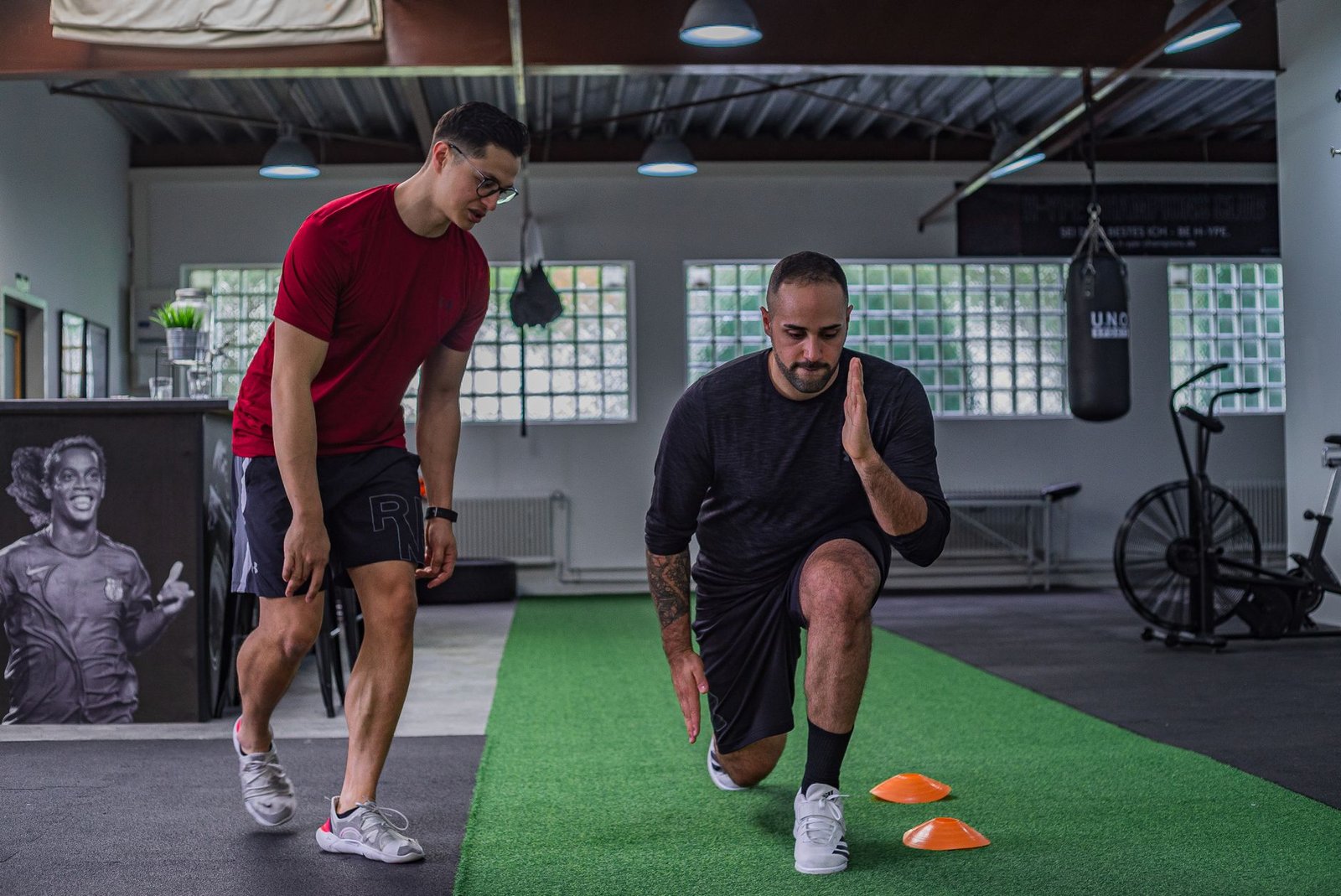
Offer well run starter packages to people in your network, with full screening and notes. After a client sees a result, ask politely for a testimonial and a referral. Beginners are a large market, and sessions built around low impact workouts for beginners meet people where they are. Reliability wins more renewals than discounts. Price by checking local rates and your costs, including gym rent, and state the price plainly.
Step 8: Choose Gym Based, Independent, or Online Work
Employed or gym based. The gym supplies clients, equipment, and often insurance for in house work, in exchange for a salary, an hourly rate, or a split of session fees, and sometimes floor duties. This is usually the lowest risk start and the best classroom for a new trainer. Read the contract for rent expectations, non compete clauses, and who owns the client relationship if you leave.
Independent in person. You rent space in a gym, train in a studio, visit clients at home, or use outdoor spaces where permits allow. You keep more of each fee but pay rent, insurance, travel, and marketing yourself, and you carry the quiet weeks too. Many trainers move here after a year or two in a gym.
Online and hybrid. You deliver programs, check ins, and video sessions remotely. Online work widens your market, but demands stronger written programming and honest thought about what you can safely assess through a screen. Hybrid models, in person for assessment plus online for follow ups, are now common in all four countries.
Step 9: Specialise Slowly and Stay Current
Once you become a personal trainer and have coached general clients for several months, patterns will appear. You may love strength training for older adults, or helping people return to activity after a break. That lived pattern, not an advert, should guide your first specialisation.
Useful continuing education builds on core skills: strength and conditioning, behaviour change, pre and postnatal training with a recognised provider, older adult exercise, or business skills. Check that any specialisation is recognised by your insurer. A short course does not make you a physiotherapist or dietitian, and marketing must never imply that it does. Finally, all major certifications require renewal, usually every 1 to 3 years, with continuing education credits and current CPR.
What It Costs, in General Ranges
Costs to become a personal trainer vary by city and provider, so treat these as planning ranges, not quotes, and confirm the full price including exams and retakes.
Major certification packages and exams in the United States together commonly run from a few hundred dollars to around 1,500 US dollars. Comparable routes in Canada often sit in a similar band in Canadian dollars, with college programs costing more. Combined Level 2 and Level 3 diplomas in the United Kingdom commonly range from about 1,000 to 3,500 pounds. Australian Certificate III and Certificate IV study combined commonly ranges from a few thousand to well over 10,000 Australian dollars, with subsidised TAFE places, where eligible, at the lower end.
Add CPR and first aid, first year insurance, register fees, and basic items such as resistance bands. If you go independent, add gym rent, which in big cities can be your largest monthly cost. You do not need a full equipment set on day one.
A Realistic Timeline
Month one is research and booking CPR and first aid. Months two to four are study and practice, with mock exams and coaching friends for feedback. Month four or five is exam time, followed by insurance and applications. By months five to six, many new trainers are running floor shifts or their first regular clients. In practice, client building still takes weeks, so budget for a slower ramp than adverts imply.
Common Mistakes New Trainers Make
Choosing a course on price or speed alone. If local employers and insurers do not recognise it, you will pay twice.
Skipping eligibility and CPR checks. Discovering a missing requirement after your exam delays certification and a job start.
Studying only theory. Clients do not experience your knowledge as a quiz score. Practise coaching real people early.
Training clients without insurance or screening. One accident or undisclosed health issue can end a career before it starts.
Copying advanced programs for beginners. Impressive exercises are not good coaching. Progress people from where they are.
Promising results. Guaranteed weight loss, pain cures, or fixed timelines are dishonest and outside your scope. Promise a clear process and honest tracking instead.
Neglecting the business half. Great sessions with chaotic bookings and no tax savings still produce a failing business.
Frequently Asked Questions About How to Become a Personal Trainer
Do I need a degree to become a personal trainer?
No, not for the standard route in the United States, the United Kingdom, Canada, or Australia. Most trainers enter through a recognised vocational certification. A degree helps for some specialist or academic roles, but it is not the entry ticket for general personal training.
How long does it take to become a personal trainer?
Most part time candidates take about 3 to 6 months from starting study to certification, insurance, and first clients. Intensive courses can be faster, while college and university routes take 1 to 4 years.
Which certification is the best one?
There is no single best certification across all four countries. The right choice is named in local job adverts, accepted by insurers, properly accredited or awarded through the recognised national route, and inclusive of practical coaching. Check employers first, then choose on cost, format, and support.
Online Work, Earnings, and Job Titles Once You Become a Personal Trainer
Can I train clients online as a new trainer?
Yes, if your certification and insurance cover online delivery where your clients are located, and you adapt screening for remote coaching. Many new trainers do better starting in person, because hands on coaching builds the eye for technique.
How much do personal trainers earn?
Earnings vary by country, city, model, hours, and experience. Employed starter roles pay the least per hour but carry the least risk. Experienced independent trainers can earn more per session but pay rent, insurance, tax, and marketing from that fee and are not paid for empty hours.
What is the difference between a gym instructor and a personal trainer?
A gym instructor, Level 2 in the United Kingdom and Certificate III in Australia, supervises the floor and runs inductions. A personal trainer, Level 3 and Certificate IV respectively, designs individual programs and coaches clients one to one. In the United States and Canada the titles are less formal, but employers make the same distinction.
The Bottom Line on How to Become a Personal Trainer
The path to become a personal trainer is a learnable sequence. In short, confirm eligibility, pick a certification employers and insurers recognise, keep CPR current, study in a structured way, pass the exam by coaching safely and in scope, and protect yourself and your clients with insurance and paperwork. Then earn your reputation by showing up, coaching beginners patiently, and continuing to learn.
This article is general information about career routes for personal trainers in the United States, the United Kingdom, Canada, and Australia. It is not legal, financial, tax, or certification advice, and requirements, course names, costs, and insurance rules change and vary by location and employer. Always confirm current requirements directly with the certifying body, training provider, insurer, and employer you plan to work with before enrolling, paying, or training clients.

 Ablaze Fitness


 Mélanie Courcelles


