

HIIT classes have a reputation problem. The name promises maximum intensity, and the marketing photos show people collapsed on the floor. Plenty of beginners quietly decide the whole format is not for them before they have ever tried it. The reality is more flexible than the branding suggests. A well run HIIT class is a structured session built from short bursts of hard work. Planned recovery separates the bursts. Almost every part of it can be scaled up or down to match the person doing it.
This guide explains what HIIT classes actually involve and the most common formats. It also explains how the session runs from warm up to cool down, and what the benefits honestly are. It also covers the part most guides skip. That means how hard it really feels. It also means how good instructors adjust the work for beginners, and who should talk to a doctor before booking.
What HIIT classes actually are
HIIT stands for high intensity interval training. The core idea is simple. Instead of exercising at one steady pace for a long time, you alternate short periods of hard effort. Those periods are followed by short periods of rest or easy movement. A work interval might last 20 seconds to three minutes. It is followed by a recovery interval, and that pattern repeats in blocks until the workout is done. During the hard parts, most people work at roughly 80 to 90 percent of their maximum effort. That is hard enough that speaking more than a few words is difficult.
What makes HIIT classes different from doing intervals on your own is everything around the work itself. The instructor picks the exercises, sets the timers, demonstrates each movement, and watches the room for form problems. The music, the clock, and the people around you do a surprising amount of the motivational work. You do not have to design the session, judge your own pacing, or decide when you have done enough. Those are exactly the decisions that cause solo workouts to quietly shrink over time.
Class length is usually 30 to 45 minutes, shorter than a typical steady gym session, because the intensity is higher. Some gyms run 60 minute versions with longer rests and more strength work mixed in. Either way, the total amount of truly hard work inside a class is often only 10 to 20 minutes. The rest is warm up, recovery, transitions, and cool down.
The most common HIIT class formats
HIIT is a method, not a single workout, so classes built on it look quite different from each other. These are the formats you will see most often on timetables.
Tabata style classes
Tabata is a specific interval pattern. It is 20 seconds of work followed by 10 seconds of rest, repeated eight times for one four minute round. A class strings several rounds together, usually with a different exercise in each round. Examples include squats, push ups, mountain climbers, or kettlebell swings. The rounds are short, which makes them mentally manageable, but the rest periods are brief, so the effort builds fast. With rounds that short, the effort comes in spikes rather than as one long grind.
Circuit station classes
Circuit classes set up a series of stations around the room. Each station has a different exercise. Examples are a sled push, a rowing machine, a box step up, a medicine ball throw, and so on. You work at each station for a set time, often 40 to 60 seconds. Then you move to the next station with a short transition. Circuits suit beginners well. You are rarely on one movement long enough to fail at it, and the variety keeps things moving. The trade-off is less individual attention, since the instructor covers the whole room.
EMOM and AMRAP sessions
Two formats borrowed from strength and conditioning gyms show up often. EMOM means every minute on the minute. At the start of each minute you perform a set number of reps. Whatever time is left in that minute is your rest. AMRAP means as many rounds as possible. You cycle through a short list of exercises as many times as you can. The block is fixed, usually 8 to 15 minutes. Both are self pacing by design. In an EMOM, choosing fewer reps buys you more rest. In an AMRAP, nobody else can see whether you managed four rounds or seven, which takes the pressure off.
Treadmill and bike based interval classes
Some classes keep the intervals on one piece of cardio equipment. Treadmill classes alternate fast runs or steep incline walks with easy recovery pace. The instructor calls the speeds and gradients. Bike based classes do the same with resistance and cadence, sprinting out of the saddle and then recovering seated. These formats are easy to scale because your speed is your own. They are naturally low impact on a bike, though treadmill running is higher impact on the joints.
How a HIIT class runs, start to finish
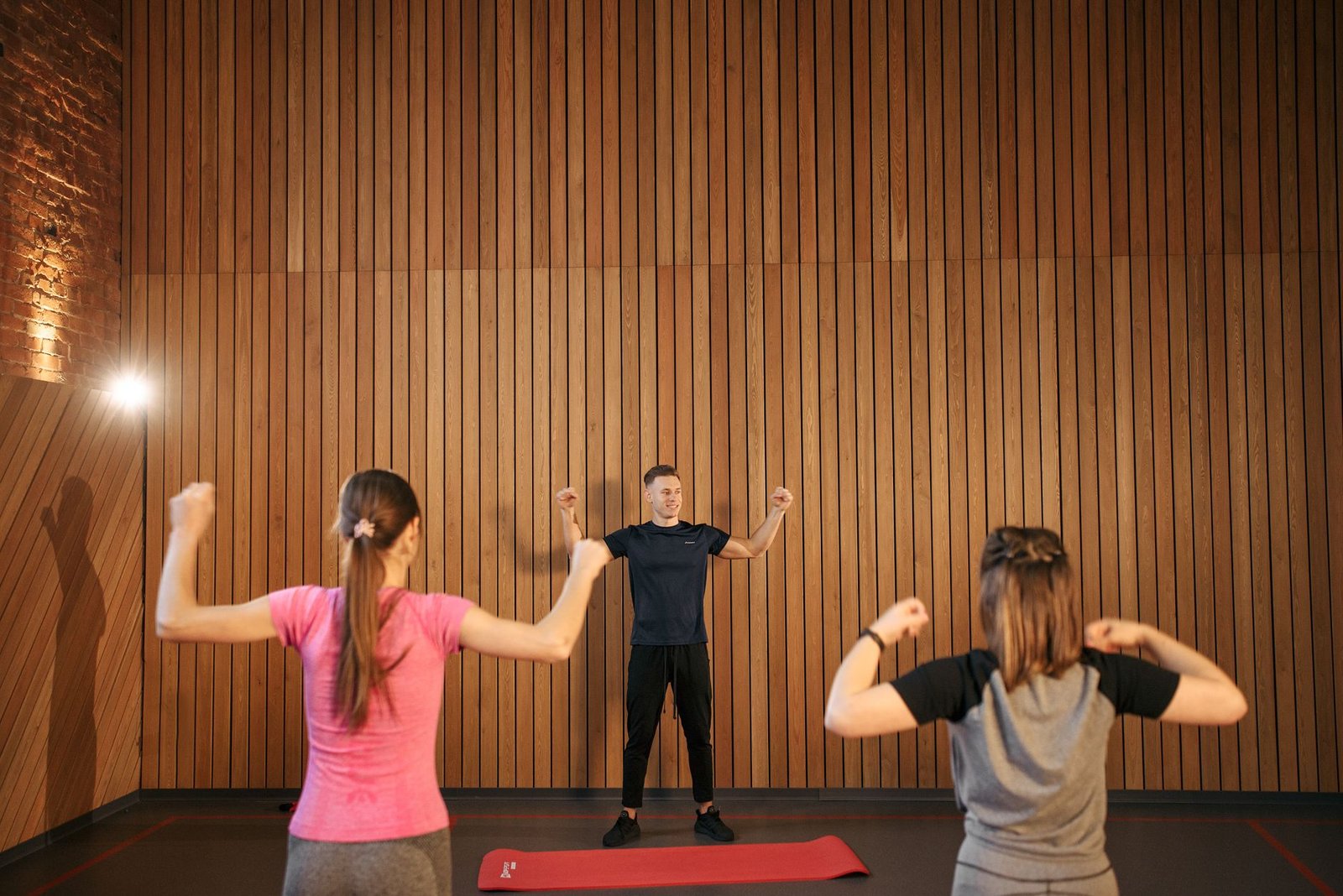
Most HIIT classes follow the same skeleton, whatever the format. You arrive, and the instructor explains the workout and demonstrates every movement, including the easier options. That is your first chance to note which swaps you might use. Then comes a warm up of about five to ten minutes. It starts with easy cardio to raise your temperature, followed by rehearsal versions of the main movements at low effort.
The main work comes next, in one to four blocks depending on class length, with water breaks built in. Many classes finish with a short finisher. It is two to five minutes of simple, high effort work. Examples are repeated squats, carries, or intervals on a bike. Treat the finisher as optional in your first weeks. Stepping out of it early is normal, and no instructor worth booking with will mind.
Finally there is a cool down. It is a few minutes of easy movement to bring your heart rate down gradually, then light stretching. The whole session is choreographed, so you never have to guess what happens next. That is a large part of why beginners often find classes less intimidating than the open gym floor.

The real benefits of HIIT classes
The honest headline benefit is time. HIIT was designed to deliver a meaningful training effect in less time than steady state exercise. Research broadly supports that it can. According to the American College of Sports Medicine overview of high intensity interval training, HIIT can improve several health markers. These include insulin sensitivity, blood pressure, and body composition. The improvement is comparable with traditional moderate intensity training, even though the sessions are shorter. That does not make it superior for everyone. It does make it a legitimate option when time is the barrier.
In practical terms, regular HIIT classes can improve cardiovascular fitness. They can also build some strength and muscle endurance, especially when classes include loaded movements like squats and presses. They burn a reasonable number of calories in half an hour. The range is often 200 to 400, depending on body size, format, and how hard you actually work. Treat any specific calorie figure a gym quotes you as marketing, because individual numbers vary widely.
The afterburn effect in HIIT classes
One benefit deserves a correction rather than a promotion. You may hear that HIIT keeps burning extra calories for hours afterwards. This effect is called excess post-exercise oxygen consumption, or afterburn. The effect is real, but it is modest. It is typically a small percentage of what you burned during the session itself, not a second workout’s worth. Choose HIIT for its efficiency, not for afterburn claims.
There is also a less measurable benefit that keeps people coming back. Intervals break a workout into short, finishable pieces. The group setting supplies effort and accountability that are hard to manufacture alone. For many people, that combination is the difference between two programs. One lasts three weeks, and the other lasts a year.
How hard HIIT classes feel, and how instructors scale them
This is the section that matters if you are nervous, so here is the unvarnished version. In the work intervals, a HIIT class feels hard. Your breathing will be heavy, your heart rate will be high, and your muscles will burn on the later rounds. You will probably be uncomfortable for stretches of the session. What surprises most beginners is that the discomfort comes in short, planned waves with recovery built in. The overall session is also shorter than the steady workouts they have already survived.
More importantly, hard is relative, and a good instructor treats your version of hard as the target. Scaling happens in several predictable ways. Almost every jumping or running movement has a low impact swap. Step backs replace burpees, marching or step touches replace jumping jacks, and incline walking replaces treadmill sprints. Loads scale too. You might do a goblet squat with a light dumbbell. Someone else might use a heavy kettlebell, and nobody is keeping score. Rest scales as well. You can start each interval a few seconds late or finish a few seconds early. You can also take an extra round off entirely and rejoin when you are ready.
How HIIT classes set effort targets
Effort targets are usually given as a personal scale rather than a fixed speed or weight. That means working at an 8 out of 10 effort, one you could not sustain for much longer. If you wear a heart rate monitor, staying mostly in your higher training zones during work intervals is the goal. Our heart rate zones calculator can help you work out what those zones are for your age before you go.
For your first few classes, aim for about 70 percent of what you think you could do. Aim to finish feeling like you had something left. Fitness builds over weeks, and the people who last in HIIT are the ones who pace their first month sensibly. If you would rather build a base first, try gentler training. The low impact workouts for beginners on this site are a sensible on-ramp. Nothing about HIIT requires you to start with it.
Who should check with a doctor before a HIIT class
HIIT asks a lot of the heart and joints, and it is not the right first step for everyone. Talk to your doctor before booking if any of the following apply to you. These include a heart condition or a history of chest pain during exertion. They also include uncontrolled high blood pressure. Joint problems that flare with impact or load are another reason, particularly knees, hips, ankles, or lower back. Pregnancy is another, because intensity guidance is individual and your clinician’s advice comes first. The same applies if you are returning to exercise after an injury, surgery, or a long layoff. An enthusiastic class can set a recovery back.
Warning signs during any session mean stop, not push through. Watch for chest pain or tightness, dizziness, or feeling faint. Also watch for unusual breathlessness that does not settle during rest, or sharp joint pain. Tell the instructor immediately.
None of this is meant to scare you off. Millions of ordinary people, including many in their fifties and sixties, do modified HIIT safely. It simply means the format rewards a quick check and an honest conversation with the instructor before the music starts.
How many HIIT classes a week is enough
Because the work is intense, more is not better. Two to three HIIT classes a week, on non-consecutive days, is the sensible ceiling for most people. One or two is plenty for your first month. The hard intervals create the training stress, but the improvements happen during recovery. Stacking HIIT on back to back days usually leads to flat performance, sore joints, and eventually skipped sessions.
Fill the rest of the week with easier movement. Walking, easy cycling or swimming, mobility work, and dedicated strength training all count. Strength training pairs particularly well with HIIT, because the two stress the body in different ways. A structured beginner strength training plan across two or three other days gives you a balanced week. It avoids doubling up on intensity. If your energy, sleep, and motivation start sliding after a few weeks, rest more. The fix is almost always an extra rest day, not more effort.
What to bring to your first HIIT class
You need less than the marketing suggests. Bring a water bottle, a small towel, and trainers with decent lateral support. HIIT involves side to side movement and quick direction changes. Very soft, high stacked running shoes can feel unstable in them. Wear clothes you can squat, lunge, and get down to the floor in. Arrive ten minutes early. Tell the instructor you are new, and mention any injuries or concerns. Then take a spot where you can see the demonstrations clearly. That short conversation lets the instructor watch out for you and offer swaps at the right moments.
How to choose a good HIIT class
The best predictor of whether you will stick with HIIT classes is the quality of the coaching. It is not the brand on the door or the darkness of the room. Look for an instructor who demonstrates every movement before the timer starts. A good instructor offers an easier and a harder version of each exercise as a matter of routine. They also correct form during the session, rather than only shouting encouragement. Class size matters. Roughly 12 to 16 people per instructor is a practical upper limit for real coaching. Very large classes should have a second coach on the floor.
Pay attention to the culture around modifications. In a good class, taking the low impact option or an extra rest is unremarkable, and nobody is singled out. In a poor one, the language is all about keeping up. Beginners hide at the back and copy bad form at high speed. Use a trial class before committing to any pack or membership. Judge it on how you were coached, not on how destroyed you felt afterwards. Exhaustion is easy to produce; progress is the actual product.
What HIIT classes cost
Prices vary a lot by country, city, and format. Treat the following as rough US guide ranges rather than quotes. Boutique studio classes commonly cost about $20 to $40 for a single drop-in session. Class packs bring the per class price down, sometimes to the $15 to $25 range when you buy in bulk. Large gyms often include HIIT classes in a standard membership. That membership might run about $30 to $80 a month, depending on the chain and location. It is the cheapest per class option if you attend regularly. Online and app based HIIT classes usually cost about $10 to $30 a month. Intro deals and off peak timetables can cut these figures considerably, so ask before paying full price.
Frequently asked questions about HIIT classes
Are HIIT classes suitable for complete beginners?
Yes, with the right class and the right expectations. Beginners should choose classes that advertise scaling options. Keep your effort around 70 percent for the first few weeks, and use the low impact swaps freely. Start with one or two classes a week. If you have any of the health concerns listed in the safety section above, check with your doctor first.
Will HIIT classes help me lose weight?
They can contribute. They burn a reasonable number of calories in a short time and help preserve fitness while you lose weight. But fat loss is driven mainly by your overall energy balance across the week. That means food intake, daily movement, and sleep, not any single class type. Expect HIIT to be one useful part of the picture rather than the whole answer.
What is the difference between a HIIT class and a circuit class?
The two overlap. A true HIIT class is defined by intensity. Work periods are short and performed at a high effort, with planned recovery. The aim is to push your heart rate up repeatedly. A circuit class is defined by structure: rotating through stations. Many circuit classes are run at HIIT intensity, and many are not. Check how the timetable describes the session, not just the label.
How long before I notice results from HIIT classes?
Most people notice the sessions feeling more manageable within three to four weeks of attending twice a week. Measurable fitness improvements typically follow over six to eight weeks. Visible body changes, when they come, are slower and depend heavily on food and total activity. Be suspicious of any program promising dramatic change in a fortnight.
Do I need to be fit before starting HIIT classes?
No, but you do need a base of basic movement. A reasonable starting point is brisk walking for 20 to 30 minutes. You should also be able to get up and down from the floor, and squat to a chair comfortably. If that is not where you are yet, a few weeks of walking and low impact training first will help. Your first HIIT class will be far more enjoyable.
Can I do HIIT classes at home instead?
Yes. The format works anywhere, and online classes supply the timers, demonstrations, and structure. The trade-offs are the ones you would expect. There is no instructor watching your form and no shared energy from the room. The cost is lower, and there is no travel. Many people mix both, using studio classes for coaching and home sessions for convenience.
The bottom line
HIIT classes are an efficient, instructor led way to get fitter in less time. They are built from short hard efforts and planned rest. They feel challenging in the moment, but the effort is yours to scale. A good instructor will help you do exactly that. Start with one or two classes a week, and choose coaching quality over hype. Check with your doctor if you have any of the concerns covered above. Give it a month before you judge it.
This article is general information about exercise and is not medical advice. If you have a health condition or any concern about exercising at high intensity, talk to your own doctor. A qualified exercise professional can also advise you before starting.

 Ablaze Fitness


 Mélanie Courcelles


