


Tight calves after a run. Stiff hips after a long day sitting. Shoulders that feel locked after a week of desk work. Foam rolling is the simplest way to work on those feelings yourself, at home, in about ten minutes. It does not need a therapist, a gym or a complicated programme, just a foam roller and a few rules.
This article is a beginner foam rolling routine. It explains what foam rolling does and what it cannot do, how to choose a roller, the technique rules that keep it safe, a simple routine you can follow tonight, and the mistakes that make it hurt more than it helps. If you are short on time, skip to the routine and use the rules in section 4 (Foam Rolling Technique Rules) as your checklist.
What Is Foam Rolling?
A foam roller is a firm cylinder, usually made of dense foam, that you roll slowly over a muscle group while using your body weight to apply pressure. The pressure briefly compresses the soft tissue, and as you roll, the tissue is gently stretched and released. It is a form of self-myofascial release, a term that sounds technical but simply means working on the thin layer of tissue that surrounds and connects your muscles.
The idea is not to crush the muscle or to force it into submission. It is to apply enough pressure to raise the local blood flow and to give your nervous system a signal to relax the area. When the pressure is moderate and the rolling is slow, the muscle usually softens a little and the range of movement improves for a short while. That short window is the point of foam rolling, and it is why the routine below pairs rolling with movement rather than treating rolling as the whole session.
A short word on the fascia debate. Some people talk about foam rolling as if it reshapes fascia or breaks down knots. The evidence for those claims is weak. What the evidence does support is more modest and more useful: foam rolling can improve short-term flexibility and reduce the feeling of soreness after exercise. That is enough to make it worth doing, and it is the standard this article uses throughout.
What Foam Rolling Can and Cannot Do
The evidence on foam rolling is mixed in quality but fairly consistent in direction. A 2019 meta-analysis of 21 studies in Frontiers in Physiology (Wiewelhove et al., 2019) found small but consistent benefits: foam rolling improved flexibility in the short term and reduced perceived muscle soreness after exercise, without reducing strength or sprint performance afterwards.
That gives you two well-supported reasons to roll:
Short-term flexibility. A few minutes of rolling before or after training increases the range of movement you can use comfortably, and that effect lasts long enough to train through it.
Less perceived soreness. People who foam roll after training typically report feeling less sore in the day or two afterwards, even if the muscle itself is still recovering.
Just as important is what foam rolling cannot do:
It does not permanently restructure tissue. A roller is not strong enough to change the shape of fascia, and the effects wear off within hours.
Claims about breaking up adhesions or flushing out toxins are not supported by the evidence. If a product or a programme promises to detox your muscles, it is selling a story, not a result.
Finally, it does not fix injuries. A torn muscle, a stress fracture or a pinched nerve needs assessment and treatment, not pressure from a roller.
Used honestly, foam rolling is a useful recovery tool, not a treatment. It sits alongside sleep, nutrition and sensible training load, and it works best as part of any list of ways to recover faster, not as a replacement for them.
Choosing a Roller for Foam Rolling: Types Compared
Rollers come in three main types, and the differences matter more than the price. A soft roller is comfortable but may not reach deep enough for larger muscles. A firm roller is the best all-rounder. A textured roller, with bumps or ridges, feels more intense but does not necessarily work better, and it can be too much for a beginner. Start firm and smooth, then experiment.
| Roller type | What it is | Best for |
|---|---|---|
| Soft | Low-density foam, gentle pressure | Beginners, sensitive areas, the upper back |
| Standard (smooth) | Medium to high density, even pressure | Most people, most muscles, daily use |
| Textured | Bumps or ridges on the surface | Experienced rollers, larger muscles such as the thighs |
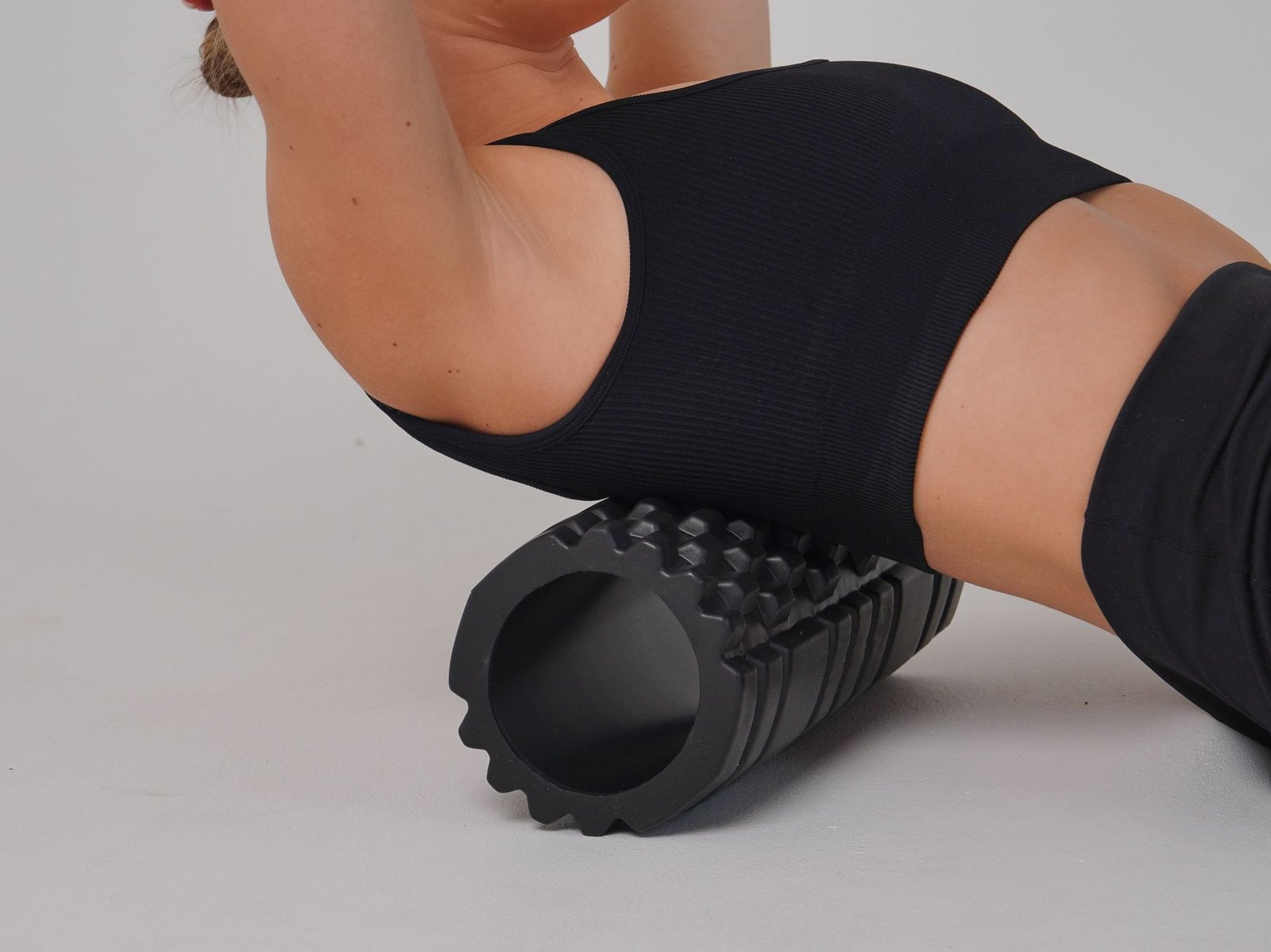
Two buying rules follow from that. First, choose a roller that is at least 45 centimetres long, so it stays stable under your hips and thighs. Second, if you can, try the roller before you buy it, because density varies more between brands than the labels suggest.
Foam Rolling Technique Rules
Good technique is simple, but it is also easy to get wrong. Keep these rules in mind every time you roll.
Roll slowly. Move at about two to three centimetres per second, which is far slower than most people expect. If you are rolling quickly, you are not giving the tissue time to respond.
Work in small zones. Divide each muscle into two or three sections and roll one section at a time. Long sweeping rolls across the whole thigh miss the tight spots.
Pause on tender spots, do not grind them. When you find a spot that feels tight or tender, stop and hold the pressure for 20 to 30 seconds, breathing slowly. Do not saw back and forth over it.
Foam Rolling Position, Timing and Safety
Keep pressure moderate. Aim for a discomfort level of five or six out of 10. If you are wincing, holding your breath or tensing up, you are pressing too hard.
Support your weight. Use your hands and your other leg to control how much weight goes onto the roller. You should be able to stop the roll at any point.
Give each area 30 seconds to 2 minutes. Most muscles need 30 seconds to two minutes. More than that is rarely better, and it can leave the area feeling bruised.
Stay on muscle. Roll the fleshy part of the muscle and avoid bones, joints and the front of the neck. The roller belongs on muscle, not on structure.
Skip the lower back as a rolling target. Rolling the lower back directly can put pressure on the spine and the kidneys. Use a ball against a wall for that area instead, or stretch it gently.
Never roll injured tissue. If a muscle is torn, bruised or swollen, rolling it will make it worse. Leave it alone until it has healed.
The Beginner Foam Rolling Routine
This routine takes 10 to 15 minutes and covers the areas most people need: calves, thighs, hips, upper back and glutes. Do it after training, or in the evening if that is when you have time. Work through the areas in order and breathe slowly throughout.
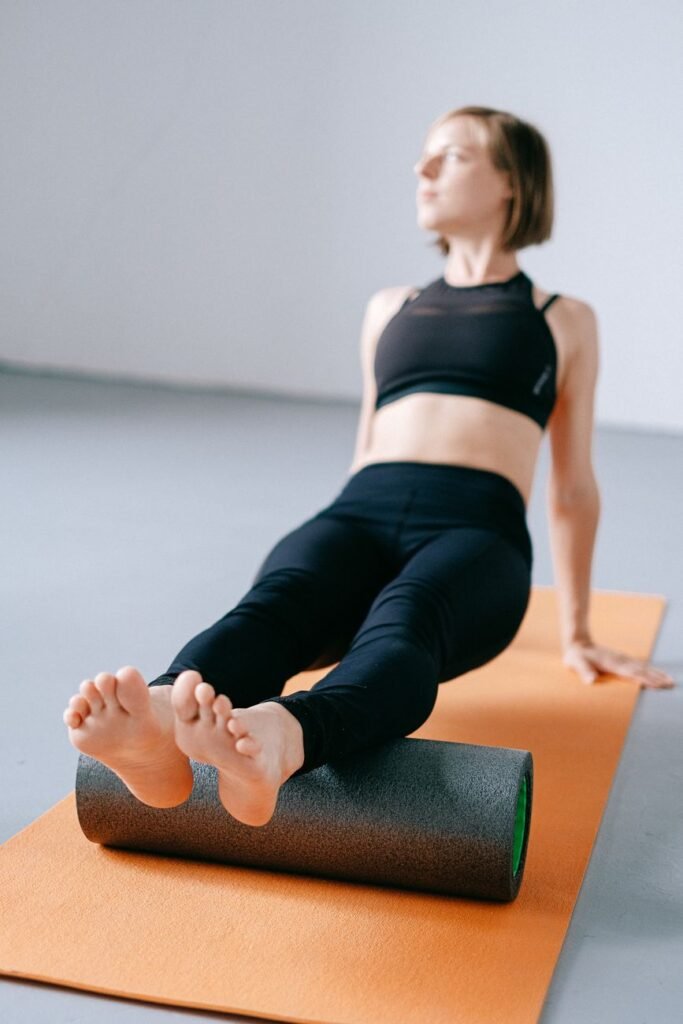
1. Calves: 60 seconds per side
Sit on the floor with the roller under one calf and your hands behind you for support. Cross your other ankle over the top to add a little weight. Roll slowly from just below the knee to just above the ankle. Pause on any tender spot for 20 seconds. Keep the movement slow and the pressure moderate.
2. Front of thighs: 60 seconds per side
Lie face down with the roller under the front of one thigh and your forearms on the floor. Roll from just above the knee to just below the hip. Keep your core braced and avoid letting your lower back sag. If the pressure is too much, put more weight through your forearms.
3. Outer thigh (IT band): 30 seconds per side
Lie on your side with the roller under the outer thigh. Support your weight with your forearm and your top foot. Roll slowly from just above the knee to just below the hip. This area is often tender, so keep the pressure light and the pace slow. Do not roll directly on the knee.
4. Glutes: 60 seconds per side
Sit on the roller with one ankle crossed over the opposite knee. Lean gently toward the crossed leg and roll the back of the hip. This is a small area, so small movements are enough. Pause on tender spots for 20 seconds.
5. Upper back: 60 seconds
Lie on your back with the roller across your shoulder blades and your hands supporting your head. Lift your hips slightly and roll slowly from the middle of the back to the top of the shoulder blades. Do not roll the lower back, and do not force your head back.
6. Lats: 30 seconds per side
Lie on your side with the roller under your armpit and your arm extended overhead. Roll slowly from the armpit down toward the ribs. Keep the movement small and the pressure moderate. This area is sensitive, so go gently.
Finish with two minutes of gentle movement. Walk around the room, swing your arms, and use the 5 stretches to improve flexibility to ease into the rest of your evening.
When to Foam Roll
However, timing matters less than consistency, but there are three useful windows.
Before training. A short roll of the muscles you are about to train can improve the range of movement you can use and helps you warm up. Keep it brief, 30 seconds per area, and follow it with movement.
After training. Rolling after training helps you wind down and reduces next-day soreness. Keep the pressure moderate and the pace slow, and pair it with the post-workout tips for faster recovery that fit your routine.
On rest days. Rolling on rest days is a useful way to stay mobile without adding training load. Keep it gentle, and stop if anything hurts.
Overall, most people get the best results from two or three short sessions a week, rather than one long session. A little often beats a lot rarely, and a short routine you actually do is better than a long one you skip.
Who Should Check With a Professional Before Foam Rolling
Foam rolling is safe for most people, but some situations need a professional opinion first:
- Anyone with a recent injury, surgery or fracture.
- Anyone with a blood clotting disorder, or anyone taking blood thinners.
- Anyone with diabetes and reduced feeling in the feet or legs.
- Anyone with a diagnosed circulation problem, including varicose veins that are painful.
- Anyone who is pregnant and unsure whether foam rolling is safe for them.
If any of these apply to you, ask your doctor or physiotherapist before you start. A short conversation can save you from a problem that a roller cannot fix.
Common Foam Rolling Mistakes
Rolling too fast. Fast rolling feels productive but does not give the tissue time to respond. Slow down until the movement feels almost boring.
Pressing too hard. More pressure is not more effective. If you are bracing, wincing or holding your breath, the pressure is too high. Ease off until you can breathe normally.
Rolling the same spot for too long. More than two minutes on one area rarely helps and can leave the tissue feeling bruised. Move on and come back to it another day.
Rolling over bones and joints. The roller belongs on muscle. Rolling the knee, the hip bone or the spine directly is uncomfortable and unhelpful.
Using the roller as a replacement for warming up. Rolling is not a warm-up on its own. It prepares the tissue, but your joints and your heart still need movement to be ready for training.
Expecting instant results. Foam rolling gives you a short window of improved range and reduced soreness. It does not fix a problem in one session, and it does not replace consistent training.
Rolling through sharp pain. Discomfort is normal. Sharp pain is not. If a spot makes you catch your breath or pull away, stop and choose a gentler area.
Frequently Asked Questions About Foam Rolling
How often should I foam roll?
Two or three times a week is a good starting point for most people. Daily rolling is fine if you keep the pressure moderate and the sessions short, and if you are not rolling over an injury.
Is foam rolling supposed to hurt?
It should feel uncomfortable, not painful. Aim for a five or six out of 10 on a discomfort scale. If you are wincing or holding your breath, ease off the pressure or choose a softer roller.
Can foam rolling replace stretching?
No. Foam rolling and stretching do different jobs. Rolling improves short-term range and reduces the feeling of soreness, while stretching lengthens the muscle over time. The two work best together.
Should I foam roll before or after a workout?
Both work, for different reasons. Before a workout, a short roll can improve the range you can use. After a workout, rolling helps you wind down and can reduce next-day soreness. If you only have time for one, roll after.
How long should I foam roll for?
Ten to 15 minutes is enough for a full routine. Give each area 30 seconds to two minutes, and stop when the area feels a little softer. Longer sessions rarely add anything.
Can I foam roll every day?
Yes, if you keep it gentle. Daily rolling is fine for most people, as long as the pressure stays moderate and you are not rolling over an injury or a painful area.
The Bottom Line on Foam Rolling
Foam rolling is a simple tool with modest, honest benefits. It improves short-term flexibility, it can reduce the feeling of soreness after training, and it gives you a few quiet minutes to check in with your body. It will not fix an injury, it will not reshape your fascia, and it will not replace sleep, nutrition or good training. Used that way, it is worth the ten minutes.
General information only. This article is not medical advice and is not a substitute for assessment by a qualified health professional. If you have an injury, a health condition or concerns about foam rolling, seek personal advice before you start.

 Ablaze Fitness


 Mélanie Courcelles


