


Learning how to recover faster after a workout starts here. Recovery is not what happens when you stop training. Recovery is how training works. When you train, you challenge your muscles, joints, and energy systems. When you rest, sleep, eat, and move gently, your body adapts to that challenge. Without recovery, training often feels harder, progress slows, and motivation drops.
This guide explains how to recover faster after a workout, using three basics that beginners can control: sleep, rest days, and stretching. It also covers active recovery, hydration, and simple routines you can use after strength training, running, walking, and general fitness sessions.
This article is for general fitness information only. It is not medical advice. It does not diagnose pain, injury, or illness. If you have sharp pain, joint pain, swelling, pain that gets worse over several days, or a health condition that affects recovery, ease off and talk to a qualified health professional.
What recovery actually means
Recovery has two parts. Short term recovery happens in the hours after a workout, when your breathing returns to normal, your muscles relax, and you eat, drink, and rest. Longer term recovery happens over days, when your body adapts to training and you feel ready for your next hard session.
Beginners often focus only on the workout, and forget the second part. A good rule is: train hard enough to challenge yourself, then recover well enough to train again with good form. If every session feels like a struggle, and you never feel fresh, your recovery may need more attention than your workout.
Sleep: the most powerful recovery tool – how to recover faster after a workout
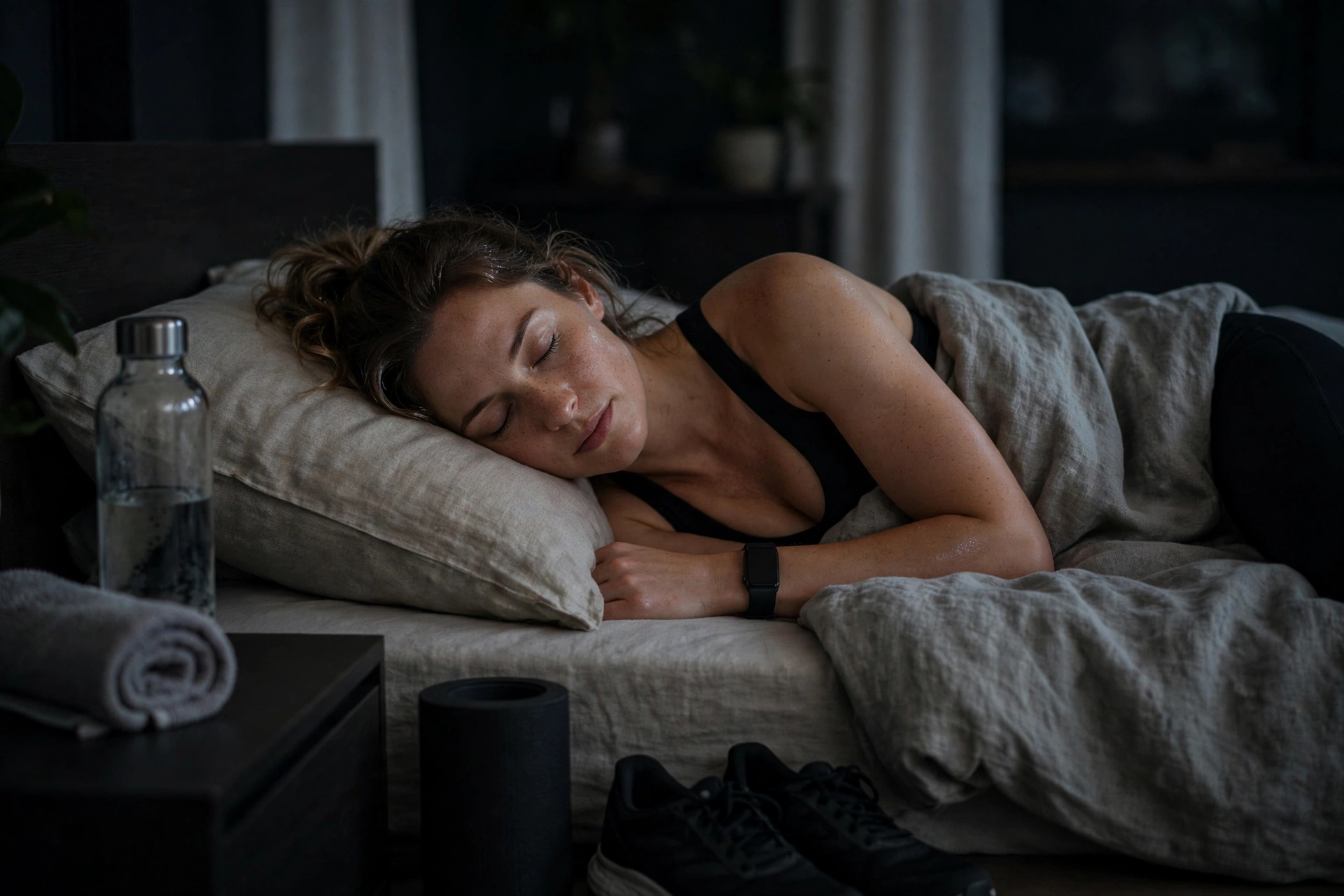
Sleep is often the most underrated part of recovery. During sleep, your body carries out many repair and adaptation processes in general terms, and poor sleep can make training feel harder, even if your workout has not changed.
How much sleep do most adults need?
For official sleep guidance, see the CDC guide to sleep.
Many adults aim for 7 to 9 hours of sleep a night, but individual needs vary. Some people feel best at 7 hours, others at 9 hours. Consistency matters as much as the exact number. Going to bed and waking up at similar times each day, including weekends when you can, often helps more than sleeping very long on one night after several short nights.
If you consistently sleep far less than 7 hours, feel very tired during the day, or have trouble staying asleep, that is worth discussing with a health professional, rather than trying to fix it with training alone.
Simple sleep habits that support recovery – how to recover faster after a workout
- Keep a regular sleep and wake time, as close as you can, even on rest days
- Dim lights and screens in the last hour before bed, or use a wind down routine you enjoy, like reading, stretching, or a warm shower
- Keep your bedroom cool, dark, and quiet, as far as possible
- Avoid a large, heavy meal, a large amount of alcohol, or a large dose of caffeine late in the evening
- Avoid hard training very late at night if it makes it harder for you to fall asleep. If evening is your only training time, keep the session moderate, and finish with a gentle cool-down
- Get daylight in the morning when you can, especially if you work indoors. A short morning walk can help your body clock, and it also counts as gentle activity
You do not need perfect sleep to recover. Small improvements, like a regular bedtime and a calmer evening routine, often make a noticeable difference over a few weeks.
Sleep after hard training – how to recover faster after a workout
After a hard session, you may feel tired, hungry, and ready for bed earlier than usual. That is normal for many beginners. Eat a normal balanced meal, drink water, do a gentle cool-down, and go to bed at your usual time if you can. Avoid staying up very late to watch training videos or scroll through fitness content, even if you feel motivated. Motivation is useful, but sleep is recovery.
Rest days: how to use them well – how to recover faster after a workout
A rest day is not a wasted day. It is a planned part of a training program. Beginners who train hard every day often hit a wall: constant soreness, low energy, poor sleep, and loss of interest. Planned rest helps prevent that pattern.
How many rest days do beginners need?
For a 3 day strength plan, 4 rest or light activity days a week is normal. For a beginner running plan, 3 to 4 easy or rest days a week is also common. The exact number depends on your training load, sleep, stress, and overall activity, but most beginners do better with more rest than they expect, not less.
A useful pattern is:
- Hard or strength days: 3 days a week
- Light activity days: 2 to 3 days a week, like walking or gentle stretching
- Full rest days: 1 to 2 days a week, with only normal daily activity
If you feel fresh, strong, and motivated, you may not need extra rest. If you feel tired, sore, and unmotivated for several days, extra rest is often the right choice, even if your plan says to train.
What to do on a rest day – how to recover faster after a workout
Rest days work best when they are active, but easy. Good rest day activities include:
- Walking at a comfortable pace for 20 to 40 minutes
- Gentle stretching or mobility work for 10 to 20 minutes
- Light household activity, gardening, or easy play
- Foam rolling at a gentle pressure, if you enjoy it and it feels comfortable
- Normal daily movement, like taking stairs, standing up regularly, and walking to shops when you can
Avoid turning a rest day into a second hard workout. A rest day that leaves you exhausted is not a rest day.
Active recovery: a useful middle ground
Active recovery means light activity that helps you feel better after a hard session, without adding much fatigue. Examples include an easy walk, gentle cycling, easy swimming, or a light mobility routine.
Active recovery is useful when:
- You feel stiff the day after training, but not in sharp pain
- You want to move, but you do not feel ready for a hard session
- You sit for most of the day, and gentle movement helps you feel less stiff
Active recovery is not useful when:
- You have sharp pain, joint pain, or swelling
- You feel ill, very tired, or overheated
- A health professional has advised you to rest fully
In those cases, full rest and professional advice are better than pushing through with light activity.
Stretching: what helps, and what does not – how to recover faster after a workout
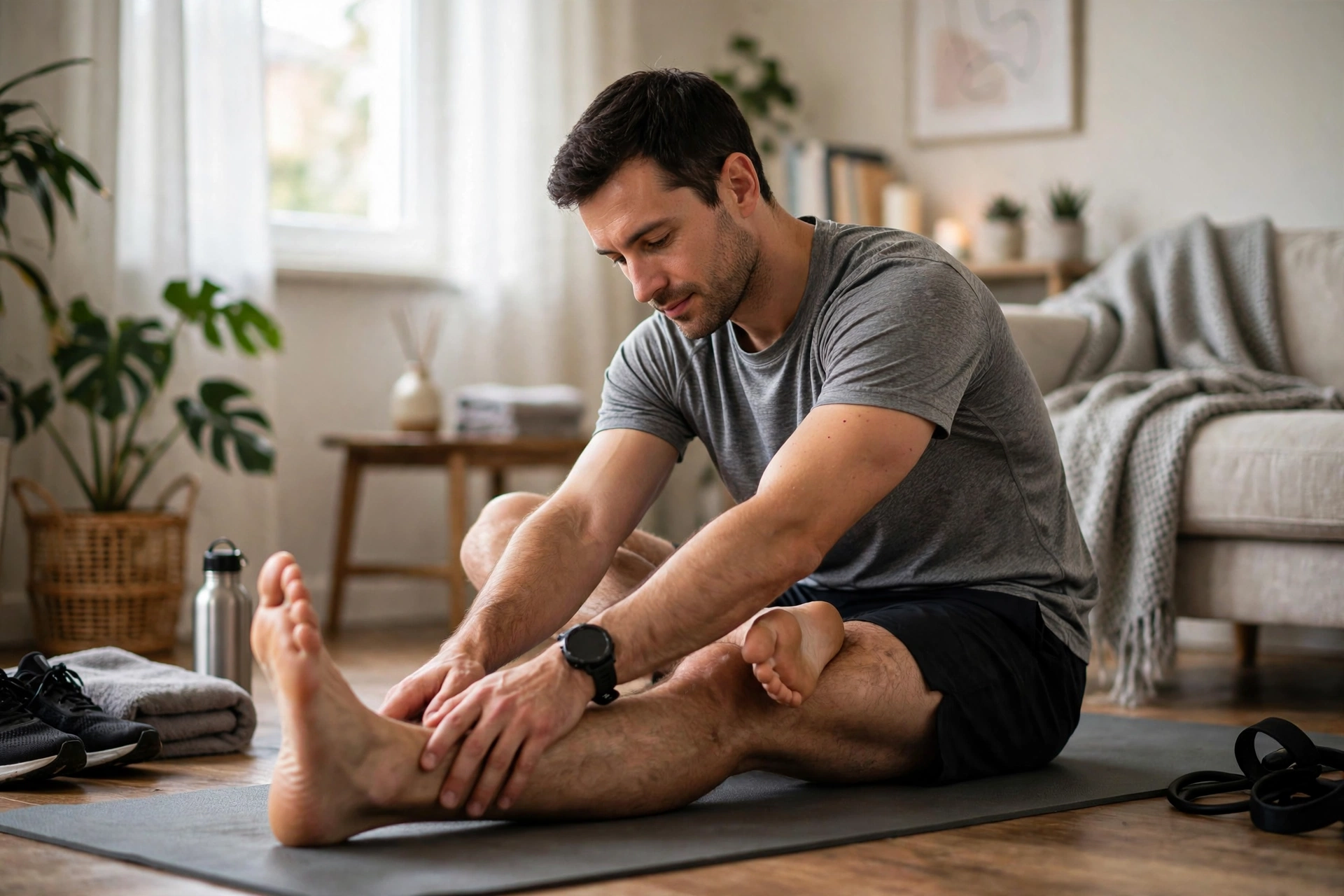
Stretching is often misunderstood. It is not a cure for soreness, and it does not need to be painful to work. For beginners, gentle stretching and mobility work can help you feel less stiff, move more comfortably, and wind down after training.
Dynamic stretching before training
Before training, use dynamic stretches, which are controlled movements, not long holds. Examples include:
- Marching in place
- Arm circles
- Hip circles
- Leg swings, small and controlled
- Slow bodyweight squats
- Walking lunges
Dynamic warm-ups prepare your muscles and joints for movement, and they are a good way to start every session.
Static stretching after training
After training, use static stretches, which are gentle holds. Examples include:
- Standing quad stretch, 30 seconds each side, holding a wall for balance if needed
- Hamstring stretch, seated or standing, 30 seconds each side
- Chest opener, hands behind your back, 30 seconds
- Hip flexor stretch, in a half kneeling position, 30 seconds each side, if it feels comfortable
- Child’s pose, 1 to 2 minutes, with slow breathing
Stretching should feel like a gentle pull, not sharp pain. Breathe normally, do not bounce, and do not force a joint into a position that hurts. If a stretch causes sharp pain, stop and try a smaller range, or skip that stretch.
A simple 10 minute post workout stretching routine
Use this routine after strength training, running, or a general fitness session:
- Standing quad stretch, 30 seconds each side
- Hamstring stretch, 30 seconds each side
- Hip flexor stretch, 30 seconds each side
- Glute stretch, lying or seated, 30 seconds each side
- Chest opener, 30 seconds
- Shoulder stretch across the body, 30 seconds each side
- Neck rolls, slow and gentle, 30 seconds
- Child’s pose or lying deep breathing, 2 minutes
You can do this routine on rest days too, especially if you sit for long periods. It is short enough to fit into a lunch break or an evening wind down.
Stretching and soreness: what to expect
Mild muscle soreness after a new workout is common, and it is often called delayed onset muscle soreness. It usually appears 12 to 48 hours after training, and it usually eases within a few days.
Gentle movement, walking, light stretching, sleep, and normal meals can help you feel more comfortable during that time. Stretching does not guarantee that soreness will disappear, and aggressive stretching when you are very sore can make you feel worse.
Seek professional advice if soreness is severe, lasts much longer than a few days, is mainly in a joint rather than a muscle, or is joined by swelling, weakness, or dark urine after very hard training. Those are general safety notes, not a diagnosis.
Other recovery basics beginners often forget – how to recover faster after a workout
Hydration
Drink water through the day, not just during training. After a workout, drink to thirst, and eat a normal meal. For longer, hotter, or very sweaty sessions, you may need more fluids, and some people use an electrolyte drink, but water and normal food are enough for most beginner sessions.
Food
A balanced meal after training, with protein, carbohydrate, and vegetables, supports recovery in general terms. Skipping meals after hard training, or eating very little for several days, can make recovery feel harder. You do not need a perfect diet to recover, but regular meals help.
Stress and daily activity
Work stress, poor sleep, and long periods of sitting can all make recovery feel slower. Short walks, breaks from sitting, and a calmer evening routine can help, even if they do not feel like training. Recovery is not only about muscles. It is about your whole day.
Recovery tools: what is worth it for beginners?
Many recovery tools are marketed to beginners, including foam rollers, massage guns, compression boots, ice baths, and saunas. Some people enjoy these tools, and gentle foam rolling or a warm shower can feel good after training. None of them replace sleep, rest days, and sensible training load.
If you want to try a tool, start simple:
- A foam roller for gentle rolling of thighs, calves, and upper back, for a few minutes, at a comfortable pressure
- A warm shower or bath after training, if you enjoy it
- Comfortable shoes and a good mattress, which affect daily recovery more than a gadget for many people
Avoid ice baths, very hot saunas, or aggressive massage tools if you have a health condition, poor circulation, or you are unsure whether they are safe for you. Get professional advice first.
A weekly recovery schedule for beginners – how to recover faster after a workout
This schedule pairs well with a 3 day strength plan, but you can adjust it to your own training days.
| Day | Training | Recovery focus |
|---|---|---|
| Monday | Strength, full body | Post workout stretch, balanced dinner, regular bedtime |
| Tuesday | Rest or light walk | Gentle mobility, 10 minute stretch, daylight walk |
| Wednesday | Strength, full body | Post workout stretch, hydration, regular bedtime |
| Thursday | Rest or light walk | Foam rolling if you enjoy it, gentle stretch, early wind down |
| Friday | Strength, full body | Post workout stretch, balanced dinner, regular bedtime |
| Saturday | Light activity | Longer walk, easy stretch, social activity you enjoy |
| Sunday | Full rest | Normal daily activity, meal prep if helpful, regular bedtime |
If you train on different days, keep the pattern: hard day, then light or rest day, then hard day again. Avoid stacking three hard days in a row when you are still building the habit.
Recovery in different seasons and climates – how to recover faster after a workout
In the US, UK, and Canada, recovery needs change a little with the seasons.
In winter, cold muscles feel stiffer, especially in Canada and the northern US. Warm up indoors, stretch in a warm room, and wear layers for outdoor walks. In summer, heat and humidity in the southern US can make training feel harder and increase fluid needs. Train in cooler parts of the day, keep water close, and take extra rest if you feel overheated.
In the UK, rain and short winter days can make outdoor recovery walks less appealing. An indoor walk, a gentle home stretching routine, or a walk in a shopping centre can work as a substitute. The goal is gentle movement, not perfect weather.
Common recovery mistakes to avoid – how to recover faster after a workout
- Training hard every day, with no planned rest days
- Skipping sleep to fit in more training, then wondering why progress stalls
- Stretching aggressively when you are very sore, or forcing a painful stretch
- Using painkillers or supplements to mask pain and keep training hard, without addressing the cause
- Comparing your recovery to an athlete online. A professional’s recovery routine, sleep, nutrition, and training load are very different from a beginner’s routine
- Ignoring persistent pain. Rest, gentle movement, and professional advice are better than pushing through sharp pain
- Changing everything at once: a new workout, a new diet, a new sleep schedule, and a new recovery tool in the same week, so you cannot tell what helped
How to tell if your recovery is working – how to recover faster after a workout
Recovery is working when, over weeks, you notice:
- You feel ready for most training sessions, not exhausted every time
- Your performance improves slowly: more reps, better form, or an easier session at the same effort
- Soreness after a familiar workout is milder than it was in week one
- Your sleep feels more regular, and your daytime energy is steadier
- You look forward to training more often than you dread it
Recovery needs work when:
- You feel tired and sore most days, for more than two weeks
- Your performance drops for several sessions in a row
- You struggle to sleep, even though you feel tired
- You lose interest in training you used to enjoy
- Pain becomes sharper, more localised, or longer lasting
If recovery is not improving with rest, sleep, and easier training, talk to a qualified health professional, rather than adding more training to fix the problem.
Frequently asked questions
How long does it take to recover after a workout?
For most beginners, a light session may need only a few hours, while a hard strength session may need 24 to 48 hours before the same muscles feel ready for another hard session. That is a general guide, not a strict rule. Sleep, nutrition, stress, and training load all affect recovery time.
Should I stretch every day?
Gentle stretching most days is fine for many beginners, especially if you sit for long periods. Keep it gentle, short, and comfortable. You do not need a long, intense stretching session every day to benefit.
Is it better to rest completely or do active recovery?
It depends on how you feel. If you feel stiff but otherwise well, light active recovery like walking often helps. If you feel very tired, ill, or in pain, full rest is better. Listen to your body, and choose the easier option when you are unsure.
Does an ice bath help recovery?
Some athletes use ice baths, and some people enjoy cold water after training. For beginners, sleep, rest days, and gentle movement are more important, and cold water immersion is not required to recover well. If you have a health condition, get professional advice before trying ice baths or very hot saunas.
What should I eat to recover faster?
A normal balanced meal after training, with protein, carbohydrate, and vegetables, plus water, supports recovery in general terms. You do not need a special recovery meal or supplement to recover from a beginner workout. Regular meals across the day matter more than one perfect post workout meal.
Why am I still sore after three days?
Soreness after a new workout can last a few days, especially if the workout was new or much harder than usual. Gentle walking, light stretching, sleep, and normal meals can help you feel more comfortable. If soreness is severe, mainly in a joint, or joined by swelling or weakness, seek professional advice.
Can poor sleep really affect my training?
Yes, in general terms. Poor sleep can make training feel harder, reduce motivation, and affect coordination and mood. Improving sleep regularity, even by a small amount, often helps training feel easier over time.
Should I train if I feel tired?
If you feel mildly tired, a lighter session or a walk is often a good choice. If you feel very tired, ill, or in pain, rest is usually better. One missed session does not ruin a plan. Training hard when you are exhausted often leads to poor form and longer recovery.
The bottom line
How to recover faster after a workout is not about a secret tool or a complicated routine. It is about sleep, rest days, and gentle stretching, done consistently.
Sleep at regular times, plan rest days into your week, stretch gently after training, eat regular meals, drink water, and move lightly on rest days. That simple pattern helps beginners recover, stay consistent, and keep progressing without burning out.
Start with one change this week: a regular bedtime, a planned rest day, or a 10 minute post workout stretch. Then add the next habit when the first one feels easy.
Disclaimer: This content is for general fitness information only and is not a substitute for professional medical, fitness, or nutrition advice.

 Ablaze Fitness


 Mélanie Courcelles


