


Ask ten regular gym goers how many rest days a week you need. You will hear ten confident answers, from “none, keep moving” to “every other day, no exceptions.” The honest answer is less tidy and much more useful. Most people training with real effort do best with somewhere between two and four rest days a week. In addition, the right number for you depends on how you train. It also depends on how long you have been training. Finally, it depends on how well the rest of your life lets you recover.
Rest days are not the days your program stops working. In fact, they are the days it pays out. Training is the request; rest is when your body grants it. This guide explains what rest days actually do. It also covers the factors that move your number up or down. Finally, it shows how to lay out a week you can repeat for months. You will find example schedules and the warning signs of resting too little. You will also learn what counts as active recovery, and what quietly does not.
What Rest Days Actually Do
A hard session leaves your body slightly worse than it started, on purpose. For example, muscle fibers carry training damage. Fuel stores in the muscle are drawn down. In addition, your nervous system is fatigued from producing force. None of that is a problem. It is the trigger. The improvements you are training for are built afterward, while you are not training. They include stronger muscles, better endurance, and heavier lifts.
What Happens During Rest
During rest, your body repairs the trained muscle and rebuilds it a little sturdier than before. It also refills its fuel stores. In addition, it lets the nervous system recover so you can produce full force again. In particular, sleep is when a large share of this work happens. That is why one short night can make a normal session feel strangely heavy. Connective tissue such as tendons and ligaments recovers more slowly than muscle. That is one more reason the calendar matters, not just how your muscles feel.
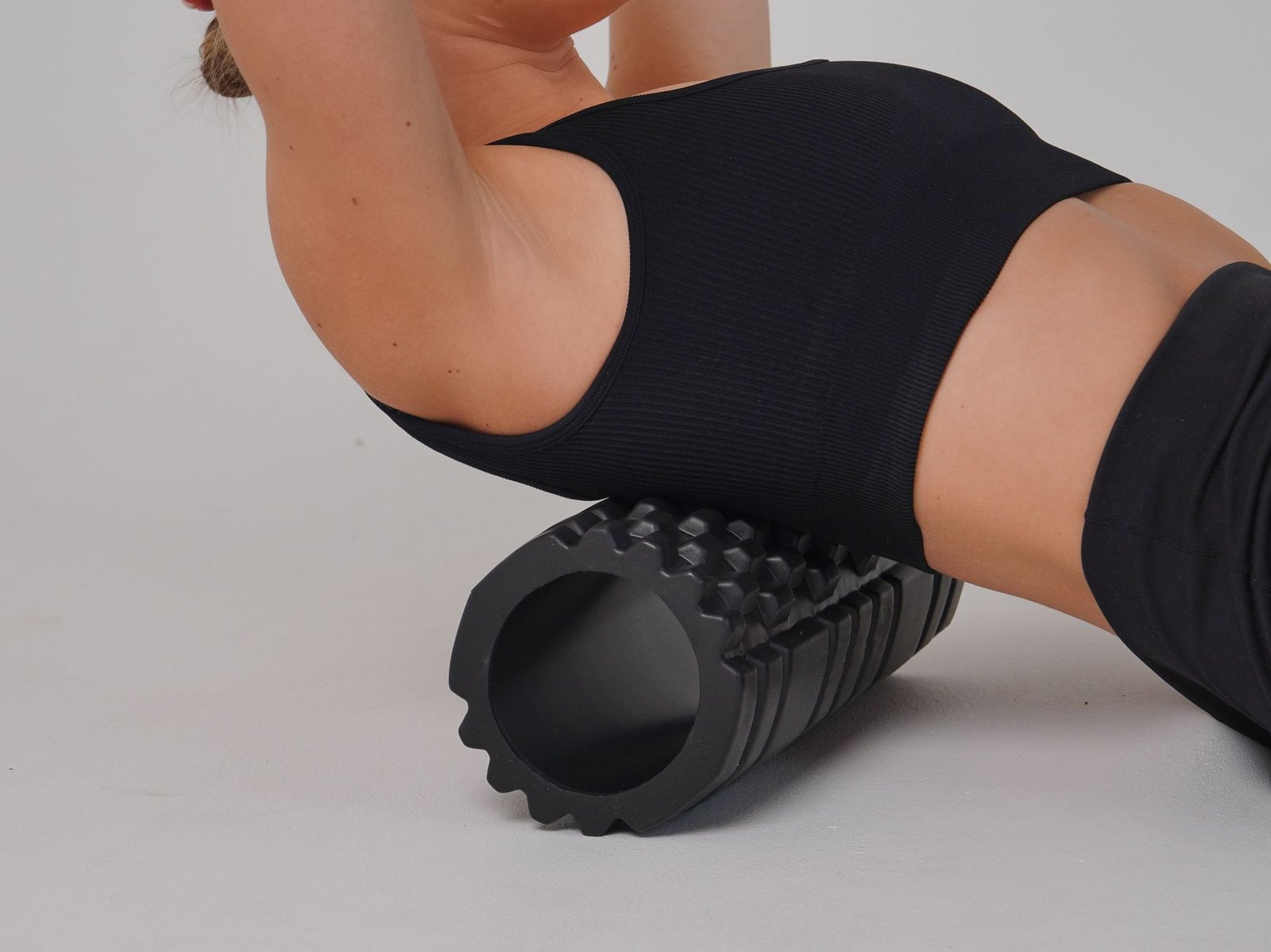
Rest days also protect performance in a simpler way. They keep fatigue from piling up across the week. In addition, a session done while carrying heavy leftover fatigue is usually a worse session. It brings lighter loads, sloppier technique, and less to adapt from. Spaced properly, each workout starts from a higher floor. As a result, progress shows up in your training log instead of hiding underneath constant tiredness. Rest is one piece of the puzzle. The habits around it matter too. Our guide to the most overlooked ways to recover faster covers the supporting side.
The Short Answer: How Many Rest Days Most People Need
If you want a starting number before the detail, use your training age as the guide. Training age means how long you have been training consistently, and it shapes how many rest days you need.
Beginners (first year of consistent training): three or four rest days a week. To start with, two or three full body sessions a week is plenty of stimulus when everything is new. In addition, your technique, joints, and work capacity are all still catching up. More rest here is not lost progress. Instead, it is what lets you arrive at each session able to learn and lift well.
Intermediate lifters (one to three years): two or three rest days a week. In contrast, three to five sessions a week is the common range. They are often organized as upper and lower body splits. As a result, one area rests while another trains. Your recovery capacity has improved. However, so has the work you can do in a session. In fact, the two roughly balance.
Experienced lifters (three plus years): one to three rest days a week. Finally, advanced trainees sometimes train five or six days. However, they almost always split the body into smaller sessions. As a result, each muscle group still gets its rest between exposures. The total rest per muscle is similar. It is just distributed differently.
Notice what these ranges share. Nobody sensible lands on zero. Nobody who trains hard lands on six or seven unless life simply gets in the way for a week. The sections below explain how to adjust inside your range. They will help you set how many rest days you need.
What Changes How Many Rest Days You Need
Two people can follow the same program and need different rest. Specifically, these are the levers that matter, in roughly the order they matter.
How Hard and How Much You Train
Intensity and volume are the biggest drivers. For instance, a session of heavy squats and deadlifts close to your limit costs far more recovery than a moderate session. That holds even if both take an hour. The more hard sets you do, the more rest each session needs. The same applies to lifting heavier relative to your maximum. Copying the schedule of someone whose workouts look nothing like yours goes wrong for this reason. Their six day week may hold less hard work than your four day week.
Strength Days Cost More Than Easy Cardio Days
Not all training days spend recovery at the same rate. Above all, heavy strength training, sprinting, and hard interval sessions are expensive. They load muscle, joints, and the nervous system all at once. Easy to moderate cardio is cheap by comparison. A relaxed 30 to 45 minute cycle or a steady walk uphill is one example. Many people can do it the day after a hard session without blunting recovery at all. When you count rest days, count them against your hard days. A week with three hard sessions and two easy cardio days may only need two full rest days. The easy days nearly count as recovery, since they cost so little.
Sleep and the Rest of Your Life
Recovery capacity is not fixed. Moreover, a demanding job, a stressful month, or broken sleep with a young baby all shrink your recovery budget. A stretch of short nights does the same. Poor sleep in particular raises the number of rest days a given program needs. That is why sleep gets so much attention in recovery discussions. It ranges from basic habits to topics like magnesium glycinate for sleep. The practical response is not to quit training in hard months. Instead, hold training steady and add a rest day until life calms down. Do not add sessions and wonder why everything feels heavy.
Training Age and Age Itself
Beginners need more rest not because they are fragile. Everything is a new stress for them. New movements, new loads, and muscles and connective tissue have not adapted yet. With years of training, your body recovers from familiar work more efficiently. Consequently, experienced lifters handle higher frequency. Age pulls the other way. From your forties onward, connective tissue recovery and sleep quality tend to become the limiting factors. Many lifters over 40 do better with an extra rest day than they needed when younger. It is also when supporting recovery gets more deliberate attention. That attention ranges from protein and sleep to researched supplements such as creatine for women over 40.
Soreness Is One Signal, Not the Whole Decision
Soreness belongs in the scheduling conversation, but only as one input. For example, mild soreness in a muscle you trained two days ago is normal. By itself, it does not require cancelling a session, especially a session that trains something else. Heavy soreness is a stronger vote for moving the session. That applies when it changes how you move, makes stairs a project, or is still climbing on day three. Swapping in something light is another option. What soreness is and why it happens is a topic of its own. It is covered in our guide to DOMS. For the weekly plan, treat it as one vote among several, alongside energy, sleep, and recent performance.
How Many Rest Days: Example Weekly Schedules
The pattern underneath every good schedule is the same. First, hard days are spaced out. Second, no muscle group is trained hard on back to back days. In addition, rest days are placed where fatigue peaks rather than in leftover gaps. Use these layouts to test how many rest days suit your life.
Training Two Days a Week (Five Rest Days)
Best for true beginners, people returning after a long layoff, and anyone whose life currently only fits two sessions.
- Monday: full body strength session
- Tuesday: rest or easy walking
- Wednesday: rest
- Thursday: full body strength session
- Friday: rest
- Saturday: rest or an easy active day
- Sunday: rest
Two full body sessions with at least two days between them gives every muscle group repeated practice. Recovery stays generous throughout. Indeed, many people progress surprisingly well on exactly this for their first several months.
Training Three Days a Week (Four Rest Days)
The most common and most sustainable layout for beginners and early intermediates. It is also the rhythm a typical beginner strength training plan is built on.
- Monday: full body strength
- Tuesday: rest
- Wednesday: full body strength
- Thursday: rest
- Friday: full body strength
- Saturday: rest or easy cardio
- Sunday: rest
Every session is followed by a rest day. Meanwhile, the weekend holds one longer recovery stretch. In addition, the week is easy to remember and repeat, which matters more than clever variations.
Training Four Days a Week (Three Rest Days)
The usual next step is typically an upper and lower body split. As a result, each area rests while the other works.
- Monday: upper body
- Tuesday: lower body
- Wednesday: rest
- Thursday: upper body
- Friday: rest
- Saturday: lower body
- Sunday: rest
Notice that even here, no two hard lower body days sit next to each other. The full rest days break the week into manageable blocks. Similarly, people training five or six days a week extend the same logic with push, pull, and legs splits. They keep at least one full rest day, because per muscle rest is what counts, not gym visits.
Signs You Need More Rest Days
Your body usually files its complaint in the training log before it files it anywhere else. Therefore, add a rest day when several of these show up together. Alternatively, take an extra one for a week or two. They signal that how many rest days you take needs to rise.
- Performance is sliding. Loads or reps that were manageable two weeks ago now feel harder. This applies across several sessions, not just one off day.
- Fatigue does not clear overnight. For example, you wake up nearly as tired as you went to bed, for days in a row.
- Sleep gets worse, not better. Training normally helps sleep. Finding yourself wired at night or waking early and restless is a common under-recovery pattern.
- Motivation collapses. Dreading sessions you normally enjoy often tracks fatigue more than laziness. Finding excuses you do not quite believe does the same.
- Small aches stop resolving. In particular, nagging joints and tendons that used to settle in a day now linger and accumulate.
- Your resting heart rate sits a few beats higher than usual on waking, several mornings running.
One bad session after a poor night means nothing. A two week trend across several of these signs means your ratio of training to rest is wrong for your current life. Consequently, the cheapest fix is rest, not more effort. Ignored for long enough, under-recovery can deepen into a persistent slump in performance and mood. It takes weeks to unwind. The medical literature describes this far end of the spectrum as overtraining syndrome. The distance between needing a rest day and that state is exactly what sensible scheduling protects. If fatigue is severe, persistent, or paired with symptoms that worry you, talk to a health professional. That conversation does not belong in a training article.
Signs You Are Fine to Train
Recovery has a positive side too. It is worth recognizing so you do not rest out of habit. In general, you are good to train when your warm up sets move at their normal speed. Your energy and mood should be roughly baseline. Soreness should be mild and fading. In addition, your recent performance should be stable or creeping upward. A useful test is the first working set. If it feels as expected, the session is on. Readiness is rarely perfect, and it does not need to be.
Active Recovery: What Counts and What Does Not
A rest day does not have to mean the sofa. For most people, it should not. Active recovery is movement easy enough that it costs almost nothing. At the same time, it helps you feel looser and less stiff. Try an easy walk, gentle cycling, light swimming, mobility work, or an unhurried stretching session. Similarly, a daily step habit fits perfectly here. Our guide to walking 10,000 steps shows how much daily walking fits comfortably on rest days.

What does not count is anything that quietly becomes training. A “light” session that adds weight because the first sets felt good spends recovery. Similarly, a casual run that turns competitive in the last kilometre (about 0.6 miles) does the same. The same goes for a supposedly easy conditioning class. All of these spend the recovery the day was meant to return. Ultimately, the honest test is how you feel an hour later and the next morning. True active recovery leaves you feeling better than when you started. If you feel more tired, it was a training day wearing a rest day’s clothes. Your week should count it as one.
Common Mistakes
Never resting. The most common scheduling error is treating rest as a reward for exhaustion. It should be a planned part of training instead. Initially, fatigue accumulates silently. Then it announces itself as stalled lifts, poor sleep, or a minor injury. Planned rest days prevent the crash that forces unplanned ones.
Resting too much, or too passively. The opposite error is real too. One session a week with six full rest days rarely provides enough stimulus to progress. Moreover, very long gaps between training the same muscle let soreness return in full each time. That feels like poor recovery, but it is actually under-training. If every session feels like starting over, the answer is usually a little more frequency, not more rest.
Training through warning signs. Deciding in advance that the plan is untouchable converts a one week correction into a month of digging out. Pushing through the two week slide described above does the same. In contrast, adjusting the week is not weakness. Instead, it is the skill scheduling exists to teach.
Copying an advanced schedule. A six day split works for someone with years of adaptation, small daily sessions, and a life organized around training. However, borrowed whole by a beginner, it delivers the fatigue without the capacity. Earn frequency gradually. Master three days before adding a fourth.
How Many Rest Days: How to Set Your Own Number
Start with the range for your training age above. Lay out the week with the spacing pattern above. Then let three to four honest weeks of evidence adjust how many rest days you take. To begin with, keep a simple log of loads, reps, and a one line note on energy and sleep. If performance climbs and you feel ready on training days, your number is right. Alternatively, you could trial one fewer rest day. If the warning signs gather, add a rest day before you change anything else. Recheck whenever life changes. A new job, a new baby, or a harder training block all move the answer. The right number is a setting, and settings are meant to be adjusted.
Frequently Asked Questions About How Many Rest Days
Can I train seven days a week if I feel fine?
You can be active seven days a week. At least one or two of those days should be genuinely easy. At first, feeling fine in week one of daily hard training is normal. The question is week five, when accumulated fatigue has had time to build. Almost everyone performs better long term with true rest built in.
Do rest days mean doing nothing at all?
No. Rest days mean no hard training. Walking, gentle cycling, mobility work, and easy swimming are all compatible with recovery. In fact, they usually beat a fully sedentary day. Just keep the effort honest and low.
More Questions About How Many Rest Days
Should I take a rest day if I am still sore?
It depends on the degree and on what the session trains. Mild soreness is a poor reason to skip a session, particularly one aimed at different muscles. Strong soreness that changes how you move is a good reason to shift the session by a day. Swapping it for active recovery is another option. In short, use soreness as one vote alongside sleep, energy, and recent performance, not a veto.
Do older lifters need more rest days?
Often, yes, by about one. Recovery of connective tissue and the quality of sleep tend to change from the forties onward. For instance, many lifters find that the schedule that worked at 30 needs an extra rest day at 50. It is an individual setting, though. Plenty of experienced older lifters train four days a week happily with slightly shorter sessions.
Final Questions About How Many Rest Days
What if I miss extra rest days because life gets busy?
Treat it as information, not failure. After all, a lighter week now and then costs little and sometimes helps. If missed sessions become the pattern, shrink the plan to the number of days you can repeat. A three day plan done consistently beats a five day plan done in bursts.
Do easy cardio days count as rest days?
For recovery purposes, mostly yes, as long as the cardio is genuinely easy. It must not load the same muscles you are resting. For example, a relaxed ride or walk the day after heavy squats costs the legs little. Hard intervals, hill sprints, or a long run do not count. Schedule those as training days.
A Final Word on How Many Rest Days
How many rest days a week do you need? Enough that each hard session starts from recovery rather than from debt. Few enough that your training still adds up to progress. For most people, how many rest days you need lands between two and four. That number is set by training age, session difficulty, and the life around the training. To sum up, build the week with hard days spaced apart. Meanwhile, watch your log and your sleep for a month. Finally, adjust when the evidence asks for it. Rest is not time off from your program. It is half of it.
This article is general information only and is not medical advice. Rest and recovery needs vary widely between individuals. Listen to your own body. Discuss any persistent fatigue, pain, or health concerns with your own doctor or another qualified health professional.

 Ablaze Fitness


 Mélanie Courcelles


