


You finished your workout feeling fine. Maybe even great. Then, a day or two later, you went to sit down, climb the stairs, or lower yourself onto the toilet, and your legs staged a protest. That stiff, tender ache that shows up well after the workout ends is called DOMS, and it is one of the most common experiences in exercise.
DOMS stands for delayed onset muscle soreness. It is the soreness that arrives late, builds slowly, and makes everyday movements feel like hard work for a few days. Almost everyone who trains has felt it, from first time gym members to experienced lifters trying a new exercise.
The good news is that DOMS is normal, temporary, and usually harmless. This guide explains what causes it, why it peaks a day or two after training rather than during it, how to tell it apart from a genuine injury, what actually helps it ease off, and how to stop it hitting quite so hard next time.
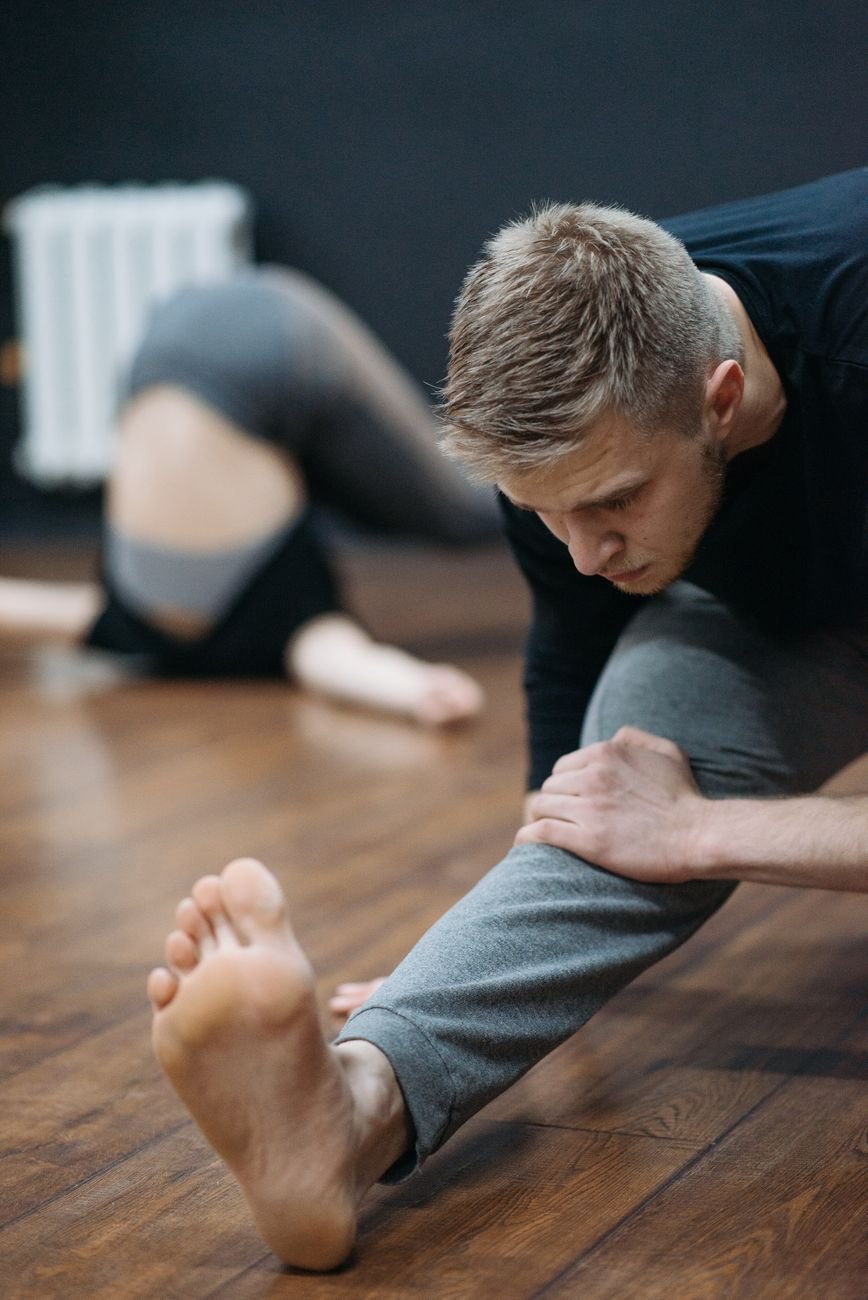
What Is DOMS? Delayed Onset Muscle Soreness Explained
DOMS is the dull, aching soreness that develops in a muscle roughly 6 to 24 hours after exercise, peaks somewhere between 24 and 72 hours, and then fades over the following days. Research reviews hosted by the US National Institutes of Health describe the same pattern: soreness typically appears after a pain free period of about 12 to 24 hours, peaks at 24 to 72 hours, and disappears within about 7 days.
Two ingredients produce DOMS more reliably than anything else:
- Unfamiliar exercise. A movement your body is not used to, even at a modest weight, is far more likely to leave you sore than a harder version of a movement you do every week.
- Eccentric contractions. These are contractions where the muscle lengthens under load, such as lowering a dumbbell slowly, running downhill, or the downward phase of a squat or lunge. Eccentric work is the single biggest trigger.
During hard or unfamiliar eccentric exercise, tiny disruptions occur in the muscle fibres and the surrounding tissue. Researchers often describe this as microscopic damage, which sounds alarming but is a routine part of how muscle adapts. Your body responds with a repair process, and the increased sensitivity of the tissue during that repair is a large part of why the muscle feels tender to the touch and sore when you use or stretch it.
It is worth clearing up one old myth while we are here. DOMS is not caused by lactic acid building up in your muscles. Lactate clears from muscle within about an hour of exercise, long before the soreness arrives. The delayed timing alone rules it out.
Why DOMS Hurts More on the Second Day
People are often surprised that the day after a workout feels manageable, while the second day feels dramatically worse. If your soreness follows that pattern, nothing has gone wrong. It is the classic DOMS timeline.
The soreness is not at its worst when the exercise ends because the repair response takes time to develop. The sensitivity in the muscle builds gradually as the tissue responds to the unfamiliar stress, which is why the ache typically peaks one to three days after the session rather than the same evening.
A few practical signs you are dealing with textbook DOMS:
- It affects a muscle group you trained recently, often on both sides of the body.
- It feels like a dull ache, stiffness, and tenderness rather than a sharp pain.
- It is worst in the morning and when you first start moving.
- It eases noticeably once you warm up and get the blood flowing.
- Stairs, squats, and sitting down are uncomfortable, but nothing feels unstable or broken.
If that sounds like what you are feeling, you are most likely looking at an ordinary recovery process running its course.
DOMS or Injury? How to Tell the Difference
Most post workout soreness is DOMS, but not all of it is. Knowing the difference matters, because the right response to DOMS is gentle movement, while the right response to an injury is to stop and get it assessed.
It is probably DOMS if:
- The ache is spread across the whole muscle rather than in one small spot.
- Both sides feel it after a session that trained both sides.
- It arrived a day or two after training, not during a specific rep.
- It improves as you warm up and move around.
- It is steadily getting better day by day, even if slowly.
Get checked instead if:
- The pain is sharp, stabbing, or burning rather than a dull ache.
- The pain is in a joint, or on one side only, or in one exact point you can cover with a fingertip.
- You felt something pop, tear, or give way during the workout.
- There is visible swelling, bruising, or weakness that is getting worse.
- Movement makes it worse rather than easing it.
- Soreness has not clearly improved after about a week.
Muscle soreness belongs in the belly of the muscle. Pain that lives in a joint, arrives suddenly during a lift, or comes with swelling and instability deserves proper attention, not a wait and see approach.
How Long Does Muscle Recovery Take?
The honest answer is that DOMS usually lasts between 3 and 5 days, with the worst of it concentrated in the first 48 to 72 hours. Mild cases clear in a couple of days. A brutal first leg session after a long break can leave you stiff for the better part of a week.
Your muscle recovery time depends on a few predictable factors:
- Training experience with that movement. Beginners get hit hardest. After you repeat the same workout once or twice, the soreness drops dramatically, a protective response covered in the prevention section below.
- How much eccentric work was involved. Downhill running, heavy negatives, and long slow lowering phases extend the timeline.
- How big the jump was. A small increase in load usually means a small response. Doubling your volume in one session is a reliable recipe for a long recovery.
- Sleep, food, and general stress. Recovery is a whole body process. Short sleep, low protein intake, and a stressful week can all stretch soreness out.
As a rough guide, most people can train a muscle group again comfortably once the soreness has faded to a mild background stiffness, which for a typical session is somewhere between 48 and 96 hours later. You do not need to be completely soreness free before training again, but you do need to be able to move through a normal range of motion and produce reasonable force.
What Actually Helps DOMS, Ranked by Evidence
No remedy makes DOMS vanish overnight, and anything promising that should be treated with suspicion. What the evidence supports is a short list of modest, sensible measures that take the edge off while your body does the real work. If you want a fuller routine, our guide on how to recover faster after a workout pulls these ideas together.
1. Light movement and active recovery
This is the most reliable item on the list. Gentle movement increases blood flow to the sore muscles and temporarily reduces how stiff and tender they feel. A walk, an easy bike ride, or a light session targeting different muscles all work. This is exactly what easy sessions are for, and building them into your week with something like low impact workouts for beginners gives you a structured way to move on sore days without digging the hole deeper.
2. Sleep
Sleep is when a large share of tissue repair happens, and consistently short sleep is linked with slower recovery and higher perceived soreness. Protecting your sleep for the two or three nights after a hard session is unglamorous, but it is one of the few levers that genuinely moves recovery along.
3. Enough protein and fluids
Your body needs raw materials to repair tissue. Eating adequate protein across the day, roughly in line with standard sports nutrition guidance of about 1.2 to 2.0 grams per kilogram of body weight for people who train regularly, and staying normally hydrated gives the repair process what it needs. A protein calculator can help you work out your own daily target. No supplement is required for this. Ordinary meals do the job.
4. Heat or cold, based on what feels better
Warm baths and heat packs tend to feel good on stiff, achy muscles and can ease the sensation of soreness for a while. Cold water immersion may blunt soreness too, though some research suggests frequent ice baths after lifting can slightly dampen strength and muscle gains over time, so many coaches save them for competition periods rather than everyday training. Neither is essential. Use whichever gives you relief, or skip both.
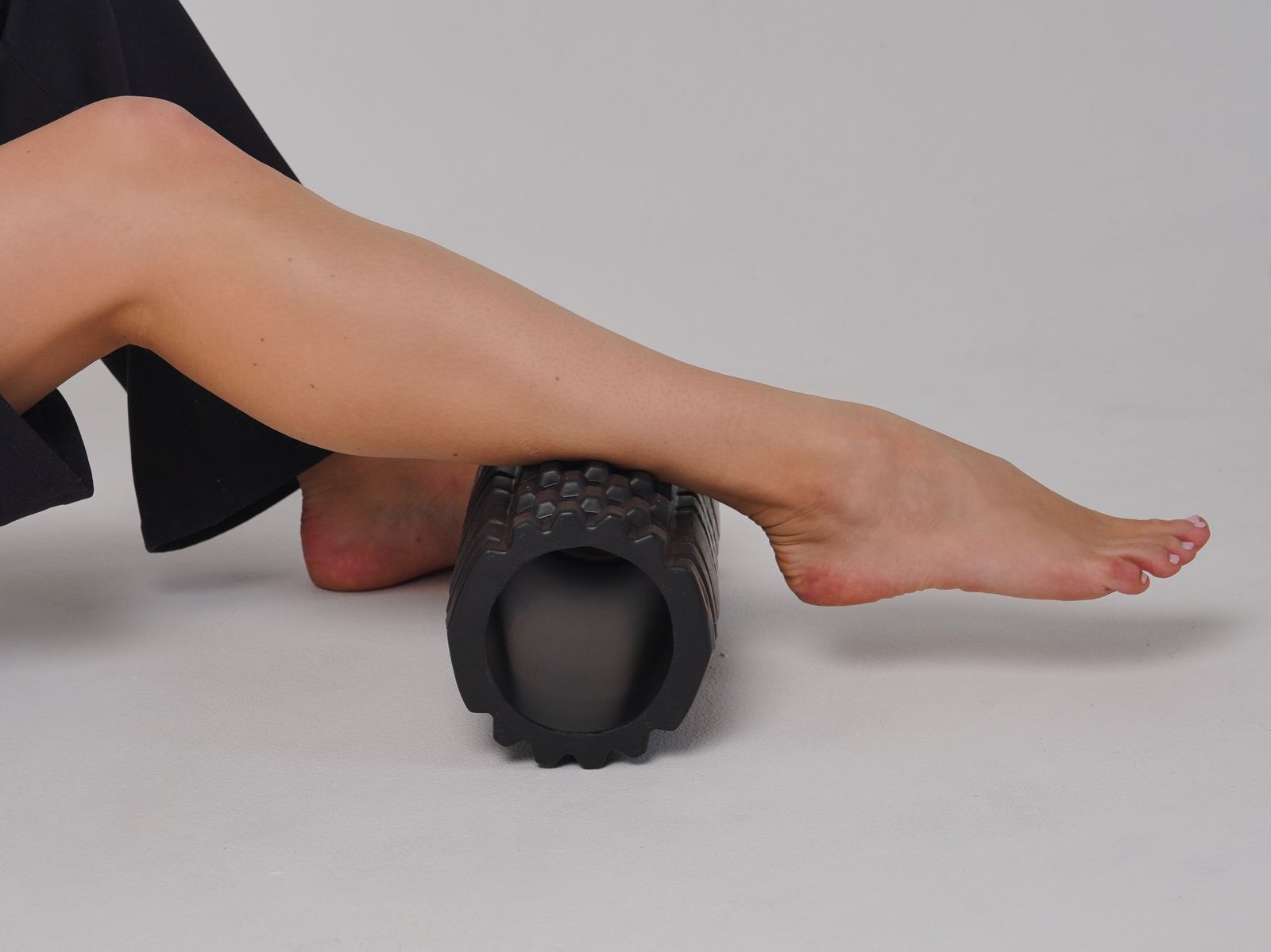
5. Gentle massage or foam rolling
Massage and self massage with a foam roller show small but real short term reductions in perceived soreness in studies. The effect is temporary comfort rather than faster healing, but temporary comfort is worth having when the stairs look like a mountain. For more ideas in the same vein, see our 10 post-workout tips for faster recovery.
What does not prevent DOMS
Two popular beliefs do not hold up well. Stretching before or after a workout, on the available evidence, does not meaningfully prevent DOMS, though gentle stretching can feel good on stiff muscles. And reaching for painkillers as a routine recovery strategy is not a great idea. Used occasionally they are unlikely to be a problem for most people, but regularly masking soreness to train through it hides the exact signal you need to judge your training load, and frequent use carries its own downsides. DOMS is information. Work with it, do not just mute it.
Training While Sore: When It Is Fine and When to Skip
You do not have to wait for perfect, ache free muscles before your next session. Training with mild DOMS is generally fine, as long as you adjust intelligently.
Usually fine:
- Training a different muscle group while one group recovers. Upper body day does not care that your legs are sore.
- Light to moderate work on the sore muscle itself, starting with a longer warm up and lighter loads.
- Easy cardio, walking, and mobility work at any level of soreness.
Adjust the session if:
- Soreness is changing how you move. If you are limping through squats or shortening every stride, the load or the exercise needs to change.
- Your strength is clearly down. Treat it as a technique and volume day rather than a personal record attempt.
Skip and rest if:
- The pain is sharp, one sided, or in a joint, which takes you back to the injury checklist above.
- You have the warning signs in the next section.
A simple rule works well: warm up thoroughly, then reassess. DOMS almost always feels better ten minutes into a warm up. Pain that feels worse as you warm up is your signal to stop.
How to Prevent the Worst of DOMS Next Time
You cannot and should not eliminate DOMS completely. Some soreness after a new stimulus is a normal part of training. You can, however, stop it from ruining your week.
Progress gradually
The soreness you feel is roughly proportional to how unfamiliar and how large the jump in training was. Increasing load, reps, or sets by small steps, often summarised as around 5 to 10 percent at a time, keeps the response manageable. A structured plan builds this in for you, which is one reason following something like a beginner strength training plan tends to produce far less brutal soreness than random hard sessions.
Use the repeated bout effect
This is the most reassuring fact in the whole DOMS literature. After you perform a workout once, your muscles adapt so that the same workout produces far less soreness the next time, even just a week or two later. The second leg day is almost never as bad as the first. Consistency is both the cure and the prevention: the people who train a movement every week rarely suffer for it, while the once a month hero pays every time.
Respect new exercises
Introduce one or two new movements at a time, start them lighter than you think you need to, and keep the eccentric phase controlled rather than exaggerated in your first sessions. You can chase the burn later, once the movement is familiar.
Spread the work out
Training each muscle group twice a week with moderate sessions usually produces less total soreness than one enormous weekly session, and it tends to produce better results too. Frequency is a soreness management tool, not just a programming choice.
One Warning Sign That Is Not DOMS
Rarely, extreme muscle breakdown after exercise can cause a serious condition called rhabdomyolysis, where damaged muscle releases substances into the bloodstream that can harm the kidneys. It is uncommon, and ordinary DOMS is not a mild version of it, but everyone who trains hard should know the signs.
Seek urgent medical care if, after a workout, you notice:
- Very dark, cola or tea coloured urine.
- Severe swelling in a trained muscle.
- Weakness that is dramatically beyond normal soreness, such as being unable to straighten an arm or bear weight.
- Pain that seems wildly out of proportion to the workout you did.
These symptoms are not a wait and see situation. Get medical help the same day. This is general information only and is not medical advice; when in doubt about any symptom, getting checked is always the right call.
Frequently Asked Questions About DOMS
Is DOMS a sign of a good workout?
No. Soreness tells you the workout was unfamiliar or heavily eccentric, not that it was effective. You can make excellent progress with little or no soreness, especially once a routine is familiar, and you can be extremely sore after a workout that did little for your fitness. Judge a programme by your progress over weeks, not by how wrecked you feel on Wednesday.
How long does DOMS usually last?
Most cases peak between 24 and 72 hours after the session and clear within 3 to 5 days. Mild soreness may be gone in 48 hours, while an unusually hard or unfamiliar session can leave stiffness for up to a week. Soreness that is not clearly improving after about 7 days is worth getting checked.
Should I work out with DOMS?
Usually yes, with adjustments. Train other muscle groups, keep loads lighter on the sore muscles, warm up for longer, and favour easy movement. Skip the session if the pain is sharp, one sided, in a joint, or getting worse as you warm up.
Does stretching prevent DOMS?
The evidence says no, not to any meaningful degree. Static stretching before or after training has not been shown to prevent delayed onset muscle soreness. Gentle stretching can still feel relieving on stiff muscles, so do it for comfort if you enjoy it, just do not rely on it as protection.
Can DOMS happen without muscle damage?
DOMS is strongly linked to microscopic disruption in muscle tissue after eccentric exercise, which is part of the normal adaptation process rather than an injury. Researchers continue to debate the exact mechanisms, including the role of nerve endings and connective tissue, but the practical picture is unchanged: it is uncomfortable, temporary, and not a sign you have harmed yourself, as long as none of the injury or warning signs above are present.
Why do I get DOMS in some muscles more than others?
Muscles trained with a lot of eccentric load, such as quadriceps during downhill walking or squats, hamstrings during deadlift variations, and calves during running, tend to complain the loudest. Muscles you train frequently with familiar movements adapt and become resistant. New exercises, new angles, and longer ranges of motion are the usual culprits.
The Bottom Line on DOMS
DOMS is your muscles responding to something new. It arrives late, peaks around day two, and leaves within the week. Move gently, sleep well, eat enough protein, and let gradual progression and the repeated bout effect do the long term work. If soreness keeps returning and your body is not recovering between sessions, that wider pattern is worth a closer look. Respect the difference between a dull, whole muscle ache that warms up and improves, and pain that is sharp, swollen, one sided, or paired with dark urine, because that second list always deserves medical attention.
The soreness will pass. The consistency is what counts.

 Ablaze Fitness


 Mélanie Courcelles


