


Most skin care advice quietly assumes your skin lives a calm life. Yours probably does not. If you train several times a week, your skin deals with sweat, friction, and gym towels. It also deals with outdoor sun on runs and rides, and chlorine or sauna heat for some of you. Then there is the daily question of whether to wash your face again or leave it alone. A skin care routine that ignores all of that will always feel like it almost works.
The good news is that active skin does not need more products. It needs the right order, the right timing around workouts, and fewer mistakes. This skin care routine gives you a simple morning plan, a workout plan, and a night plan. Each is a short ordered plan you can actually keep. It also shows how to adjust the plan for oily, dry, sensitive, and combination skin. It is general information only, not medical advice, and it skips the miracle claims. Skin responds to consistency over weeks, not to a perfect product bought once.
Why Active Skin Needs Its Own Skin Care Routine
Sweat itself is not dirty, and it is not the villain it is often made out to be. The problems for people who train come from what happens around the sweat. Sweat left to dry on the skin mixes with oil and the day’s sunscreen. It can leave pores feeling clogged, especially under a hat band, a sports bra strap, or a weight belt. Friction from towels and clothing adds irritation. Outdoor training adds sun exposure that many people underestimate on cloudy days and short sessions.
The second issue is timing. The most useful skin care moment of an active person’s day is the thirty minutes after a workout. It is the moment most routines say nothing about. Cleanse too late and the sweat and oil sit for hours. Cleanse too aggressively, three times a day with a harsh wash, and the skin barrier complains. It reacts with tightness, flaking, and more breakouts, not fewer.
The third issue is overload. A ten step routine copied from social media gives your skin ten chances to react to something. It also gives you ten reasons to quit by Thursday. The skin care routine below uses three to four steps at each point in the day, which is where most skin, active or not, does best.
The Golden Rules Before the Steps
A few principles sit underneath the skin care routine in this guide. They matter more than any single product choice.
Order matters. Apply products from thinnest to thickest: cleanser, then any watery treatment or serum, then moisturiser, then sunscreen in the morning. Each layer sits better on the one before.
Sunscreen is the morning finale. In the daytime routine, sunscreen goes on last, after moisturiser, and it is the step that protects all the others. Guidance from health services such as the NHS is consistent on the basics: use a broad spectrum sunscreen of at least SPF 30, apply it generously, and reapply after heavy sweating or swimming. On a training day outdoors, that reapplication rule is the one that counts.
One new product at a time. Change a single thing and give it two weeks. If your skin improves or reacts, you know why. Change three things at once and you know nothing.
Give it six weeks. Skin cells turn over slowly, so a fair trial for a new routine is about six weeks of consistent use. Judge by how your skin feels at the same time of day across weeks, not by tomorrow morning.
Patch test strong actives. Anything with acids or retinoids gets tested on a small area, such as behind the ear or along the jaw, for a few days before it goes on your whole face.
The Morning Skin Care Routine, Step by Step
The morning routine has one job. Start the day clean, hydrated, and protected, without stripping the skin before you have even trained.
Step 1: Rinse or gentle cleanse. If your skin is dry or sensitive, a splash of lukewarm water is enough in the morning, because you cleansed properly the night before. If your skin is oily, or you trained late and slept in the day’s residue, use a small amount of gentle cleanser for 30 to 60 seconds and rinse with lukewarm, not hot, water.
Step 2: Moisturise. Apply moisturiser to slightly damp skin, which helps it spread and seal. Choose texture by skin type: a light gel or lotion for oily skin, a cream for dry skin. Include the neck, which trains, sweats, and shows sun exposure just as much as the face.
Step 3: Sunscreen, every day you go outside. Use about two finger lengths of product for the face and neck as a practical measuring guide, and do not forget ears and the back of the neck if your hair is up for training. In Australia, and anywhere in a northern summer, this step is non negotiable year round for outdoor sessions. In a Canadian or UK winter it still matters on bright days, ski days, and long runs, even when a full application feels less urgent on a grey commute.
Step 4: Makeup, if you wear it, goes on after sunscreen settles. Give sunscreen about ten minutes before makeup or a hard outdoor session where you can. For training itself, less on the skin is better: heavy base makeup plus sweat is a combination many people find clogs their pores, and a tinted sunscreen often does both jobs on gym days.
The Workout Routine: Before, During, and After Training
This is the part ordinary routines miss, and for active skin it is the part that makes the biggest difference.
Before training. If you are heading to a session with the day’s makeup or sunscreen and city grime on your face, cleanse quickly first. Sweat moving through a layer of old makeup is a common trigger for the forehead and hairline breakouts people blame on exercise itself. Tying hair back and using a clean headband or cap keeps hair products off the forehead too. Our guide to simple ways to clear your skin and prevent breakouts goes deeper on the breakout patterns themselves.
During training. Pat sweat, do not scrub it, and use a clean towel rather than the bottom of your gym top. Avoid touching your face with gym hands between sets. Small habits, real effect, because the goal is simply to move sweat off the skin without friction or extra bacteria from shared equipment.
After Training
Within thirty minutes after training. Cleanse, ideally in the shower, with the same gentle cleanser from your routine. This is the cleanse that matters most in an active person’s day. If a shower is not available, a rinse with water and a clean, damp cloth is a reasonable bridge until you get home, and changing out of damp training clothes promptly helps the skin on your back, chest, and shoulders in exactly the same way.
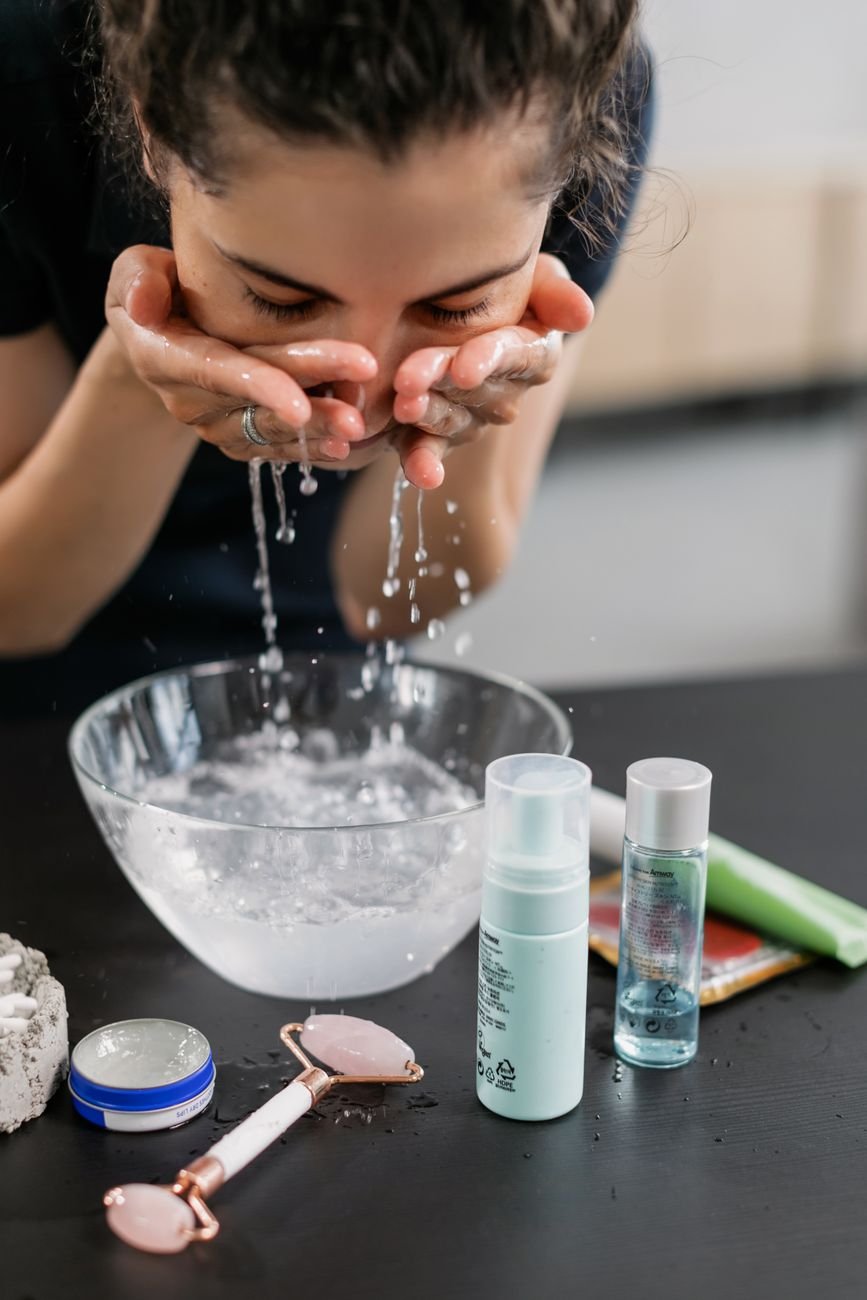
After the post workout cleanse. Moisturise as usual. If the session was outdoors, check the sun exposed areas: a missed sunscreen patch on the shoulders shows up by evening. If you use the sauna after training, keep sessions moderate and cleanse after, not before sitting in the heat with the day’s sweat still on your skin; our guide to how long you should sit in a sauna covers sensible session lengths.
The Night Skin Care Routine, Step by Step
Night is when the routine does its repair work. It is also when the day’s sweat, sunscreen, and pollution absolutely must come off.
Step 1: Cleanse, properly this time. Sixty seconds with a gentle cleanser, lukewarm water, and your fingertips. If you wore water resistant sunscreen or makeup, a double cleanse helps: an oil based cleanser or balm first to dissolve the day, then your regular cleanser. Skin should feel clean and comfortable afterwards, never squeaky or tight. Squeaky means stripped.
Step 2: Treat, if you use a treatment at all. This is the slot for one targeted product, and one is enough for most people. A niacinamide serum suits uneven tone and oil balance. A gentle chemical exfoliant, such as a low strength AHA or BHA product used two or three nights a week rather than nightly, suits texture and clogged pores. A retinoid, started slowly at pea size amounts twice a week and built up, suits long term texture and fine lines, and it is the ingredient to be most patient and cautious with. Pick the one that matches your main goal instead of stacking all three.
Moisturise and Rest
Step 3: Moisturise, slightly richer than the morning. Night moisturisers can be a step heavier, because there is no sunscreen or makeup to sit on top. Dry skin types in particular benefit from a cream at night even if the morning uses a lotion. Dry and weather beaten skin responds well to the basics covered in our guide to home remedies for dry skin, paired with a plain, fragrance light cream.
Step 4: Sleep on a clean pillowcase. A small, unglamorous step that active people feel more than most: change the pillowcase at least weekly, twice a week if you train daily or have breakout prone skin. Your face spends about eight hours on it, and the link between sleep and skin runs deeper than the pillowcase; the role of sleep in maintaining good health includes the overnight repair your skin does while you rest.
Your Gym Bag Skin Care Kit
A skin care routine only works if it survives contact with your actual schedule, and for active people the weak point is usually the gym bag. A small, permanent kit removes the daily decision making, because everything you need is already where the workout happens. Keep it simple: a travel size bottle of your regular gentle cleanser, a small tube of moisturiser, a spare sunscreen for outdoor sessions, a clean face cloth or two in rotation, and a spare hair tie or headband. That is the whole kit, and it fits in a side pocket.
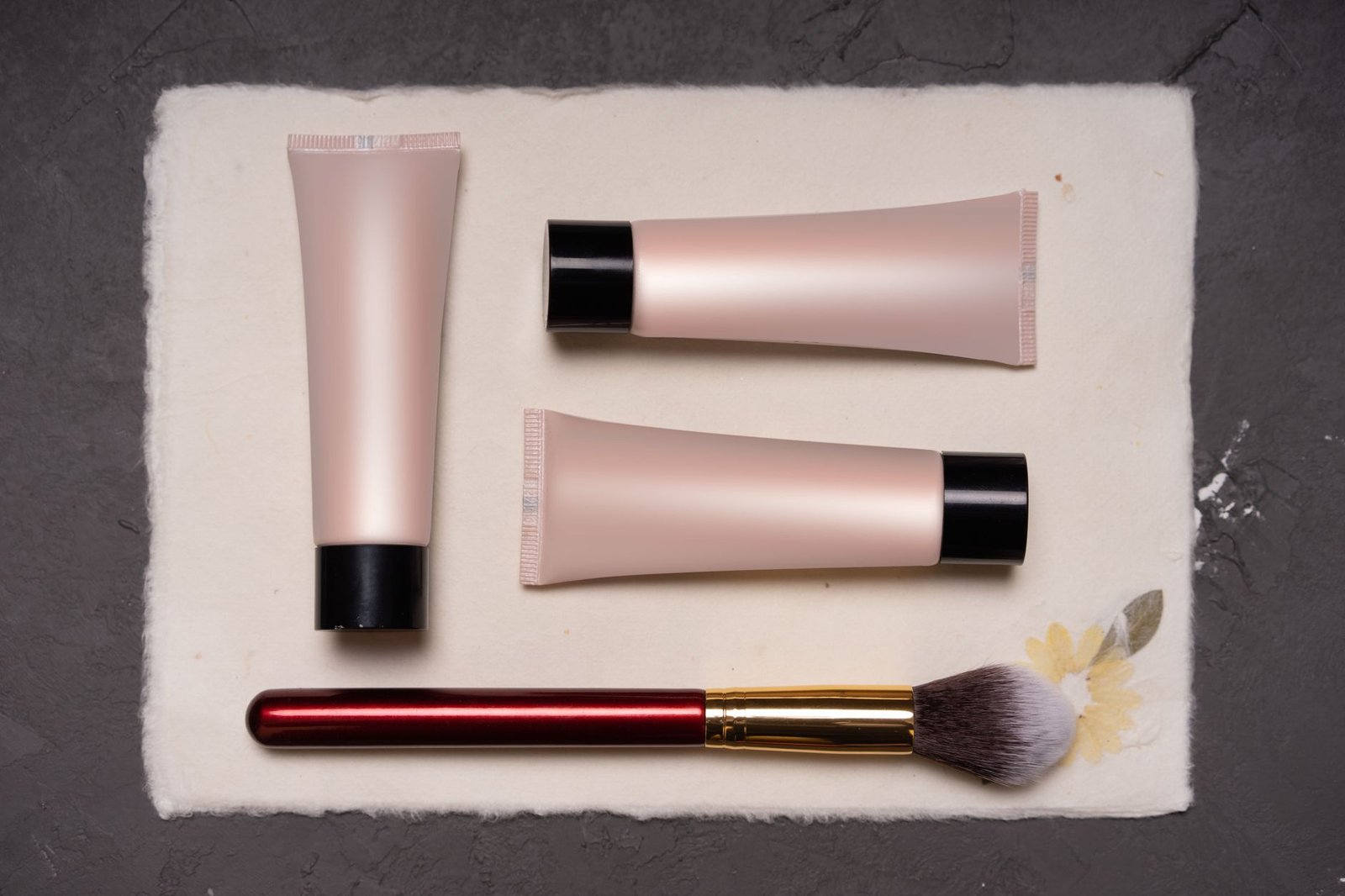
Two habits make the kit work. First, wash or swap the face cloths with your regular laundry every week, because a cloth that lives damp in a bag for a month undoes the point of carrying it. Second, decant from your full size products at home rather than buying separate gym products, so the skin on your face meets the same formulas it already knows instead of a rotating cast of samples. Travelling for a race, a match, or a work trip runs on the same kit: the routine travels because the bag does, and consistency across time zones and hotel bathrooms is exactly what skin notices most.
Adjusting the Plan for Your Skin Type
The skin care routine above is the frame. These adjustments fit the frame to your skin.
Oily skin. Gel cleanser, light gel moisturiser, and sunscreen with a matte or gel finish. Resist the urge to cleanse harder and more often: over washing oily skin commonly backfires with more oil and more irritation. Your treatment slot suits niacinamide or a BHA exfoliant a few nights a week.
Dry skin. Rinse only in the morning, cream cleanser at night, richer moisturiser both ends of the day, and treatment products introduced most slowly of all. Lukewarm water matters here, because long hot showers are a quiet cause of winter dryness in Canada and the UK and of year round dryness for frequent trainers.
Sensitive skin. Fewer products, fragrance free where you can, and the longest patch tests. Skip the treatment step entirely until the basic cleanse, moisturise, and sunscreen routine has run calmly for a month. Then add one gentle active at low frequency if you still want one.
Combination skin. The middle path: gentle cleanser, light moisturiser everywhere with a touch more cream on dry cheeks, and treatments aimed only where they are needed, such as an exfoliant on the T-zone rather than the whole face.
For a seasonal reset that pulls several of these habits together, our summer glow up guide works as a companion piece, keeping in mind that glow comes from consistency, not from a new shelf of products. And because a routine is self care only when it stays sustainable, the perspective in what actually works for self care applies here too: the best routine is the one still running in six weeks.
The Order of Application, at a Glance
If the steps ever blur together, this order settles it. Morning: cleanse or rinse, moisturise, sunscreen, then makeup. Training days: cleanse before a session if the day is already on your face, pat sweat during, cleanse within thirty minutes after, moisturise. Night: cleanse for a full sixty seconds, one treatment product if you use one, moisturise. That is the whole skin care routine. Everything else in this article is adjustment and troubleshooting around those nine or ten actions.
Common Skin Care Routine Mistakes
Cleansing too often, too hard. Three harsh cleanses a day is the classic active skin error. Two gentle cleanses, timed around training, beat it every time.
Stacking new actives. Starting an acid, a retinoid, and a vitamin C product in the same week is how people conclude that skin care does not work for them. One at a time, two weeks apart minimum.
Skipping sunscreen because the workout is early or short. Sun exposure adds up across hundreds of small sessions. The early run still counts.
Judging the routine in three days. Skin works on a six week clock. Quitting at day four and restarting with new products every week guarantees you never learn what works.
Copying a routine built for a different life. A routine designed for someone who never sweats will fail a daily trainer at the post workout step, and an influencer routine with ten steps fails anyone with a job. Fit the routine to your training week, not the other way round.
Frequently Asked Questions
How many steps should a skin care routine have?
Three steps in a skin care routine is the honest core: cleanse, moisturise, and sunscreen in the morning; cleanse, an optional treatment, and moisturise at night. Active people add one more essential moment rather than more products: the post workout cleanse.
Should I wash my face after every workout?
Yes, in some form. A proper cleanse in the shower is best, and a water rinse with a clean cloth is an acceptable bridge when a shower is not available. What matters is not leaving sweat, oil, and the day’s sunscreen sitting on the skin for hours afterwards.
Can sweat cause breakouts?
Sweat itself is not the direct cause, but sweat left on the skin, mixed with oil and products and held there by straps, hats, and unwashed kit, creates the conditions where breakouts thrive. The fix is timing and cleanliness, not training less.
How long before a new routine shows results?
Plan on about six weeks of consistent use before judging. Hydration and comfort improve within days, which is encouraging, but texture, tone, and breakout patterns move on the slower cell turnover clock.
Do I need different products for morning and night?
Mostly no. One cleanser and one moisturiser can serve both routines, with sunscreen added in the morning and an optional single treatment added at night. A slightly richer night moisturiser is a preference, not a requirement.
When should I see a professional instead?
If you have a rash that spreads, painful or cystic breakouts that leave marks, patches that change, bleed, or do not heal, or any condition that persists despite a gentle routine, see a pharmacist, GP, family doctor, or dermatologist. This article is general information about everyday skin care, not a guide to diagnosing or treating skin conditions.
The Bottom Line
An active skin care routine is a timing plan disguised as a product plan. Cleanse gently morning and night, protect with sunscreen every day you are outside, and treat the thirty minutes after training as the most important skin care window of your day. Keep the steps few, the order steady, and the changes one at a time, and give the plan six honest weeks. Your skin does not need a new shelf. It needs a routine that respects the life you actually live, workouts included.

 Ablaze Fitness


 Mélanie Courcelles


