


Noticing more forehead than you remember, thinning at the crown, or a hairline that looks different in photos can be unsettling. It is also extremely common. Male pattern baldness is the most common form of hair loss in men, and it usually follows a recognisable pattern gradually, rather than happening all at once.
This article explains what male pattern baldness is, why the hairline and crown are affected first, the role of genetics and hormones in general terms, how stages are described, and how it differs from temporary shedding and other conditions. It also reviews the claims you will see online, plainly, against what the evidence actually supports. Everything here is general information only, not a diagnosis, and it does not replace a dermatologist who can examine your scalp in person.
What Male Pattern Baldness Actually Is
Male pattern baldness has the clinical name androgenetic alopecia. It is gradual thinning in specific areas of the scalp. The word pattern matters. Hair does not thin evenly everywhere. Instead, certain follicles shrink over time. These small structures grow hair, and doctors call the process miniaturisation. The hairs they produce become finer, shorter, and lighter. In some areas they may stop producing visible hair. Hair at the back and sides usually stays far fuller. That is why that area often remains even when the top has thinned.
This is different from normal daily shedding. Everyone sheds hair daily as hairs grow, rest, and fall out to be replaced. In pattern baldness the problem is not simply that hair falls out. It is that regrowth in affected areas becomes progressively finer over repeated cycles. Our general hair loss information covers the hair cycle more widely. This article stays on the pattern form, because its cause, course, and outlook differ from temporary shedding.
How Male Pattern Baldness Shows at the Hairline, Temples, and Crown
Most people first notice male pattern baldness in one of two places. The first is the front hairline, especially at the temples, which may recede on both sides and form a more pronounced M shape over time. The change is often slow, then suddenly obvious when you compare photos a few years apart. The second is the crown, at the top and back of the head. Crown thinning is harder to spot yourself, and may first show as more scalp visible under bright light or in photos from above.
Over time, front and crown thinning can expand and meet, leaving less coverage across the top while the sides and back stay fuller. Not everyone follows the same route. Some notice mainly hairline change for many years, others crown thinning first, and pace varies from decades of gradual change to a shorter period. Patchy round spots, sudden heavy shedding all over, pain, scaling, or scarring do not usually fit this pattern, and are reasons to seek professional assessment instead.

Why Male Pattern Baldness Happens: Genetics and Hormones in General Terms
Genetics strongly influence male pattern baldness. If close relatives have had pattern thinning, the likelihood is higher. Still, family history does not predict exactly when it may start or how far it will go. No single gene causes it. Genes from both sides of a family can play a part. The idea that it comes only from one parent is an oversimplification.
Hormones also play a role, in particular dihydrotestosterone, often shortened to DHT, which the body makes from testosterone. In people who are genetically sensitive to it, DHT is linked to gradual shrinking of follicles in the pattern areas. DHT is present in all men. The difference is sensitivity: follicles at the front and crown in some men respond to it differently than follicles at the back and sides. Wearing hats, normal washing, styling products, or stress alone do not match what is understood about this long term process, although stress can trigger a separate, temporary type of shedding described below. Age matters too, because these follicle changes happen gradually and often become more visible over time.
How Male Pattern Baldness Stages Are Usually Described
Clinicians sometimes use the Norwood scale to describe pattern thinning in general terms. Early stages describe little or no hairline recession, then deepening recession at the temples and early crown thinning. Middle stages describe both areas becoming more established, still separated by a band of hair. Later stages describe that band narrowing, and finally only the sides and back retaining significant hair.
The scale is a shared language for a professional conversation about male pattern baldness, not a test to score yourself against. Lighting, hair length, styling, and colour contrast can make the same scalp look very different in photos, and self comparison online often creates unnecessary worry. Progression also varies. Some people change a little and then stay much the same for years, while others progress more steadily. General information cannot forecast an individual timeline.
At What Age Does It Commonly Appear?
There is no single normal age for male pattern baldness. It can begin any time after puberty and becomes more common with each decade. Some men notice hairline change in their late teens or twenties, many more in their thirties and forties, and by later life a large proportion have some pattern thinning. Early change does not automatically mean rapid loss ahead, and later onset does not guarantee minimal change. Age figures describe groups, not individuals, and their main use is to show how ordinary this experience is.
If loss is rapid, patchy, or comes with itching, pain, redness, or scaling, age generalisations matter much less. Those are reasons to see a dermatologist promptly, whatever your age.
How It Differs From Other Types of Hair Loss
Not all hair loss is male pattern baldness, and the differences matter because causes and outlooks differ. Our broader hair loss information gives wider background.
Temporary shedding, or telogen effluvium
In telogen effluvium, more hairs than usual enter the shedding phase at once. In general terms, a trigger weeks or months earlier often lies behind it. Examples include significant illness, severe stress, rapid weight change, or a nutritional problem. Thinning tends to be diffuse, spread across the scalp rather than focused on hairline and crown. Shedding may show on pillows or in the shower. It is often temporary once the trigger passes, although timelines vary. The two can also occur together, which is one reason self diagnosis is unreliable.
Alopecia areata
Alopecia areata is a different condition. Researchers understand it as involving the immune system. Hair typically falls out in round or oval patches on the scalp, beard, or elsewhere. It does not follow the hairline and crown pattern, and its course can be unpredictable. This article does not cover its causes or management. A dermatologist should assess patchy loss.
Other causes and general nutrition
Skin conditions of the scalp, certain illnesses, and certain medicines can also affect hair. Nutritional status matters for general hair health. Hair is made largely of protein, and eating too little overall, or too little protein, is not helpful for normal growth in general. Our Protein Calculator can help estimate needs for your size and activity. Vitamin D is another nutrient many adults in northern countries run low on in winter, and our vitamin D supplement guide explains that wider context. Neither is presented here as a response to pattern baldness, which is not explained by a single nutrient. Correcting a genuine deficiency, if one exists, is a general health matter for a clinician, not a promise about your hairline.
Male Pattern Baldness Claims You Will See Online, and What the Evidence Supports
Search male pattern baldness online and you will quickly meet confident claims. This article addresses them directly, without recommending any of them.
People discuss rosemary oil more than most options. They often share one small study online as if it settled the question. It did not. A single small, short study cannot establish a general effect. The wider evidence remains limited. That is a reason not to present rosemary oil as proven. It also means you should not delay professional advice while relying on it. Onion juice claims rest largely on a very small study in a different type of hair loss, not male pattern baldness. Applying that result here is not sound. There is no strong evidence base behind those confident claims.
The same caution applies to kitchen and folk remedies circulating in videos and forums. Recent claims include bone marrow and other animal products. For those, there is no credible clinical evidence in pattern baldness at all. Some raise hygiene and irritation concerns. Companies also market scalp massage, special shampoos, caffeine based products, and many supplements heavily. They often go well beyond what small, short, or industry funded studies show. The studies often involve people whose hair loss had a different cause. Before and after photos deserve particular caution. Lighting, longer hair, a different parting, fibres, or a haircut can transform how density looks with no change in the scalp.
A Reliable Reference on Male Pattern Baldness
The American Academy of Dermatology page on male pattern hair loss is a useful plain language reference on how dermatologists describe this condition, from a source with nothing to sell you. The honest summary is this: the distance between an interesting claim and a supported one is large, and hopeful wording does not close it.
What Slowing It Involves, in General Professional Terms
There are prescription and clinical options for male pattern baldness that dermatologists may discuss with some patients, and those conversations belong in a clinic, not in a blog article. This article does not name specific medicines, describe doses or routines, or recommend for or against any option, because suitability, risks, and expectations vary and require medical history and examination.
In general professional terms, such a conversation usually covers confirming what type of hair loss is present, since management differs by cause, timing and what can realistically be expected for existing hair versus areas inactive for a long time, the long term nature of any approach and the need for review, and the fact that results, where they occur, are usually gradual and partial. It also covers doing nothing, which is a legitimate choice many people make. Be cautious of any source that guarantees regrowth, promises a timeline, or pressures you into a large upfront payment. A measured professional talks about limits as clearly as possibilities.
The Psychological Side
Hair connects to identity, age, and how people feel others see them. Male pattern baldness can affect confidence, mood, or willingness to be in photos. That is normal, even though it poses no physical danger in itself. The emotional impact can be larger than how the change looks to anyone else. It deserves respect rather than dismissal.
Some people adjust quickly. Others find it harder, especially if change happens young or quickly. Neither response is wrong. If low mood, anxiety about appearance, or avoiding social situations becomes a significant problem, talking to a trusted person, a support organisation, or a health professional is sensible. Keep social media in perspective too. Feeds over represent transformation marketing and unusually full hair at every age. Real life in the United States, the United Kingdom, Canada, and Australia looks far more varied.
Everyday Coping: Haircuts, Grooming, and Scalp Care
Styling and grooming cannot change the underlying male pattern baldness process, and this article does not present them as doing so. They can change how thinning looks and how you feel day to day, which is a valid goal in itself.
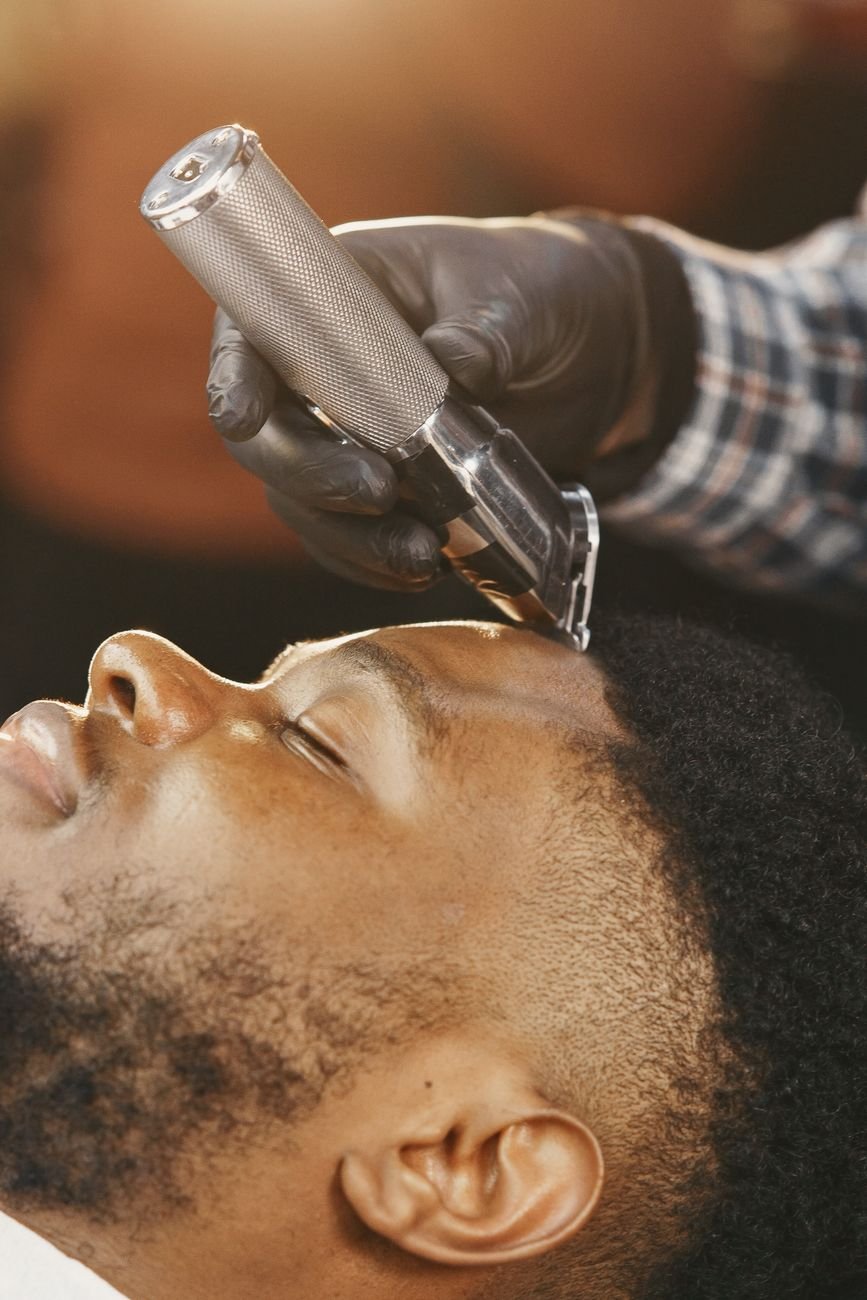
Many people find shorter styles make contrast between fuller and thinner areas less obvious than longer hair, which separates and exposes the scalp. A barber used to working with thinning hair can advise on length and texture that work with your current coverage. Growing the top longer to cover thin areas often backfires for the same reason. Hats are a personal choice for comfort and style, and wearing them does not cause pattern baldness. Shaving the head is another choice some men prefer, as a deliberate style or to end the daily work of arranging thinning hair. It is not giving up. It is preference.
Scalp sun protection matters more as coverage thins, because exposed scalp burns more easily. A hat in strong sun, shade at midday, and sunscreen on exposed scalp where practical are sensible habits. Summer timing flips in Australia, where the strongest sun is December to February, while Canada and the United Kingdom face theirs in June to August. For skin health alongside scalp care, a simple, consistent skin care routine beats an ever changing shelf of products. Persistent redness, flaking, itching, sores, or pain on the scalp should be raised with a clinician, not managed with grooming products alone.
When to See a Dermatologist
See a professional promptly if hair loss is patchy or rapid. The same applies if it comes with pain, significant itching, redness, scaling, sores, or scarring. Seek advice if shedding is heavy and diffuse. Also seek advice if eyebrows or body hair are also affected, or if loss begins after a new medicine or significant illness. It is also reasonable to book simply for clarity. A visit can confirm what type of hair loss you have and explain the usual outlook. If you wish, you can discuss options at a professional level. You can also ask about a claim you have seen online before spending money on it. A clinician should always assess children and teenagers with hair loss professionally. Do not assume pattern thinning in their case.
The Bottom Line on Male Pattern Baldness
Male pattern baldness is a common, gradual, genetically influenced form of hair loss affecting mainly the hairline, temples, and crown, as follicles there produce progressively finer hair. It differs from temporary diffuse shedding and from patchy alopecia areata, which is why in person assessment is more reliable than comparing photos online. The evidence supports understanding the pattern, recognising what does not fit it, treating online remedy claims with caution because their evidence is limited or absent, and having a professional conversation if you want to discuss slowing progression in general terms. It does not support promises of reversal or guaranteed regrowth. Whether you choose a dermatologist appointment, a new haircut, or leaving things as they are, an informed decision made without pressure is the aim.
Frequently Asked Questions About Male Pattern Baldness
Is male pattern baldness the same as normal shedding?
No. Everyone sheds some hair daily in the normal growth cycle. Pattern baldness is a longer term process where follicles at the hairline and crown produce progressively finer hair over repeated cycles. Shedding can increase for other, often temporary reasons, and the two can overlap.
Does wearing a hat, washing hair often, or styling cause pattern baldness?
No good evidence supports that. Genetic sensitivity and hormones drive it mainly, in general terms. Very tight hairstyles over long periods can contribute to a different type of loss in some people. That is a reason to see a clinician in person about unusual loss.
Can stress cause male pattern baldness?
Stress is more commonly linked to temporary diffuse shedding after a difficult period. It does not explain the long term, gradual miniaturisation at the temples and crown that defines pattern baldness, although a bout of shedding can make underlying thinning more noticeable.
Male Pattern Baldness: Remedies, Diet, and Professional Care
Do natural remedies reverse male pattern baldness?
No natural remedy has strong evidence showing reversal. Claims for rosemary oil and onion juice rest on small, limited, or condition specific studies, and claims for trends such as bone marrow have no credible clinical evidence for this condition. This article does not recommend any of them.
When should I see a dermatologist?
Promptly for patchy, rapid, painful, itchy, red, scaly, or scarred loss, or for heavy diffuse shedding that continues. It is also reasonable to book for clarity, to confirm the type of hair loss and discuss, in general professional terms, whether any clinical options are appropriate for you.
Will changing my diet restore my hairline?
Eating enough overall, including enough protein, supports normal hair growth in general, and a clinician can advise if a deficiency may be contributing to shedding. Evidence does not present diet change as a way to restore a hairline affected by genetic pattern thinning, and any claim promising that should be treated with caution.
This article is general information only and is not medical advice, a diagnosis, or a treatment recommendation. Hair loss has many possible causes, and only a qualified clinician who can examine you and take your history can assess your individual situation. If you are concerned about hair loss or scalp symptoms, please see a dermatologist or your regular health professional.

 Ablaze Fitness


 Mélanie Courcelles


